The Thermodynamics of the Differential Gear Unit
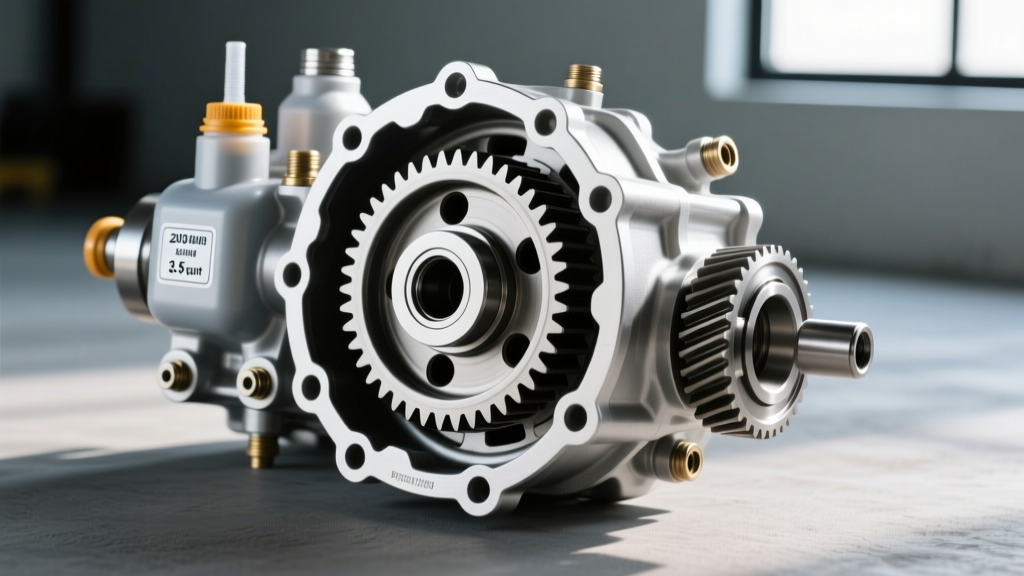
The differential gear unit is a marvel of mechanical power transfer, tasked with splitting engine torque while allowing left and right drive wheels to rotate at different speeds. However, this mechanical advantage comes with a significant thermodynamic penalty. In high-load scenarios—such as towing a 15,000-pound fifth-wheel trailer up a 6% grade or crawling through deep sand in low-range 4WD—the internal friction of the axle assembly generates immense thermal energy. As of 2026, modern heavy-duty trucks are pushing Gross Combined Weight Ratings (GCWR) past 40,000 pounds, placing unprecedented thermal stress on rear and front axles.
When the internal temperature of the differential housing exceeds 250°F (121°C), standard 75W-90 synthetic gear oils begin to experience rapid viscosity breakdown. Once the fluid thins, the protective hydrodynamic film between the ring and pinion gears collapses, leading to micropitting, accelerated wear, and catastrophic gear tooth failure. Upgrading the differential cover is the first and most cost-effective line of defense in managing this critical heat.
Hypoid Gear Inefficiency and Heat Generation
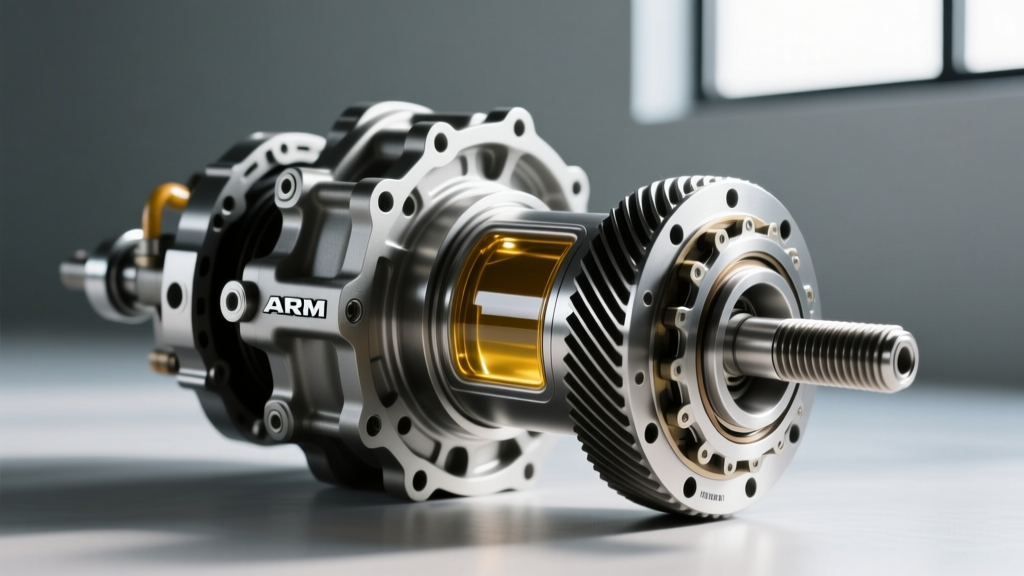
Most automotive and truck axles utilize a hypoid ring and pinion gear set. Unlike straight-cut or helical gears that primarily rely on rolling friction, hypoid gears feature a sliding friction component due to the offset between the pinion centerline and the ring gear centerline. While this sliding action allows for a lower driveshaft tunnel and smoother operation, it is inherently inefficient. Approximately 2% to 5% of the input energy is lost purely to friction and converted directly into heat. In a drivetrain transmitting 800 lb-ft of torque, this equates to hundreds of watts of continuous thermal energy dumped directly into the differential fluid.
Material Science: Cast Iron vs. A356-T6 Aluminum
Original equipment manufacturer (OEM) differential covers are typically stamped steel or nodular cast iron. Stamped steel offers minimal thermal mass and virtually no external surface area for convective cooling. Cast iron provides better structural rigidity and protects against rock strikes, but its thermal conductivity is relatively poor (approximately 50 W/m·K).
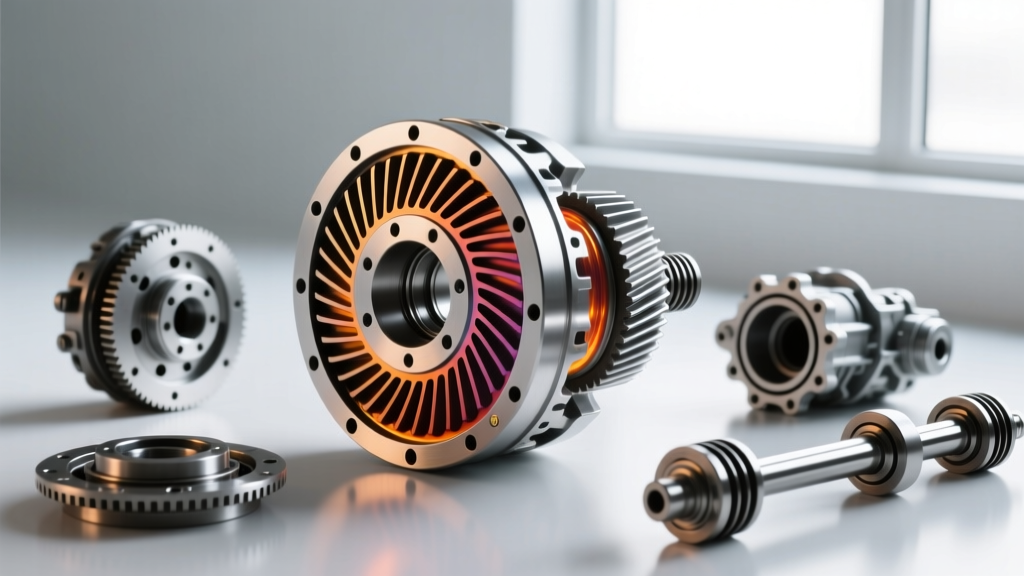
High-performance aftermarket differential covers are overwhelmingly CNC-machined or die-cast from A356-T6 aircraft-grade aluminum. Aluminum boasts a thermal conductivity of roughly 150 W/m·K—three times that of cast iron. Furthermore, premium covers feature deeply finned exterior profiles. These fins dramatically increase the surface area exposed to ambient airflow, utilizing the vehicle's natural forward motion (or under-carriage turbulence) to act as a passive heat sink.
Thermal Dissipation Data Table
| Cover Type | Material | Surface Area Increase | Fluid Capacity Gain | Avg. Temp Reduction |
|---|---|---|---|---|
| OEM Stamped Steel | Low-Carbon Steel | Baseline | Baseline | N/A |
| OEM Nodular Iron | Cast Iron | +15% | +0.25 Quarts | -5°F to -10°F |
| Aftermarket Finned | A356-T6 Aluminum | +250% to +400% | +0.5 to +1.5 Quarts | -25°F to -45°F |
Note: Temperature reductions are based on steady-state highway towing tests at 65 MPH with a 10,000 lb trailer.
Internal Fluid Dynamics and Baffle Engineering
External fins are only half of the cooling equation. The internal architecture of the differential cover dictates how effectively heat is transferred from the fluid to the aluminum housing. A common failure point in heavily loaded axles is pinion bearing starvation. As the ring gear rotates at highway speeds, it acts as a centrifugal pump, slinging gear oil outward and upward. In stock housings, this fluid often pools at the top of the cover and drains back down the sides, bypassing the critical pinion bearings.
Premium manufacturers like PML Castings and Mag-Hytec engineer internal baffles and directional fins into their covers. These internal structures intercept the oil slung by the ring gear and route it directly into the pinion bearing cavities. This ensures continuous lubrication and cooling of the pinion head, which is subjected to the highest localized stresses in the entire differential gear unit. Additionally, the increased fluid volume (often adding 0.5 to 1.5 quarts of 75W-140 synthetic oil) increases the overall thermal mass of the system, meaning it takes significantly longer for the axle to reach critical operating temperatures during steep, low-speed climbs.
Active vs. Passive Axle Cooling Systems
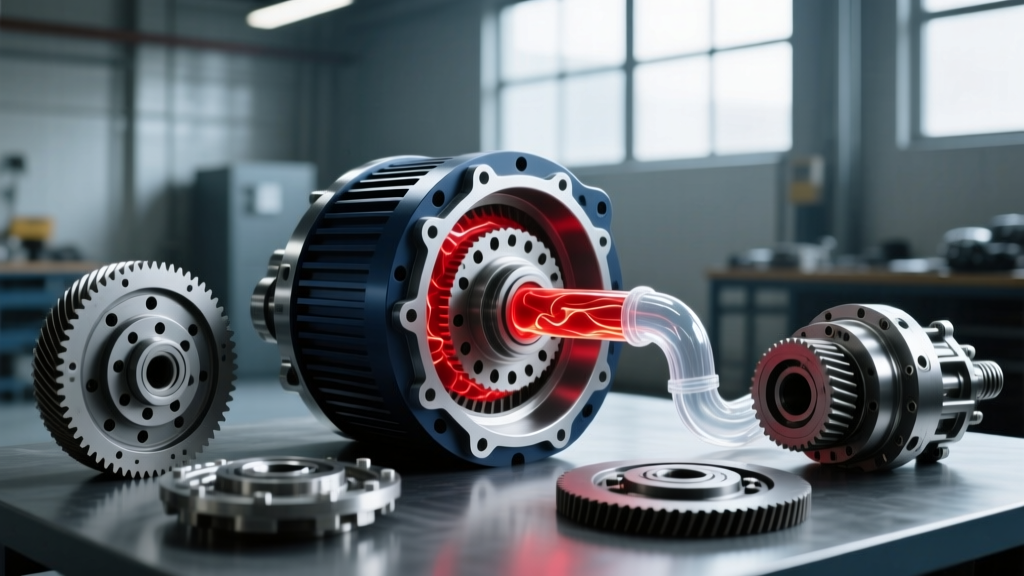
While finned aluminum covers provide excellent passive cooling, extreme-duty applications (such as Baja racing, heavy mining equipment, or continuous mountain-grade towing) may require active cooling. Active differential cooling systems utilize a mechanical or electric pump to draw hot gear oil from the bottom of the housing, push it through an external air-to-oil or liquid-to-oil heat exchanger (radiator), and return the cooled oil directly to the pinion bearings.
For 95% of street, towing, and off-road applications, a high-quality passive aluminum cover paired with a high-thermal-stability synthetic fluid (like Red Line 75W-140 or Amsoil Severe Gear) is entirely sufficient. Active systems introduce plumbing, pumps, and potential leak points that require rigorous maintenance, making them overkill for most daily-driven or weekend-warrior vehicles.
Precision Installation: Sealants, Torque, and Clearances
Upgrading your differential cover is a straightforward procedure, but improper installation will result in chronic leaks or damaged hardware. The mating surface between the axle housing and the new cover must be surgically clean. Use a plastic scraper and brake cleaner to remove all traces of old RTV silicone or factory gasket material. Any debris left on the flange will create a seepage path for high-viscosity gear oil.
Sealant Selection and Gasket Technology
If your aftermarket cover requires RTV, use only sensor-safe, high-temperature silicone specifically designed for gear oil environments, such as Permatex Ultra Black (Part #85084). Apply a continuous 1/8-inch bead, ensuring complete circles around every bolt hole. However, the industry standard has shifted toward reusable elastomer gaskets. Products like the LubeLocker differential gasket feature a steel core with a molded nitrile rubber sealing bead. These eliminate the need for messy RTV, provide a perfect seal upon initial torque, and can be reused during future fluid services.
OEM vs. Aftermarket Torque Specifications
Over-torquing cover bolts is a frequent mistake that warps the mating flange or strips the threads in the cast-iron axle housing. Always use a calibrated inch-pound or low-range foot-pound torque wrench. Consult the specific Dana Spicer or OEM service manual for your exact axle model, but adhere to these general baseline specifications:
- Dana 60 / Dana 70 (3/8-inch bolts): 30 to 35 lb-ft
- Dana 60 / Dana 70 (7/16-inch bolts): 40 to 45 lb-ft
- AAM 11.5-inch (GM HD Trucks): 30 lb-ft (Use caution on aluminum housings; do not exceed 28 lb-ft)
- Ford 10.5-inch / 10.25-inch Sterling: 30 to 35 lb-ft
- Chrysler 9.25-inch (ZF / AAM): 25 to 30 lb-ft
Always tighten the bolts in a crisscross or star pattern to ensure even clamping force across the entire perimeter of the cover.
Cost Analysis and Part Sourcing
Investing in a premium differential cover yields immediate dividends in extended gear oil life and component longevity. As of 2026, pricing for high-end CNC-machined and cast aluminum covers generally falls into the following tiers:
- Entry-Level Cast Aluminum (e.g., ARB, Rough Country): $120 - $180. These offer basic finning and slight capacity increases but may lack advanced internal baffling.
- Mid-Range Precision Cast (e.g., PML Castings): $200 - $280. Excellent sand-cast finishes, integrated drain/fill plugs with magnetic tips, and proven internal fluid routing.
- Premium CNC Billet / Heavy-Duty (e.g., Mag-Hytec, Fabricated Race Covers): $280 - $450. Maximum fluid capacity, O-ring seals, and extreme-duty structural rigidity for competition use.
When replacing the cover, always factor in the cost of 3 to 4 quarts of premium 75W-140 full-synthetic gear oil ($60-$90) and the appropriate limited-slip friction modifier if your differential gear unit is equipped with a clutch-type LSD. By optimizing your axle's thermal management, you ensure that the differential gear unit remains a reliable, bulletproof link in your drivetrain for hundreds of thousands of miles.