The Architecture of Modern EV E-Axles
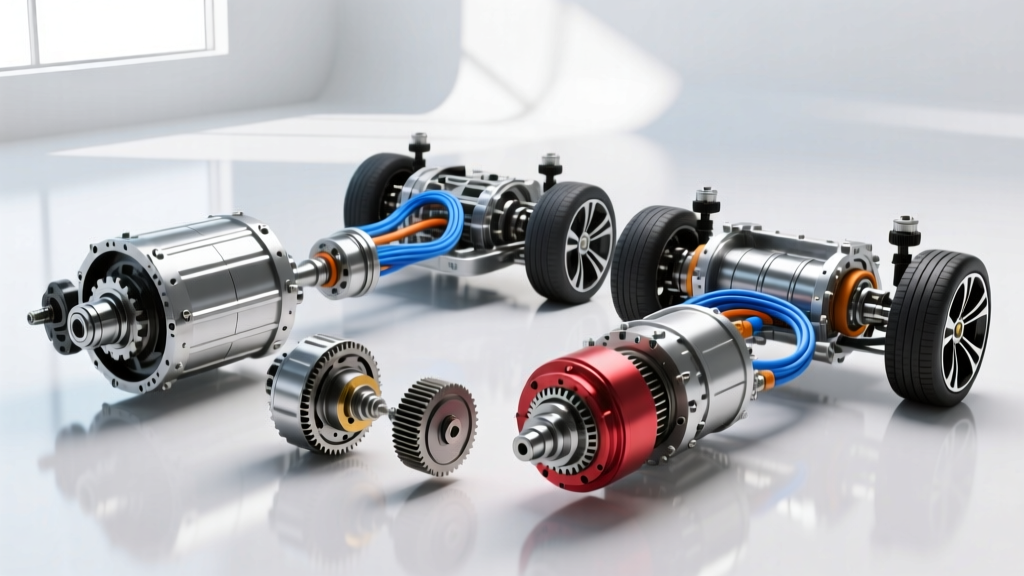
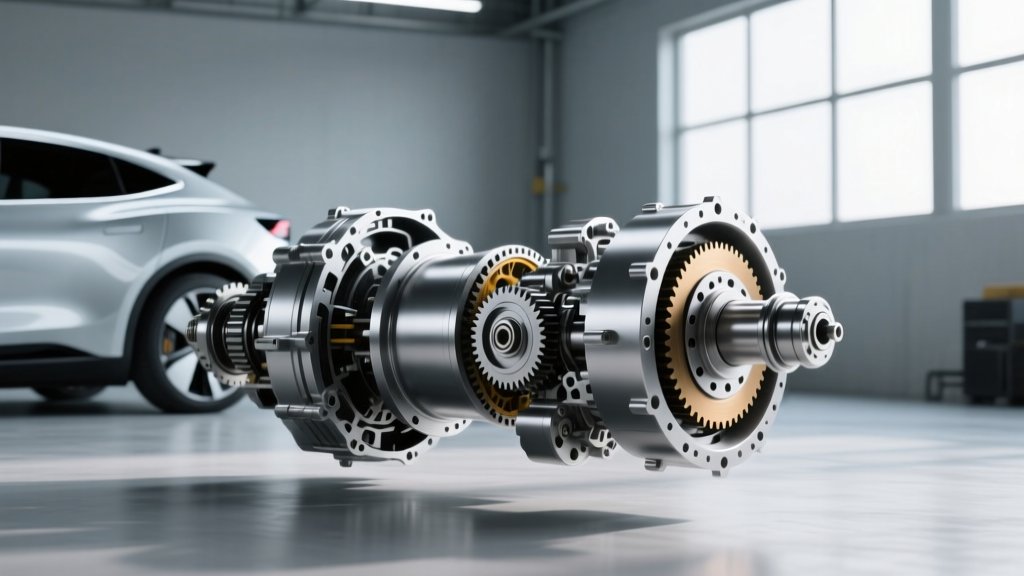
As the electric vehicle market matures in 2026, the first major wave of mainstream EVs—including early Tesla Model 3s, Chevrolet Bolts, and Porsche Taycans—are crossing the 100,000-mile threshold. Unlike internal combustion engine (ICE) vehicles that rely on complex multi-speed transmissions, most EVs utilize a single-speed reduction gear integrated directly with the electric motor and inverter. This integrated unit, commonly known as an e-axle, represents a paradigm shift in drivetrain layout and configuration.
According to the U.S. Department of Energy, the vast majority of EVs use single-speed transmissions because electric motors deliver maximum torque at zero RPM and maintain high efficiency across a broad operational band. However, this simplicity masks extreme mechanical stress. EV motors routinely spin between 15,000 and 20,000 RPM—nearly three times the redline of a high-performance ICE engine. This necessitates specialized reduction gears, high-precision bearings, and advanced dielectric cooling fluids.
Defining the Platinum Drivetrain Works Standard
When fleet managers, EV conversion specialists, and performance enthusiasts search for platinum drivetrain works, they are typically looking for the absolute pinnacle of aftermarket remanufacturing and upgrade standards. In the EV space, a 'platinum' tier rebuild or upgrade goes far beyond simply replacing worn seals and flushing old fluid. It involves metallurgical enhancements and precision-machined tolerances designed to handle the instantaneous torque delivery and extreme rotational velocities unique to electric motors.
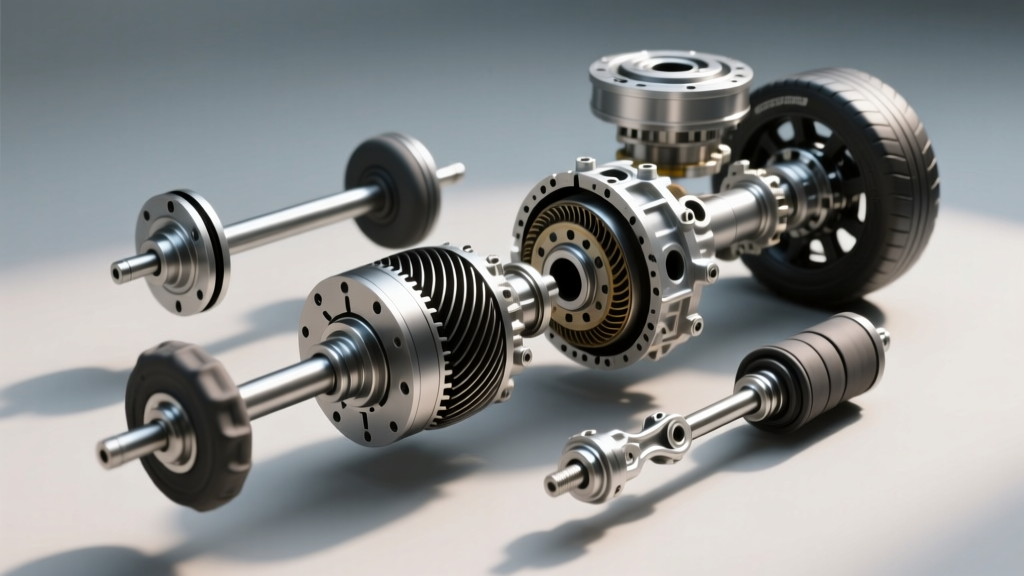
A true platinum-standard e-axle rebuild addresses the inherent weak points of OEM designs. For example, early Tesla Model 3 rear drive units (RDUs) with the 9.04:1 reduction ratio were prone to premature bearing whine due to standard steel deep-groove ball bearings struggling with the high-RPM lateral loads. Platinum-tier facilities address this by upgrading to ceramic hybrid bearings and utilizing cryogenically treated helical gears to reduce NVH (Noise, Vibration, and Harshness) and increase load capacity.
OEM vs. Premium Remanufacturing: A Technical Breakdown
Choosing between a brand-new OEM e-axle and a premium remanufactured unit requires a deep understanding of what is actually being replaced. Below is a comparison of standard OEM replacements versus platinum-tier aftermarket upgrades.
| Specification | OEM Replacement E-Axle | Platinum-Tier Reman / Upgrade |
|---|---|---|
| Bearing Type | Standard Steel Deep-Groove Ball | Silicon Nitride Ceramic Hybrid (e.g., SKF) |
| Gear Treatment | Standard Case Hardening | Cryogenic Treatment + Micro-Polishing |
| Seal Material | Standard Nitrile Rubber (NBR) | PTFE / Fluorocarbon (Viton) Low-Drag |
| Max RPM Rating | 16,000 - 18,000 RPM | 22,000+ RPM (Lucid / Plaid Compatible) |
| Warranty | 12 Months / 12,000 Miles | 36 Months / 36,000 Miles |
Critical Failure Points in High-Mileage EV Drivetrains
To make an informed buying decision, you must understand how and why EV drivetrains fail. The absence of a traditional multi-speed gearbox eliminates clutch packs and torque converters from the failure matrix, but it introduces new vulnerabilities.
High-RPM Bearing Degradation
The most common mechanical failure in aging e-axles is bearing degradation. Electric motors generate significant electromagnetic forces and heat. Standard steel bearings can suffer from electrical pitting—a phenomenon where stray electrical currents pass through the bearing rollers, causing microscopic craters in the raceway. SKF's research on electric motor bearings highlights that using ceramic hybrid bearings or insulated bearings is critical in EV applications to prevent current arcing and extend service life by up to 400%.
When rebuilding or installing a premium e-axle, precise torque specifications are non-negotiable. For instance, the primary flange nut securing the motor shaft to the reduction gear input on many common e-axles requires a torque of 120 Nm followed by an additional 45-degree angle turn. Under-torquing leads to gear lash and catastrophic spline failure; over-torquing preloads the ceramic bearings, causing rapid thermal expansion and seizure.
Dielectric Fluid Breakdown and Thermal Management
EV reduction gears do not use standard automatic transmission fluid (ATF). They require specialized dielectric fluids that serve a dual purpose: lubricating the helical gears and cooling the electric motor windings and inverter components. Over time, the shearing forces of the gears and the intense thermal cycling break down the fluid's dielectric properties and anti-wear additives.
Using the wrong fluid can lead to catastrophic inverter failure if the fluid becomes conductive. Premium fluids like Castrol ON or OEM-specific formulations like Pentosin E-Fluid are engineered with low viscosity to minimize churning losses at 20,000 RPM while maintaining a high dielectric breakdown voltage. A typical Tesla rear drive unit holds approximately 2.4 liters of fluid, and a platinum-standard service includes a complete flush, magnetic plug inspection for ferrous debris, and a dielectric strength test.
Expert Insight: Never substitute standard ICE ATF or manual transmission gear oil in an integrated e-axle. The copper windings in the electric motor will corrode, and the fluid's electrical conductivity will short-circuit the inverter, resulting in a $5,000+ secondary failure.
2026 Buyer’s Cost and Installation Matrix
Pricing for EV drivetrain components varies wildly depending on the vehicle architecture. A dual-motor AWD system, such as the one found in the Rivian R1T or Tesla Model Y, requires maintaining two separate e-axles, effectively doubling the maintenance footprint. Furthermore, complex setups like the Porsche Taycan's rear axle—which utilizes a genuine two-speed transmission with a 15:1 first gear for launch and an 8:1 second gear for top speed—command a massive premium for parts and specialized labor.
Cost Comparison: OEM vs. Premium Aftermarket
- OEM E-Axle Assembly (New): $4,500 to $8,500+ (depending on motor output and inverter integration). Lead times can exceed 4 weeks for older models.
- Platinum-Tier Remanufactured E-Axle: $2,800 to $4,200. Includes upgraded ceramic bearings, cryo-treated gears, and dyno-tested inverter pairing.
- E-Axle Fluid & Bearing Service (Preventative): $450 to $750. Highly recommended at 60,000-mile intervals to flush out copper particulates and gear wear metals.
Installation and Calibration Requirements
Swapping an e-axle is not a simple bolt-on procedure. Modern EVs require software calibration to align the resolver (the sensor that tells the inverter the exact position of the motor rotor). If the resolver is misaligned by even a fraction of a degree during installation, the motor will experience severe torque ripple, efficiency loss, and violent shuddering under acceleration.
Furthermore, the physical mounting of the e-axle requires strict adherence to torque specs to maintain NVH isolation. The primary M12x1.5 e-axle mounting bolts to the subframe typically require 85 Nm plus a 90-degree turn. Using aftermarket polyurethane bushings instead of OEM fluid-filled or rubber isolators will transmit high-frequency motor whine directly into the cabin, ruining the refinement of the EV.
Final Verdict for EV Owners and Fleet Managers
The landscape of EV drivetrain maintenance in 2026 demands a departure from traditional ICE maintenance mindsets. While EVs have fewer moving parts, the parts they do have operate under extreme thermal and rotational stress. Seeking out facilities and components that meet the platinum drivetrain works benchmark ensures that your e-axle is equipped to handle the instantaneous torque and high-RPM demands of modern electric motors.
For daily drivers and high-mileage fleet vehicles, investing in a premium remanufactured e-axle with ceramic hybrid bearings and upgraded PTFE seals offers the best balance of cost, longevity, and performance. By prioritizing dielectric fluid integrity and precision installation calibrations, EV owners can easily push their drivetrains well past the 200,000-mile mark with minimal degradation in efficiency or refinement.