The Evolution of the Electric Vehicle Drivetrain
As we navigate the 2026 automotive landscape, the internal combustion engine (ICE) is increasingly being replaced by highly efficient electric architectures. However, the electric vehicle (EV) drivetrain is far from a monolith. Unlike traditional ICE vehicles that rely on complex multi-speed automatic or manual transmissions to keep a narrow power band in check, EVs utilize entirely different mechanical philosophies to deliver torque to the wheels. For buyers and enthusiasts alike, understanding the nuances of single-motor, dual-motor, and multi-speed reduction gearboxes is critical for making an informed purchase or performing out-of-warranty maintenance.
In this comprehensive buyer's guide, we break down the mechanical realities of modern EV drivetrains, comparing eAxle configurations, reduction gear ratios, and the real-world maintenance costs associated with high-torque electric powertrains.
Single-Motor vs. Multi-Motor EV Drivetrain Layouts
The foundation of any EV's performance and efficiency lies in its motor configuration. Automakers are currently deploying three primary layouts, each with distinct mechanical trade-offs.
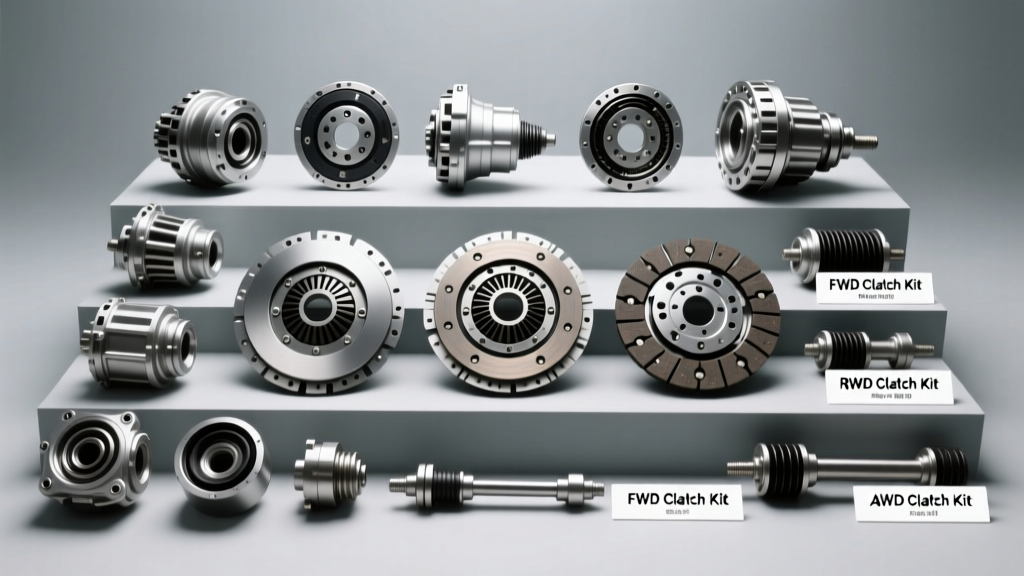
Single-Motor (FWD and RWD) eAxles
The most common and cost-effective layout is the single-motor configuration. In 2026, vehicles like the standard-range Hyundai Ioniq 5 and the Chevy Equinox EV utilize a Front-Wheel Drive (FWD) single-motor setup. This places the motor, inverter, and reduction gear into a single transaxle unit, driving the front wheels. Conversely, performance-oriented single-motor setups, such as the base Tesla Model 3 and Ford Mustang Mach-E, utilize a Rear-Wheel Drive (RWD) layout. RWD single-motor drivetrains typically handle higher torque outputs (up to 450 Nm at the motor shaft) without suffering from torque steer, providing better weight distribution and launch dynamics.
Dual-Motor AWD Systems
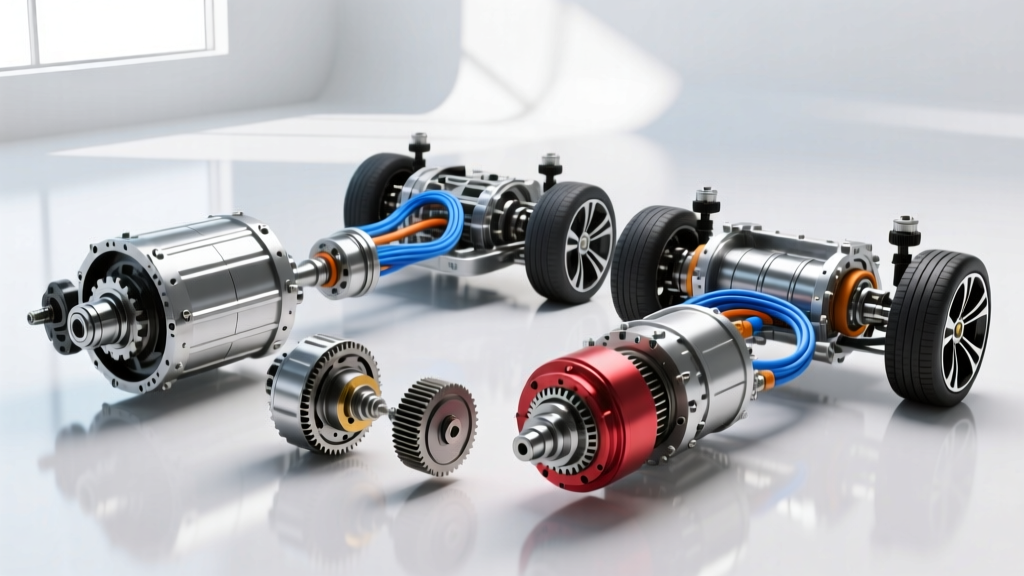
Dual-motor All-Wheel Drive (AWD) systems eliminate the need for a mechanical driveshaft and center differential. Instead, a dedicated eAxle is placed on both the front and rear axles. Vehicles like the Rivian R1S and Tesla Model Y Long Range use this setup to independently control front and rear torque delivery. The front motor often acts as a freewheeling unit during light-load cruising to reduce parasitic drag, engaging only when slip is detected or heavy acceleration is demanded.
Tri and Quad-Motor Torque Vectoring
Reserved for high-performance and heavy-duty applications, tri-motor (e.g., Tesla Model S Plaid) and quad-motor (e.g., Mercedes-Benz G 580 EQ, Rivian Quad-Motor) configurations offer true torque vectoring. By assigning a dedicated motor and reduction gear to each individual wheel, the drivetrain can apply positive torque to the outside wheels and negative torque (regenerative braking) to the inside wheels during cornering, virtually eliminating understeer and drastically reducing turning radiuses via tank turns.
The Heart of the EV Drivetrain: Reduction Gearboxes
Because electric motors can rev from 0 to 20,000+ RPM and produce maximum torque at 0 RPM, most EVs do not require a multi-speed transmission. Instead, they use a single-speed reduction gearbox. However, as of 2026, the two-speed EV transmission has carved out a vital niche in the luxury and performance segments.
| Feature | Single-Speed Reduction Gear | Two-Speed EV Transmission |
|---|---|---|
| Examples | Tesla Model 3/Y, Ford F-150 Lightning | Porsche Taycan, Audi e-tron GT, ZF 2AV |
| Gear Ratios | Fixed (typically 9:1 to 11:1) | 1st Gear: ~15:1 / 2nd Gear: ~8:1 |
| Primary Advantage | Simplicity, lower weight, zero shift-shock | Explosive launch acceleration + high-speed efficiency |
| Maintenance Complexity | Low (sealed unit, basic fluid swap) | High (requires clutch pack and shift actuator service) |
| Estimated Weight | 15 - 25 kg (gearbox only) | 35 - 50 kg (integrated housing) |
According to engineering data from ZF's EV transmission division, a two-speed gearbox allows automakers to use a smaller, lighter, and less powerful electric motor while maintaining identical 0-60 mph times and improving highway range by up to 5% due to lower motor RPMs at cruising speeds.
Key EV Drivetrain Components & Specifications
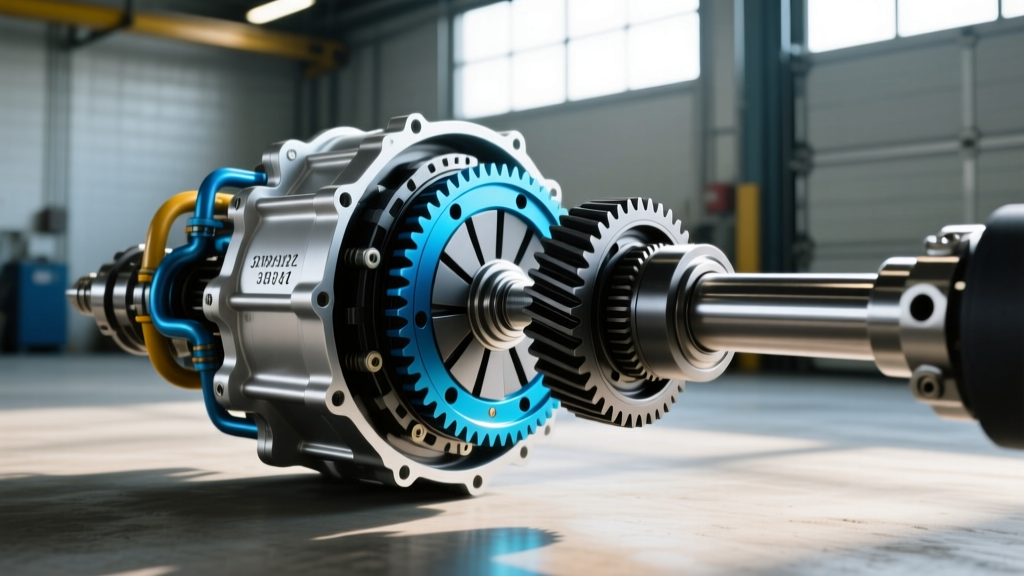
Modern EVs rely on highly integrated eAxles (electric axles), which combine the electric motor, power inverter, and reduction gearbox into a single, liquid-cooled housing. This integration reduces high-voltage cabling and saves crucial packaging space.
- Bosch eAxle: A dominant supplier in the 2026 market, the Bosch eAxle scales from 50 kW to over 300 kW. It utilizes Silicon Carbide (SiC) inverters to reduce switching losses by up to 20% compared to older IGBT chips.
- GKN Automotive eDrive: Known for their Twinster torque-vectoring axles, GKN's latest eDrive systems can deliver up to 8,000 Nm of torque directly to the wheels, utilizing specialized helical gearsets to manage NVH (Noise, Vibration, and Harshness) at high motor RPMs.
- Inverter Cooling: High-performance eAxles utilize direct oil-cooling for both the motor stator and the inverter power modules, requiring specialized dielectric fluids that do not conduct electricity.
EV Drivetrain Maintenance: Fluids, Torque Specs, and Costs
A common misconception is that EVs require zero drivetrain maintenance. While they lack engine oil and exhaust systems, the extreme instantaneous torque places immense stress on reduction gears, CV joints, and half-shafts.
Reduction Gear Fluid Service
Most single-speed reduction gearboxes hold between 1.2L and 2.5L of fluid. Unlike ICE automatic transmission fluid (ATF), EV reduction gear fluids must possess high dielectric strength to prevent short-circuiting in case of internal seal leaks near the motor stator, and they must protect copper windings from corrosion.
Expert Tip: Never use standard ATF in a modern EV eAxle unless explicitly specified by the OEM (e.g., early Tesla drive units used Pentosin ATF 1). For 2024-2026 models, dedicated fluids like Castrol ON EV Drive Fluid or Shell E-Fluids are mandatory to maintain warranty compliance and thermal stability.
Half-Shaft and Axle Nut Torque Specifications
The instantaneous torque of an EV causes accelerated wear on CV joints and half-shaft splines. When replacing a torn CV boot or a worn half-shaft, adhering to Torque-to-Yield (TTY) specifications is non-negotiable. For example, the rear axle nut on a Tesla Model 3 RWD requires a massive clamping force to prevent spline fretting: typically 310 Nm + 120 degrees of additional turn using a 36mm socket. Always replace TTY axle nuts with new OEM hardware (e.g., Tesla Part # 1007366-00-B).
Out-of-Warranty Repair Costs (2026 Estimates)
| Drivetrain Component | Part Cost Range | Labor Cost Range |
|---|---|---|
| Reduction Gear Fluid Flush | $30 - $80 (OEM Fluid) | $80 - $150 |
| CV Half-Shaft Assembly (OEM) | $450 - $900 | $250 - $400 |
| Complete eAxle Replacement (Reman) | $3,500 - $6,500 | $800 - $1,500 |
| Two-Speed Gearbox Actuator Repair | $1,200 - $2,500 | $1,000 - $2,000 |
2026 Buyer's Decision Matrix: Which Drivetrain is Right for You?
Choosing the right EV drivetrain layout depends heavily on your use case, climate, and performance expectations.
- The Commuter (FWD Single-Motor): Ideal for urban environments and mild climates. Offers the best efficiency, lowest curb weight, and cheapest maintenance. Look for models utilizing integrated eAxles with oil-cooled stators for better longevity in stop-and-go traffic.
- The Enthusiast (RWD Single-Motor): Best for drivers who prioritize driving dynamics and steering feel over maximum traction. RWD layouts suffer less from torque-steer and offer a more traditional sports-car weight bias.
- The All-Weather Traveler (Dual-Motor AWD): Essential for regions with heavy snow or rain. The lack of a mechanical driveshaft means AWD engagement is measured in milliseconds, not mechanical rotations. Ensure the model you choose features a front-motor disconnect clutch to preserve highway range.
- The Track/Off-Road Extremist (Tri/Quad-Motor): Reserved for buyers with high budgets who demand sub-2-second 0-60 times (Tri-motor) or extreme off-road articulation via independent wheel control (Quad-motor). Be prepared for higher tire wear and complex out-of-warranty repair bills.
Conclusion
The electric vehicle drivetrain is a marvel of modern packaging and electromechanical engineering. While it eliminates the shifting clunks and torque converter slush of the past, it introduces new demands regarding thermal management, dielectric fluid chemistry, and extreme torque handling. As automotive engineering analyses continue to show, the future of EV performance isn't just about bigger batteries; it's about smarter eAxles, advanced torque vectoring, and the strategic implementation of multi-speed reduction gears. Whether you are buying a basic FWD commuter or a quad-motor off-roader, understanding the hardware beneath the floorboards is the key to maximizing both performance and longevity.