Understanding the mechanical limits of your drivetrain is the first step toward reliable horsepower. Before adding forced induction or nitrous, you must answer a fundamental question: what is automatic transmission in cars from a high-performance perspective, and which architecture can survive your power goals?
The Performance Definition of Automatic Transmissions
When gearheads and track enthusiasts ask what is automatic transmission in cars, they are rarely looking for a basic textbook definition. In the performance and upgrade sector, an automatic transmission is defined by its torque-handling capacity, shift speed, thermal management, and mechanical efficiency. While early automatics were notorious for parasitic drivetrain loss, modern iterations utilize advanced lock-up torque converters, dual-clutch mechatronics, and high-friction clutch materials to outpace traditional manuals in both acceleration and durability.
For the 2026 tuning landscape, selecting the right transmission architecture—or knowing how to fortify your existing one—dictates whether your build will hook at the starting line or scatter parts across the asphalt. Below, we break down the primary types of automatic transmissions, their inherent performance ceilings, and the exact upgrade pathways required to push them past factory limits.
Planetary Gear Automatics: The High-Horsepower Standard
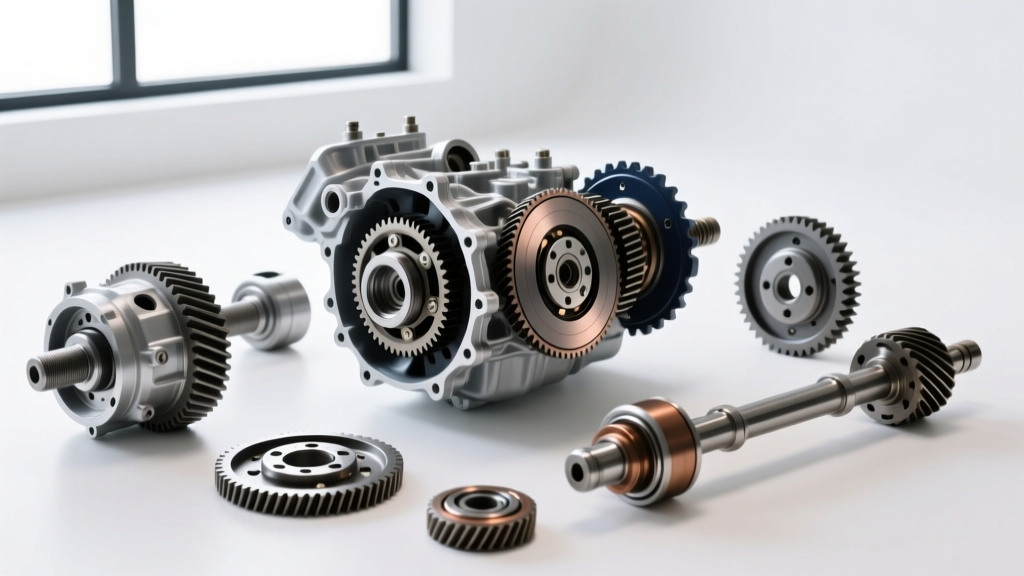
The traditional planetary gearset automatic remains the undisputed king of high-horsepower, high-torque applications. From the legendary GM 4L60E to the modern ZF 8HP series, these transmissions use hydraulic pressure to actuate clutch packs that lock specific gears within a planetary set.
The GM 4L60E and 6L80E: Domestic V8 Workhorses
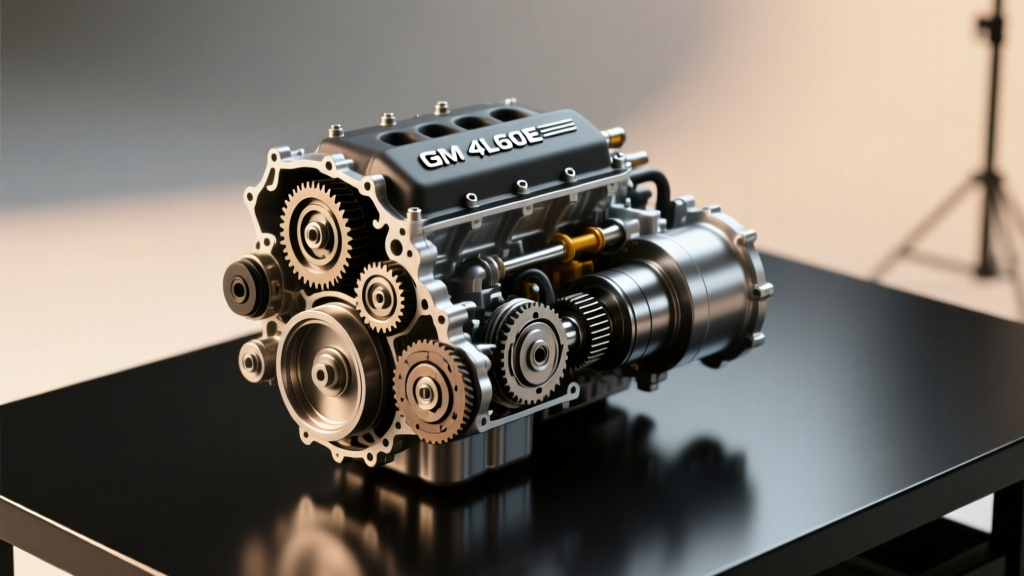
The GM 4L60E is a staple in the LS-swap community, but its factory torque limit hovers around 380 lb-ft. The 3-4 clutch pack is its most notorious failure point under hard track use. Upgrading to Raybestos GPZ high-energy frictions and installing a billet 3-4 backing plate (such as the Sonnax 77733-01K) is mandatory for builds exceeding 500 horsepower. A fully built, race-prepped 4L60E typically costs between $3,800 and $5,200.
The newer 6L80E and 6L90E transmissions feature a robust 6-speed layout with a much deeper first gear (4.03:1). However, the factory torque converter clutch (TCC) apply valves are prone to bore wear, leading to slip and overheating. Installing a Sonnax Zip Kit (part number 104740-01K) restores hydraulic integrity and allows the transmission to safely handle up to 650 lb-ft of torque at the crank.
The ZF 8HP: The Global Benchmark
The ZF 8HP transmission (found in everything from the Dodge Hellcat to the BMW M5) is an engineering marvel. The 8HP70 variant is factory-rated for roughly 600 Nm (442 lb-ft) of torque, while the heavy-duty 8HP90 handles up to 1,000 Nm (737 lb-ft). To push the 8HP70 beyond its limits, tuners must upgrade the 'A' and 'B' clutch packs with thicker Kolene-coated steels and utilize custom TCM (Transmission Control Module) tuning to increase line pressure from the stock 18 bar to a safer 22 bar during wide-open-throttle (WOT) shifts. Fluid specification is critical here; only ZF LifeguardFluid 8 (part number S671 090 255) or an exact synthetic equivalent should be used to maintain the precise friction coefficients required by the ZF mechatronic unit.
Dual-Clutch Transmissions (DCT): Track-Ready Shift Speeds
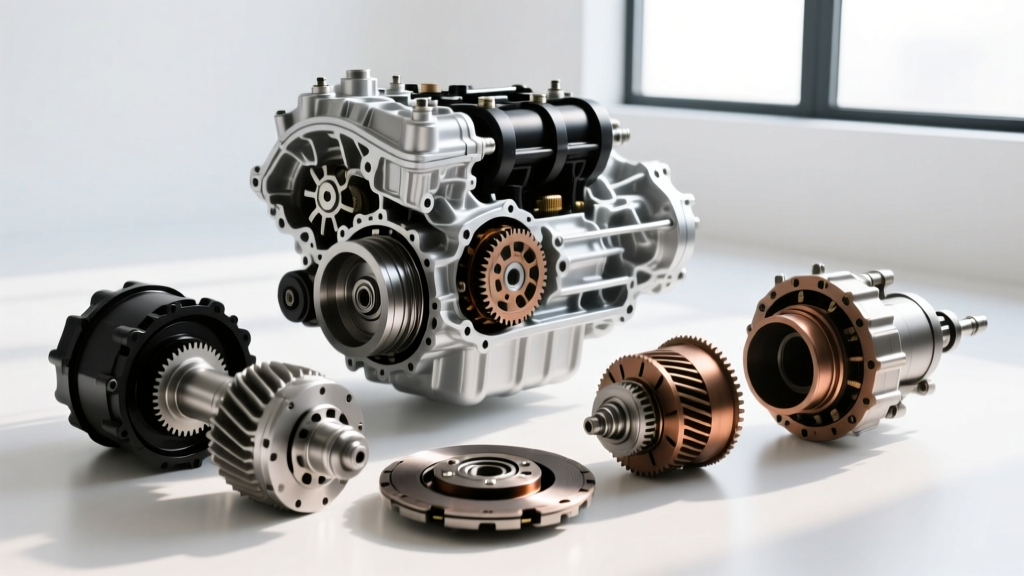
Dual-Clutch Transmissions operate using two separate input shafts and clutch packs—one for odd gears and one for even gears. This allows the next gear to be pre-selected, resulting in shift times measured in milliseconds rather than tenths of a second.
Wet vs. Dry DCT Architectures
For performance applications exceeding 350 horsepower, wet DCTs are mandatory. Dry clutches, like those found in early VW DSGs or the Ford Focus ST, suffer from severe thermal degradation during repeated hard launches. Wet DCTs, such as the Tremec TR-9077 used in the C8 Corvette or the Porsche PDK, submerge the clutch packs in specialized fluid for continuous cooling.
The Tremec TR-9077 is a marvel of modern engineering, capable of handling the C8 Z06's 470 lb-ft of torque. However, track-day enthusiasts frequently encounter mechatronic heat soak. When DCT fluid temperatures exceed 265°F (129°C), the TCU will intervene and limit torque output. Upgrading to a high-capacity DCT cooler system, such as the Derale Hyper-Cool remote mount kits (approx. $900 - $1,400 installed), is essential for maintaining sub-220°F operating temperatures during sustained track sessions.
Continuously Variable Transmissions (CVT): The Performance Bottleneck
When evaluating what is automatic transmission in cars for track or drag use, the CVT is generally excluded. CVTs rely on a push-belt or chain riding between two variable-diameter pulleys. There are no fixed gear ratios, which eliminates shift shock but introduces massive vulnerability to high-torque slip.
The Subaru Lineartronic CVT (TR690) is one of the few CVTs subjected to aftermarket performance tuning. While the chain-driven design is stronger than a traditional steel push-belt (like those in JATCO CVT8 units), the hydraulic pressure required to clamp the pulleys increases exponentially with torque. Pushing a stock Subaru CVT beyond 300 wheel-horsepower usually results in chain slip, which scores the pulley faces and destroys the unit instantly. For serious Subaru builds, a transmission swap to a 6-speed manual or a built 5EAT planetary automatic remains the only viable path for reliable performance.
Drivetrain Data: Performance Transmission Comparison Chart
Use the following matrix to evaluate transmission architectures based on your specific performance goals and budget constraints.
| Transmission Type | Common Models | Stock Torque Limit | Shift Speed | Typical Built Cost (2026) |
|---|---|---|---|---|
| Planetary (4-Speed) | GM 4L60E, Ford AOD | 380 - 450 lb-ft | 350 - 500 ms | $3,500 - $4,800 |
| Planetary (6 to 10-Speed) | GM 6L80E, ZF 8HP70 | 550 - 750 lb-ft | 150 - 250 ms | $5,500 - $8,500 |
| Wet Dual-Clutch (DCT) | Tremec TR-9077, Porsche PDK | 500 - 700 lb-ft | 50 - 100 ms | $9,000 - $14,000+ |
| CVT (Chain/Belt) | Subaru TR690, JATCO CVT8 | 250 - 300 lb-ft | N/A (Linear) | Not Recommended |
Essential Upgrade Metrics: Torque Converters and Cooling
Understanding what is automatic transmission in cars also requires mastering the torque converter—the fluid coupling that multiplies engine torque before it reaches the gearsets.
Stall Speed and Lock-Up Dynamics
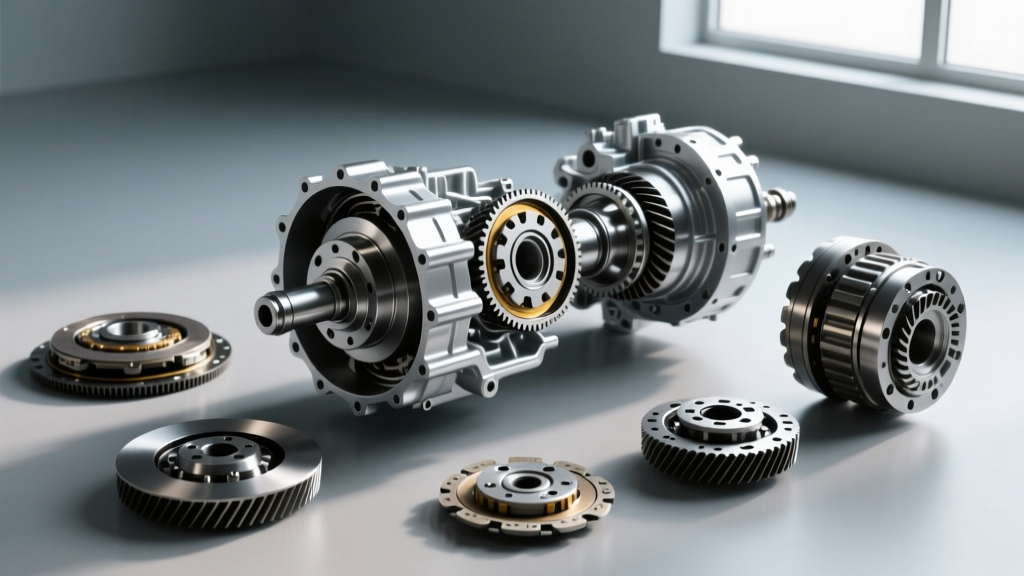
Upgrading to a performance torque converter is the most cost-effective way to improve 60-foot times in a planetary automatic. A stock 4L60E converter typically stalls around 1,800 RPM. For a cammed LS V8 making peak torque at 4,500 RPM, installing a Precision Industries Vigilante series converter with a 3,200-3,500 RPM stall speed will allow the engine to launch directly into its powerband. Expect to pay between $850 and $1,200 for a quality billet-cover converter.
However, higher stall speeds generate immense internal heat due to fluid shear. This mandates an upgraded cooling circuit. The factory radiator-integrated cooler is insufficient for track use. Installing a dedicated air-to-fluid cooler with a minimum 24,000 GVW (Gross Vehicle Weight) rating, plumbed in series with the factory cooler, will drop pan temperatures by 30°F to 50°F.
Fluid Pan Torque Specs and Filtration
During maintenance or upgrades, adhering to exact torque specifications prevents catastrophic leaks and warped valve bodies. For the GM 6L80E, the aluminum transmission pan bolts must be torqued to exactly 18 lb-ft in a crisscross pattern. Over-torquing will strip the threads in the aluminum casing, while under-torquing leads to air ingestion by the pickup tube, causing immediate clutch pack burnout due to aerated fluid.
Furthermore, abandon the idea of using cheap, generic dexron blends in high-performance builds. Synthetic fluids like Amsoil Signature Series Multi-Vehicle ATF offer significantly higher shear stability, maintaining their viscosity index even when pan temperatures spike to 240°F during a drag strip staging session.
Final Thoughts on Drivetrain Selection
The answer to what is automatic transmission in cars ultimately depends on your application. If you are building a 1,000-horsepower drag car, a heavily fortified planetary automatic with a trans-brake and high-stall converter is your only option. If you are chasing lap times at Road Atlanta, a wet DCT with upgraded mechatronic cooling will provide unmatched shift consistency. By understanding the mechanical realities, torque limits, and required aftermarket support for each transmission type, you can allocate your build budget effectively and ensure your drivetrain survives the punishment you put it through.