The Hidden Cost of a Failing High-Stall Converter
When pushing 600+ horsepower in a street/strip or dedicated drag application, your drivetrain is only as strong as its weakest hydrodynamic link. For many racers and tuners, the torque converter is an afterthought until it catastrophically fails or begins quietly robbing elapsed times (ET). Understanding how to tell if torque converter is bad in a performance environment requires looking far beyond the standard passenger-car symptoms of shudder or slipping. In high-stall, high-torque applications, failure modes manifest as inconsistent 60-foot times, unexplained top-end MPH drops, and severe transmission fluid aeration.
As we navigate the 2026 racing season, the proliferation of heavily modified 4L80E, TH400, and modern ZF 8HP platforms in sportsman and radial classes means that converter diagnostics must be data-driven. This performance and upgrade guide will walk you through the exact telemetry, physical inspections, and track-side behaviors that indicate your high-stall converter is on its way out, and how to select the right billet replacement.
How to Tell if Torque Converter is Bad on the Dyno and Track
1. Inconsistent 60-Foot Times and Stator Slippage
In a performance application, the stator assembly and its internal one-way roller or sprag clutch are critical for torque multiplication off the transbrake or footbrake. If you are seeing your 60-foot times fluctuate by 0.05 to 0.10 seconds between identical passes—despite consistent track conditions and identical engine telemetry—you likely have a slipping stator clutch.
When the stator clutch fails to lock, the stator freewheels in both directions, effectively turning your high-stall performance converter into a fluid coupling with zero torque multiplication. You can verify this by analyzing your data logger's RPM trace. A healthy 4,000-RPM stall converter will 'flash' to its peak stall speed within the first 0.2 seconds of a transbrake release. If your data shows the engine laboring and slowly climbing to 3,400 RPM before the car begins to hook, the stator sprag is worn or the stator spline has stripped. This is a definitive answer to how to tell if torque converter is bad in a drag setup.
2. Top-End MPH Drop and Converter Ballooning
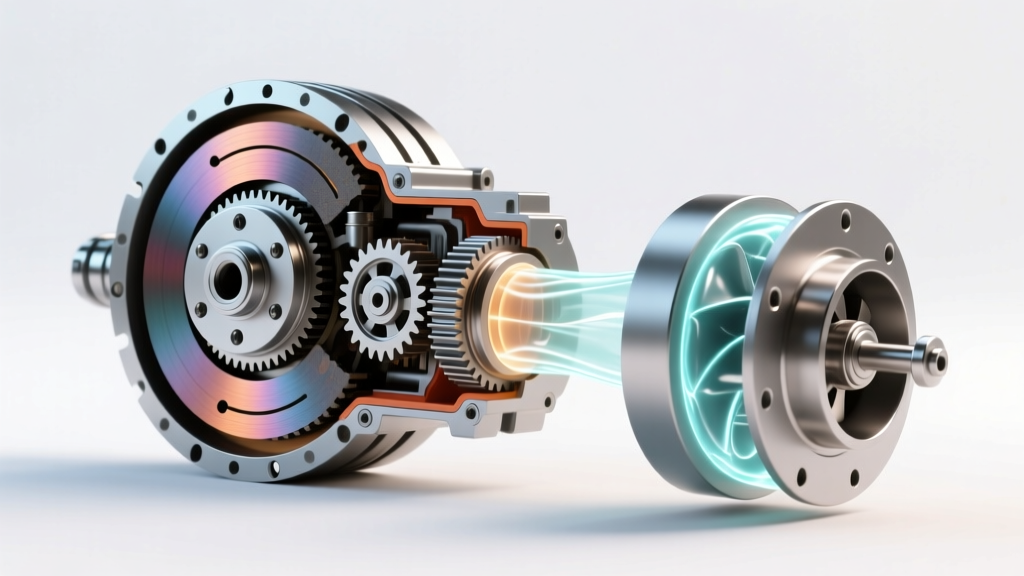
Converter ballooning occurs when the immense centrifugal force of high RPM and high line pressure causes the stamped steel or poorly welded aluminum cover of the converter to physically expand outward. In a TH400 or Powerglide running 3,000+ RPM of stall and 6,500+ RPM through the traps, a stock-style cover can expand by 0.050 to 0.150 inches.
This expansion does two things: it alters the internal clearances between the turbine and the cover (causing parasitic drag and top-end MPH loss), and it pushes the entire converter assembly forward against the transmission's front pump. If your trap speed drops by 2 to 4 MPH while your engine is making the same horsepower on the dyno, the converter is ballooning and wasting kinetic energy as heat and friction. Over time, this forward thrust will destroy the pump gears and crack the pump housing.
Street/Strip Diagnostics: TCC Failure Under Boost
For modern street/strip builds utilizing lockup converters—such as those based on the GM 6L80E or Tremec-equipped hybrid platforms—the Torque Converter Clutch (TCC) presents a unique set of performance failure modes. When applying 15+ PSI of boost or heavy nitrous, a stock organic TCC friction lining will instantly slip, generating massive amounts of heat and glazing the clutch material.
Symptoms of a failing performance TCC include:
- Post-Lockup RPM Flares: The engine RPM surges 200-400 RPM immediately after the TCC solenoid commands lockup in 5th or 6th gear under heavy throttle.
- Severe ATF Degradation: Synthetic fluids like Dexron VI or Trick Shift turning black and smelling burnt after a single weekend of street/strip driving, caused by microscopic carbon or Kevlar lining particles shedding into the fluid.
- Harmonic Shudder Under Load: Unlike a stock car that shudders at light throttle, a failing performance lockup converter will shudder violently when the tune commands a 50-70% TCC apply rate under high manifold pressure.
Performance Converter Specs: Failure Points vs. Upgrades
Knowing when to upgrade requires understanding the physical limits of your current hardware. Below is a comparison of standard versus performance-oriented torque converter architectures.
| Feature | Standard OEM / Low-End Aftermarket | Billet Performance (e.g., Circle D, PTC, Vigilante) |
|---|---|---|
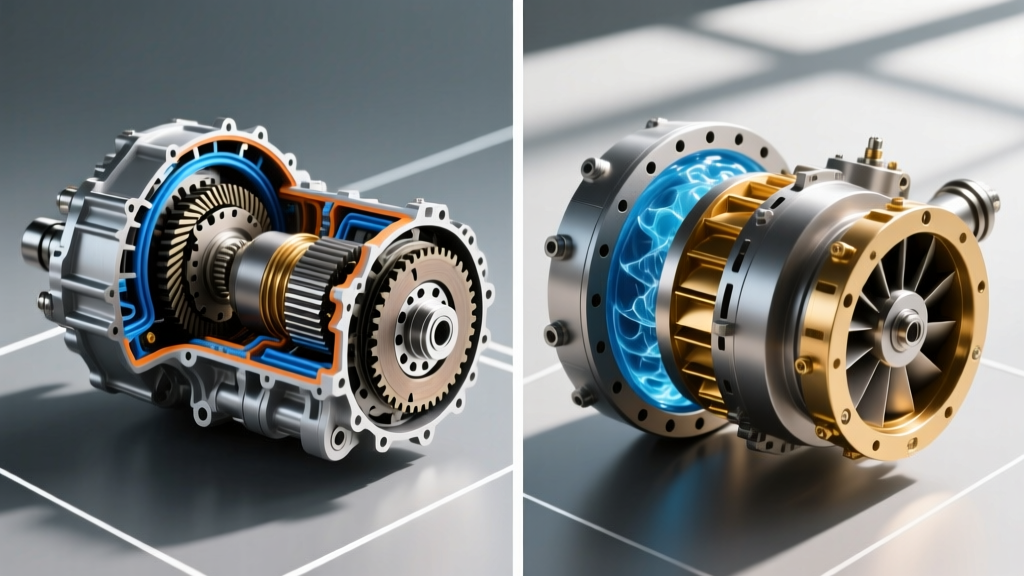
| Cover Material | Stamped Steel (Prone to ballooning >4500 RPM) | Billet Steel / CNC Machined (Safe to 8,000+ RPM) |
| Stator Clutch | Standard Roller Clutch (Fails >450 lb-ft) | Billet Sprag / Multi-Disc (Holds 1,200+ lb-ft) |
| Fin Attachment | Brazed (Can detach under high fluid shear) | Furnace Brazed / TIG Reinforced |
| TCC Lining | Organic Paper / Carbon (Slips under boost) | Kevlar / Sintered Bronze (Locks under 1,000+ HP) |
| Max HP Rating | 350 - 450 HP | 800 - 2,500+ HP |
Real-World Replacement Costs and Part Selection
If your diagnostics confirm internal failure, rebuilding a high-stall performance converter is rarely cost-effective for the end-user; the precision balancing and furnace brazing required dictate a full replacement. As of 2026, expect to invest between $750 and $1,400 for a reputable, custom-stalled billet converter from manufacturers like Circle D Specialties, PTC, or TCI.
When ordering a replacement, you must provide the manufacturer with your exact engine torque curve, camshaft duration, and vehicle weight. A common mistake is ordering a '3,500 RPM stall' converter based on internet forums rather than matching the converter's flash stall to your engine's peak torque RPM. For a naturally aspirated 408ci LS3 making peak torque at 5,200 RPM, a converter that flashes at 5,000-5,400 RPM will yield vastly superior 60-foot times compared to a generic 3,500 RPM unit. You can explore custom-stall configurations and billet options through specialized drivetrain retailers like Summit Racing or directly via the manufacturer's tech lines.
Expert Verdict: Installation Checks and End-Play
Before you blame the converter for a vibration or noise, ensure your installation tolerances are correct. A frequent issue in performance builds is improper converter end-play. When mating a new billet converter to a TH400 or 4L80E, you must measure the distance from the transmission bellhousing mounting pad to the converter pilot pad.
Using a straight edge and dial calipers, verify that you have between 0.030 and 0.060 inches of clearance (end-play) before bolting the transmission to the engine block. If the converter is forced forward by the flexplate because the clearance is zero or negative, you will instantly bind the front pump, resulting in catastrophic pump failure and immediate converter lockup upon engine startup. Furthermore, always torque your flexplate-to-converter nuts to the manufacturer's exact specification (typically 35-45 ft-lbs for most GM applications) using a high-strength thread locker, and ensure your flexplate is precision-balanced to match the new converter's external balance weights if applicable.
Ultimately, tracking your data logger's RPM traces, monitoring ATF temperatures post-lockup, and inspecting for physical ballooning are the most reliable methods to diagnose a failing performance torque converter. Do not let a $900 hydrodynamic component destroy your $8,000 transmission and ruin your season.