Your Ultimate Performance Clutch Discography
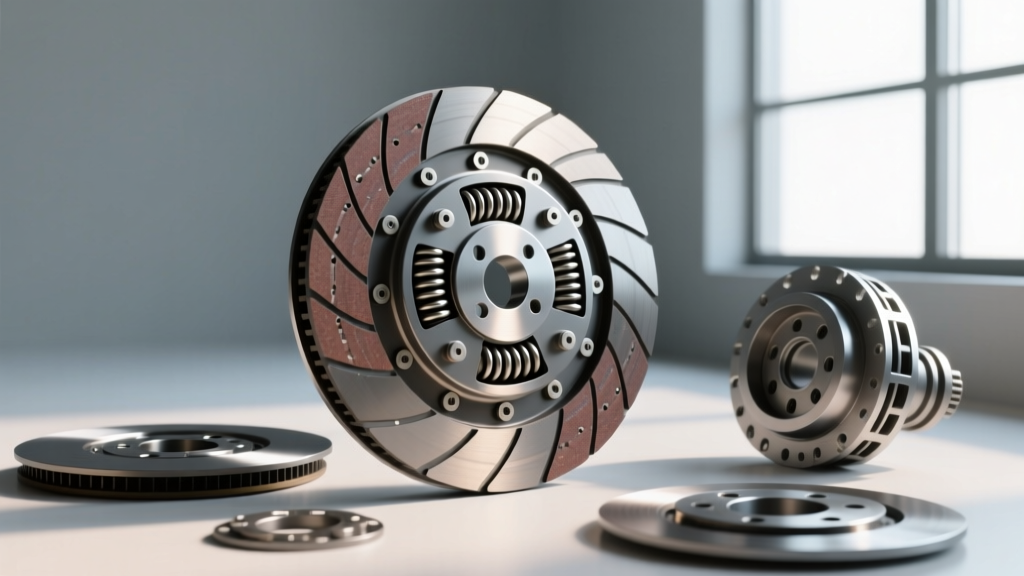
In the automotive community, the term 'discography' usually refers to a musician's catalog of albums. However, in the transmission and drivetrain world, your clutch discography is the comprehensive catalog of friction materials, disc configurations, and hardware components available to connect your engine to the gearbox. As of 2026, the proliferation of high-torque forced-induction platforms, modular V8 swaps, and even EV-to-manual conversions means that factory clutch kits are routinely overwhelmed. Upgrading requires more than just throwing money at a brand name; it demands a precise understanding of how every component in the kit interacts under extreme thermal and mechanical stress.
Whether you are building a 450-wheel-horsepower track car or a 1,200-horsepower roll-racing missile, this guide breaks down the essential components of a performance clutch kit, providing the exact specifications, failure modes, and selection criteria you need to make an informed upgrade.
The Friction Surface: Cataloging the Clutch Disc
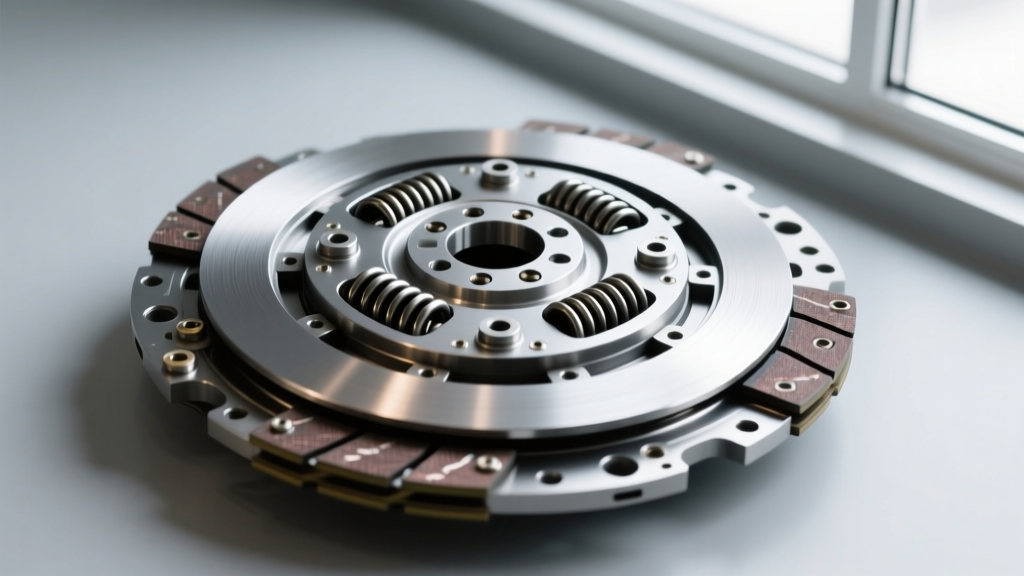
The clutch disc is the consumable heart of the kit. Its friction material dictates not only how much torque the system can hold but also how the vehicle behaves during street driving, low-speed maneuvering, and track abuse. When browsing your options, you will encounter several distinct material families.
Organic and Kevlar (Aramid) Compounds
Full-face organic discs are the standard for daily driving, offering a coefficient of friction (Mu) between 0.30 and 0.35. They provide smooth, progressive engagement and are gentle on flywheels. For enthusiasts stepping up to mild performance builds, Kevlar (Aramid) composites offer a Mu of roughly 0.35 to 0.40. Kevlar provides excellent thermal resistance and longevity, but it requires a strict 500-mile break-in period. Failure to bed Kevlar properly results in severe glazing, leading to irreversible slippage under high boost.
Cerametallic and Sintered Iron
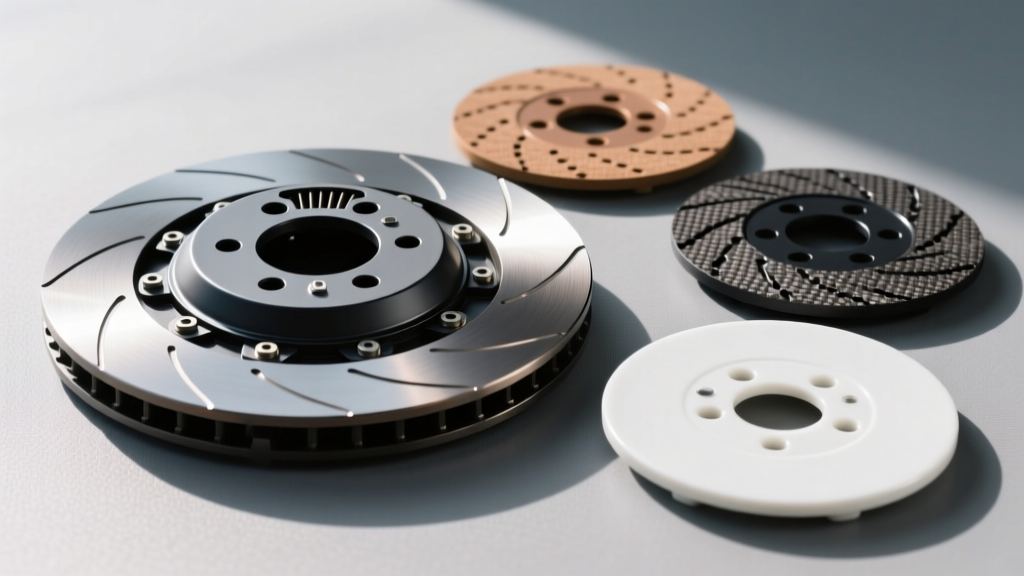
When torque outputs exceed the limits of full-face organic materials, manufacturers turn to segmented 'puck' designs using cerametallic or sintered iron. Cerametallic materials (Mu 0.45–0.50) offer aggressive bite and immense heat tolerance, making them ideal for drag racing and high-boost roll racing. However, they chatter heavily at low speeds and will aggressively chew through standard cast-iron flywheels if not paired with hardened chromoly or billet steel mating surfaces. Sintered iron (Mu 0.55+) is reserved almost exclusively for dedicated race applications where on/off switch-like engagement is acceptable.
| Friction Material | Coefficient (Mu) | Torque Capacity | Engagement Feel | Best Application |
|---|---|---|---|---|
| Full-Face Organic | 0.30 - 0.35 | Stock to +30% | Smooth, Progressive | Daily Driving, Light Track |
| Kevlar / Aramid | 0.35 - 0.40 | +30% to +50% | Progressive, Firm | Street/Track, Time Attack |
| Cerametallic (Puck) | 0.45 - 0.50 | +60% to +100% | Aggressive, Chatter | Drag, Roll Racing, Drift |
| Sintered Iron | 0.55+ | +100% to +200% | On/Off Switch | Purpose-Built Race Cars |
The Muscle: Pressure Plate Architectures
The pressure plate provides the clamping force necessary to sandwich the disc against the flywheel. In the performance aftermarket, you will primarily encounter two designs: the Diaphragm style and the multi-finger (Borg & Beck) style.
Modern performance kits, such as those from Advanced Clutch Technology (ACT), heavily favor the Diaphragm pressure plate. It utilizes a single, large conical spring that provides high clamp loads (often 25% to 50% over stock) while actually reducing pedal effort at the top of the pedal travel. This is crucial for endurance racing or heavy stop-and-go traffic.
Conversely, the Borg & Beck design uses multiple coil springs and levers. It requires significantly higher pedal effort, especially as the clutch wears and the levers pivot, but it offers unparalleled clamping stability under extreme RPM where diaphragm springs might experience centrifugal distortion. You will typically see Borg & Beck setups in top-fuel dragsters and high-RPM naturally aspirated race engines.
The Foundation: Flywheel Dynamics and Mating
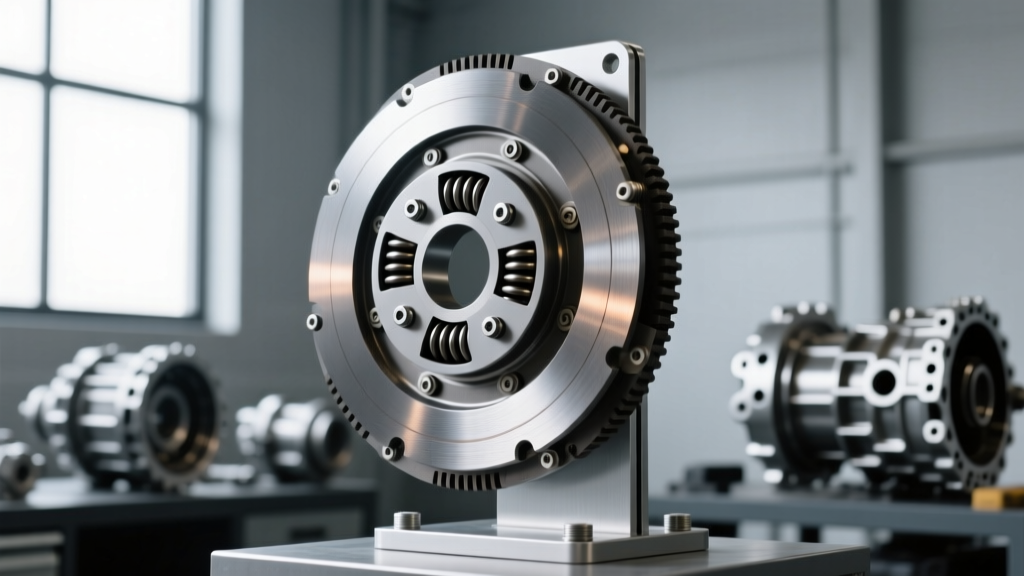
A clutch kit is only as good as the surface it mates to. Upgrading to a high-clamp-load pressure plate on a worn, resurfaced factory flywheel is a recipe for immediate failure. Performance upgrades generally mandate a switch to a single-mass flywheel (SMF) constructed from forged 4140 chromoly steel or billet aluminum.
Dual Mass Flywheel (DMF) Deletes: Many modern manual vehicles (like the BMW S55 or Porsche 991 platforms) use DMFs to absorb torsional vibrations. Deleting a DMF for a lightweight chromoly SMF reduces rotational mass, vastly improving throttle response. However, without the DMF's internal dampening, NVH (Noise, Vibration, and Harshness) increases dramatically. To combat this in 2026, high-end kits utilize 'dual-sprung' hubs with polyurethane bump stops and multi-stage torsional springs inside the clutch disc itself to isolate gear rattle and protect the transmission input shaft.
Unsung Heroes: Release and Pilot Bearings
Overlooking the release bearing (throwout bearing) and pilot bearing is the most common cause of catastrophic drivetrain failure in upgraded vehicles.
- Release Bearings: High-clamp-load pressure plates generate immense heat at the bearing face. Upgrading to a heavy-duty, sealed angular-contact release bearing is mandatory. For hydraulic systems, aftermarket hydraulic release bearings (HRBs) must be matched precisely to the master cylinder bore size to prevent over-travel and pressure plate damage.
- Pilot Bearings: The pilot bearing supports the tip of the transmission input shaft. While cheap kits use standard sealed needle bearings, these can seize under high-heat, low-lubrication conditions, instantly snapping the input shaft or destroying the bellhousing. For high-horsepower builds, a sintered bronze oil-impregnated bushing is vastly superior, as it cannot seize catastrophically even if it begins to wear.
Real-World Upgrade Scenarios and Part Selection
Scenario A: 550 WHP Street/Track C5 Corvette (Tremec T56)
For a C5 Corvette pushing 550 wheel horsepower via a supercharger, drivability remains a priority. The ideal clutch discography entry here is a twin-disc setup with full-face organic/ceramic hybrid materials. A kit like the McLeod RXT twin-disc provides massive torque capacity (up to 800 lb-ft) while maintaining a surprisingly streetable pedal feel thanks to its diaphragm pressure plate and sprung hubs. Expect to pay between $1,400 and $1,800 for the complete kit, including the lightweight steel flywheel.
Scenario B: 850 WHP Roll-Racing Mustang (Tremec Magnum XL)
In a dedicated roll-racing Mustang making 850 WHP on E85, low-speed manners are irrelevant. The focus is pure clamping force and thermal survival. A single-disc, 4-puck cerametallic setup paired with a billet aluminum flywheel and a high-ratio Borg & Beck pressure plate is the standard. The aggressive bite of the cerametallic pucks ensures zero slip during 25-psi boost spikes, though it will chatter violently when pulling away from a stoplight.
Critical Installation Torque Specifications
Even the most expensive clutch kit will fail if installed improperly. Always refer to factory service manuals, but here are critical baseline torque specs for common performance platforms:
- GM LS/LT Flywheel to Crank (M11 Bolts): 74 lb-ft + 74 degrees of rotation. (Do not reuse TTY bolts).
- Pressure Plate to Flywheel (M8x1.25): 25 to 30 lb-ft, tightened in a crisscross star pattern to prevent pressure plate warping.
- Bellhousing to Engine Block: 35 to 50 lb-ft. (Crucial: Misalignment here causes input shaft bind and premature pilot bearing failure. Always check with a dial indicator; aim for less than 0.005 inches of runout).
- Clutch Pedal Stop (If equipped): Adjust to prevent over-traveling the diaphragm springs, which can cause the fingers to invert and lock the clutch in the disengaged position.
Expert Insight: When installing a high-clamp-load performance clutch, never use an impact wrench to seat the pressure plate bolts. The shock loads can micro-fracture the casting or distort the machined mating surface, leading to uneven disc wear and severe driveline shudder. Always use a calibrated torque wrench.
By understanding the complete clutch discography of your vehicle's drivetrain, you can select components that not only handle your current horsepower but also provide the exact driving dynamics required for your specific motorsport discipline. For further technical documentation on transmission tolerances and bellhousing alignments, consult the engineering resources available at Tremec.