The Hellcat Torque Problem: Why Stock Discs Fail
The 6.2L Supercharged HEMI V8 in the Dodge Challenger SRT Hellcat produces a factory-rated 707 lb-ft of torque at the crank. While the Tremec TR-6060 manual transmission is robust enough to handle this twist, the factory single-disc organic clutch is not. On a bone-stock Hellcat, the OEM clutch disc typically begins to slip during 3rd-to-4th gear pulls once the engine reaches peak boost, often failing completely by 15,000 miles if the car is driven aggressively. When it is time to upgrade, selecting the correct clutch kit and understanding the friction materials involved is the difference between a streetable daily driver and an undrivable nightmare.
Setting Up Your "Clutch Kitchen": Workspace & Tool Prep
In high-level transmission repair slang, your "clutch kitchen" refers to the sterile, highly organized prep bench where you unbox, inspect, clean, and stage your drivetrain components before mating them to the engine block. A sloppy prep area leads to contaminated friction surfaces and premature clutch failure.
Before you even touch the bellhousing, your clutch kitchen must be equipped with the following:
- Acetone and Lint-Free Shop Towels: Brake cleaner leaves a residue that can glaze certain organic and Kevlar pads. Acetone is mandatory for wiping down the flywheel friction surface and the pressure plate.
- Clutch Alignment Tool: The TR-6060 input shaft utilizes a 26-spline count. Ensure your alignment tool is specifically sized for a 1-1/8" x 26-spline shaft (common in GM and Chrysler T56/TR-6060 applications).
- Dial Indicator and Magnetic Base: Essential for checking flywheel runout. Anything exceeding 0.004 inches requires resurfacing or replacement.
- Pilot Bearing Puller: Never hammer a new pilot bearing into the crankshaft. Use a proper press tool to seat the sealed ball bearing without damaging the internal races.
Clutch Disc Types and Friction Materials
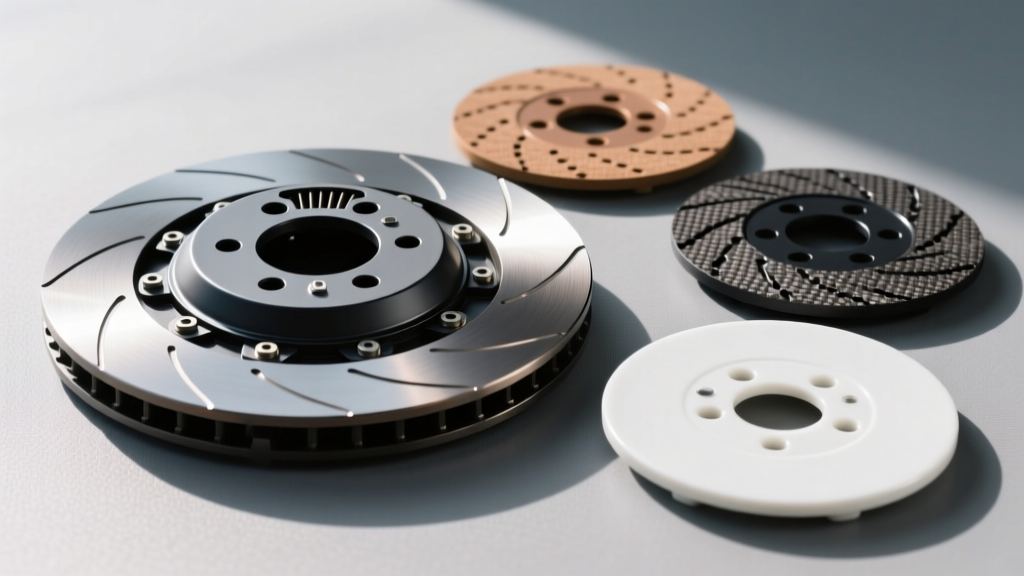
When shopping for an aftermarket clutch kit for the Hellcat, you will encounter several friction materials. The right choice depends entirely on your power goals, driving environment, and tolerance for NVH (Noise, Vibration, and Harshness).
Organic (Full-Faced)
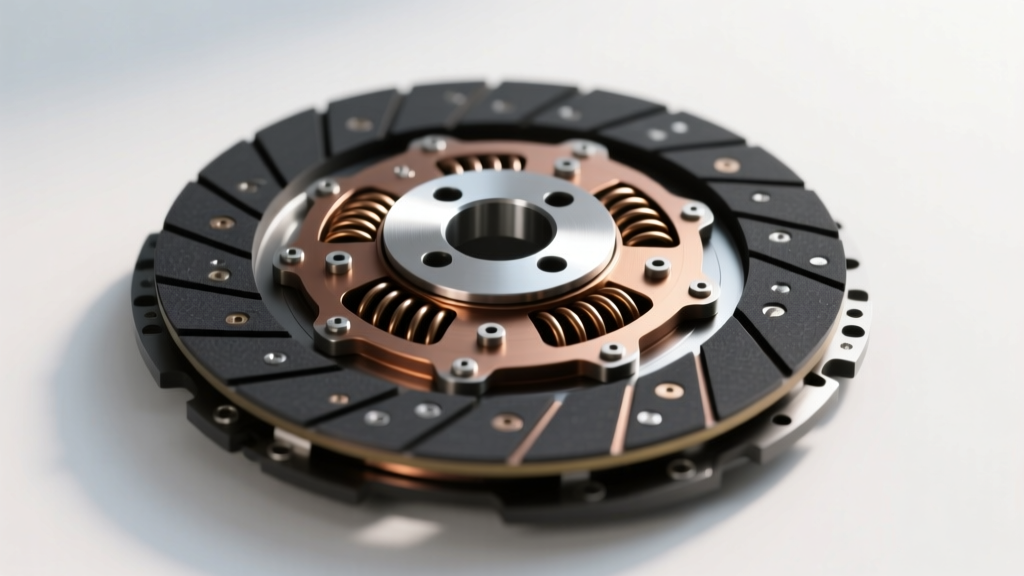
Organic discs are made from a composite of fiberglass, Kevlar strands, and resin binders. They offer the smoothest engagement and the best drivability, making them ideal for stop-and-go traffic. However, traditional organic materials max out around 550-600 lb-ft of torque. For a Hellcat, a standard organic disc is a guaranteed failure point unless you are intentionally detuning the vehicle.
Kevlar and Carbon Composites
Kevlar-based discs offer a higher friction coefficient and exceptional heat resistance compared to standard organic pads. They are highly durable but require a strict, prolonged break-in period (often 500+ miles) to properly bed the material to the flywheel. If subjected to aggressive slip during the break-in phase, Kevlar discs will glaze and lose their bite permanently.
Ceramic (Puck Style)
Ceramic pucks (often 3-puck or 4-puck configurations) provide the most aggressive bite and the highest torque capacity. Because the surface area is reduced, the clamping force is concentrated, allowing ceramic discs to hold 900+ lb-ft of torque. The trade-off is harsh engagement, significant chatter in reverse or 1st gear, and accelerated flywheel wear. Ceramic is strictly for track use or dedicated drag applications.
Hybrid / Multi-Disc Solutions
To solve the Hellcat's torque-to-drivability paradox, manufacturers like McLeod Racing and Centerforce utilize twin-disc clutch kits. These kits pair a ceramic disc for raw holding power with an organic or Kevlar disc for smooth take-offs, effectively multiplying the torque capacity without requiring a brutal pedal feel or sacrificing street manners.
Material Comparison Chart: Torque Capacity vs. Drivability
| Friction Material | Friction Coefficient (μ) | Max Torque Capacity | Drivability / NVH | Best Application |
|---|---|---|---|---|
| Full-Faced Organic | 0.28 - 0.32 | ~550 lb-ft | OEM-like, Very Smooth | Stock replacement, light bolt-ons |
| Kevlar / Carbon | 0.35 - 0.40 | ~750 lb-ft | Mild chatter, requires break-in | Street/Strip, pulley/tune upgrades |
| Ceramic (Puck) | 0.45 - 0.55 | 900+ lb-ft | Aggressive, heavy chatter | Dedicated track, drag, roll racing |
| Twin-Disc Hybrid | Varies (0.35 - 0.50) | 1,000 - 1,200 lb-ft | Good, slight gear rattle | High-HP Street/Track Hellcats |
Recommended Hellcat Clutch Kits for 2026
Based on current market data and dyno-proven reliability, here are the top clutch kits for the TR-6060 equipped Hellcat:
1. McLeod RXT Twin Disc (Part # 752120)
Featuring two ceramic metallic discs, the RXT is rated for up to 1,000 lb-ft. It includes a billet steel flywheel and requires a specific break-in procedure. Expect to pay between $1,600 and $1,850.2. Centerforce DYAD Twin Disc (Part # 013560)
Utilizing an organic/Kevlar blend on a patented ball-bearing pressure plate, the DYAD holds roughly 850 lb-ft but drives almost like stock. Priced around $1,750, it is the ultimate choice for a daily-driven, supercharged street car.
Model-Specific Install Specs: Flywheel & Pressure Plate Torque
When installing your new clutch kit into the 6.2L HEMI, adhering to Tremec and Chrysler factory service manual (FSM) torque specifications is non-negotiable. Improper torque leads to warped pressure plates, uneven disc wear, and catastrophic driveline vibrations.
Flywheel to Crankshaft
The Hellcat uses a single-mass aftermarket billet flywheel (if replacing the OEM dual-mass). The crankshaft flange utilizes M10 x 1.0 bolts. FSM Spec: Torque all bolts in a star pattern to 54 lb-ft (73 Nm). Once all bolts are seated at 54 lb-ft, perform a final 90-degree turn (yield torque) on each bolt in the star pattern. Always apply a medium-strength threadlocker (e.g., Loctite 243) to the flywheel bolt threads.
Pressure Plate to Flywheel
The M8 x 1.25 pressure plate bolts must be tightened gradually in a crisscross pattern to ensure the diaphragm spring is compressed evenly. Spec: Torque to 250 in-lbs (approx. 21 lb-ft). Do not use an impact gun; use a calibrated inch-pound torque wrench.
Bellhousing to Engine Block
The TR-6060 bellhousing bolts are M10 and M12. Torque the M10 bolts to 35 lb-ft and the M12 bolts to 55 lb-ft. Verify that the bellhousing dowel pins are clean and fully seated to prevent input shaft misalignment, which will destroy the front input bearing of the transmission.
Break-In Procedures: Saving Your Investment
The most critical phase of any clutch kit installation is the bedding process. For Kevlar and Hybrid organic discs, you must perform 500 miles of varied stop-and-go driving. Avoid wide-open-throttle (WOT) pulls, do not ride the clutch pedal in traffic, and try to keep RPMs below 3,500 during the first 300 miles. This allows the resin binders in the friction material to slowly transfer an even layer onto the flywheel's micro-pores. For full ceramic puck discs, the bedding process is much shorter but requires higher heat. Perform 10 to 15 aggressive accelerations from 30 mph to 60 mph in 3rd gear, allowing the vehicle to coast down between pulls to introduce cooling airflow. You will smell the friction material burning—this is normal and indicates the resins are curing and the disc is mating to the steel flywheel. Treat your clutch kitchen prep and break-in procedures with respect, and your TR-6060 will handle the Hellcat's supercharged fury for years to come.