Do All Cars Have a Clutch? The Performance Reality
When newcomers to the automotive world ask, do all cars have a clutch, the answer is more nuanced than a simple yes or no. While traditional manual transmissions rely on a friction disc and pressure plate, modern Dual-Clutch Transmissions (DCTs), Continuously Variable Transmissions (CVTs), and even 2026 EV powertrains utilize complex decoupling mechanisms, torque converters, or electronic disconnects to manage power delivery. However, in the high-performance, track, and restomod space, the traditional manual clutch remains the undisputed king of driver engagement and direct power transfer.
When you transition from a factory daily driver to a high-horsepower performance build, you inevitably encounter NVH (Noise, Vibration, and Harshness). The most notorious of these is clutch chatter—a violent, low-frequency shudder that occurs during initial engagement. If left undiagnosed, severe chatter can shatter bellhousings, destroy pilot bearings, and shear flywheel bolts. This guide dives deep into the physics of performance clutch chatter, diagnostic matrices, and the exact hardware specifications required to tame high-torque drivetrains.
The Physics of Performance Clutch Chatter
Chatter is fundamentally a stick-slip friction phenomenon combined with harmonic resonance. In a stock application, a heavy Dual Mass Flywheel (DMF) and an organic clutch disc with marcel springs (wave springs) absorb the kinetic energy of combustion pulses. When you upgrade to a performance setup, you alter three critical variables:
1. Moment of Inertia (MOI) Reduction
Swapping a 28-pound cast-iron factory flywheel for a 12-pound billet aluminum or chromoly unit drastically reduces the MOI. While this allows the engine to rev and drop RPMs lightning-fast (crucial for heel-toe downshifts and rapid gear changes), it removes the rotational mass that normally smooths out low-RPM engine pulses. Without this kinetic buffer, the friction material bites aggressively, causing the driveline to oscillate.
2. Friction Material Aggressiveness
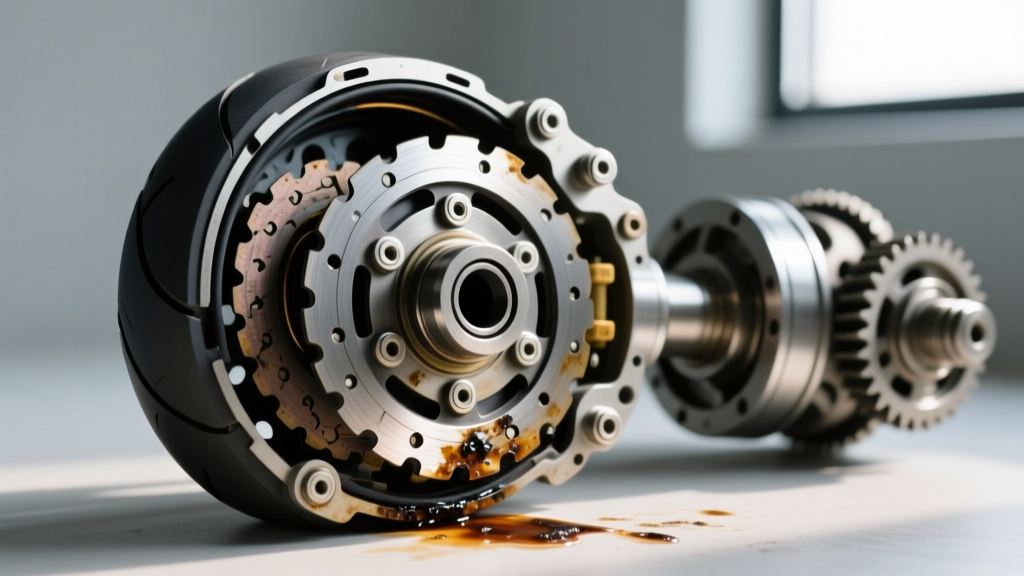
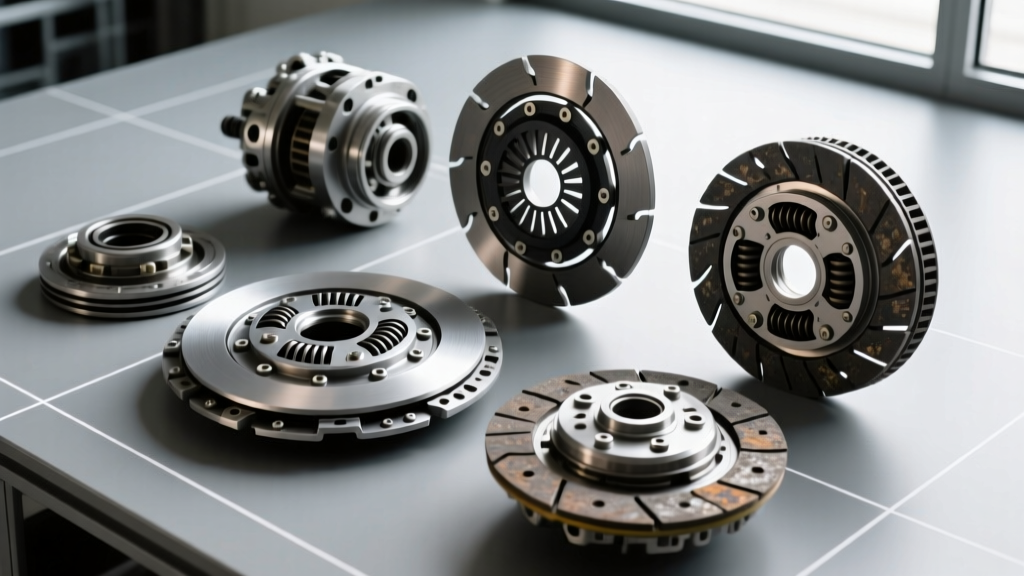
Performance clutches utilize sintered iron, ceramic pucks, or Kevlar. Sintered iron offers exceptional heat capacity and a high coefficient of friction, but it lacks the progressive engagement of organic materials. When the ceramic or sintered material grabs the steel flywheel face, it does so abruptly, transferring shock directly into the transmission input shaft.
3. Loss of Torsion Dampening
Many high-torque race clutches (like rigid-hub sintered iron discs) eliminate torsion dampening springs entirely to handle extreme clamping loads without spring bind. This creates a solid mechanical link between the crankshaft and the transmission, turning the entire chassis into a tuning fork for driveline harmonics.
Diagnostic Matrix: Clutch Chatter vs. Driveline Vibration
Before pulling the transmission, you must isolate the vibration. Misdiagnosing a bad U-joint as a warped flywheel is an expensive mistake. Use the following matrix to pinpoint the failure point.
| Symptom Profile | Clutch Chatter (Engagement) | Driveline Vibration (Cruising) | Harmonic Flywheel Resonance |
|---|---|---|---|
| When it Occurs | 1,200 - 1,800 RPM during pedal release | 2,500 - 3,500 RPM under steady load | Idle to 2,000 RPM (Neutral or in gear) |
| Sensory Feedback | Violent longitudinal shudder, feels like rear axle hop | High-frequency buzzing in the floorpan and shifter | Deep booming sound, rattling heat shields |
| Load Dependency | Worse with A/C on or on an incline | Changes when lifting off the throttle (coast vs. drive) | Present regardless of clutch pedal position |
| Primary Culprit | Aggressive friction material, lack of marcel springs | Improper U-joint operating angles, unbalanced shaft | Lightweight flywheel gear rattle, loose bellhousing |
Step-by-Step Diagnosis for the Track and Street
If your diagnostic points to the clutch assembly, you must verify the mechanical tolerances of the mating surfaces. According to Summit Racing's bellhousing runout guide, even a brand-new performance clutch will chatter violently if the input shaft is not perfectly concentric with the crankshaft.
Step 1: Bellhousing Concentricity (Runout)
Mount a magnetic dial indicator to the crankshaft or flywheel face, with the needle resting on the inner bore of the bellhousing. Rotate the engine 360 degrees. The Total Indicator Runout (TIR) must not exceed 0.005 inches. If it exceeds this, the transmission input shaft will bind in the pilot bearing during engagement, causing severe chatter and premature spline wear. Fix this using offset dowel pins (available in 0.007", 0.014", and 0.021" offsets).
Step 2: Flywheel Face Runout
Place the dial indicator on the friction surface of the flywheel. Rotate the engine. TIR must be under 0.003 inches. A warped chromoly flywheel will cause the pressure plate fingers to pulse against the throwout bearing, creating a rhythmic chatter that mimics a bad friction disc.
Step 3: Driveline Angles and Pinion Snubbers
In high-torque leaf-spring cars (like classic Mustangs or Camaros), aggressive clutch engagement causes axle wrap. The pinion nose points upward, altering the driveshaft U-joint angles past the 3-degree maximum, inducing bind and violent shudder. Installing traction bars or a stiffer polyurethane transmission mount can mitigate this chassis-induced chatter.
Real-World Upgrade Scenarios & Hardware Specs
Let us examine two common performance platforms in 2026 and the exact hardware specifications required to eliminate chatter while maintaining track durability.
Scenario A: GM LS V8 with Tremec T56 Magnum Swap
The LS platform is notorious for gear rattle and chatter when equipped with lightweight flywheels. A common mistake is pairing a solid-hub ceramic puck clutch with a 12-pound Fidanza aluminum flywheel for street use.
- The Fix: Upgrade to a twin-disc clutch with organic or Kevlar friction material and sprung hubs (e.g., McLeod RXT). The twin-disc setup doubles the friction surface area, allowing for softer, more progressive pedal engagement while handling 800+ lb-ft of torque.
- Hardware Spec: When installing the flywheel, use ARP 2000 series 7/16" flywheel bolts. Per ARP Fasteners' official torque specifications, these must be torqued to 85 ft-lbs using ARP Ultra-Torque assembly lubricant. Standard 30W oil will result in inaccurate clamping loads and eventual bolt stretch.
- Pilot Bearing: Always use a sealed SKF or Timken roller pilot bearing, never a porous bronze bushing, which can gall and bind the T56 Magnum input shaft.
Scenario B: Subaru EJ257 6-Speed STI Track Build
Subaru’s symmetrical AWD system is incredibly sensitive to rotational mass imbalances. Dropping the heavy stock DMF for a lightweight chromoly unit often introduces a terrifying 4,000 RPM mid-range vibration.
- The Fix: Utilize an Exedy twin-plate clutch featuring a dampened center hub. Furthermore, you must address the rear differential and pitch stops. Upgrading to Group N transmission and engine mounts reduces the driveline slack that amplifies clutch engagement shock.
- Bleeding the System: Subaru hydraulic clutch systems are prone to aeration. A spongy pedal prevents full pressure plate engagement, causing the disc to slip and chatter. Use a Motive Products power bleeder set to 15 PSI with high-temp DOT 4 fluid (e.g., Castrol SRF) to ensure a rock-solid pedal.
Mitigation Strategies: Taming the Beast
If you have verified runout, confirmed your driveline angles, and are still experiencing chatter, the issue lies in the friction interface and chassis harmonics. As noted in McLeod Racing's technical documentation, the transition from a daily driver to a dedicated track car requires accepting a baseline level of NVH. However, you can mitigate this through smart component selection.
- Select Sprung-Hub Discs for Street/Track Hybrids: Never use a rigid (unsprung) hub disc on a street-driven vehicle, regardless of horsepower. The torsion springs in the clutch hub act as the first line of defense against combustion harmonics.
- Opt for Kevlar over Sintered Iron for Street Use: Kevlar offers a high torque capacity but engages much more smoothly than sintered iron, which requires significant heat to generate bite and will chatter aggressively when cold.
- Upgrade Differential Bushings: Worn or soft differential bushings allow the rear axle to shift longitudinally during clutch engagement. Pressing in solid aluminum or stiff polyurethane differential inserts locks the axle in place, preventing the wind-up and release cycle that manifests as chatter.
Conclusion
So, do all cars have a clutch? In the realm of high-performance manual transmissions, the clutch is not just a component; it is the critical gateway between engine torque and forward momentum. Diagnosing clutch chatter requires a methodical approach, moving past the friction disc to examine bellhousing runout, flywheel MOI, and chassis dynamics. By adhering to strict torque specifications, utilizing dial indicators for alignment, and selecting the appropriate friction materials for your specific use case, you can build a drivetrain that hooks violently off the line without shaking the fillings out of your teeth on the way to the staging lanes.