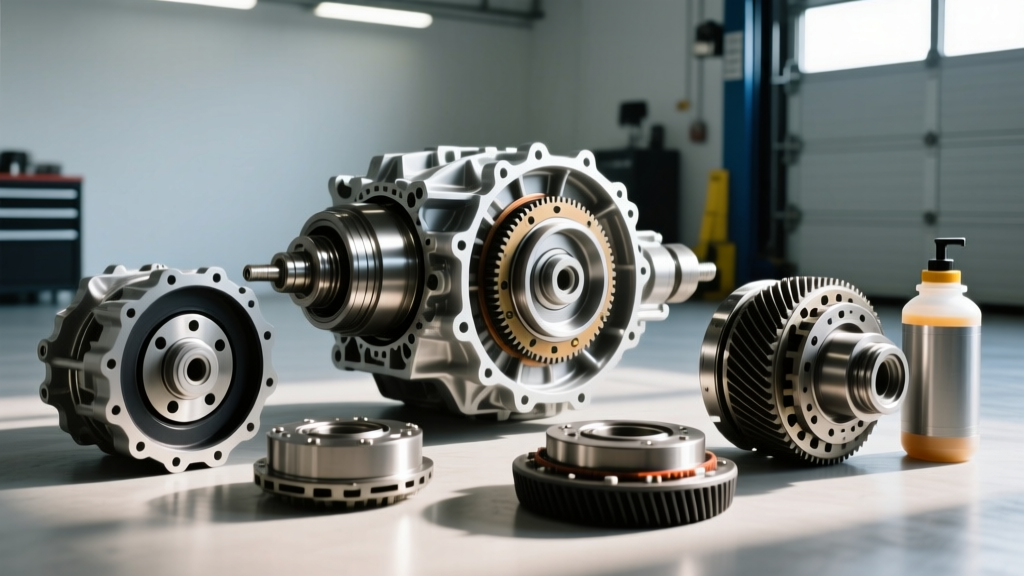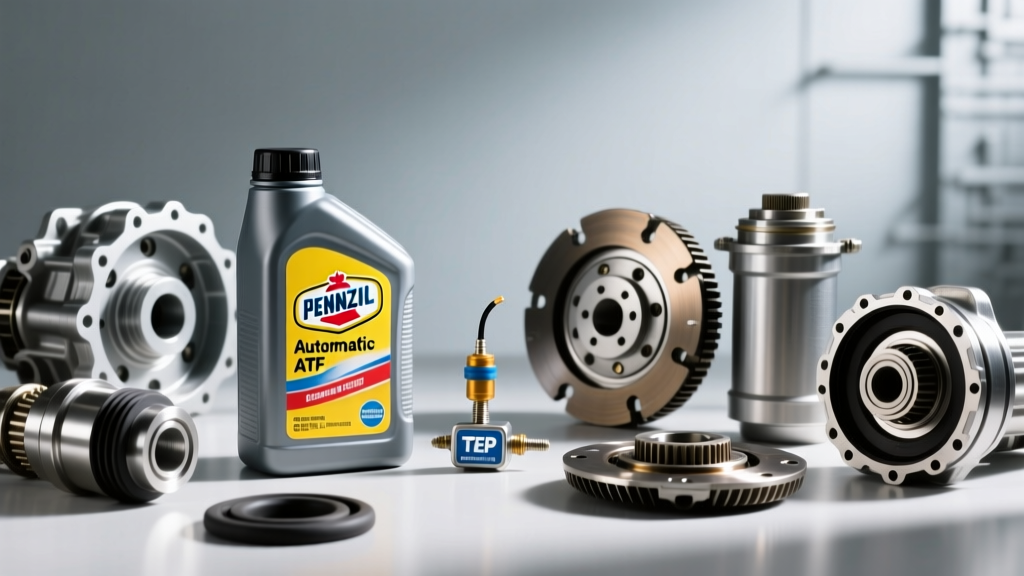
The Core Question: Can I Use Pennzoil Automatic Transmission Fluid?
When maintaining modern automatic transmissions, enthusiasts and daily drivers alike frequently ask: can I use Pennzoil automatic transmission fluid instead of expensive OEM-branded fluids? Pennzoil Platinum LV (Low Viscosity) ATF is a highly regarded, full-synthetic multi-vehicle fluid that boasts licensing for critical specifications like GM's DEXRON VI and Ford's MERCON LV. From a pure lubrication and friction-modifier standpoint, it is an exceptional product. However, modern transmissions are not just mechanical gearboxes; they are complex electro-hydraulic networks heavily reliant on the Transmission Fluid Pressure (TFP) sensor.
The TFP sensor monitors hydraulic line pressure and feeds real-time data to the Transmission Control Module (TCM). If the TCM detects a variance between the commanded pressure and the actual pressure read by the TFP sensor, it will trigger limp mode and throw diagnostic trouble codes (DTCs) like P0842 or P0843. In this 2026 buyer's and diagnostic guide, we explore how fluid chemistry interacts with TFP sensors, how to diagnose pressure sensor failures, and which replacement components offer the best value.
Fluid Chemistry vs. TFP Sensor Diaphragms
To understand whether Pennzoil ATF is safe for your transmission's sensors, we must look at sensor construction. Most modern TFP sensors use a piezoresistive diaphragm that flexes under hydraulic pressure, altering electrical resistance. This diaphragm is sealed by O-rings, typically made of Buna-N or Viton, and exposed directly to the transmission fluid.
The Detergent Effect on Varnish
Pennzoil Platinum LV is formulated with robust detergent and dispersant packages. If you are performing a high-mileage fluid drain-and-fill on a neglected transmission (e.g., a GM 6L80 or Ford 6R80 with over 120,000 miles), the superior cleaning agents in the Pennzoil ATF can dislodge microscopic varnish deposits. While cleaning is generally good, dislodged varnish can migrate to the TFP sensor's micro-orifices or the pressure switch manifold, causing the diaphragm to stick. This results in erratic voltage returns to the TCM, mimicking a catastrophic sensor failure.
Seal Swell and Viscosity Index
Multi-vehicle ATFs utilize specific seal-swell additives to ensure compatibility across various manufacturers. While Pennzoil's official ATF lineup is rigorously tested to prevent excessive O-ring expansion, aging sensors with already-compromised Viton seals may react unpredictably to a change in fluid chemistry. Furthermore, operating at 100°C (212°F), the kinematic viscosity of the fluid directly impacts the hydraulic response time. Pennzoil Platinum LV maintains a tight viscosity index, ensuring the TFP sensor reads accurate pressure spikes during rapid 3-4 or 4-5 upshifts.
Transmission Fluid Pressure Sensor Issues: A Diagnostic Guide
Before blaming the fluid, you must accurately diagnose the TFP sensor. Pressure sensor issues generally fall into two categories: electrical circuit faults and hydraulic-mechanical faults.
Electrical Diagnostics (Multimeter Testing)
If you are facing DTC P0842 (Circuit Low) or P0843 (Circuit High), the issue is often electrical. Using a digital multimeter (DMM), you can test the sensor's reference voltage and ground.
- Reference Voltage: With the key on, engine off (KOEO), back-probe the sensor's reference wire. You should read exactly 5.0V (+/- 0.1V) from the TCM.
- Ground Circuit: Check the ground pin for continuity to the chassis. Resistance should be less than 0.5 ohms.
- Signal Return: At idle (0 PSI line pressure in some states, or baseline line pressure), the signal return should typically sit between 0.5V and 0.8V. As line pressure increases under load, voltage should climb proportionally, usually maxing out around 4.5V at 250+ PSI.
Hydraulic-Mechanical Failures
If the electrical circuit tests perfectly, the sensor's internal diaphragm may be fatigued, or the hydraulic port feeding the sensor is clogged with clutch material or varnish. In GM's 6L80 and 6L90 transmissions, the TFP sensor is integrated into the Transmission Electro-Hydraulic Control Module (TEHCM), also known as the Pressure Switch Integrated Module (PSIM). In ZF 8HP applications (found in Chrysler, BMW, and Audi), the pressure sensors are embedded deep within the Mechatronic valve body unit.
Expert Insight: Never attempt to clean a piezoresistive TFP sensor diaphragm with compressed air or harsh solvents like brake cleaner. The diaphragm is calibrated at the factory to micron tolerances; aggressive cleaning will permanently ruin the sensor's calibration, leading to harsh shifts and immediate TCM failure codes.
Buyer's Comparison Chart: OEM vs. Aftermarket TFP Sensors
When a TFP sensor fails, your replacement options vary wildly in price and complexity. Below is our 2026 buyer's matrix comparing common OEM and aftermarket solutions, alongside recommended fluid pairings.
| Transmission | Component / Part Number | Type | Est. Price (2026) | Recommended Fluid Pairing |
|---|---|---|---|---|
| GM 6L80 / 6L90 | ACDelco 24236521 (TEHCM/PSIM) | OEM | $280 - $340 | ACDelco DEXRON VI or Pennzoil Platinum LV |
| GM 6L80 / 6L90 | Standard Motor Products TFS55 | Aftermarket | $160 - $190 | OEM DEXRON VI (Strict) |
| ZF 8HP (Gen 1/2) | ZF 0501216243 (Mechatronic Sensor) | OEM | $95 - $130 | ZF LifeguardFluid 8 or Pennzoil Platinum LV |
| Ford 6R80 | Motorcraft SW-7210 (Pressure Switch) | OEM | $45 - $65 | Motorcraft MERCON LV or Pennzoil Platinum LV |
Note: Pricing sourced from RockAuto Parts Catalog and dealer MSRP averages. Always verify part numbers with your specific VIN.
Installation Protocols: Protecting Your New Sensor
Whether you choose to run Pennzoil ATF or stick to OEM fluid, the installation of a new TFP sensor or TEHCM requires strict adherence to torque specifications and cleanliness protocols. A single grain of sand trapped between the sensor O-ring and the valve body casting will cause a microscopic hydraulic leak, dropping line pressure and triggering a P0841 code.
GM 6L80 TEHCM Replacement Specs
The TEHCM sits inside the transmission pan, bolted directly to the valve body. When replacing this unit:
- Fluid Capacity: A standard pan drop and filter change requires approximately 6.0 to 6.5 quarts of fluid. The 6L80 dry fill capacity is 11.2 liters (11.8 quarts).
- Torque Sequence: The TEHCM-to-valve body bolts must be torqued to exactly 11 Nm (97 lb-in). Over-torquing will crack the plastic housing of the pressure switch manifold, ruining the part instantly.
- TCM Programming: On 2009+ 6L80 applications, the TEHCM contains the TCM. You must use a J2534 pass-through device to flash the calibration data from the old module to the new one before installation, or the vehicle will not start due to the Vehicle Anti-Theft System (VATS) handshake failure.
ZF 8HP Mechatronic Sensor Replacement
Replacing a pressure sensor on a ZF 8HP requires separating the Mechatronic unit from the transmission case. According to ZF Aftermarket service guidelines:
- Torque Specs: Mechatronic-to-case bolts are torque-to-yield. The spec is 8 Nm (71 lb-in) plus a 90-degree turn. You must use new aluminum bolts; reusing old bolts risks snapping them inside the transmission casing.
- Fluid Choice: While Pennzoil Platinum LV is a capable DEXRON VI/MERCON LV fluid, ZF 8HP units are notoriously sensitive to friction modifiers. If you are replacing a Mechatronic pressure sensor due to harsh shifting, it is highly recommended to use the exact OEM ZF LifeguardFluid 8 to guarantee the correct shift adaptation parameters during the TCM reset.
Final Verdict: Fluid Selection and Sensor Longevity
So, can I use Pennzoil automatic transmission fluid? The definitive answer is yes, provided it matches your vehicle's specific OEM specification (such as DEXRON VI or MERCON LV) and your transmission is in good mechanical health. Pennzoil's synthetic base stocks offer excellent thermal stability, which actually helps protect the TFP sensor's internal wiring from heat degradation in the pan.
However, if your transmission is already exhibiting transmission fluid pressure sensor issues—such as erratic shifting, delayed engagements, or active P084X codes—changing the fluid will not fix a torn diaphragm or a shorted piezoresistive circuit. Use the diagnostic steps outlined above to verify the electrical integrity of the sensor. When it comes time for replacement, invest in OEM or premium-tier sensors, adhere strictly to the torque specifications, and pair your new hardware with a high-quality, spec-compliant ATF to ensure your transmission shifts flawlessly for the next 100,000 miles.