The Pre-Drain Diagnostic: Reading Your Baseline
When preparing a vehicle for high-horsehead duty cycles, track use, or heavy towing, upgrading your transmission fluid is one of the most cost-effective reliability modifications you can make. However, before you drop the pan and introduce high-friction synthetic fluids like Red Line D6 or Amsoil Signature Series, you must perform a meticulous baseline transmission fluid check procedure. This initial assessment tells you the current health of your clutch packs, torque converter, and valve body.
Start by checking the fluid condition before the drain. If your transmission features a dipstick, pull it while the fluid is at operating temperature. For sealed units like the ZF 8HP or GM 6L80, you will need to remove the fluid level check plug. Evaluate the fluid on three fronts:
- Color and Opacity: Fresh ATF is translucent and typically red, pink, or amber. If the fluid is dark brown or opaque black, it indicates severe thermal degradation and oxidation. A milky or strawberry-milkshake appearance signifies a catastrophic failure of the transmission oil cooler, mixing coolant with ATF.
- Odor Profile: Normal ATF has a slightly sweet or tart chemical scent. Fluid that smells acrid, like burnt toast or sulfur, points to glazed clutch friction materials and a slipping torque converter lock-up clutch (TCC).
- Particulate Suspension: Rub the fluid between your fingers. While a fine metallic paste on the pan magnet is normal for planetary gear wear, visible brass-colored flakes indicate bushing failure, and chunky metallic debris points to catastrophic bearing or hard-part failure. In these cases, a simple drain and fill will not save the unit; a full rebuild is required.
How Do You Drain Automatic Transmission Fluid? (The Enthusiast Approach)
When enthusiasts and professional builders ask, how do you drain automatic transmission fluid for a performance application, the consensus is clear: avoid pressurized machine flushes at all costs. Machine flushers can dislodge large debris from the pan and force it into the delicate solenoid screens and valve body galleries, causing immediate shift solenoids to stick or fail. Furthermore, many modern performance fluids contain specific friction modifiers that machine flushers can contaminate.
Instead, the correct transmission fluid check procedure and upgrade path relies on a multi-stage 'drain-and-fill' method combined with a physical pan drop. Here is the exact procedure for platforms like the GM 6L80, Ford 10R80, and ZF 8HP:
Step-by-Step Drain Procedure
- Warm the Fluid: Bring the transmission up to at least 100°F (38°C). Warm fluid flows faster and keeps particulates suspended, ensuring more contaminants are evacuated.
- Drop the Pan: Loosen the pan bolts in a crisscross pattern, leaving the front bolts snug to allow the pan to hinge and drain into a catch basin. Note that ZF 8HP units utilize a plastic pan with an integrated filter and aluminum torque-to-yield (TTY) bolts. These aluminum bolts must be discarded and replaced with aftermarket steel bolts during reassembly.
- Clean and Inspect: Wipe the pan interior with a lint-free shop towel. Clean the factory magnets. If you are upgrading, now is the time to install a billet aluminum deep pan with an external magnetic drain plug (typically M12x1.75 or M14x1.5 depending on the application).
- Reinstall and Torque: Reinstall the pan using a new gasket or RTV (where specified). Torque the pan bolts in a spiral pattern from the center outward. For the GM 6L80/6L90 and Ford 10R80, the M6 pan bolts require exactly 10 Nm (89 lb-in). Over-torquing will warp the thin stamped steel pans or strip the aluminum case threads, leading to persistent leaks and pressure loss.
The Post-Fill Check Procedure: Hitting the Exact TFT Target
The most critical and frequently botched step in the transmission fluid check procedure is the post-fill level verification. Modern automatic transmissions do not use a simple 'full' line on a dipstick. They rely on a thermal expansion principle, meaning the fluid level must be checked at a specific Transmission Fluid Temperature (TFT) to account for fluid density changes.
To execute this properly, you must connect a bi-directional OBD2 scan tool (such as an Autel MaxiSys or Snap-on Zeus) to monitor the TFT PID (Parameter Identification Data) in real-time. Guessing the temperature by feeling the pan will result in an under-filled or over-filled transmission, both of which are fatal to performance builds.
Expert Insight: On platforms equipped with a thermal bypass valve, such as the Ford 10R80 and GM 8L90, the fluid does not flow through the main cooler until the TFT reaches a specific threshold (often around 185°F/85°C). If you attempt the check procedure before the bypass valve opens, the fluid level reading will be drastically inaccurate. Always verify cooler flow before finalizing the level.
Cycling the Valve Body and Torque Converter
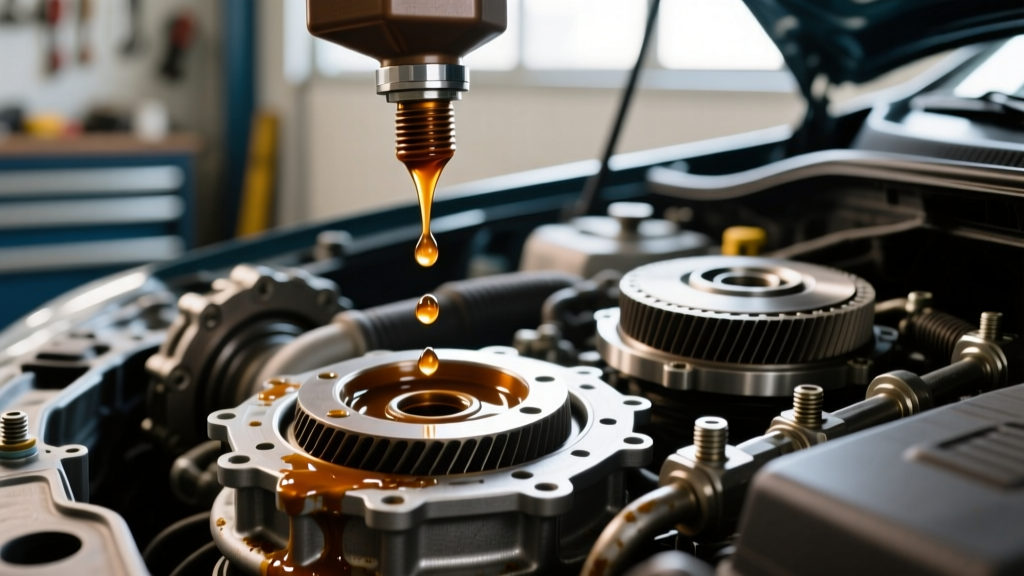
After adding the initial measured volume of new performance fluid, start the engine. With your foot firmly on the brake, cycle the gear selector through P-R-N-D-S, pausing for three seconds in each gear. This actuates the manual valve inside the valve body, filling the respective clutch apply circuits and the torque converter with fluid. Leave the vehicle in Park or Neutral (as specified by the OEM service manual) and let the fluid reach the exact target TFT window. Once the temperature is in the green zone, remove the level check plug. If a steady stream trickles out and slows to a drip, the level is perfect. Install the plug and torque to spec.
Platform-Specific Capacities, Torque Specs, and TFT Targets
Below is a reference table for three of the most popular performance and heavy-duty automatic transmissions on the road today. Keep this data handy in your garage when performing the transmission fluid check procedure.
| Transmission Model | Total Capacity | Drain & Refill Volume | Pan Bolt Torque | TFT Check Target |
|---|---|---|---|---|
| GM 6L80 / 6L90 | 11.2 - 13.0 qts | 6.0 - 6.5 qts | 10 Nm (89 lb-in) | 86°F - 122°F (30°C - 50°C) |
| ZF 8HP70 / 8HP90 | 8.5 - 10.5 L | 5.0 - 6.0 L | 10 Nm (Steel Bolts Only) | 86°F - 104°F (30°C - 40°C) |
| Ford 10R80 | 13.1 qts | 6.5 - 7.5 qts | 10 Nm (89 lb-in) | 95°F - 113°F (35°C - 45°C) |
Performance Upgrades: Billet Pans, Filters, and Synthetic Fluids
Once you understand how do you drain automatic transmission fluid and verify the level, the next step in the performance upgrade guide is selecting the right hardware and chemistry. Factory stamped-steel pans are prone to warping and offer minimal fluid capacity. Upgrading to a cast or billet aluminum deep pan increases fluid volume by 2 to 4 quarts, which dramatically increases thermal mass and delays fluid overheating during track sessions or heavy towing.
Sourcing High-Performance Fluids and Filters
For ZF 8HP applications, the factory plastic pan integrates a non-serviceable filter. Upgrading to an aftermarket aluminum pan (such as the Sonnax 928-8HP-PAN kit) not only allows for deeper fluid capacity but also utilizes a serviceable spin-on or drop-in filter element, ensuring that your high-dollar synthetic fluid remains free of micro-particulates. According to Sonnax Technical Resources, maintaining strict filtration is vital for the ZF mechatronic unit, as the solenoid feed orifices are incredibly small and easily clogged by degraded friction material.
When selecting a fluid, match the viscosity and friction modifier package to your build. For heavily modified GM 6L80s pushing 600+ wheel horsepower, a fluid like Red Line D6 provides superior shear stability and high-temperature film strength compared to standard Dexron VI. For ZF 8HP units, which require highly specific friction characteristics to prevent shudder in the lock-up clutch, sticking to a dedicated ZF Lifeguard 8 equivalent or a proven multi-vehicle synthetic like Amsoil Signature Series is critical. Always consult ATRA (Automatic Transmission Rebuilders Association) technical bulletins for the latest fluid compatibility updates, as mixing incompatible friction modifiers can lead to immediate shift flare and clutch burnout.
By treating the transmission fluid check procedure as a precise, data-driven science rather than a casual maintenance chore, you ensure that your drivetrain can handle the torque you are putting to the ground. Proper draining, exact torque specifications, and strict adherence to TFT targets are the hallmarks of a professional performance build.