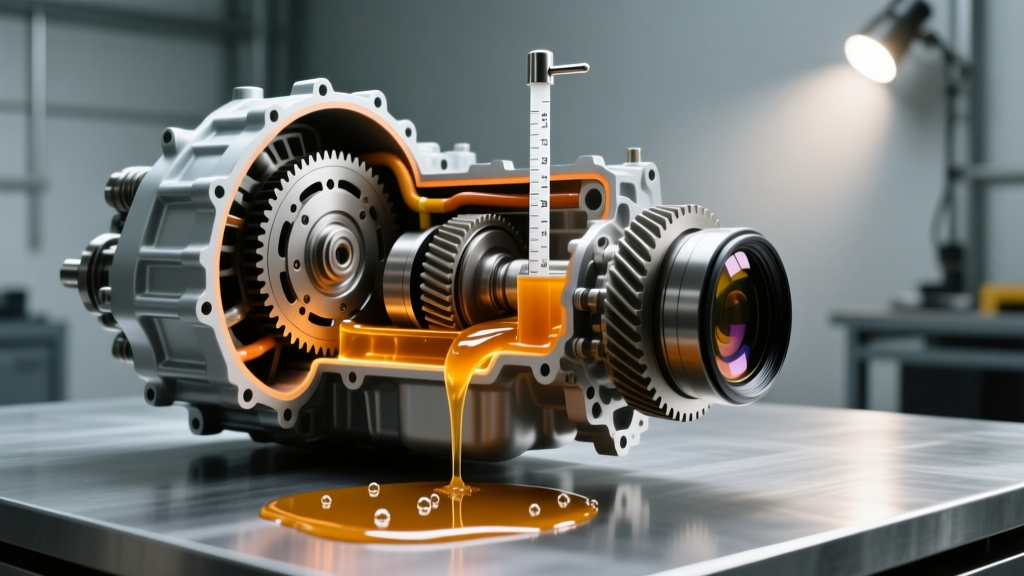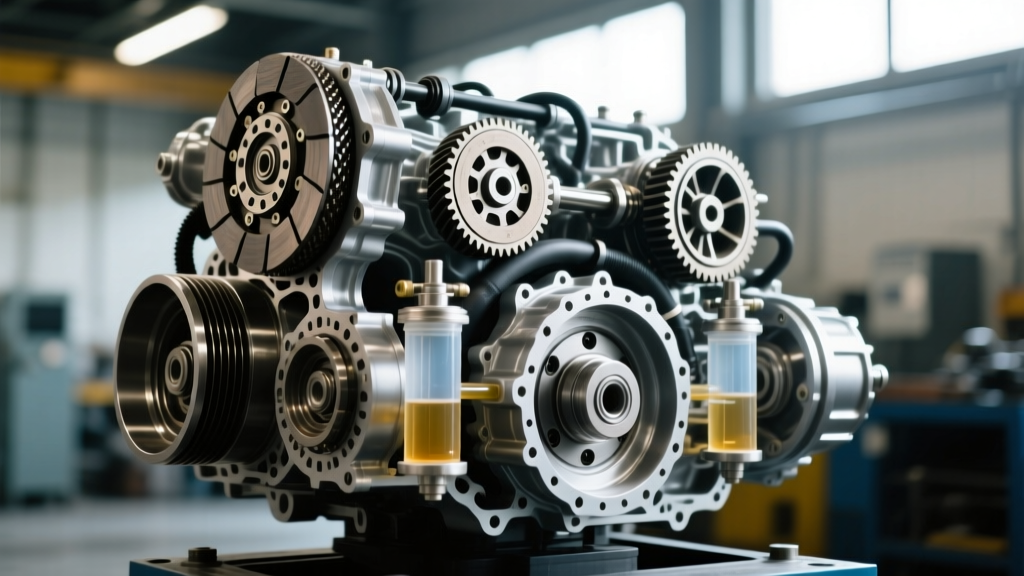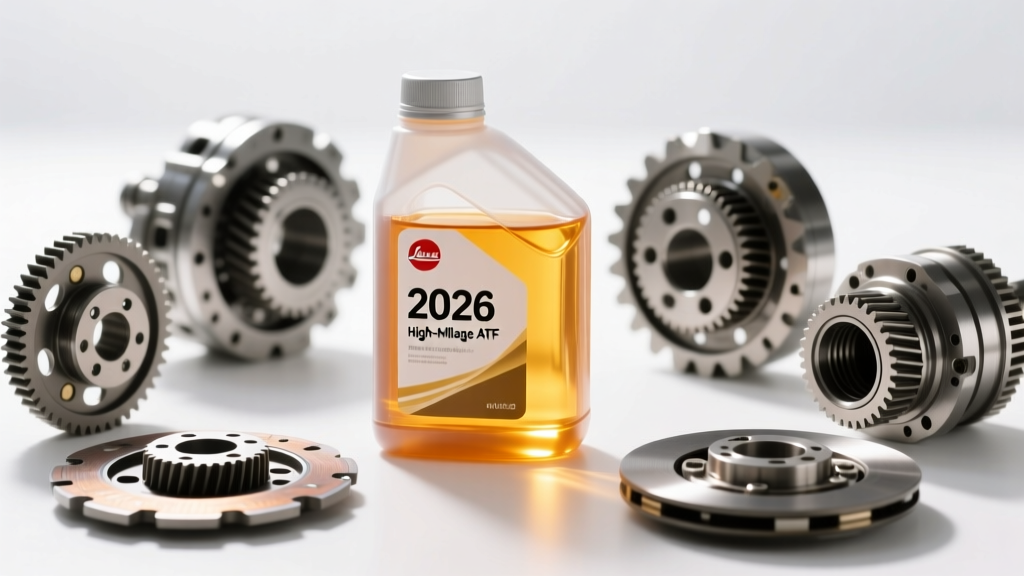
When a vehicle crosses the 150,000-mile threshold, the internal clearances of its transmission fundamentally change. Clutch packs wear down, elastomeric seals harden and shrink, and valve body bores develop microscopic scoring. For owners and technicians maintaining aging drivetrains, this mechanical reality begs a critical question: what does automatic transmission fluid do when the hardware it protects is no longer in factory condition? In 2026, the aftermarket fluid industry has engineered specific high-mileage formulations to address these exact wear patterns. This buyer's guide breaks down the chemistry, application, and real-world performance of high-mileage automatic transmission fluids (ATF) for legacy and modern high-mileage platforms.
The Core Question: What Does Automatic Transmission Fluid Do at 150k+ Miles?
To understand the value of high-mileage specific fluids, we must first establish the baseline. In any gearbox, ATF serves as a hydraulic medium for clutch actuation, a coolant for the torque converter, and a lubricant for planetary gearsets. However, as mileage climbs, the fluid's secondary responsibilities become paramount.
Compensating for Internal Wear
In a brand-new GM 6L80 or ZF 8HP transmission, clearances between the clutch piston seals and the drum walls are measured in fractions of a millimeter. By 150,000 miles, those seals lose their plasticity. Standard ATF, which relies on pristine seal geometry to maintain hydraulic line pressure, will begin to leak internally across worn sealing rings. High-mileage ATF addresses this by altering the fluid's interaction with aging elastomers, effectively restoring hydraulic integrity without requiring a transmission teardown.
Shear Stability and Viscosity Retention
Standard ATFs are subjected to immense mechanical shear inside the torque converter and gear meshes. Over 60,000 miles, the viscosity index improvers (VII) in conventional fluids physically tear apart, causing the fluid's kinematic viscosity at 100°C to drop from a nominal 7.0 cSt to below 5.5 cSt. High-mileage synthetics utilize shear-stable polymers that resist this mechanical degradation, ensuring that the fluid continues to cushion aging planetary gearsets and prevent metal-on-metal scuffing.
Chemical Differences: Standard OEM vs. High-Mileage Formulations
Not all fluids labeled 'high-mileage' are created equal. True high-mileage formulations differ from standard OEM equivalents in three distinct chemical ways:
- Seal Conditioning Agents: High-mileage ATFs contain higher concentrations of alkylated aromatics and specific esters. These compounds gently penetrate hardened nitrile and polyacrylate seals, causing them to swell slightly and regain flexibility.
- Enhanced Anti-Wear Additives: Aging thrust washers and bushings operate with wider clearances. High-mileage fluids often feature elevated levels of Zinc Dialkyldithiophosphate (ZDDP) or ashless friction modifiers to provide a sacrificial boundary layer on worn metals.
- Oxidation Inhibitors & Dispersants: Older transmissions run hotter due to degraded cooling lines and clogged radiator heat exchangers. Premium high-mileage fluids use advanced phenolic antioxidants to resist sludge formation at elevated temperatures.
2026 Buyer's Comparison: Top High-Mileage ATFs
Selecting the right fluid requires matching the additive package to your specific transmission's wear characteristics. Below is a comparison of the most trusted high-mileage and multi-vehicle synthetic ATFs available on the market today.
| Brand & Product | Part Number | Base Stock | Avg. Price / Qt | Best Application |
|---|---|---|---|---|
| Valvoline MaxLife Multi-Vehicle ATF | 773775 | Synthetic Blend | $8.50 | Older domestic 4/5/6-speeds (4L60E, 6R80) |
| Castrol Transmax High Mileage | 06818 | Conventional/Syn Blend | $7.25 | Budget-friendly seal conditioning for domestic V8s |
| Mobil 1 Synthetic ATF | 112985 | Full Synthetic | $9.75 | High-stress towing, severe shear environments |
| AMSOIL Signature Series Multi-Vehicle | ATFQT | Full Synthetic (PAO) | $11.50 | European 8/9-speeds (ZF 8HP, Aisin), extreme heat |
Note: Pricing reflects average 2026 retail estimates and may vary by region and supplier.
Application Guide: Capacities & Torque Specs for Aging Transmissions
When performing a drain-and-fill on a high-mileage vehicle, precision is critical. Over-torquing worn aluminum pan threads or using the wrong fluid volume can lead to immediate hydraulic failure.
GM 6L80 / 6L90 (6-Speed Automatic)
Widely used in Silverados, Camaros, and Corvettes, the 6L80 is notorious for torque converter clutch (TCC) shudder past 120,000 miles. A high-mileage synthetic with robust friction modifiers is essential here.
- Service Fill Capacity: 6.0 to 6.3 Quarts (pan drop only)
- Pan Bolt Torque: 9 Nm (80 lb-in) — Do not exceed, as the aluminum case threads strip easily on high-mileage trucks.
- Filter Note: The filter is press-fit. Lubricate the new filter's O-ring with fresh ATF before seating it into the valve body to prevent dry-start cavitation.
ZF 8HP45 / 8HP70 (8-Speed Automatic)
Found in Ram trucks, BMWs, and Jaguars, ZF markets their LifeguardFluid 8 as a 'lifetime' fluid. In reality, ZF defines 'lifetime' as 100,000 miles. Beyond this, the plastic mechatronic sealing sleeves degrade, causing internal cross-leaks. While AMSOIL Signature Series is an excellent substitute for worn ZF units due to its low volatility, the physical pan and filter must be replaced as a single unit.
- Service Fill Capacity: 5.0 to 6.0 Liters (varies by torque converter drain plug presence)
- Plastic Pan Bolt Torque: 10 Nm (89 lb-in)
- Level Check Procedure: Must be checked via the overflow plug with the fluid temperature strictly between 30°C and 50°C (86°F - 122°F) using a bi-directional scan tool.
Toyota A750E / A760E (5/6-Speed Automatic)
Toyota's WS (World Standard) fluid was designed for low viscosity and fuel economy. However, in high-mileage Tacomas and 4Runners, WS fluid shears rapidly. Upgrading to a high-quality synthetic multi-vehicle fluid can firm up sluggish 2-3 shifts caused by worn accumulator pistons.
- Service Fill Capacity: 3.0 to 3.5 Quarts
- Drain Plug Torque: 20 Nm (15 lb-ft) with a new crush washer.
The 'Seal Swell' Controversy: Additives vs. Engineered Fluids
Expert Warning: Never pour aftermarket 'Stop Leak' additive concentrates into a high-mileage transmission. These products are essentially aggressive solvents that force seals to swell rapidly. While they may temporarily stop a rear main seal leak, they will inevitably cause clutch pack friction materials to delaminate and valve body spool valves to stick.
Instead of relying on snake-oil additives, rely on engineered high-mileage fluids like Castrol Transmax or Valvoline MaxLife. These fluids integrate seal conditioners directly into the base oil additive package, ensuring a slow, controlled rejuvenation of the seals over the first 1,000 miles of driving, rather than a violent chemical shock.
Step-by-Step High-Mileage Fluid Inspection Protocol
Before deciding to swap to a high-mileage formulation, you must accurately assess the current state of your transmission. Understanding what does automatic transmission fluid do visually and olfactorily is the first step in diagnostics.
- Temperature Normalization: Drive the vehicle for 15 minutes to bring the ATF to operating temperature (approx. 180°F / 82°C). Cold fluid will give a falsely high reading on the dipstick due to thermal contraction.
- The Wipe Test: Pull the dipstick, wipe it on a clean white paper towel, and re-insert. Pull it again to check the true level against the 'HOT' crosshatch marks.
- Color & Odor Interpretation:
- Cherry Red & Sweet: Fluid is healthy. Standard OEM fluid is fine.
- Dark Brown & Burnt Smell: The base oil has oxidized, and clutch material is suspended in the fluid. A high-mileage synthetic flush is recommended, provided the transmission is not currently slipping.
- Black with Metal Glitter: Catastrophic mechanical failure. No fluid will save this unit; a rebuild is required.
Final Verdict: Is High-Mileage ATF Worth the Premium?
If your vehicle has surpassed 120,000 miles and has been maintained on a conventional or semi-synthetic diet, transitioning to a dedicated high-mileage or premium full-synthetic ATF is one of the most cost-effective preventative measures you can take. By restoring seal pliability, resisting shear, and providing boundary lubrication to worn bushings, fluids like AMSOIL Signature Series and Valvoline MaxLife extend the operational life of aging transmissions by thousands of miles. Always pair your fluid upgrade with a precise torque-spec adherence and a new OEM filter to ensure the hydraulic system remains uncompromised.