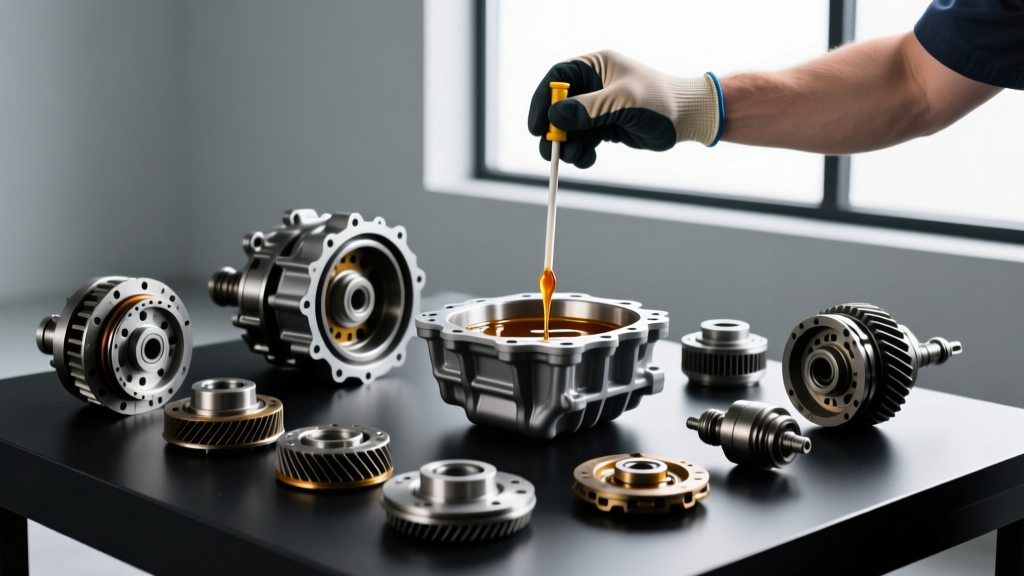
When a vehicle crosses the 150,000-mile threshold, the automatic transmission enters a critical phase of its lifecycle. Clutch packs wear, valve body bores score, and internal seals harden. At this stage, selecting the right fluid and knowing how to properly inspect it becomes the difference between another 50,000 miles of service and a catastrophic failure requiring a $4,000 rebuild. One of the most frequent questions DIYers and junior techs ask is: does car have to be running to check transmission fluid? The answer dictates not just how you read the dipstick, but how you approach the entire maintenance cycle for aging drivetrains.
The Core Question: Does Car Have to Be Running to Check Transmission Fluid?
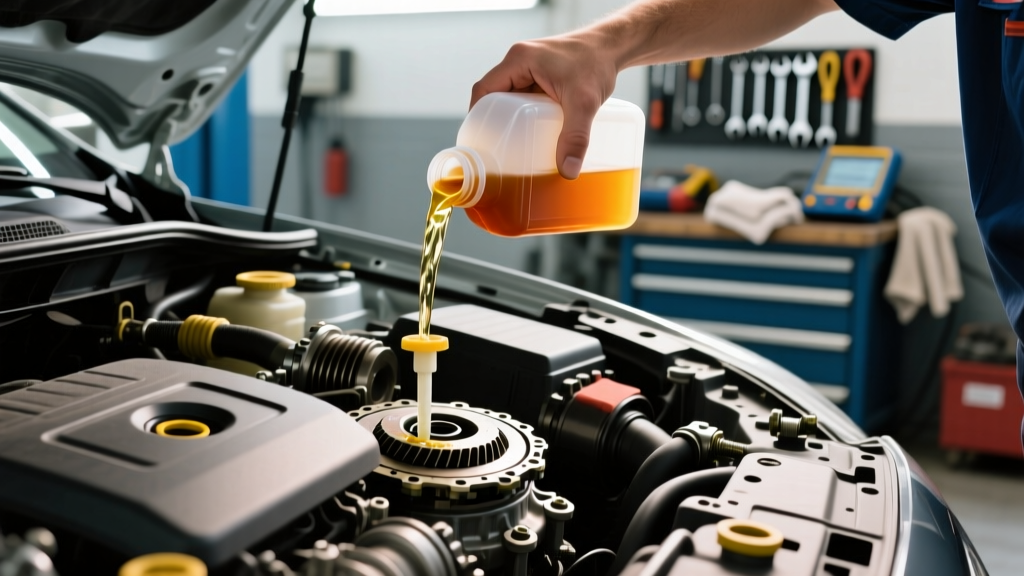
For 95% of automatic transmissions equipped with a dipstick (such as the legendary GM 4L60E, Ford 4R70W, or Chrysler NAG1), the answer is an emphatic yes. The engine must be running, and the transmission must be in Park (or Neutral for specific older Ford and Chrysler applications).
The Torque Converter and Hydraulic Pump Factor
To understand why, you must understand the hydraulic circuit. When the engine is off, the transmission pump is not turning. Gravity causes fluid to drain back from the torque converter, the cooler lines, and the upper valve body galleries directly into the transmission pan. If you check the fluid with the engine off, the pan will appear drastically overfilled, often showing fluid well past the "FULL HOT" mark on the dipstick. When the engine is running, the pump pressurizes the system, filling the torque converter and circulating fluid through the cooler. This establishes the true operating level. For high-mileage vehicles, checking the fluid at operating temperature (typically 160°F to 200°F, or 71°C to 93°C) is mandatory because automatic transmission fluid (ATF) expands significantly as it heats up. A cold reading on a hot transmission will lead to severe under-filling, causing pump cavitation, slipping clutch packs, and burnt friction material.
High-Mileage Fluids: Marketing Gimmick or Chemical Necessity?
As transmissions age, the internal lip seals and O-rings (often made of nitrile or polyacrylate) lose their elasticity due to continuous thermal cycling. This leads to internal cross-leakages where hydraulic pressure bleeds off before it can fully apply a clutch pack, resulting in harsh shifts or flare-ups between gears.
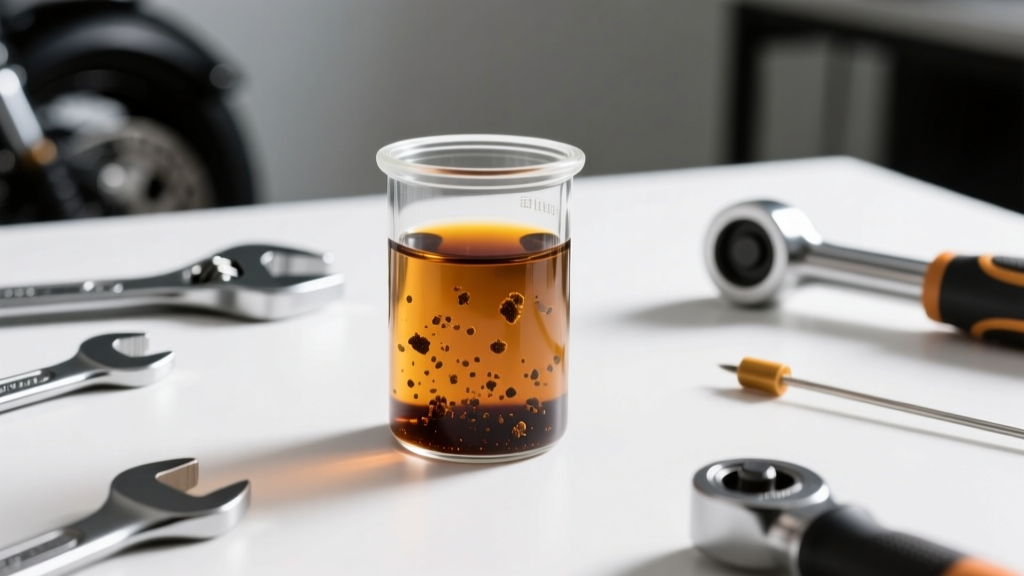
High-mileage ATFs are specifically formulated to combat this. They contain a higher concentration of seal conditioners (typically specialized esters and alkylated naphthalenes) designed to safely swell and soften hardened seals, restoring hydraulic integrity. Furthermore, they feature robust friction modifier packages tailored to grip worn friction surfaces without causing shudder.
Expert Warning: Never introduce high-mileage seal-swelling additives to a transmission that is already slipping severely due to mechanical wear (e.g., burnt clutches or broken snap rings). Seal conditioners only fix hydraulic leaks, not mechanical destruction.
2026 Buyer’s Guide: Top High-Mileage Transmission Fluids Compared
Not all high-mileage fluids are created equal. Below is a comparison of the top performers for aging drivetrains, focusing on base oil quality, additive packages, and real-world pricing.
| Brand & Product | Part Number (1 Gal) | Base Oil Chemistry | Est. Price | Best High-Mileage Application |
|---|---|---|---|---|
| Valvoline MaxLife Multi-Vehicle | VV150 / 773775 | Full Synthetic Blend | $34.00 | GM 4L60E / Ford 4R70W (Excellent seal conditioning) |
| Castrol Transmax High Mileage | 06818 | Conventional / Syn-Blend | $28.00 | Older Chrysler / Dodge (NAG1, 41TE) |
| AMSOIL Signature Series Multi-Vehicle | ATFQT (Quart) | 100% PAO Synthetic | $62.00 | ZF 6HP / 8HP, Aisin Warner (Superior shear stability) |
For budget-conscious restorations on domestic V8s, Valvoline MaxLife remains the industry standard for reviving aging domestic seals. However, for high-end European imports or heavy-duty applications where viscosity shear-down is a concern, AMSOIL Signature Series provides unmatched film strength, even if it lacks the aggressive seal-swelling agents of dedicated "high-mileage" branded fluids.
Inspection & Service Specs for Common High-Milers
When servicing a high-mileage transmission, precision is paramount. Stripped pan bolts or crushed gaskets will ruin an otherwise perfect fluid exchange.
GM 6L80 / 6L90 (150,000+ Miles)
The 6L80 is notorious for internal wear in the TEHCM (Transmission Electro-Hydraulic Control Module) and pressure regulator valves.
- Capacity: ~6.3 quarts (drain and fill); 11.2 quarts (dry fill).
- Pan Bolt Torque: M6x1.0 bolts must be torqued to exactly 9 Nm (80 lb-in). Over-torquing will strip the aluminum case threads.
- Filter: The filter is a press-in style with an O-ring. Lubricate the new O-ring with fresh ATF before seating it. Never reuse the old filter on a high-miler.
- Check Procedure: Engine running, vehicle level, transmission fluid temperature (TFT) between 86°F and 122°F for the initial check, but final level must be set in the "HOT" band on the dipstick (approx. 180°F).
ZF 8HP (100,000+ Miles)
Often marketed with "lifetime" fluid, ZF officially states that for severe driving conditions or high-mileage usage, the fluid should be changed. ZF LifeguardFluid 8 is the OEM requirement, though AMSOIL and Liqui Moly offer approved alternatives.
- Pan Replacement: The ZF 8HP uses a plastic pan with an integrated filter. You must replace the entire pan assembly, not just the fluid.
- Pan Bolt Torque: 10 Nm (88 lb-in) in a crisscross pattern.
- Check Procedure: There is no dipstick. The engine must be running (to fill the torque converter). You must use an OBD2 scanner to monitor the transmission temperature. The fluid level is checked via the overflow plug on the pan when the fluid temperature is exactly between 30°C and 50°C (86°F - 122°F). If it drips out, the level is correct.
Drain-and-Fill vs. Power Flush: The High-Mileage Dilemma
If you have acquired a vehicle with 180,000 miles and no documented transmission service history, never perform a pressurized power flush. Power flush machines use high pressure and aggressive detergents to push fluid through the cooler lines and torque converter. In a high-mileage transmission, the clutch packs are often worn down to the point where the varnish and degraded friction material suspended in the old, thick fluid are the only things providing enough grip to prevent the clutches from slipping. Flushing this out will result in immediate, catastrophic slip.
The Correct Protocol: Perform a simple gravity drain-and-fill. Drive the vehicle for 500 miles to allow the new fluid's detergents to gently clean the valve body, then repeat the drain-and-fill two more times. This safely exchanges over 90% of the old fluid without shocking the fragile clutch packs or dislodging debris into the sensitive solenoid screens.
Final Verdict
Understanding whether your car has to be running to check transmission fluid is just the first step in preserving a high-mileage drivetrain. By pairing correct inspection protocols with chemically appropriate high-mileage fluids and adhering to strict torque specifications, you can reliably extend the life of aging transmissions well past the 200,000-mile mark. Treat the hydraulic system with respect, and it will return the favor on the road.