The Sinking Feeling: Post-Repair Clutch Failures
There are few experiences more frustrating for a manual transmission owner than picking up a vehicle after a $1,500+ clutch replacement, pressing the pedal to engage first gear, and watching helplessly as the clutch pedal goes to floor with zero hydraulic resistance. When clutch problems occur immediately after a repair or replacement, the issue is rarely a defective friction disc. Instead, it almost always points to hydraulic mismanagement, incorrect stack heights, or mechanical binding during reassembly.
From a cost analysis perspective, diagnosing a post-repair failure requires a strategic approach. You must determine whether the fault lies in a warrantable part, a technician's installation error, or an unaddressed secondary component. This 2026 cost breakdown and diagnostic guide will help you navigate the financial and mechanical realities of a botched clutch job.
Financial Liability: Who Pays for the Teardown?
Before authorizing any diagnostic work, you must establish liability. If the clutch pedal goes to floor within the first 50 miles of a professional installation, this is classified as a 'comeback' job in the automotive repair industry.
- Shop Installation Error: If the technician failed to bench-bleed the master cylinder, reused a worn clutch fork pivot ball, or improperly lubricated the input shaft, the shop must absorb the entire cost of the secondary teardown and labor.
- Defective New Part (DOA): If a brand-new Concentric Slave Cylinder (CSC) suffers an internal seal blowout upon first pressurization, the parts supplier will cover the replacement part under warranty. However, the labor to pull the transmission again is often a point of contention. Many shops will waive the labor if they supplied the part, but if you provided your own parts, you will eat the $800 to $1,400 R&R (Remove and Replace) labor cost.
Root Cause 1: Hydraulic Air Traps and Bleeding Errors
The most common reason the clutch pedal drops to the floor post-repair is trapped air in the hydraulic system. Modern manual transmissions, such as the Ford MT-82, GM Tremec T56 Magnum, and various Porsche transaxles, rely on internal Concentric Slave Cylinders (CSC). The CSC sits at the highest point of the hydraulic circuit, making it a natural trap for air bubbles.
The Cost of Improper Bleeding
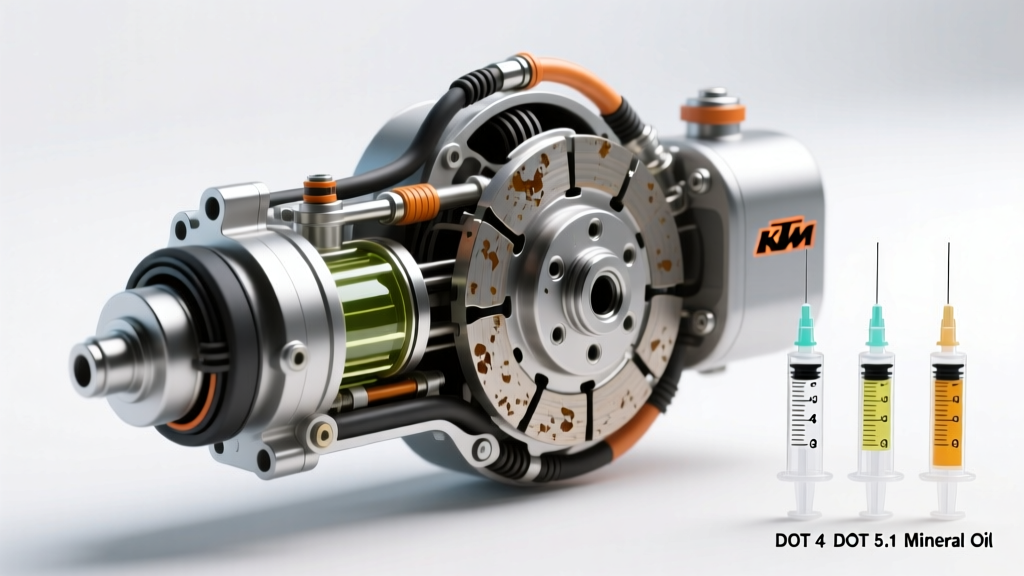
If a technician relies solely on gravity bleeding or manual pedal-pumping, air will remain in the CSC. When you press the pedal, the master cylinder compresses the air rather than moving the throwout bearing, resulting in a pedal that stays on the floorboard. Furthermore, using old, hygroscopic DOT 3 fluid instead of fresh DOT 4 can lower the boiling point and introduce vapor lock under heavy stop-and-go driving.
| Hydraulic Fix | Average 2026 Cost | Required Equipment and Specs |
|---|---|---|
| Pressure Bleeding | $85 - $140 | Motive Power Bleeder, 15-20 PSI, DOT 4 Fluid |
| Master Cylinder Bench-Bleed | $120 - $180 | Removal of MC, vice-mount, loop-bleed setup |
| Complete MC and Line Replacement | $350 - $600 | OE or Wilwood aftermarket master, stainless lines |
Expert Insight: According to technical bulletins from Schaeffler (parent company of LUK), failing to bench-bleed the master cylinder before connecting it to the downstream line is the leading cause of CSC failure and pedal drop. If your shop skipped this step, demand they perform a pressure bleed at their expense.
Root Cause 2: Mechanical Binding and Pivot Ball Wear
If the hydraulic system is verified to be free of air and holding pressure, the clutch pedal goes to floor due to mechanical binding. This occurs when the throwout bearing cannot slide smoothly along the transmission input shaft sleeve, or when the clutch fork slips off its pivot point.
The Reused Pivot Ball Mistake
Many budget-conscious mechanics reuse the original clutch fork pivot ball. Over 80,000 miles, the factory steel pivot ball wears a groove into the clutch fork. Installing a new clutch kit with a thicker friction disc and a new pressure plate alters the resting position of the fork. When the fork engages the worn groove of the old pivot ball, it binds or slips entirely under load. The hydraulic pressure has nowhere to go, and the pedal drops.
- Part Cost: $15 - $45 (e.g., Ford Motorsport M-7552-BOSS pivot ball or GM equivalent).
- Labor Cost to Fix: $900 - $1,600 (Requires full transmission R&R to access the bellhousing).
Input Shaft Spline Lubrication Errors
The throwout bearing collar must slide freely on the input shaft. If the technician applied too much grease, the excess flings onto the clutch friction material upon startup, causing catastrophic slipping and eventual binding. If they used the wrong grease instead of the specified LUK multi-purpose spline grease, the bearing will seize to the shaft. The slave cylinder pushes, the bearing refuses to move, and the hydraulic pressure bypasses the internal seals, dropping the pedal.
Additionally, when reinstalling the transmission to the engine block, bellhousing bolts must be torqued to exact specifications (e.g., 35 lb-ft for GM LS applications, or 59 lb-ft for Ford Modular V8s). Improper torque can cause input shaft misalignment, leading to binding and a dropped pedal under load.
Root Cause 3: Flywheel Stack Height and Machining Tolerances
When converting from a Dual-Mass Flywheel (DMF) to a Single-Mass Flywheel (SMF) using a kit like the LUK RepSet Pro, stack height is critical. The distance from the engine block mating surface to the clutch fingers must remain within a strict tolerance, usually within 0.020 inches of OE specifications.
If the machine shop resurfaced a stepped flywheel incorrectly, or if an aftermarket SMF was manufactured with the wrong step-depth, the clutch fingers will sit too far forward. The slave cylinder will run out of physical travel before the clutch is fully disengaged. In severe cases, the piston inside the CSC, such as the LUK part #510020910 commonly used in late-model Dodge and Chrysler manual platforms, will pop out of its bore, instantly dumping hydraulic fluid and sending the pedal to the floor.
Diagnostic Tip: Before tearing the transmission back out, use a borescope through the inspection cover or slave cylinder access port to measure the physical travel of the throwout bearing. If the bearing is moving a full 0.600+ inches but the clutch is not releasing, you have a stack-height or mechanical binding issue, not a hydraulic one.
2026 Cost Breakdown: Fixing the Post-Repair Drop
Below is a realistic cost matrix for resolving a post-repair clutch pedal drop, assuming a standard rear-wheel-drive sports car or light truck (e.g., Ford Mustang, Chevrolet Camaro, Nissan 370Z).
| Diagnostic / Repair Path | Independent Shop Cost | Dealership Cost |
|---|---|---|
| Hydraulic System Flush and Pressure Bleed | $110 - $160 | $180 - $250 |
| External Master Cylinder Replacement | $250 - $400 | $450 - $650 |
| Transmission R&R (Labor Only for Warranty Part) | $800 - $1,200 | $1,400 - $1,900 |
| Full Teardown + New CSC, Pivot Ball, and Fluid | $1,300 - $1,800 | $2,200 - $2,800 |
Action Plan: What to Do Before Authorizing Work
If your clutch pedal goes to floor immediately after a replacement, do not immediately authorize a $1,500 teardown. Follow this diagnostic sequence to protect your wallet:
- Check the Fluid Level: Open the hood and inspect the clutch master cylinder reservoir. If it is empty, a line has burst or the CSC seal has blown. Look for fluid dripping from the bellhousing weep hole.
- Verify Pedal Free-Play: Measure the free-play at the top of the pedal. Most modern hydraulic systems require 0.5 to 1.0 inches of free-play. If the shop adjusted the pushrod too tight, the master cylinder piston may be blocking the compensation port, leading to pressure buildup and seal failure.
- Demand a Pressure Bleed: If the fluid is full and there are no leaks, insist the shop hook up a pressure bleeder. As noted by the experts at AA1Car, many dead clutches are simply victims of improper bleeding techniques.
- Review the Invoice: Check if the shop replaced the clutch fork pivot ball and the master cylinder. If they only replaced the friction disc, pressure plate, and CSC, the reused external components are your prime suspects.
Understanding the intersection of mechanical tolerances and financial liability is the key to surviving a botched clutch job. Armed with these torque specs, part numbers, and cost benchmarks, you can hold your repair facility accountable and ensure your manual transmission operates exactly as engineered.