The Anatomy of KTM Hydraulic Clutch Failures
For riders pushing the limits on a KTM 300 XC-W or a 450 SX-F, the hydraulic clutch is a critical interface between rider intent and rear-wheel power delivery. However, hydraulic clutch systems are highly sensitive to fluid chemistry, thermal loads, and maintenance intervals. As we navigate the 2026 off-road and motocross seasons, improper fluid selection and neglected maintenance remain the leading root causes of catastrophic clutch disengagement failures.
Unlike cable-actuated systems, KTM hydraulic clutches rely on the incompressibility of fluid to transfer force from the master cylinder to the slave cylinder. When the fluid degrades, boils, or attacks the internal elastomers, the system fails. Understanding the specific failure modes tied to KTM clutch fluid is essential for accurate diagnostics and selecting the correct replacement product. In this guide, we break down the root causes of hydraulic clutch failure and compare the best fluids on the market to keep your lever feeling crisp.
Root Cause Analysis: 4 Primary KTM Clutch Failure Modes
When a rider reports a spongy lever, clutch drag, or complete loss of hydraulic pressure, the root cause almost always traces back to fluid degradation or a fundamental fluid mismatch. Below are the four most common failure modes we diagnose in KTM hydraulic systems.
1. Hygroscopic Degradation and Vapor Lock (Boiling)
DOT 4 and DOT 5.1 fluids are polyglycol-based and inherently hygroscopic, meaning they absorb moisture from the atmosphere through microscopic pores in rubber hoses and reservoir seals. As water content increases, the fluid’s wet boiling point plummets. Under heavy clutch slipping—such as navigating deep whoops or technical single-track—friction at the clutch plates generates immense heat. This heat transfers through the slave cylinder pushrod into the fluid. If the fluid has absorbed moisture, it will flash-boil, creating compressible vapor bubbles. The immediate symptom is a lever that pulls completely to the handlebar with zero resistance, leaving the bike stuck in gear.
2. Seal Swelling and Master Cylinder Bypass (The Fluid Mismatch)
This is the most destructive and common DIY error on older KTM models. Prior to 2012, many KTM models equipped with Magura master cylinders required Magura Blood (a mineral oil). Around 2012, Magura transitioned their HM (Hydraulic Master) lineup to DOT fluid to align with industry standards and improve boiling points. If a rider mistakenly fills a mineral-only system with DOT fluid, or vice versa, the incompatible chemistry causes the EPDM or NBR rubber seals to rapidly swell, blister, and disintegrate. The root cause of a master cylinder that continuously bypasses fluid back into the reservoir without building pressure is almost always a seal destroyed by fluid incompatibility. According to Magura’s official technical support documentation, mixing these fluids voids warranties and necessitates a complete master cylinder rebuild or replacement.
3. Clutch Drag and Incomplete Disengagement
Clutch drag occurs when the friction plates fail to fully separate, causing the bike to creep forward even with the lever pulled to the bar. While warped steel plates or notched clutch baskets are mechanical causes, a hydraulic root cause is fluid compressibility due to micro-aeration. If the slave cylinder bleeder screw (typically an 8mm hex head) is loose, or the master cylinder reservoir diaphragm is compromised, microscopic air bubbles enter the system. Because air is highly compressible compared to liquid, the hydraulic ratio is lost, and the slave cylinder piston fails to travel the full 12-15mm required to lift the pressure plate completely.
4. Galvanic Corrosion and Slave Cylinder Pitting
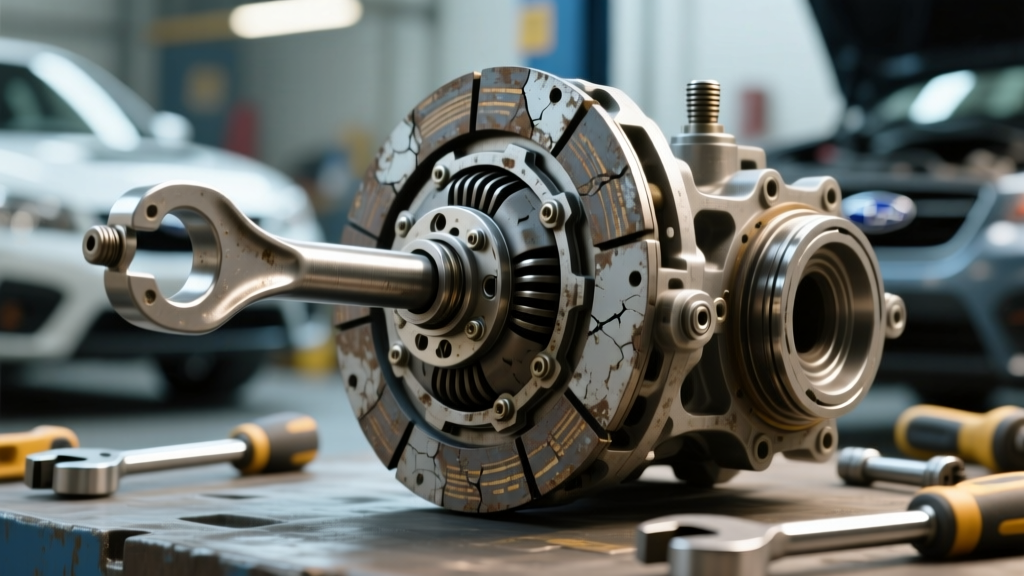
DOT fluid becomes highly acidic as it ages and oxidizes. KTM slave cylinders, often manufactured by Brembo, feature aluminum housings and steel pistons. Neglected, acidic fluid strips the protective anodizing inside the slave cylinder bore, leading to galvanic corrosion and deep pitting. Once the bore is pitted, the piston seal cannot maintain a hydraulic barrier. The fluid bypasses the piston, and the slave cylinder rod retracts prematurely, resulting in a loss of clutch disengagement. Replacing a pitted OEM Brembo slave assembly (part numbers like 50403011000 for various XC-W models) costs upwards of $180, making fluid flushes a vital preventative measure.
Fluid Comparison Chart: DOT 4 vs. DOT 5.1 vs. Mineral Oil
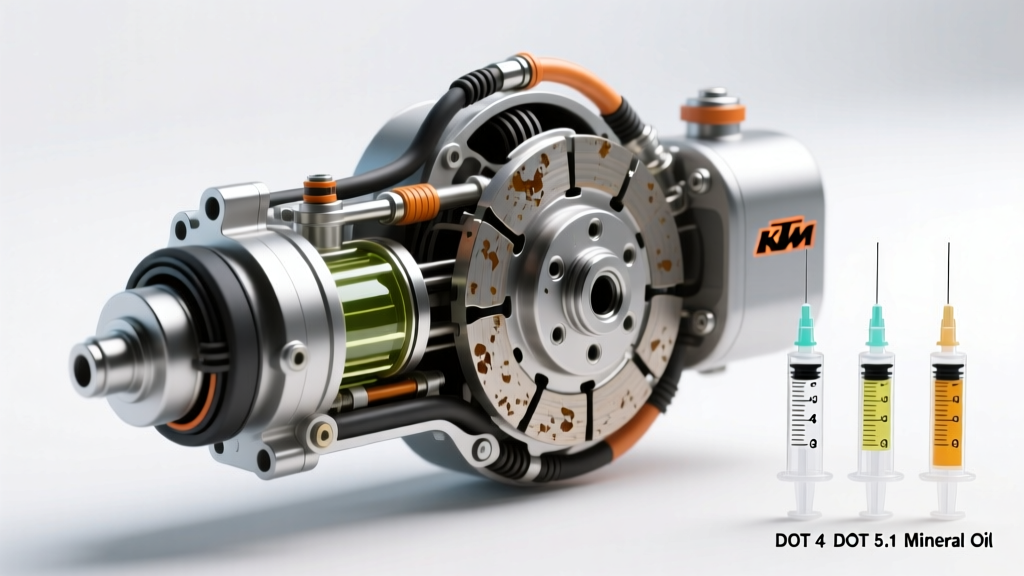
Selecting the correct fluid requires understanding the FMVSS 116 standards and your specific KTM master cylinder manufacturer. Below is a diagnostic comparison of the three primary fluid types used in motorcycle hydraulic clutches.
| Fluid Type | Base Chemistry | Dry Boiling Point | Wet Boiling Point | KTM Compatibility |
|---|---|---|---|---|
| DOT 4 | Polyglycol Ether | 230°C (446°F) | 155°C (311°F) | All Brembo systems; Post-2012 Magura |
| DOT 5.1 | Polyglycol Ether | 260°C (500°F) | 180°C (356°F) | All Brembo systems; Post-2012 Magura |
| DOT 5 (Silicone) | Silicone | 260°C (500°F) | 180°C (356°F) | NEVER USE (Causes seal failure & air trapping) |
| Mineral Oil | Petroleum-based | ~200°C (392°F) | N/A (Non-hygroscopic) | Pre-2012 Magura systems ONLY |
Diagnostic Warning: Never confuse DOT 5 (Silicone) with DOT 5.1. DOT 5 is silicone-based, does not absorb water (leading to pooled water pockets that boil instantly), and will destroy KTM hydraulic seals. DOT 5.1 is polyglycol-based and perfectly safe for DOT 4 systems.
2026 Buyer’s Guide: Best KTM Clutch Fluids
Based on boiling point stability, seal compatibility, and real-world racing data, here are the top fluid choices for maintaining your KTM hydraulic clutch.
1. Motul RBF 600 (DOT 4) - Best for Aggressive Off-Road Racing
Despite being classified as DOT 4, Motul RBF 600 boasts a massive dry boiling point of 312°C (594°F) and a wet boiling point of 216°C (421°F), outperforming many DOT 5.1 fluids. Its high borate ester formulation provides excellent lubrication for the master cylinder piston and slave cylinder seals. For KTM enduro riders who spend hours slipping the clutch in technical terrain, RBF 600 resists vapor lock exceptionally well. Cost: ~$22 per 500ml bottle. Service Interval: Flush every 6 months or 20 riding hours.
2. Castrol React SRF Racing (DOT 4 / Ester-Based) - Ultimate Thermal Protection
Castrol SRF is the gold standard for extreme thermal environments. Utilizing synthetic ester technology, it achieves an astonishing dry boiling point of 320°C (608°F). While technically overkill for a standard 250cc trail bike, professional supercross and GNCC racers running KTM 450 SX-F factory editions rely on SRF to eliminate any chance of hydraulic fade during grueling 30-minute motos. The primary drawback is the price, but for ultimate peace of mind, it is unmatched. Brembo’s engineering guidelines frequently validate high-ester fluids for their high-performance radial master cylinders. Cost: ~$65 per 1L bottle. Service Interval: Annually or every 30 hours.
3. Magura Blood (Mineral Oil) - The Vintage Specialist
If you are restoring or maintaining a 2011 or older KTM with the original Magura HM master cylinder, you must use Magura Blood or a dedicated high-grade mineral oil. Using any DOT fluid will instantly ruin the internal seals. Magura Blood is non-hygroscopic, meaning it will not absorb water from the air, allowing it to last for years without a flush. However, its lower boiling point makes it unsuitable for modern high-friction clutch loads. Cost: ~$15 per 100ml tube. Service Interval: Every 2 years.
Diagnostic & Service Specifications: Torque and Bleeding
Proper installation and bleeding are just as critical as the fluid you choose. A poorly torqued banjo bolt will introduce air, while an over-torqued bleeder screw will strip the soft aluminum slave cylinder housing.
- Master Cylinder Banjo Bolt (Brembo): 12 Nm (Always use new copper crush washers, part # 50305017028).
- Master Cylinder Banjo Bolt (Magura): 10 Nm.
- Slave Cylinder Bleeder Screw: 6 Nm (Use an 8mm flare-nut wrench to avoid rounding the soft brass/steel screw).
- Master Cylinder Reservoir Cap Screws (M5): 1.5 Nm (Hand-tighten only; easily stripped).
- System Capacity: Typically 50ml to 75ml for a full flush on KTM off-road models.
Pro-Bleeding Technique: To eliminate trapped air in the KTM slave cylinder, remove the slave cylinder from the engine casing, hold it vertically with the bleeder screw pointing strictly upward, and pump the lever slowly. This ensures that any air bubbles trapped in the piston cavity rise directly to the bleeder valve rather than getting caught in the hydraulic port.
Conclusion
Diagnosing KTM clutch failure modes requires looking past the mechanical components and analyzing the hydraulic medium. Whether you are battling vapor lock in the desert or dealing with a bypassing master cylinder due to a fluid mismatch, selecting the correct KTM clutch fluid is the most cost-effective performance upgrade you can make. Verify your master cylinder manufacturer, adhere to strict torque specifications, and flush your polyglycol fluids bi-annually to ensure flawless power delivery on the trail.