The Engineering Reality of Clutch Chatter in Performance Builds
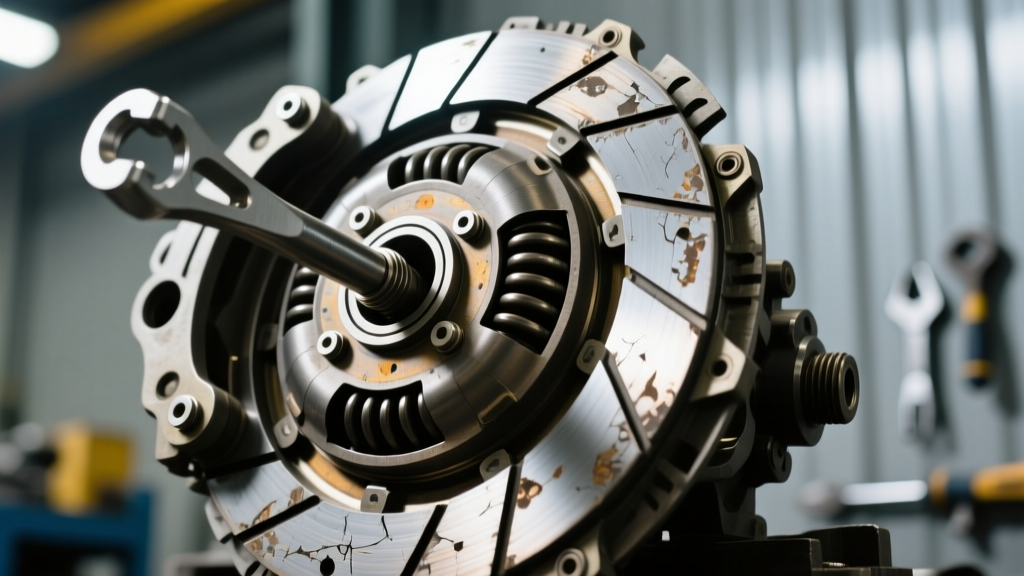
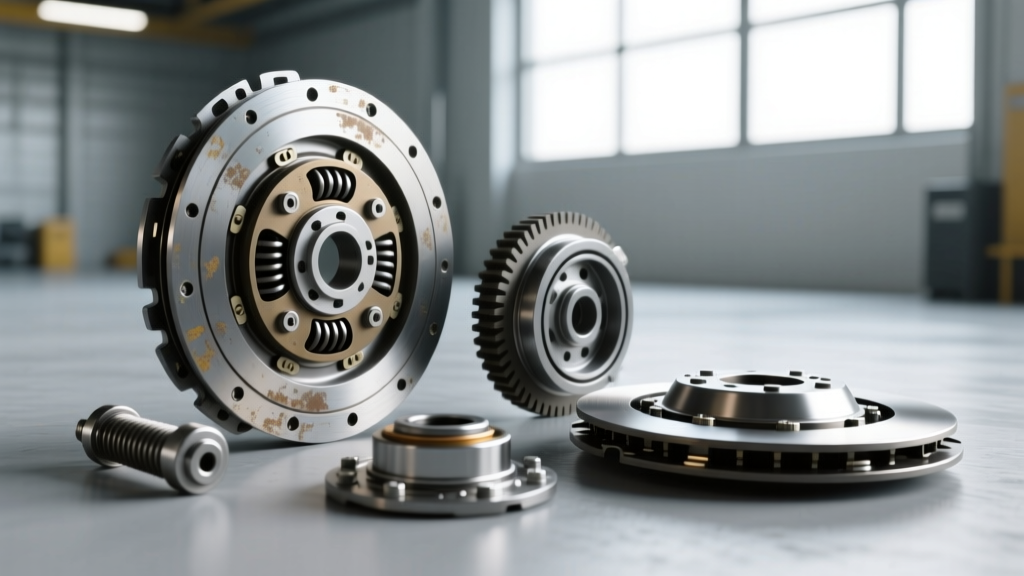
Clutch chatter in high-torque performance applications is not merely a nuisance; it is a destructive harmonic resonance that accelerates wear on the transmission input shaft, pilot bearing, and dual-mass or solid flywheel assemblies. As we navigate the 2026 landscape of high-torque EV swaps, 1,000+ hp diesel street trucks, and heavily modified track cars, the tolerance for drivetrain NVH (Noise, Vibration, and Harshness) has narrowed. Standard OEM replacement clutches routinely fail to manage the aggressive torque curves of modern forced-induction and stroker engines, resulting in violent engagement shudder.
Diagnosing the root cause of clutch chatter requires moving beyond basic visual inspections. It demands a systematic approach to measuring runout, evaluating hydraulic release ratios, and understanding friction material thermodynamics. When a build pushes the boundaries of off-the-shelf catalog applications, knowing exactly when to escalate the issue and locate the South Bend Clutch phone number to consult directly with application engineers can save you thousands of dollars in misdiagnosed parts and torn bellhousings.
The Anatomy of Chatter: Harmonic Resonance vs. Mechanical Defect
Clutch chatter occurs when the friction disc alternately grabs and slips the flywheel surface at a high frequency during the engagement window. This stick-slip phenomenon excites the natural frequencies of the drivetrain. In performance applications, this is typically driven by one of three mechanical failures:
- Torsional Spring Mismatch: The dampening springs in the clutch hub are tuned to a specific engine firing frequency. If you swap a naturally aspirated LS engine for a turbocharged setup without changing the hub spring rate, the dampeners will bottom out, transmitting raw cylinder pulses directly into the transmission.
- Thermal Runout and Hot Spotting: Aggressive track use or heavy towing generates localized heat on the flywheel face. This creates high-friction martensite spots that grab the disc unevenly.
- Hydraulic Inconsistency: Rubber flex in OEM clutch lines or an undersized master cylinder bore prevents the release bearing from maintaining a steady, linear preload against the pressure plate diaphragm.
Diagnostic Matrix: Identifying the Root Cause of Vibration
Use the following diagnostic matrix to correlate your specific chatter symptoms with the underlying mechanical failure and the appropriate performance upgrade path.
| Symptom Profile | Engagement RPM | Root Cause Analysis | Performance Upgrade Solution |
|---|---|---|---|
| Low-Frequency Shudder | 1,000 - 1,400 | Torsional spring rate mismatch; engine lugging under high boost | Upgrade to multi-disc with poly-cushion dampeners |
| High-Frequency Squeal/Grab | 1,800 - 2,500 | Flywheel thermal runout; uneven friction pad wear | Billet steel flywheel resurfacing; Cerametallic disc |
| Off-Idle Violent Jerking | 800 - 1,000 | Bellhousing misalignment; input shaft binding | Offset dowel pins; hydraulic master cylinder bore resize |
| Pedal Pulsation with Chatter | All Ranges | Warped pressure plate diaphragm; release bearing wear | Heavy-duty diaphragm upgrade; AN4 braided hydraulics |
When to Escalate: Leveraging the South Bend Clutch Phone Number
There is a distinct threshold in performance building where catalog part numbers are no longer sufficient. If you are mating a Cummins 6.7L to a custom adapter plate for a Tremec T56 Magnum, or running a heavily modified G56 transmission with a custom single-mass flywheel conversion, the flywheel step height and clutch stack-up dimensions become highly variable.
In these edge cases, finding the correct South Bend Clutch phone number to speak directly with their in-house engineering team is a critical diagnostic step. South Bend Clutch specializes in heavy-duty and high-performance applications, and their tech line can provide exact stack-up measurements, verify custom friction material compatibility (such as Kevlar vs. Cerametallic for your specific torque curve), and confirm the required flywheel step height (positive vs. negative) to ensure optimal diaphragm spring clamping load. Relying on forum guesswork for custom bellhousing adapters often results in a clutch that either fails to release or slips under load, both of which manifest as severe chatter and eventual catastrophic failure.
Critical Flywheel Step Heights and Clamping Loads
The flywheel step is the distance between the friction surface and the pressure plate mounting surface. If this dimension is incorrect, the pressure plate operates outside its designed clamping window.
- GM LS-Series (T56 / T56 Magnum): Typically requires a flat (0.000") step. Deviations greater than 0.010" will cause severe engagement chatter due to uneven diaphragm loading.
- Ford 6.7L PowerStroke (ZF S6-650 / S6-750): Often requires a specific positive step (e.g., +0.010" to +0.030" depending on the aftermarket dual-disc setup). Always verify with the manufacturer before machining.
- Dodge 5.9L/6.7L Cummins (G56 / NV5600): Solid flywheel conversions usually dictate a 0.000" step, but dual-disc setups like the South Bend SDD3250-2 require precise intermediate plate clearance checks.
Precision Measurements: Runout and Torque Specifications
Before condemning a clutch assembly for chatter, you must verify the mechanical alignment of the drivetrain. According to TREMEC engineering guidelines and SAE International standards, drivetrain misalignment is a leading cause of premature release bearing failure and input shaft chatter.
1. Bellhousing Bore Runout
Mount a dial indicator to the crankshaft flange and sweep the inside bore of the bellhousing. The Total Indicator Runout (TIR) must not exceed 0.005 inches. If it does, the transmission input shaft will bind in the pilot bearing during clutch release, causing a violent jerking sensation. Correct this using offset dowel pins (available in 0.007", 0.014", and 0.021" offsets).
2. Flywheel Face Runout
Sweep the dial indicator across the friction surface of the flywheel. Maximum allowable TIR is 0.005 inches. Excessive runout causes the clutch disc to wobble, creating a pumping action against the pressure plate that translates directly into pedal pulsation and chassis chatter.
3. Critical Torque Specifications
Improper torque sequencing warps the flywheel and pressure plate, inducing runout that wasn't there on the bench. Always use a calibrated torque wrench and follow the OEM star pattern.
- GM LS Flywheel to Crank: 74 lb-ft + 90 degrees (TTY bolts must be replaced).
- Ford 6.7L Flywheel to Crank: 89 lb-ft + 90 degrees.
- Cummins Flywheel to Crank: 96 lb-ft (verify specific year/harmonic balancer requirements).
- Pressure Plate to Flywheel: 35 to 50 lb-ft (depending on disc diameter), tightened in a crisscross pattern in three progressive steps to prevent hat distortion.
- G56 Bellhousing to Engine Block: 37 lb-ft.
Upgrade Paths: From OEM Replacement to Multi-Disc Racing Clutches
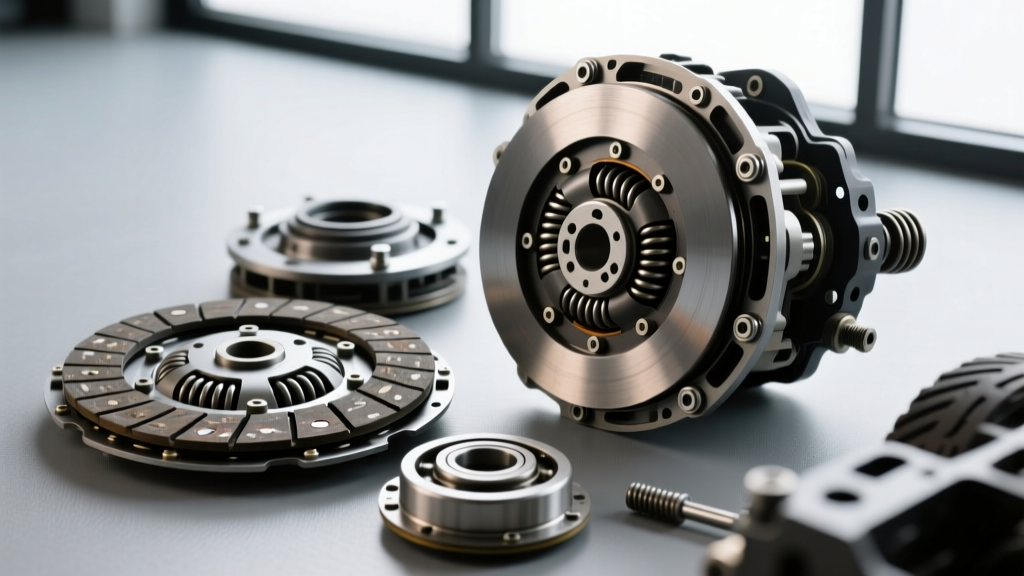
When diagnostics confirm that the hardware is within spec but the chassis still exhibits chatter under high torque, the friction material and disc configuration must be upgraded to manage the kinetic energy.
Performance Upgrade Tiers and Pricing (2026 Estimates)
- Tier 1: Heavy-Duty Organic / Kevlar Blends ($600 - $900)
Best for street-driven builds making up to 550 lb-ft of torque. Kevlar provides a higher coefficient of friction (mu) but requires a precise bed-in procedure to avoid glazing, which causes chatter. - Tier 2: Cerametallic Single Disc ($900 - $1,400)
Designed for 600-800 lb-ft applications. The aggressive friction material bites instantly, which can introduce low-speed chatter in stop-and-go traffic, but eliminates slip-induced chatter under heavy load. - Tier 3: Dual-Disc / Triple-Disc Assemblies ($1,800 - $3,200)
Required for 800+ lb-ft diesel and track builds (e.g., South Bend SDD3250-2 or equivalent). By doubling the friction surface area, the clamping load requirement is halved, allowing for a lighter pedal effort and smoother engagement while completely eliminating high-torque slip chatter.
Hydraulic System Optimization for Chatter Elimination
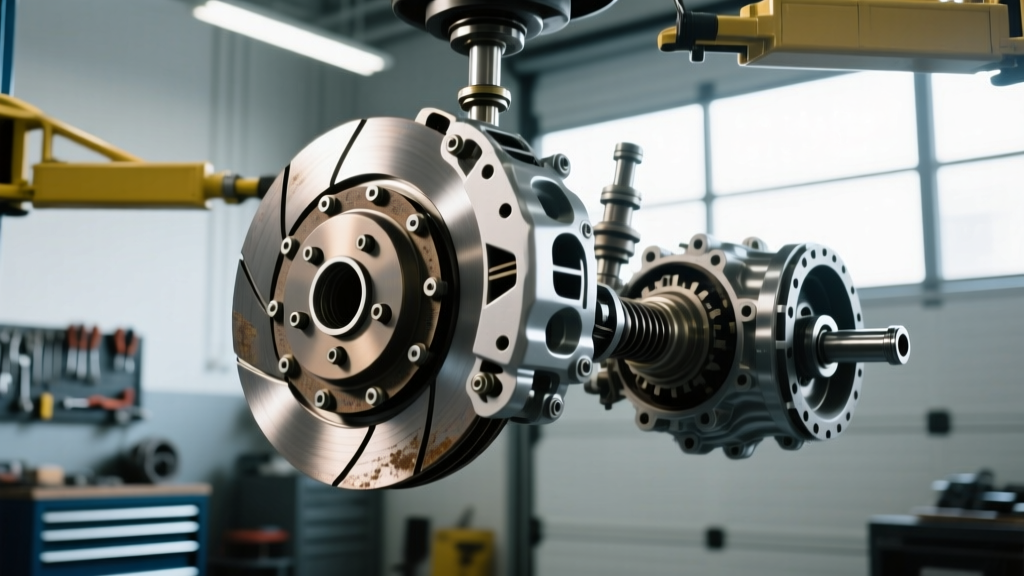
A common oversight in performance clutch upgrades is ignoring the hydraulic release system. If you upgrade to a high-clamp-load pressure plate, the OEM 3/4" master cylinder may not provide adequate fluid volume to fully disengage the clutch, leading to drag and subsequent chatter upon re-engagement.
The Fix: Upgrade to a 1.00" or 1.125" bore master cylinder (such as those from Tilton or Wilwood) paired with a remote reservoir. Replace the OEM rubber hydraulic line with an AN4 stainless steel braided line. This eliminates line expansion under high pedal pressure, ensuring the release bearing moves in a 1:1 ratio with your pedal input, providing the linear modulation required to smoothly engage a high-performance cerametallic or dual-disc clutch.
Final Verification: The Mandatory Bed-In Procedure
Even the most perfectly diagnosed and installed performance clutch will chatter violently if the friction surfaces are not properly mated. The bed-in process transfers a uniform layer of friction material to the flywheel face, creating the necessary mu for smooth engagement.
- Initial Heat Cycling: Drive the vehicle for 10-15 miles in stop-and-go traffic, using only 1/4 to 1/2 throttle. Allow the clutch to slip slightly to generate moderate, even heat.
- Mid-Range Loading: Proceed to a highway or empty road. Perform 10-15 engagements from 30 mph in 3rd gear at 1/2 throttle, allowing full cool-down between pulls.
- The 500-Mile Rule: Avoid Wide Open Throttle (WOT) launches, aggressive downshifts, and heavy towing for the first 500 miles. Glazing the pads during this window will permanently ruin the friction surface, guaranteeing a return of high-frequency chatter.
By combining rigorous mechanical diagnostics with targeted performance upgrades and expert consultation, you can eliminate drivetrain chatter and build a clutch system capable of handling the extreme torque outputs of modern performance engines.