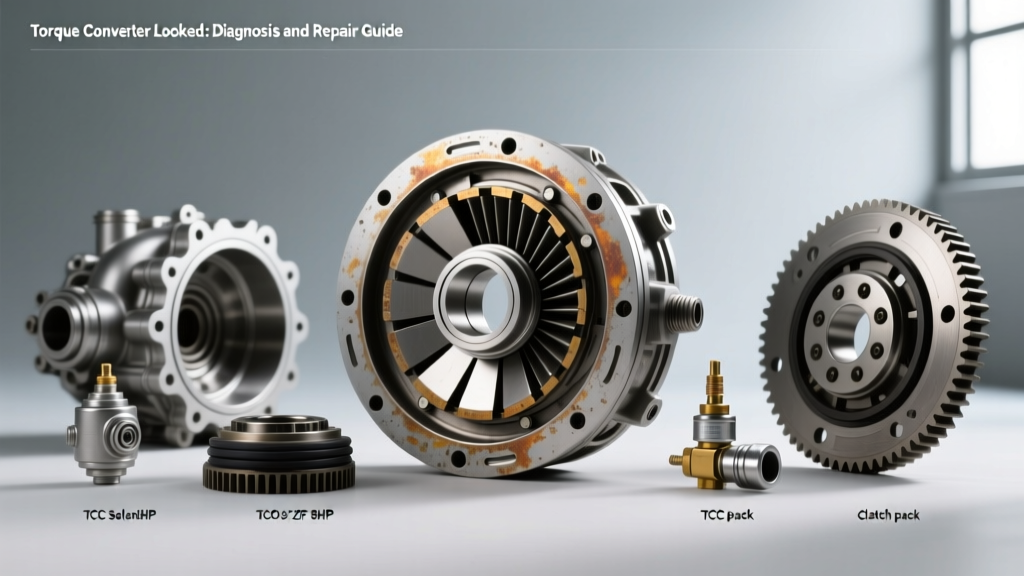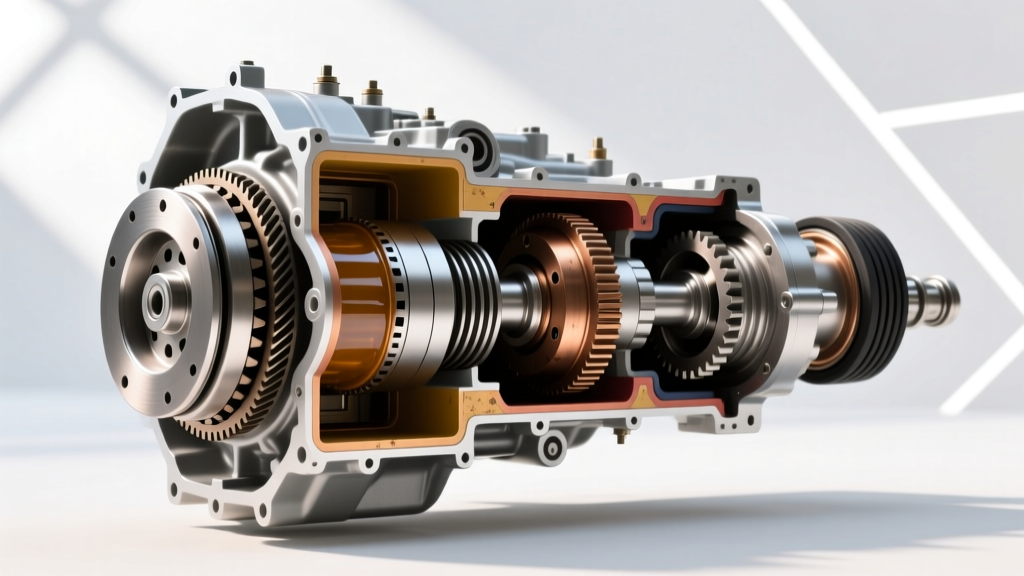
As automotive powertrains evolve in 2026, transmission technicians are increasingly forced to bridge the gap between legacy internal combustion engine (ICE) diagnostics and modern hybrid architectures. A classic benchmark for traditional torque converter (TC) troubleshooting is the 2011 Subaru Outback torque converter setup. Whether equipped with the 5EAT 5-speed automatic (in the 3.6R) or the early Lineartronic CVT (in the 2.5i), the Outback exhibits well-documented lockup clutch shudder and stall-speed anomalies. However, diagnosing torque converters in hybrid vehicles—specifically those utilizing Transmission Mounted Electrical Device (TMED) architectures—requires an entirely different diagnostic paradigm.
The Baseline: 2011 Subaru Outback Torque Converter Failures
To understand hybrid TC diagnostics, we must first establish a baseline using a legacy system. The 2011 Subaru Outback 3.6R utilizes the 5EAT transmission (a Jatco-sourced JR507E derivative). The torque converter in this unit relies on a traditional apply piston and friction lining to manage lockup.
Common Symptoms and Part Data
- Shudder Profile: 30-45 mph light-throttle shudder, typically caused by degraded friction material or valve body cross-leakage in the TCC apply circuit.
- OEM Part Number: 31500AA020 (5EAT Torque Converter Assembly).
- Fastener Specs: TC to flexplate bolts (M10x1.25) must be torqued to exactly 35 lb-ft (47 Nm) in a star pattern to prevent housing warpage.
- Fluid Requirement: Subaru ATF-HP. Using low-viscosity CVT fluids in the 5EAT will cause immediate TCC slip and trigger P0741.
When the 2011 Outback exhibits shudder, the diagnostic path is straightforward: monitor TCC slip RPM via OBD2. If slip exceeds 50 RPM during steady-state cruise, the lockup clutch is mechanically failing or the apply pressure is compromised.
Hybrid Torque Converter Architecture: The TMED Paradigm
Unlike the 2011 Outback, modern hybrid vehicles (such as the Hyundai Sonata Hybrid, Kia Optima Hybrid, and various Ford HEVs) utilize a TMED layout. In this architecture, the electric motor is sandwiched between the engine disconnect clutch (EC) and the torque converter. The TC is no longer just a fluid coupling; it is a critical torsional vibration damper managing the violent torque spikes of an Atkinson-cycle engine and the instantaneous rotational force of a high-voltage electric motor.
The Role of Multi-Stage Torsional Dampers
Hybrid torque converters are equipped with complex, multi-stage torsional damper springs and centrifugal pendulum absorbers. Because electric motors deliver peak torque at 0 RPM, the initial engagement places immense shear stress on the TC damper springs. Over time, these springs fatigue, lose their damping coefficient, or physically fracture.
Expert Insight: In a TMED hybrid, a fractured torsional damper spring will mimic an engine misfire. Technicians often waste hours replacing spark plugs and ignition coils before realizing the low-frequency NVH (Noise, Vibration, Harshness) is originating from inside the bell housing.
Comparative Symptom Matrix: ICE vs. Hybrid TC Failures
| Diagnostic Parameter | 2011 Subaru Outback (5EAT) | Modern TMED Hybrid (6AT/8AT) |
|---|---|---|
| Shudder Speed/RPM | 30-45 mph, 1500-2000 RPM | 1200-1800 RPM (Load dependent, speed independent) |
| Primary Failure Point | TCC Friction Lining / Valve Body | Torsional Damper Springs / Centrifugal Pendulum |
| Common DTCs | P0741, P0742, P0743 | P0725 (Engine Speed Sensor correlation), P2784 |
| Thermal Trigger | Worse when hot (fluid thinning) | Worse when cold (spring hysteresis) or during EV-to-ICE handoff |
Step-by-Step Hybrid TC Troubleshooting
Diagnosing a hybrid torque converter requires isolating the ICE, the electric motor, and the mechanical damper. Follow this 2026-standard diagnostic workflow:
1. The Bidirectional TCC Slip Test
Using an advanced bidirectional scan tool (e.g., Snap-on Zeus or OEM software), command the TCC to remain unlocked while driving at a steady 45 mph. If the shudder persists with the TCC unlocked, the friction clutch is NOT the issue. The vibration is being transmitted through the fluid coupling, pointing directly to internal torsional damper failure or an engine misfire.
2. Engine Disconnect Clutch (EC) Isolation
Hybrids feature an Engine Disconnect Clutch located before the TC. Command the vehicle into pure EV mode at low speeds, then monitor the EC slip RPM. If shudder occurs precisely during the ICE start/stop transition, the EC friction plates or the TC's primary damper stage are failing to absorb the engine cranking harmonics.
3. Oscilloscope Harmonic Analysis
Connect an oscilloscope to the crankshaft position sensor and the transmission input speed sensor. Overlay the waveforms. A healthy hybrid TC will show a slight, consistent phase variance between the two sensors during load changes. A failing torsional damper will display erratic, chaotic phase spikes that correlate exactly with the driver's NVH complaint.
Fluid Degradation and Thermal Management in Hybrids
Thermal management in hybrid transmissions is uniquely complex. Unlike the 2011 Outback, where the transmission cooler is fed directly by the main line pressure, many hybrid TMED units rely on an auxiliary electric fluid pump to maintain cooling and lubrication when the ICE is shut off at stoplights. If this electric pump fails or its inverter experiences heat soak, the torque converter operates in a localized thermal hotspot.
Hybrid systems mandate ultra-low viscosity fluids, such as Toyota WS or Hyundai SP-IV RR, to minimize parasitic drag on the electric motor. These fluids rely on advanced friction modifiers to prevent TCC shudder. When subjected to the extreme shear forces of a heavy hybrid battery pack launching from a stop, the fluid's friction modifiers deplete rapidly. A fluid exchange using a high-quality synthetic equivalent that meets the exact OEM friction specification is often the first line of defense against mild hybrid shudder before condemning the mechanical torsional dampers. Always verify the fluid's friction coefficient using a specialized tribometer or rely on strict OEM fluid adherence, as universal fluids will instantly trigger P0741 slip codes in these hyper-sensitive hybrid valve bodies.
Repair Realities: Costs, Fluids, and Replacements
The financial and mechanical realities of replacing these units differ vastly. A remanufactured torque converter for a 2011 Subaru Outback 5EAT typically costs between $350 and $550, with a total shop replacement bill hovering around $1,200 to $1,500. The job requires dropping the exhaust cross-pipe and unbolting the transmission from the 3.6L EZ36 block.
Conversely, hybrid torque converters are highly specialized. Because they contain precision-tuned pendulum absorbers and multi-stage springs matched to the specific NVH profile of the electric motor, they are rarely rebuilt by local shops. A new OEM hybrid TC assembly (such as for a Hyundai TMED 6AT) can exceed $1,400 for the part alone. Total replacement costs, including high-voltage safety protocols, specialized low-viscosity fluid (e.g., Hyundai ATF SP-IV RR), and recalibration of the EC and TCC adaptions, routinely push the invoice past $3,200.
For further reading on advanced torque converter clutch shudder and hydraulic apply circuits, refer to the Sonnax Technical Resources library. Additionally, the SAE International Standards portal provides extensive white papers on TMED hybrid drivetrain torsional vibration management.
Final Diagnostic Takeaway
While the 2011 Subaru Outback torque converter remains a masterclass in traditional hydraulic lockup diagnosis, hybrid vehicles demand a shift from hydraulic thinking to mechanical and electromechanical harmonic analysis. By understanding the extreme torsional loads placed on hybrid TC dampers, technicians can avoid misdiagnosing engine faults and accurately target the root cause of modern drivetrain shudder.