The Crossroads: Diagnosing Failure and Choosing Your Replacement
When your automatic transmission throws a P0741 Torque Converter Clutch (TCC) performance code, exhibits violent highway shudder, or begins shedding metallic glitter into the pan, the internal damper or clutch lining inside your torque converter has failed. At this juncture, every enthusiast and daily-driver faces a critical financial and mechanical decision. Weighing a stall converter vs torque converter (stock OEM) replacement requires looking far beyond the initial parts receipt. The true cost encompasses labor, specialized transmission fluids, mandatory ECU tuning, and secondary cooling upgrades.
In this 2026 model-specific repair guide, we break down the exact replacement costs, engineering differences, and hidden expenses of swapping a failing factory unit. We will focus on the three most prevalent rear-wheel-drive platforms in the performance and truck communities: the GM 4L60E, the GM 6L80/6L90, and the Ford 6R80.
Engineering the Difference: Why Stall Converters Cost More
To understand the pricing disparity, you must understand the manufacturing gap between a $250 stock replacement and a $1,200 performance stall converter.
- Stock OEM Converters: Utilize stamped steel covers, cast-aluminum stators, and paper-based or basic cellulose friction linings for the TCC. They are furnace-brazed in mass production and designed strictly for fuel economy, locking up at low RPMs (1100-1500 RPM) to eliminate parasitic fluid slip.
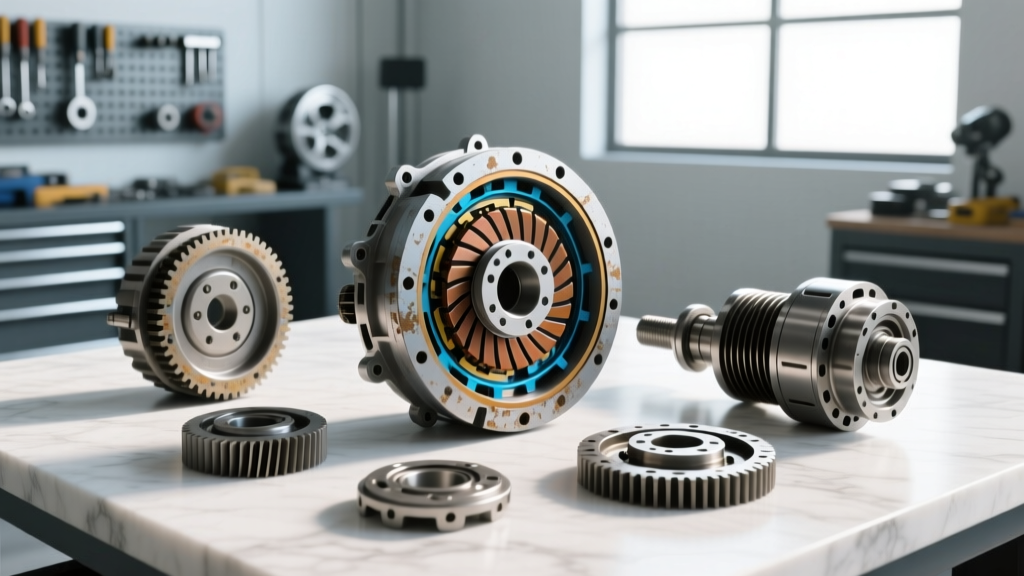
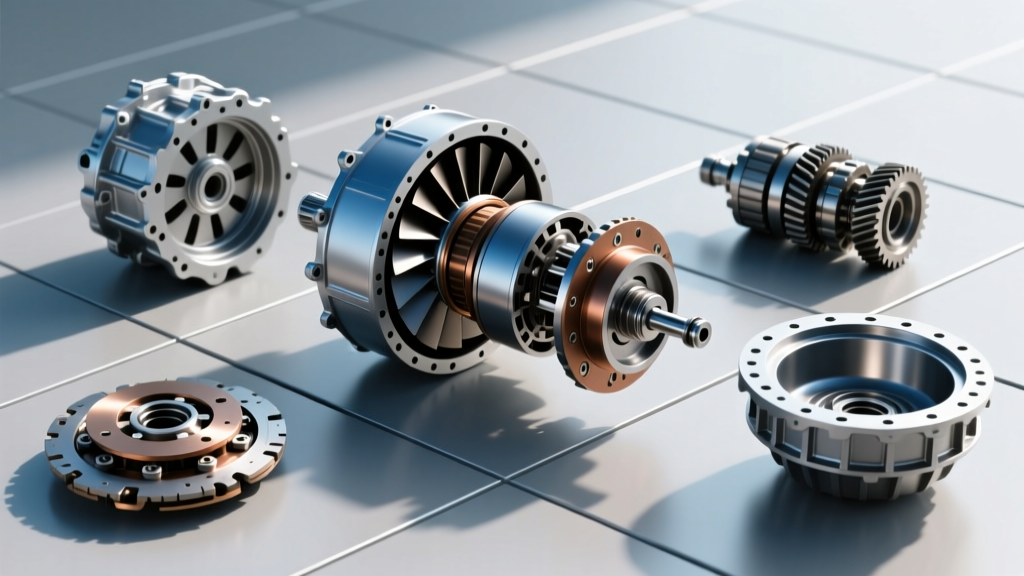
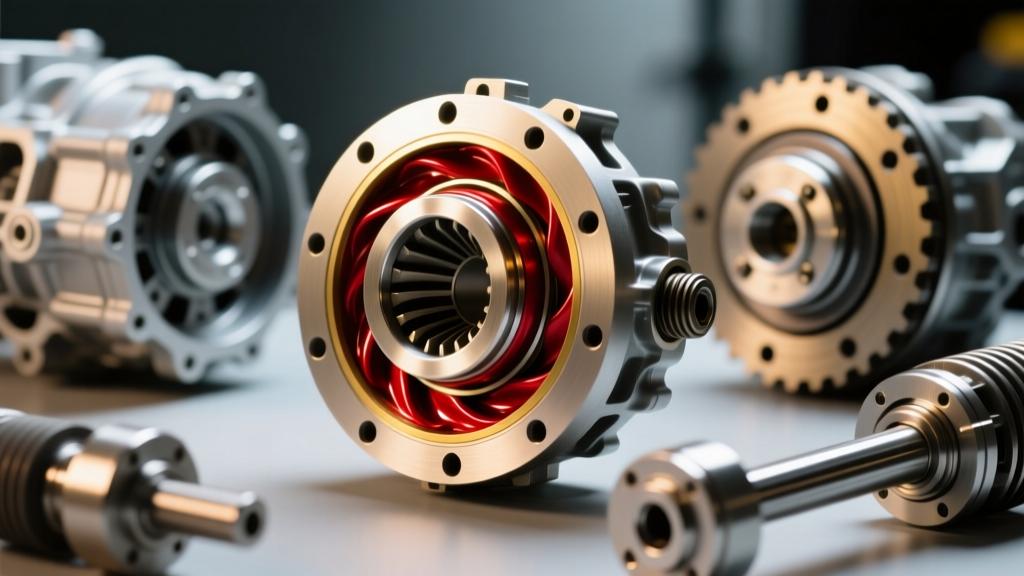
- Aftermarket Stall Converters: Feature CNC-machined billet steel front covers to prevent flexing under high horsepower. Internally, they use needle-type Torrington bearings instead of plastic thrust washers, and the TCC utilizes carbon-fiber or Kevlar multi-stage friction clutches. The stator fins are hand-brazed at specific angles to multiply torque and push the flash stall speed to 2800-3600 RPM, matching aftermarket camshaft powerbands.
According to manufacturing insights from Circle D Specialties, the raw material cost of billet steel and precision bearing tolerances inherently triples the manufacturing cost compared to OEM stamped units.
2026 Replacement Cost Matrix: Stock vs. Stall
Labor rates in 2026 have stabilized between $140 and $225 per hour at specialized drivetrain shops. Dropping a transmission crossmember, disconnecting the driveshaft, exhaust, and wiring harness typically books at 4.5 to 6.5 hours. Below is the comprehensive cost matrix for a complete R&R (Remove and Replace) operation.
| Transmission Model | Stock TC Part Cost | Stall TC Part Cost | Avg. Labor (R&R) | Fluid & Filter Kit | Required Tuning | Total Est. (Stock / Stall) |
|---|---|---|---|---|---|---|
| GM 4L60E / 4L65E | $220 - $350 | $650 - $850 | $650 - $900 | $90 (Dexron VI) | None | $960 / $1,940 |
| GM 6L80 / 6L90 | $450 - $650 | $950 - $1,400 | $750 - $1,000 | $120 (Dexron ULV) | $250 - $400 | $1,320 / $2,920 |
| Ford 6R80 (ZF 6HP26) | $400 - $550 | $850 - $1,150 | $700 - $950 | $110 (Mercon LV) | $200 - $350 | $1,210 / $2,560 |
Note: Pricing sourced via current 2026 market averages from retailers like Summit Racing and RockAuto.
Model-Specific Deep Dive: Installation and Nuances
GM 4L60E / 4L65E (1993-2013 GM Trucks, Camaros, Corvettes)
The 4L60E is the most swapped transmission in history. When replacing the torque converter, the most common DIY error is destroying the transmission oil pump. The 4L60E requires the converter to be seated fully onto the stator support tube. You must feel and hear three distinct clicks as the converter passes through the oil pump drive gear, the stator support, and the turbine spline. If you force the transmission bellhousing to the engine block with the bolts, you will crack the cast-aluminum oil pump housing, resulting in immediate zero-line-pressure failure upon startup.
Cost-Saving Tip: If you are running a naturally aspirated or mildly boosted setup (under 400 whp), a high-quality stock replacement from ACDelco or Precision Industries is vastly superior to a cheap, unbranded eBay stall converter. Cheap stalls often suffer from poor internal balancing, leading to catastrophic main-bearing wear at highway speeds.
GM 6L80 / 6L90 (2006-2017 Silverado, Tahoe, Camaro SS)
The 6L80 introduced a highly complex, Pulse Width Modulated (PWM) TCC apply strategy. The factory ECU slips the torque converter clutch continuously in 4th, 5th, and 6th gears to simulate a manual clutch and improve NVH (Noise, Vibration, and Harshness).
CRITICAL WARNING: If you install a high-stall converter (e.g., 2800 RPM or 3200 RPM) in a 6L80 without custom ECU tuning, the factory TCC apply tables will attempt to lock the clutch at 1100 RPM. Because the converter is still multiplying torque and slipping fluid, the clutch will instantly overheat, glaze the carbon lining, and throw a P0741 or P2763 code within 50 miles.
Budgeting for a 6L80 stall converter must include a licensing and tuning fee via HP Tuners VCM Editor to disable early lockup, raise the TCC apply RPM, and increase the apply pressure (PSI) to handle the increased rotational mass and torque multiplication of the aftermarket stator.
Ford 6R80 (2011-2017 Mustang GT, F-150 Coyote Swaps)
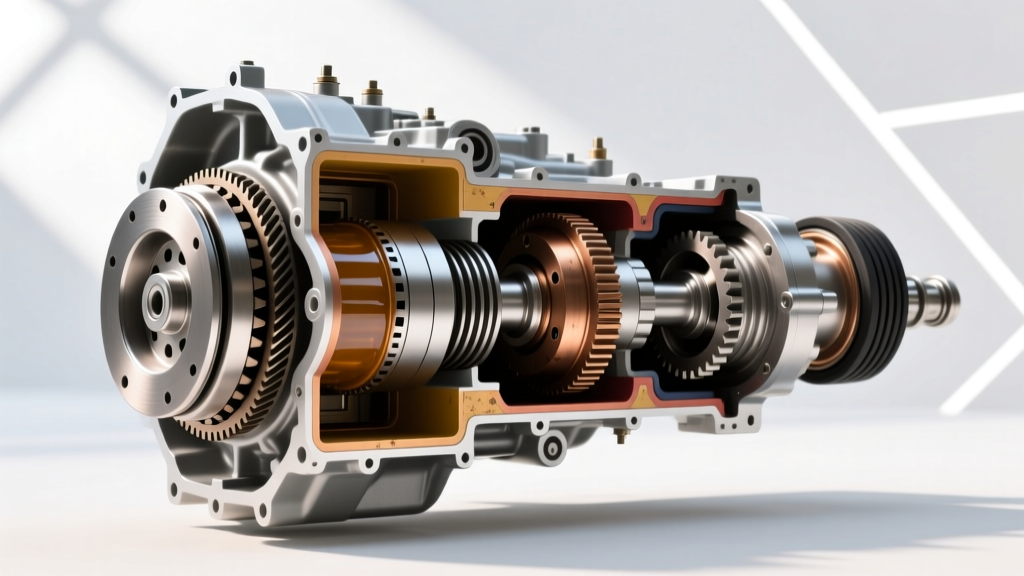
Based on the ZF 6HP26 architecture, the 6R80 uses a unique Lepelletier gearset and an integrated mechatronic valve body. The torque converter features a specialized torsional damper assembly designed to absorb the aggressive torque spikes of the 5.0L Coyote V8. When upgrading to a stall converter for track use, you must also upgrade the transmission pan and filter assembly. The factory plastic filter O-ring is notorious for shrinking and sucking air at high RPMs. Budget an extra $85 for an aluminum deep-sump pan and a bonded rubber-metal filter seal.
The Hidden Costs: Cooling and Drivetrain Stress
A frequent omission in repair budgets is the thermal penalty of a high-stall converter. By design, a 3000 RPM stall converter allows the impeller and turbine to slip past one another longer before coupling. This fluid shearing generates immense heat. While a stock converter might see 160°F in stop-and-go traffic, a stall converter can easily spike to 230°F+ under the same conditions, rapidly degrading synthetic transmission fluid and destroying clutch packs.
- Mandatory Cooler Upgrade ($150 - $300): You must bypass the factory radiator-integrated cooler and install a dedicated external air-to-fluid cooler. Brands like Derale (Hyper-Cool series) or Hayden (Rapid-Cool) are mandatory. Mounting it in front of the A/C condenser ensures adequate CFM airflow.
- Driveshaft and Rear-End Shock ($0 - $800): A high-stall converter hits the driveline with an instantaneous torque spike rather than a linear roll-on. If your 8.8 or 12-bolt rear differential has worn spider gears or a loose pinion nut, the violent 'hit' of a 3200 RPM stall will shatter U-joints or strip ring gear teeth. Inspect your U-joints and differential backlash before reinstalling the driveshaft.
Model-Specific Installation Torque Specs & Clearances
Proper installation requires adherence to exact factory specifications to prevent catastrophic flexplate failure or converter pad separation.
Flexplate Runout and Clearance
Before bolting the torque converter to the flexplate, you must measure the flexplate runout using a magnetic dial indicator. If the runout exceeds 0.015 inches, the TCC will drag against the front cover, causing severe vibration and premature clutch failure. Furthermore, verify the flexplate-to-converter-pad clearance. It should measure between 1/8" and 3/16". If it is tighter, you risk pushing the converter into the pump; if wider, the flexplate will flex backward upon bolt tightening, cracking the welds on the converter hub.
Fastener Torque Specifications
- GM 4L60E (3/8" - 16 Flexplate Bolts): 35 lb-ft. Expert Tip: Never reuse old hardware. Use new Grade 8 or ARP bolts with a medium-strength threadlocker (Loctite 243). The rotational mass and harmonics will back out dry bolts within 1,000 miles.
- GM 6L80 (M10 x 1.25 Flexplate Bolts): Factory bolts are Torque-to-Yield (TTY). Spec is 33 lb-ft + 55 degrees of rotation. For high-horsepower stall applications, discard the TTY bolts and install ARP 200,000 PSI replacement flexplate bolts torqued to 75 lb-ft to prevent stretching under high-RPM launch loads.
- Ford 6R80 (M10 Flexplate Bolts): 37 lb-ft + 90 degrees. Again, ARP replacement hardware torqued to 75-80 lb-ft is highly recommended when pairing a stall converter with a supercharged Coyote engine.
Final Verdict: Where Should You Invest Your Money?
If your vehicle is a daily driver, tow rig, or highway cruiser, the stall converter vs torque converter debate is easily won by the stock OEM replacement. The 2026 pricing for a factory-spec unit paired with a standard fluid flush will keep your vehicle reliable, cool, and streetable without the need for aftermarket tuning or massive external coolers.
However, if you are building a dedicated track car, running a camshaft with a narrow powerband (e.g., 3500-6500 RPM), or utilizing forced induction that requires immediate boost response off the line, the investment in a billet, multi-clutch stall converter is non-negotiable. Just ensure your 2026 repair budget accounts for the mandatory ECU recalibration, external cooling, and drivetrain reinforcement required to keep that upgraded power flowing to the pavement.