The Anatomy of a TCC Release Failure
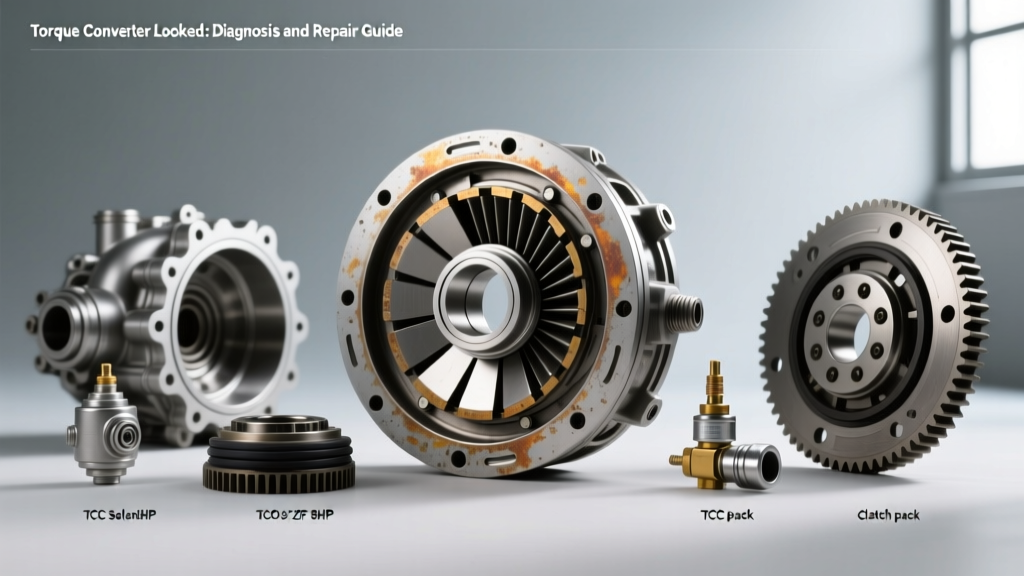
When a driver or technician notes that the torque converter locked condition is present, they are typically describing a scenario where the Torque Converter Clutch (TCC) fails to release upon vehicle deceleration or at idle. In a properly functioning automatic transmission, the TCC applies during higher gears to eliminate slip, creating a 1:1 mechanical link between the engine and the transmission input shaft. However, if the TCC remains engaged as the vehicle comes to a stop, the engine will inevitably stall, mirroring the experience of stopping a manual transmission vehicle without depressing the clutch pedal.
Diagnosing a stuck TCC requires a systematic approach to isolate whether the root cause is electrical (solenoid failure), hydraulic (valve body cross-leaks or regulator binds), or mechanical (fused friction material or warped apply piston). As of 2026, with the widespread integration of 8-speed and 10-speed automatics featuring complex PWM (Pulse Width Modulated) solenoid controls, accurate diagnosis demands more than just reading OBD-II codes; it requires live data analysis and hydraulic circuit verification.
Primary Indicators: How to Tell if the Torque Converter is Locked
Before tearing into the bellhousing, confirm the symptom profile. A true 'stuck locked' torque converter presents distinct behavioral markers that differentiate it from standard TCC shudder or slipping.
- Engine Stalling at Idle: The most definitive symptom. As the vehicle brakes to a halt (typically below 15 mph), the engine RPM drops and stalls because the mechanical link to the stationary drivetrain is not severed.
- Harsh Forward/Reverse Engagement: With the TCC partially or fully applied at a stop, shifting from Park to Drive or Reverse will result in a violent, jarring engagement, often accompanied by a heavy clunk from the driveline.
- Lack of TCC Slip RPM Data: When monitoring live transmission data via a bi-directional scan tool, the TCC Slip RPM will read 0 (or near 0) even when the PCM commands the TCC solenoid to 0% duty cycle (release).
- Transmission Overheating: If the TCC is mechanically dragging or stuck in a partial apply state, the resulting shear heat will rapidly degrade the ATF, often triggering a transmission over-temp limp mode.
Diagnostic Matrix: Electrical, Hydraulic, and Mechanical Faults
To efficiently troubleshoot, technicians must categorize the failure mode. Below is a breakdown of how different transmission families handle TCC lockup and their specific failure points.
GM 6L80 / 6L90 (RWD/AWD Applications)
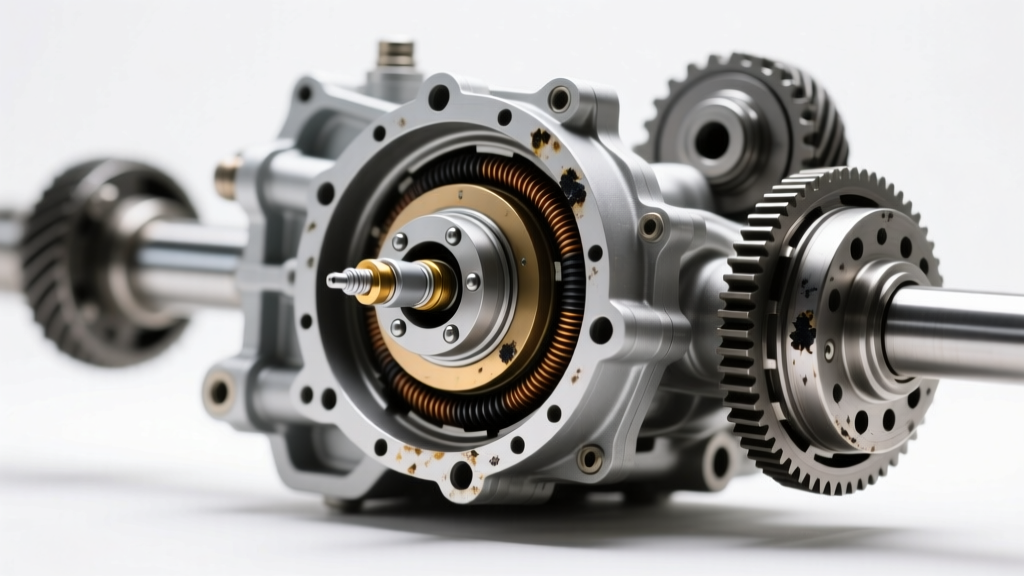
The GM 6L80 utilizes Solenoid A (TCC Solenoid) to regulate apply and release oil. A common cause for a torque converter locked event in these units is a mechanical bind within the solenoid's internal spool valve or debris lodged in the TCC regulator valve in the valve body. Furthermore, if the friction lining on the converter piston delaminates, it can wedge between the piston and the cover, mechanically preventing release regardless of hydraulic pressure.
ZF 8HP45 / 8HP70 (Chrysler, BMW, Audi)
The ZF 8-speed relies on a highly sophisticated mechatronic unit. The TCC regulator valve bore in the aluminum valve body is prone to wear. When this bore wears, apply oil can cross-leak into the release circuit, or the valve can stick in the apply position due to contaminated fluid and aluminum scoring. According to Sonnax technical bulletins, installing a hardened steel TCC regulator valve sleeve kit is often mandatory to resolve chronic lockup and release issues in high-mileage ZF units.
Ford 6R80 / 10R80
Ford's 6R80 and 10R80 transmissions use a lockup clutch with a specialized friction material that is highly susceptible to thermal degradation if the vehicle is frequently towed or driven aggressively. When the material breaks down, it creates a sludge that clogs the TCC control valve and the solenoid screens. If the TCC control valve sticks in the apply position, the converter remains locked. Additionally, the 10R80's rapid shift strategies demand flawless PWM solenoid response; a failing solenoid coil can cause erratic lockup behavior that mimics a mechanical bind.
OEM TCC Specifications and Diagnostic Targets
Use the following matrix to verify solenoid health and expected hydraulic behavior during your diagnostic routine. Always cross-reference with specific ATSG service manuals for your exact VIN calibration.
| Transmission Model | TCC Solenoid Type | Expected Resistance (Ohms @ 68°F) | TCC Apply Pressure (PSI) | Common Failure Component |
|---|---|---|---|---|
| GM 6L80 / 6L90 | PWM (Normally Low) | 10.0 - 15.0 Ω | 90 - 110 PSI | Solenoid A Spool Bind |
| ZF 8HP45 / 8HP70 | PWM (Normally Low) | 5.0 - 7.5 Ω | 85 - 105 PSI | TCC Regulator Valve Bore |
| Ford 6R80 | PWM (Normally High) | 1.5 - 4.0 Ω | 110 - 130 PSI | TCC Control Valve / Screen |
| Ford 10R80 | VFS (Variable Force) | 2.5 - 5.5 Ω | 120 - 145 PSI | Mechatronic Sleeve Wear |
Step-by-Step Troubleshooting Workflow
When confronted with a stalled engine at a stoplight, follow this diagnostic sequence to avoid unnecessary transmission removal.
1. Live Data TCC Slip Analysis
Connect an advanced bi-directional scanner. Monitor the TCC Slip RPM and TCC Solenoid Duty Cycle parameters. Command the TCC solenoid to 0% (fully released) while the vehicle is idling in gear. If the slip RPM remains at 0 and the engine wants to stall, the fault is hydraulic or mechanical. If the slip RPM fluctuates or the solenoid duty cycle does not match the PCM command, suspect an electrical fault or wiring short.
2. Electrical Verification
Drop the transmission pan and disconnect the internal wiring harness or mechatronic plug. Use a digital multimeter to measure the resistance across the TCC solenoid pins. Compare your reading to the matrix above. An open circuit (OL) or a short (near 0 ohms) dictates solenoid replacement. For PWM solenoids, an oscilloscope test is highly recommended to verify the PCM is delivering a clean square wave pattern without voltage drop-offs.
3. Hydraulic Release Circuit Testing
If the solenoid tests perfectly, the issue lies in the valve body or the converter itself. Install a transmission pressure gauge on the TCC release port (if accessible on your specific transmission casing, though many modern units require internal valve body testing). According to TransGo diagnostic procedures, if apply pressure remains present in the release circuit when the solenoid is de-energized, the TCC regulator valve is stuck, or a cross-leak has developed in the valve body casting or separator plate.
Repair Scenarios, Part Numbers, and Cost Estimates
Repairing a torque converter locked condition ranges from a simple solenoid swap to a complete driveline extraction. Below are the standard repair paths and associated 2026 market costs.
Scenario A: Solenoid or Valve Body Sleeve Replacement (Pan Drop)
If the fault is isolated to a stuck solenoid or a worn valve body bore, the transmission can often be repaired without removal.
- GM 6L80 TCC Solenoid: OEM Part # 24230298. Cost: $60 - $90.
- ZF 8HP TCC Regulator Valve Kit: Sonnax Part # 104740-13K. Cost: $85 - $120.
- Labor: 3 - 5 hours (Pan drop, valve body disassembly, cleaning, and fluid refill). Labor Cost: $360 - $750.
- Total Estimated Cost: $450 - $900.
Scenario B: Mechanical Converter Failure (Transmission R&R)
If the friction material has fused to the cover, or the apply piston is mechanically warped, the torque converter must be replaced. This requires transmission removal.
- Remanufactured Torque Converter: Cost: $350 - $750 (depending on stall speed and vehicle application).
- Flexplate to Converter Nuts: Always replace. (e.g., GM 6L80 requires new torque converter nuts, tightened to 51 Nm / 38 lb-ft).
- Transmission Fluid & Filter: Full system flush and filter replacement (e.g., 11-13 quarts of Dexron ULV or ZF 8-Speed fluid). Cost: $150 - $250.
- Labor: 8 - 12 hours for R&R. Labor Cost: $960 - $1,800.
- Total Estimated Cost: $1,460 - $2,800.
Final Diagnostic Warnings
Never attempt to 'flush' a transmission that has suffered a mechanical TCC failure. If the torque converter locked up due to internal friction material delamination, the transmission sump and cooler lines are heavily contaminated with clutch debris and metal particulates. A standard machine flush will only force this debris deeper into the valve body and solenoid screens, guaranteeing a secondary failure. The transmission must be removed, the cooler lines must be back-flushed manually, and the valve body must be disassembled and inspected for scoring before a new torque converter is installed.