The Traction Dilemma: Open vs. Limited-Slip Axles
When building, restoring, or upgrading a vehicle's drivetrain, the choice between an open differential and a limited-slip differential (LSD) fundamentally dictates how power reaches the pavement. However, many enthusiasts focus solely on traction metrics while ignoring the long-term ownership experience. As a buyer in 2026, you must evaluate not just the mechanical advantages of each system, but also the routine maintenance they demand—most notably, the nuances of fluid servicing and differential gasket replacement.
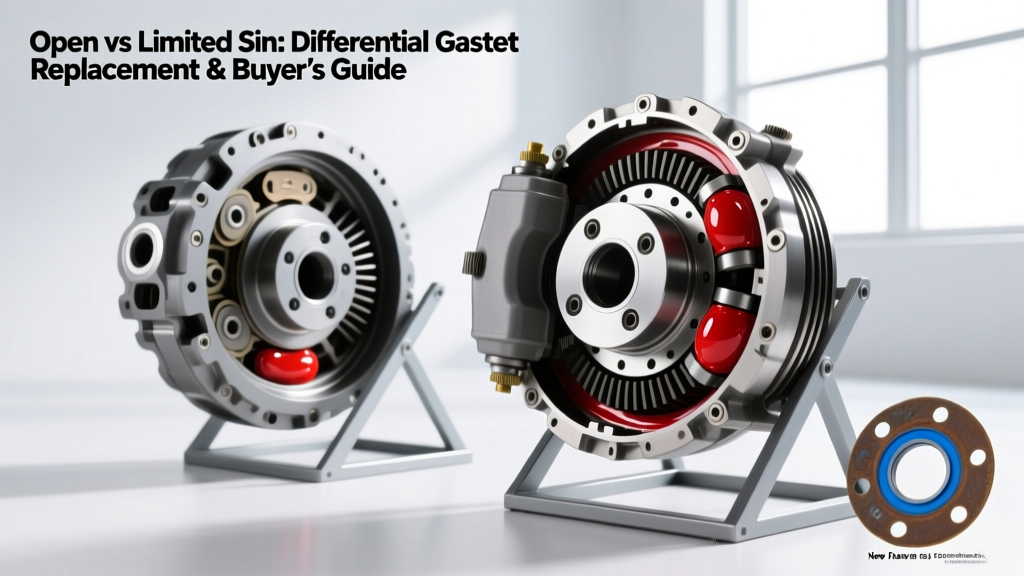
This comprehensive buyer's guide compares open and limited-slip differententials across performance, maintenance requirements, and real-world servicing costs, giving you the data needed to make an informed drivetrain investment.
Core Mechanics: How They Differ
To understand the maintenance differences, we must first look at the internal architecture of the carrier.
Open Differentials
An open differential utilizes a set of spider gears and side gears mounted on a cross pin. It allows the left and right wheels to rotate at different speeds, which is essential for smooth cornering. However, torque follows the path of least resistance. If one wheel loses traction, the open diff sends all available power to that spinning wheel, leaving the vehicle stranded. Popular examples include the standard GM 8.5-inch 10-bolt and the base Ford 8.8-inch axles found in older F-150s and Mustangs.
Limited-Slip Differentials (LSD)
Limited-slip differentials mitigate the one-wheel-spin issue by mechanically linking the axles under load. There are two primary types:
- Clutch-Type (e.g., Eaton Positraction, Ford Traction-Lok): Uses a stack of friction clutches and preload springs to resist independent wheel spin. These require specialized friction modifiers in the gear oil to prevent chatter during low-speed cornering.
- Helical/Gear-Type (e.g., Torsen, Detroit Truetrac): Uses complex helical gear meshes to multiply torque to the wheel with traction. These operate smoothly without clutch packs and generally do not require friction modifiers.
Buyer's Matrix: Which Differential Fits Your Build?
Use the decision matrix below to align your differential choice with your primary use case.
| Feature | Open Differential | Clutch-Type LSD | Helical LSD (Truetrac) |
|---|---|---|---|
| Best Application | Highway cruising, budget builds, front axles (part-time 4WD) | Drag racing, off-road rock crawling, classic muscle car restorations | Daily driving, towing, autocross, all-weather traction |
| Traction Bias | 1:1 (No bias) | 3:1 to 5:1 torque bias | 2.5:1 to 3.5:1 torque bias |
| Fluid Requirement | Standard GL-5 75W-90 | GL-5 75W-90 + Friction Modifier | Standard GL-5 75W-90 |
| Rebuild Complexity | Low (Simple spider gear replacement) | High (Clutch pack shimming required) | Medium (Sealed unit, replace if failed) |
The Maintenance Reality: Fluid Chemistry and Additives
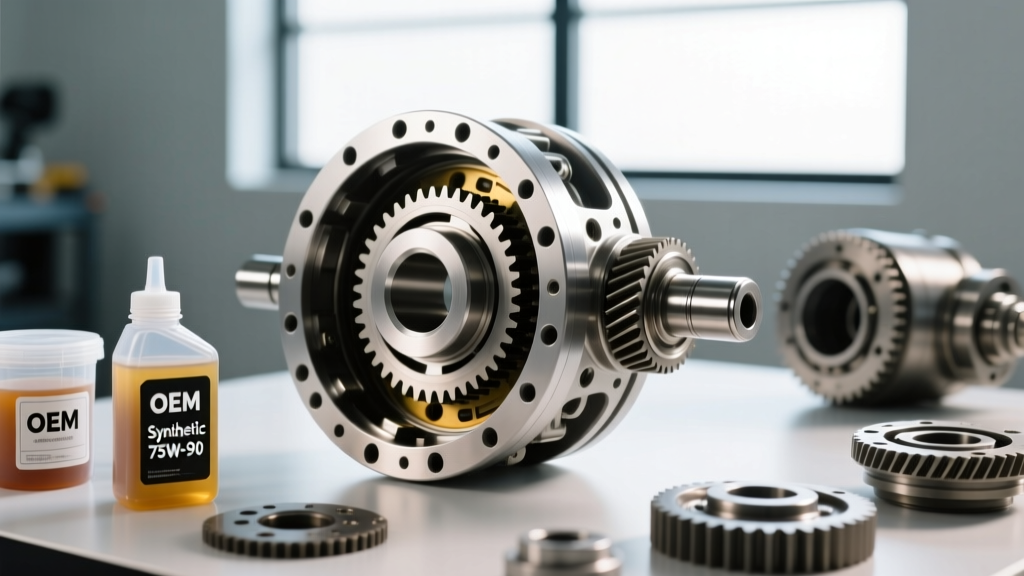
The most significant divergence in ownership occurs during fluid changes. According to AMSOIL's technical bulletins on gear oil, standard open differentials thrive on high-quality synthetic 75W-90 or 75W-140 GL-5 gear oil. The extreme pressure (EP) additives in GL-5 oils protect the hypoid ring and pinion gears from sliding friction.
However, if you opt for a clutch-type LSD, the fluid chemistry becomes critical. Clutch packs require a friction modifier (typically long-chain fatty acids, such as GM P/N 88900338 or Ford XL-3). Without this additive, the clutches will bind and release abruptly, causing a violent 'chatter' or 'grabbiness' during tight parking lot turns. Over-saturating the fluid with modifier, conversely, will cause the clutches to slip continuously, generating excess heat and prematurely destroying the carrier.
Mastering the Differential Gasket Replacement
Whether you are running an open diff or an LSD, the axle housing must be sealed. While some modern axles use a press-in carrier bearing setup that requires pulling the entire axle shaft to service the carrier, traditional solid axles (like the Dana 44, GM 10-bolt, and Ford 8.8) feature a removable stamped steel or cast aluminum cover. This makes the differential gasket replacement a straightforward, albeit meticulous, DIY task.
Step 1: Draining and Inspection
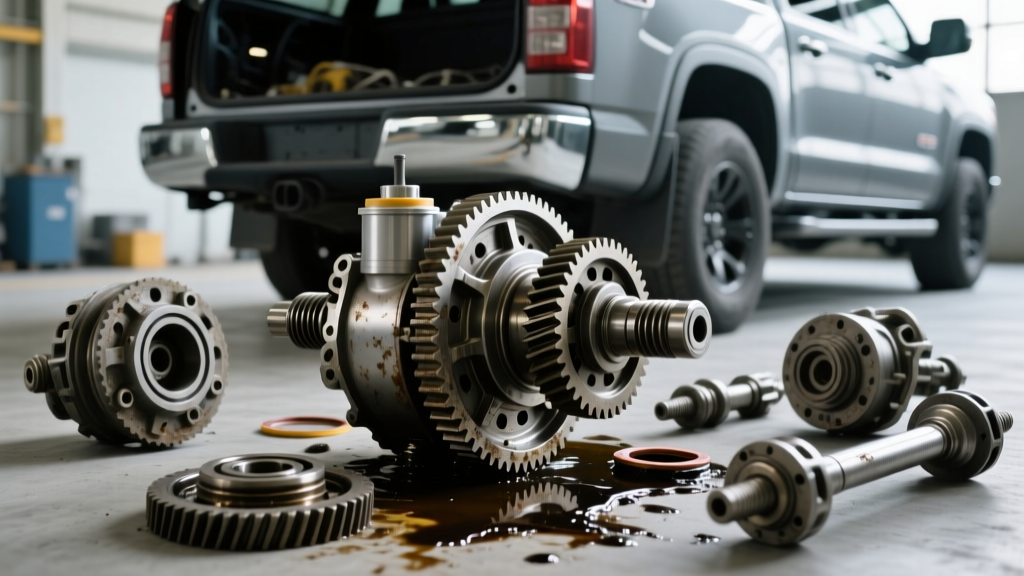
Remove the fill plug before removing the cover bolts. A common rookie mistake is draining the diff via the cover, only to find the fill plug is seized or stripped, leaving you with an empty axle and no way to refill it. As you drain the fluid, inspect for metallic glitter (normal wear) versus large chunks of steel or brass (indicative of spider gear or bearing failure).
Step 2: Mating Surface Preparation
This is where open and LSD servicing diverge slightly in risk. When cleaning the gasket mating surface on the axle housing, never use abrasive scouring pads or wire wheels. Shedding aluminum or silicon bristles into the housing can contaminate the gear oil. In an open diff, this debris might circulate harmlessly or settle in the housing sump. In a clutch-type LSD, metallic debris can embed itself into the porous friction material of the clutch packs, ruining them.
Expert Tip: Use a plastic gasket scraper and aerosol brake cleaner. Wipe the mating surface completely dry with lint-free shop towels before applying any sealant.
Step 3: Gasket Selection and Sealing
You have two primary routes for the differential gasket replacement:
- RTV Silicone: Permatex Ultra Black or The Right Stuff. Apply a continuous 1/8-inch bead around the bolt holes. This is cheap but requires careful cleanup and curing time.
- Reusable Elastomer Gaskets: Brands like Lube Locker (e.g., P/N LL-D44 for Dana 44) use a steel core with molded rubber O-rings. These cost more upfront but eliminate RTV mess and allow for immediate fluid filling.
Step 4: Torque Specifications and Sequence
Over-torquing differential cover bolts is the leading cause of post-service leaks. Stamped steel covers will warp if tightened unevenly, breaking the gasket seal. Always use a calibrated 1/4-inch drive torque wrench and follow a crisscross star pattern.
- GM 8.5' 10-Bolt: 25 lb-ft
- Ford 8.8-Inch: 28 - 38 lb-ft
- Dana 44: 30 lb-ft
For further torque specs and carrier setup data, consult the Yukon Gear & Axle Technical Resources library.
Step 5: Refilling and Additive Dosing
Refill the differential through the fill hole until the fluid reaches the bottom of the threads. For a standard Ford 8.8 open diff, this takes approximately 2.5 quarts of 75W-140 synthetic. For a clutch-type LSD, add the recommended 4 oz of friction modifier before pumping in the gear oil to ensure proper mixing. After driving for 50 miles, check the fluid level again, as the oil will have expanded and worked its way into the axle tubes.
Cost Analysis: 2026 Pricing Breakdown
Understanding the financial commitment of axle maintenance helps finalize your buyer's decision. Below is a realistic cost breakdown for a standard rear axle differential gasket replacement and fluid service.
| Component / Service | Open Differential | Clutch-Type LSD |
|---|---|---|
| Gasket (Fel-Pro Cork/Rubber) | $12.00 | $12.00 |
| Reusable Gasket (Lube Locker) | $38.00 | $38.00 |
| Synthetic Gear Oil (3 Quarts) | $45.00 - $60.00 | $45.00 - $60.00 |
| Friction Modifier Additive | $0.00 | $12.00 - $18.00 |
| Total DIY Cost (w/ Reusable Gasket) | $83.00 - $98.00 | $95.00 - $116.00 |
Expert Verdict: Making the Final Choice
If your vehicle is a dedicated highway cruiser, a tow rig with an advanced electronic traction control system, or a front-axle application in a part-time 4WD truck, an open differential remains a highly reliable, low-maintenance choice. The differential gasket replacement is foolproof, and fluid changes are inexpensive and straightforward.
However, if you are building a performance car, a dedicated off-roader, or a classic muscle car lacking modern traction aids, a limited-slip differential is mandatory. While clutch-type LSDs demand stricter adherence to fluid chemistry and careful debris management during servicing, the mechanical traction advantage they provide is irreplaceable. For the ultimate 'set-it-and-forget-it' traction upgrade without the friction modifier headaches, invest in a helical gear LSD like the Detroit Truetrac—it bridges the gap between open-diff simplicity and clutch-pack aggression, making it the top recommendation for modern enthusiasts in 2026.