The Hidden Cost of Drivetrain Neglect in Modern Trucks and SUVs
Modern trucks and SUVs are engineering marvels, capable of towing over 10,000 pounds and tackling extreme off-road terrain. However, this capability places immense stress on the drivetrain. With the widespread adoption of high-torque 10-speed automatic transmissions like the Ford 10R80 and GM 10L90, the torque multiplication reaching the rear axle is higher than ever before. When you combine this with larger aftermarket tires and heavy towing loads, the rear differential becomes a critical weak point. Recognizing the signs of bad rear differential wear early is not just about avoiding a breakdown; it is the first step in a comprehensive performance and upgrade strategy for your vehicle.
For truck and SUV owners, differential maintenance goes far beyond a simple fluid swap. It requires understanding gear metallurgy, fluid dynamics under extreme shear, and the mechanical limits of your specific axle housing. Whether you are wheeling a Jeep Wrangler Rubicon, towing a fifth-wheel with a Ford F-250, or daily driving a Toyota 4Runner, this guide will help you diagnose failure points and execute high-performance upgrades.
5 Critical Signs of Bad Rear Differential Health
Before tearing into an upgrade, you must accurately diagnose the current state of your axle. Misdiagnosing differential noise can lead to unnecessary rebuilds or missed catastrophic failures. Here are the definitive symptoms of a failing rear end:
1. Deceleration Howl and Pinion Bearing Wear
A high-pitched howl that occurs specifically when you lift off the throttle (deceleration) is a classic indicator of pinion bearing wear. As the bearing races pit and spall, the pinion gear loses its precise depth setting relative to the ring gear. In heavy-duty axles like the Dana 60 or GM 11.5-inch, this is often exacerbated by inadequate fluid levels or prolonged towing without upgrading to a higher viscosity synthetic gear oil.
2. Engagement Clunk and Excessive Backlash
If you hear a metallic clunk when shifting from reverse to drive, or when abruptly lifting and reapplying the throttle, you are experiencing excessive gear backlash. While a few thousandths of an inch of backlash is necessary to prevent gear bind, wear on the spider gears, side bearings, or carrier shims will cause this gap to widen. In high-torque applications, this clunking can eventually shear the ring gear bolts.
3. Limited-Slip Chatter in Tight Turns
For SUVs and trucks equipped with a clutch-type Limited Slip Differential (LSD), chattering, binding, or hopping during low-speed, tight-radius turns is a primary sign of degraded friction modifier. The clutch packs inside the LSD require a specific chemical additive to allow smooth slip. When the fluid degrades or the friction modifier burns off, the clutches lock and release violently.
4. Pinion Seal Leaks and Bearing Runout
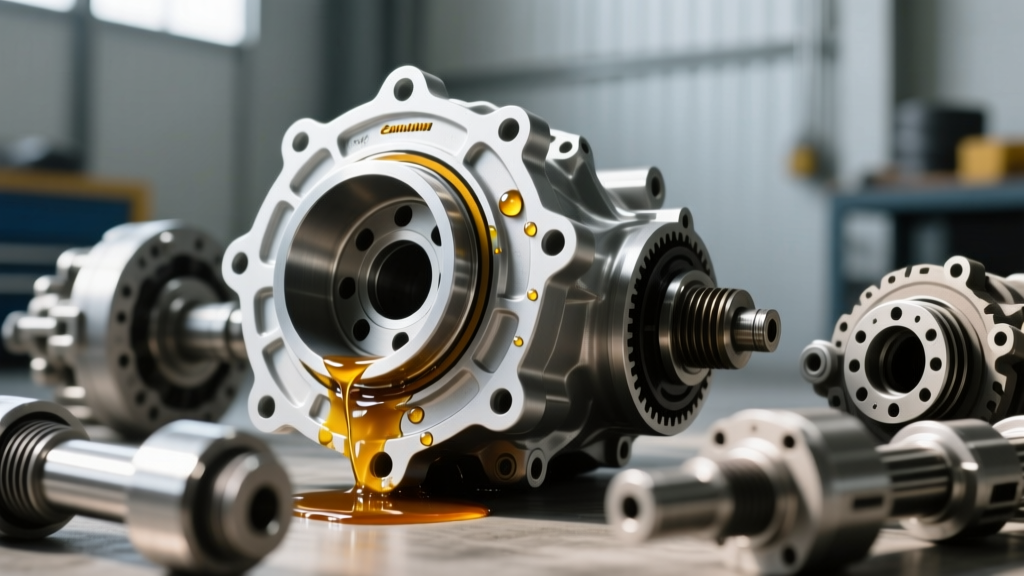
A leaking pinion seal is often treated as a simple $15 fix, but in performance applications, it is a symptom of a larger issue. If the pinion bearing is worn, it allows the pinion yoke to wobble (runout), which quickly destroys the rubber lip of the seal. If you replace the seal without checking the pinion bearing preload (typically 8-14 inch-pounds of rotating torque on a used bearing), the new seal will fail within a few thousand miles.
5. Metallic Glitter on the Drain Plug
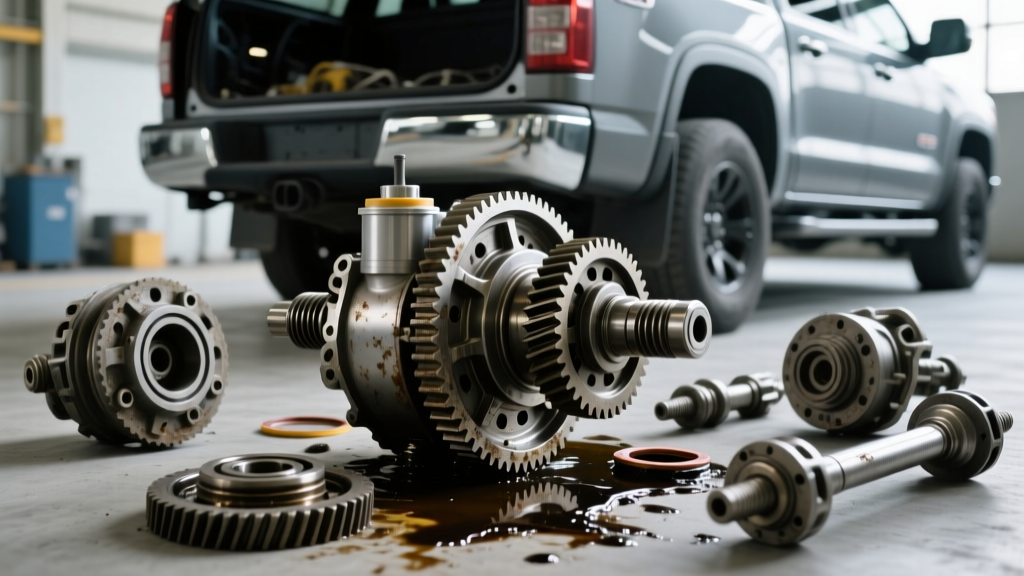
While a slight paste-like metallic coating on the magnetic drain plug is normal for a new gear set breaking in, actual metallic flakes or chunks indicate severe gear spalling or bearing cage disintegration. If you find chunks of metal, the differential must be torn down, the housing flushed, and the ring and pinion replaced.
Why Stock Truck Differentials Fail Under Performance Loads
Automakers design stock differentials for a specific balance of cost, NVH (Noise, Vibration, and Harshness), and fuel economy. They do not design them for 37-inch mud-terrain tires or constant 8,000-pound towing up 6% grades. When you increase the rolling radius of your tires, you effectively lengthen the final drive ratio, forcing the ring and pinion to work harder and generate significantly more heat. Standard stamped-steel differential covers flex under high-torque loads, altering gear mesh patterns and accelerating wear. Furthermore, stock 75W-90 conventional gear oils suffer from viscosity shear breakdown when differential temperatures exceed 250°F during heavy towing.
Performance Upgrade Matrix: From Fluid to Full Rebuilds
Addressing the signs of bad rear differential wear requires a tiered approach to upgrades. Below is a comparison matrix for popular truck and SUV axle upgrades, focusing on heat management, strength, and traction.
| Component | Stock / OEM Specification | Performance Upgrade Path | Technical Benefit |
|---|---|---|---|
| Differential Cover | Stamped Steel (10-12 bolts) | Nodular Iron / Cast Aluminum w/ Cooling Fins | Increases housing rigidity to maintain gear mesh; fins drop fluid temps by 15-20°F. |
| Gear Oil | 75W-90 Conventional / Semi-Syn | 75W-140 Full Synthetic (e.g., Amsoil Severe Gear) | Maintains hydrodynamic film strength under extreme shear and 250°F+ towing temps. |
| Carrier / Locker | Open Differential or Clutch LSD | Eaton E-Locker or Detroit Locker (35-spline) | Eliminates clutch wear; provides 100% mechanical lock for off-road and heavy traction. |
| Ring & Pinion | OEM Ratio (e.g., 3.31 or 3.55) | 4.10 or 4.56 Nitro/Spicer Gears (8620 Steel) | Restores torque multiplication lost to oversized tires; reduces transmission hunting. |
Gear Oil Selection and Friction Modifiers
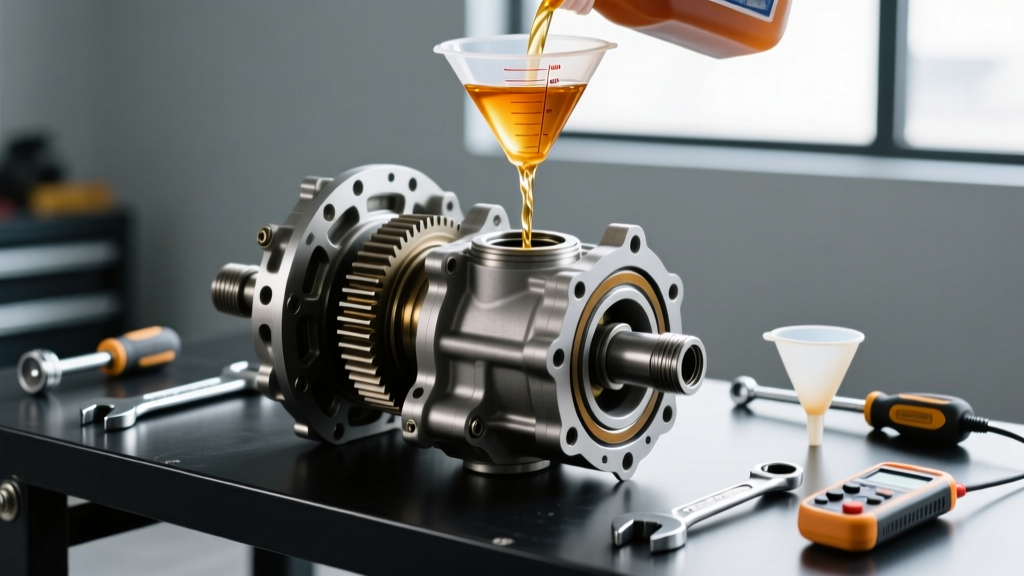
Fluid selection is the most cost-effective performance upgrade you can make. For daily-driven SUVs and light-duty trucks, a high-quality 75W-90 synthetic like Amsoil Severe Gear provides excellent protection. However, if your truck is used for heavy towing, commercial work, or rock crawling, stepping up to a 75W-140 synthetic is mandatory. The higher viscosity ensures the fluid does not shear out of the gear mesh zone under extreme pressure.
If your axle utilizes a clutch-type LSD (like the Ford Traction-Lok or GM G80), you must add a friction modifier. OEM part numbers like Ford XL-3 or GM 88900338 are standard, but performance alternatives like Torco MPF or Red Line Limited Slip Friction Modifier offer superior chatter elimination. Always add the modifier before filling the axle with gear oil to ensure proper mixing.
Step-by-Step Preventative Maintenance Protocol
To prevent the signs of bad rear differential failure from returning, implement this strict maintenance protocol, especially if your vehicle sees water fording or heavy towing.
- Axle Vent Extension: The factory axle vent tube is often located low on the housing. If you ford water, the sudden temperature drop creates a vacuum, sucking water past the seals into the gear oil. Extend the vent tube high into the engine bay or bed using a 5/16-inch hose and a remote breather filter.
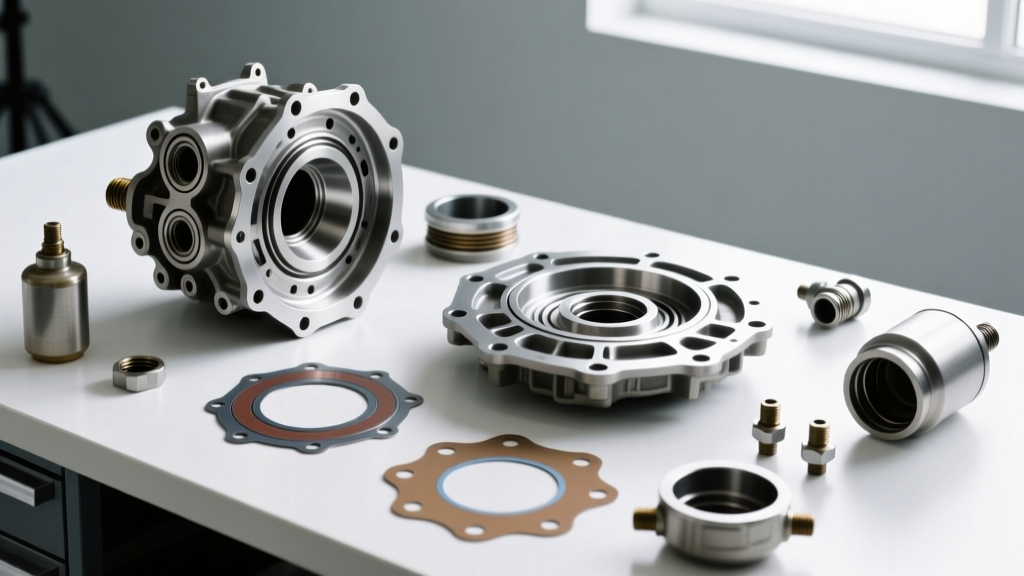
- Cover Bolt Torque Sequence: When reinstalling the differential cover, do not use an impact gun. Clean the mating surfaces with brake cleaner, apply a 1/8-inch bead of RTV silicone (like Permatex Black), and torque the cover bolts in a crisscross pattern to 25-32 lb-ft (verify your specific axle's spec, as Dana 60s may require up to 35 lb-ft).
- Fill Plug Verification: Always remove the fill plug before the drain plug. This prevents the nightmare scenario of draining the fluid only to find the fill plug is seized or stripped. Torque steel fill plugs to 25 lb-ft.
- Break-In Procedure for New Gears: If you upgrade your ring and pinion via a supplier like Yukon Gear & Axle, the first 500 miles are critical. Drive conservatively, avoid towing, and limit highway speeds to 60 mph. After 500 miles, drain the break-in fluid (which will be full of microscopic lapping compound), clean the magnetic plug, and refill with your chosen synthetic performance oil.
Final Thoughts on Drivetrain Longevity
Ignoring the early signs of bad rear differential health will inevitably lead to a catastrophic failure, often leaving you stranded on the trail or the side of the highway. By understanding the unique stressors placed on modern truck and SUV axles, you can transition from reactive repairs to proactive performance upgrades. Upgrading your gear oil, reinforcing your differential cover, and ensuring precise setup tolerances during a rebuild will transform your rear axle from a drivetrain liability into an unbreakable asset.