The Drivetrain Dilemma: Open vs. Limited Slip Differentials
When optimizing a vehicle for traction, towing, or off-road capability, the differential is the unsung hero of the drivetrain. As we navigate the 2026 automotive landscape, understanding the mechanical divide between an open differential and a limited slip differential (LSD) is critical for both performance enthusiasts and daily drivers. But hardware is only half the battle; the lifeblood of these gears is the lubricant. In this comprehensive buyer's guide, we will dissect the mechanical differences between open and LSD axles, and provide a meticulous breakdown of the Valvoline differential fluid change cost to help you budget for proper drivetrain maintenance.
Mechanical Architecture: How Power Meets the Pavement
To understand why fluid requirements differ, we must first look at the internal architecture of the axle. The differential's primary job is to allow the left and right wheels to rotate at different speeds during a corner, preventing tire scrubbing and drivetrain binding. However, how it distributes torque under load defines its classification.
The Open Differential
The open differential is the most common and cost-effective design, found in the majority of base-model trucks, SUVs, and passenger cars. It operates on the principle of least resistance. Torque is distributed equally to both axles, but if one wheel loses traction (e.g., resting on ice or lifted in the air), it will spin freely while the wheel with grip receives zero torque. While perfectly adequate for dry pavement and highway cruising, the open diff is a severe liability in off-road, snow, or high-performance launch scenarios.
The Limited Slip Differential (LSD)
A limited slip differential mitigates the flaws of the open design by incorporating internal mechanisms that resist speed differences between the two wheels when slip is detected. LSDs generally fall into two categories:
- Clutch-Type LSDs: Found in iconic axles like the Ford 8.8 Traction-Lok and Dana 44 Trac-Lok. These use a stack of alternating friction and steel clutch packs behind the side gears. Under load, the clutch packs bind, transferring torque to the wheel with grip.
- Gear-Type (Helical) LSDs: Systems like the Eaton Detroit Truetrac or Torsen use complex helical gear sets to multiply torque to the gripping wheel based on load, without the use of friction clutches.
Head-to-Head Axle Comparison
| Feature | Open Differential | Clutch-Type LSD | Helical Gear LSD (Truetrac) |
|---|---|---|---|
| Power Distribution | Path of least resistance | Variable (clutch binding) | Variable (gear bias ratio) |
| Traction in Snow/Mud | Poor | Excellent | Excellent |
| Friction Modifier Required? | No | Yes (Critical) | No |
| Maintenance Complexity | Low | Medium (Clutch wear) | Low |
| Common Applications | Base fleet trucks, economy cars | Performance cars, off-road trims | Heavy towing, rock crawling |
The Lubrication Science: GL-5 and Hypoid Gears
Whether you are running an open Dana 35 or a clutch-type Ford 9-inch, the ring and pinion gears operate under extreme sliding friction. Hypoid gear sets are offset from the centerline, creating a wiping, sliding action that generates immense heat and shear forces. This necessitates an API GL-5 rated gear oil, which contains high levels of Extreme Pressure (EP) additives—typically sulfur-phosphorus compounds. According to Dana Spicer's engineering guidelines, running standard GL-4 motor oil or inadequate gear lube in a hypoid differential will lead to catastrophic gear galling and pitting within a few thousand miles.
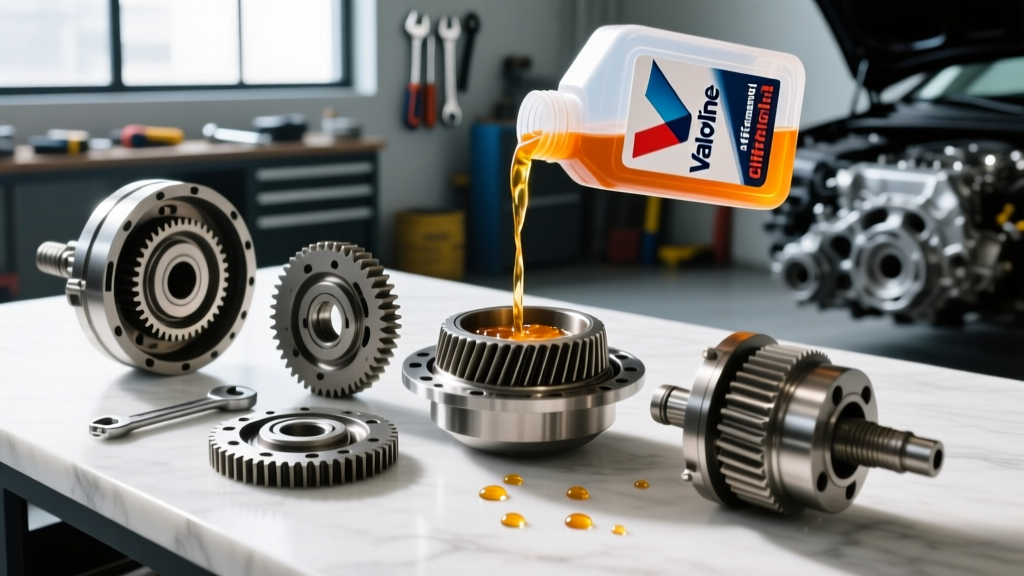
Valvoline offers two primary lines for these applications: the Daily Protection 80W-90 (conventional/mineral blend) and the SynPower Full Synthetic 75W-90. For modern 2026 vehicles, full synthetic is heavily recommended due to its superior thermal stability and resistance to oxidation, especially when towing heavy loads or operating in high-ambient temperatures.
Breaking Down the Valvoline Differential Fluid Change Cost
One of the most frequent questions we receive at AutoGearNexus revolves around maintenance budgets. Calculating the exact Valvoline differential fluid change cost depends on whether you are turning the wrenches in your driveway or paying a professional shop, as well as the specific hardware you are servicing.
DIY Cost Breakdown (2026 Estimates)
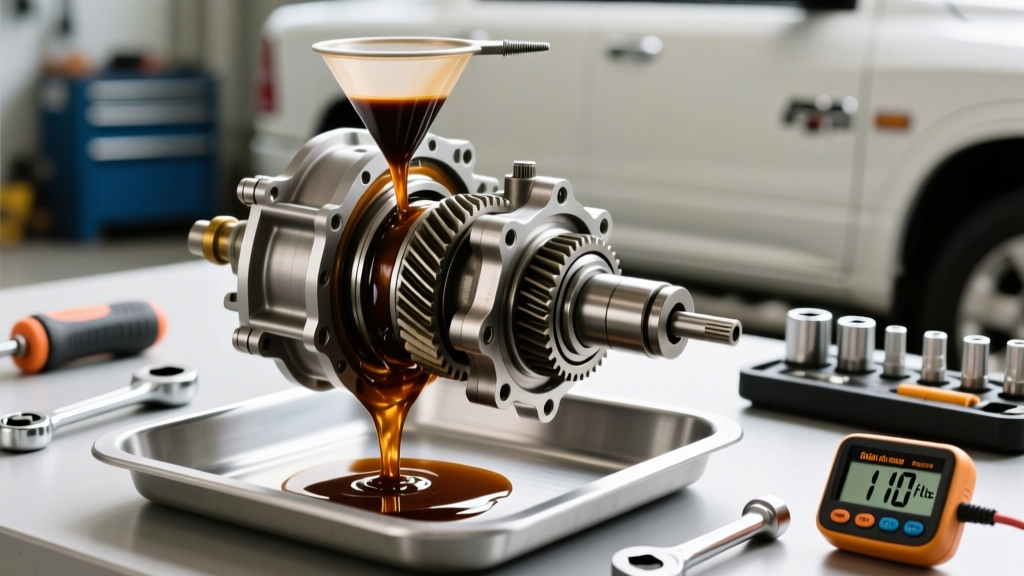
Performing the service yourself yields massive savings. Most standard light-truck differentials (like the GM 10-bolt or Ford 8.8) require between 2.0 and 2.5 quarts of fluid.
- Valvoline SynPower 75W-90 (Part # VV980): ~$13.50 per quart. (Total for 2.5 qts: $33.75)
- Valvoline Limited Slip Friction Modifier (Part # VV810): ~$9.99 per 4oz bottle (Required for clutch LSDs only).
- RTV Silicone / Gasket: ~$8.00 (Permatex Ultra Black or pre-cut LubeLocker gasket).
- Brake Cleaner & Shop Towels: ~$6.00.
- Total DIY Cost: $42.00 - $58.00 (Open vs. LSD).
Professional Shop Cost Breakdown
If you take your vehicle to a dealership or specialized drivetrain shop in 2026, labor rates and shop markups will significantly inflate the price. Shops typically charge a flat rate of 0.5 to 0.8 hours for a standard rear differential drain, clean, and fill.
- Shop Labor Rate: $120 - $180 per hour.
- Shop Fluid Markup: $20 - $30 per quart.
- Total Professional Cost: $140.00 - $260.00 per axle.
Expert Insight: Never use an automated fluid exchange machine on a differential. Unlike automatic transmissions (like the ZF 8HP or GM 10L80), differentials do not have pressurized fluid circuits. A manual drain, magnetic plug cleaning, and gravity fill is the only approved method to ensure no debris is forced into the pinion bearings.
The Friction Modifier Variable: Curing the 'Chatter'
If your vehicle is equipped with a clutch-type LSD, the Valvoline differential fluid change cost must include a friction modifier. Clutch packs require a specific coefficient of friction to engage smoothly. Without the modifier, the clutches will aggressively grab and release during low-speed, tight-radius turns (like pulling into a parking space). This results in an audible, violent 'chatter' or 'clunking' from the rear axle, which accelerates clutch pack wear and can eventually shatter the side gears.
While Valvoline's SynPower 75W-90 claims to have 'limited slip additives built-in,' decades of drivetrain bench testing prove that dedicated friction modifiers are still required for high-load clutch packs like those in the Ford Super Duty Dana 60 or the Chevy 14-bolt. Always add the modifier before filling the axle with the bulk gear oil to ensure proper mixing.
Application Guide: Torque Specs and Capacities
Proper service requires adherence to exact OEM torque specifications. Over-torquing differential cover bolts will warp the stamped steel cover, leading to chronic leaks and potential bearing misalignment. Below are the baseline specs for the most common axles serviced in 2026:
Ford 8.8-Inch (Super 8.8 & Standard)
- Fluid Capacity: 2.0 - 2.5 Quarts
- Cover Bolt Torque: 28 - 38 lb-ft (10mm hex)
- Fill Plug Torque: 20 - 25 lb-ft (3/8-inch drive square)
Dana 44 / Dana 60
- Fluid Capacity: 2.0 Quarts (Dana 44) / 3.0 Quarts (Dana 60)
- Cover Bolt Torque: 25 - 35 lb-ft (3/8-inch hex)
- Fill Plug Torque: 25 - 30 lb-ft (15mm hex or 3/8-inch drive)
GM 10-Bolt (8.5 / 8.625 Ring Gear)
- Fluid Capacity: 2.1 - 2.4 Quarts
- Cover Bolt Torque: 25 lb-ft (10mm hex)
- Fill Plug Torque: 20 - 25 lb-ft
Final Verdict: Is the Upgrade Worth It?
Choosing between an open differential and an LSD ultimately depends on your vehicle's purpose. If you are strictly commuting on paved roads, the open differential's lower maintenance requirements and simpler fluid needs are perfectly adequate. However, for towing, off-roading, or performance driving, an LSD is a non-negotiable upgrade.
Regardless of your hardware, staying on top of your maintenance schedule is paramount. The Valvoline differential fluid change cost is a minor investment—often less than $60 for a DIY service—that protects thousands of dollars in ring, pinion, and bearing hardware. By selecting the correct API GL-5 viscosity, utilizing dedicated friction modifiers for clutch-type LSDs, and adhering to strict torque specs, you ensure your axle remains quiet, cool, and capable for hundreds of thousands of miles. For more detailed product data sheets and chemical compositions, refer directly to Valvoline Global's technical resources.