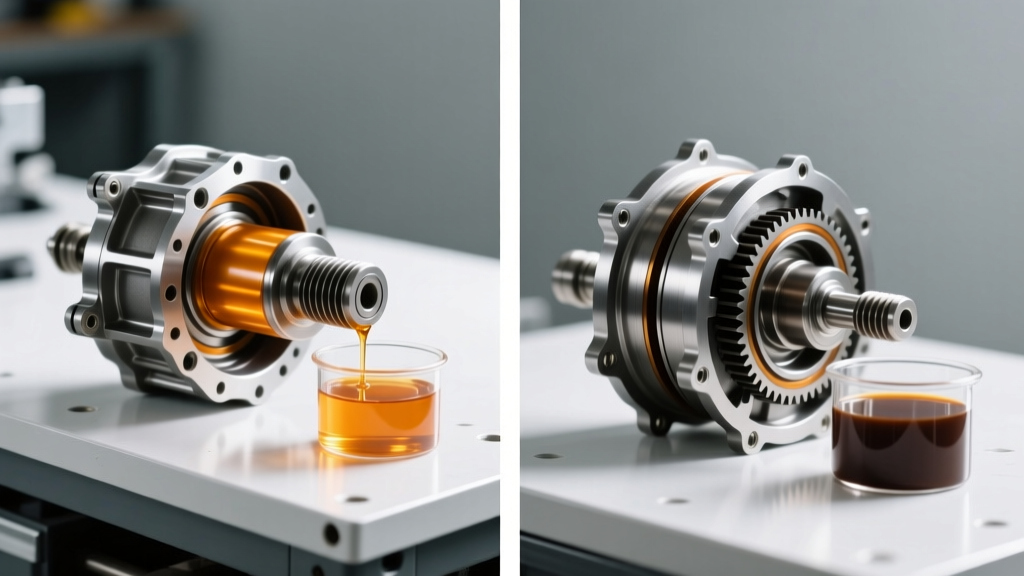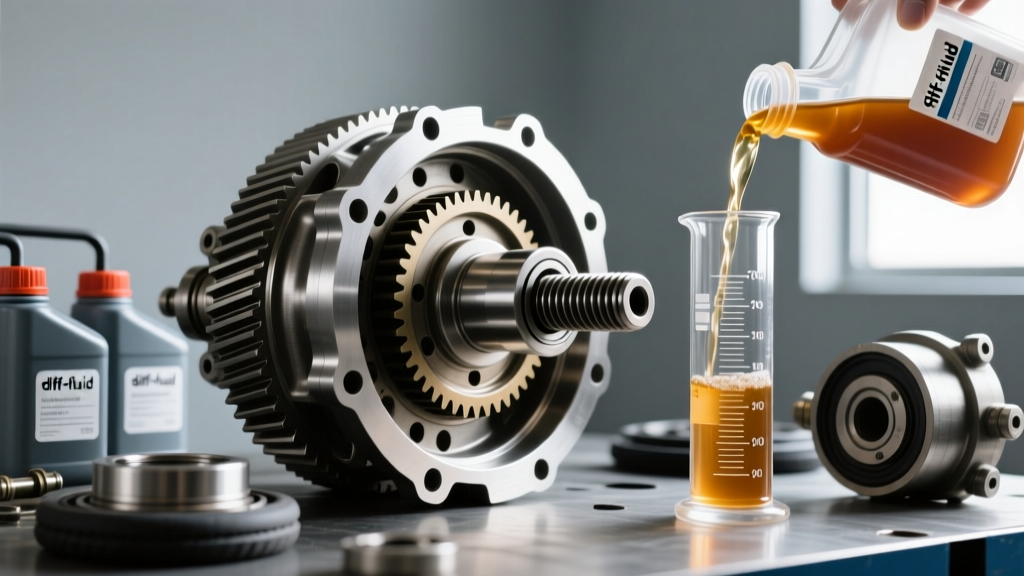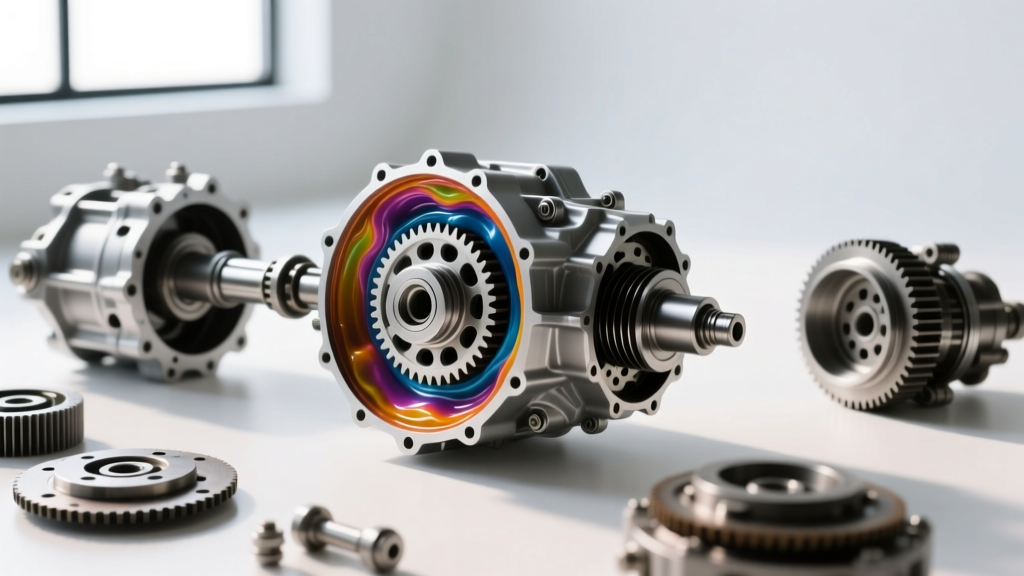
When you first start researching your Honda's all-wheel-drive maintenance, you might find yourself confused by the terminology. Truck owners talk about heavy-duty transfer cases and thick 75W-90 gear oil, but when you search for crv rear differential fluid, you are stepping into a completely different engineering paradigm. The Honda CR-V does not use a traditional, truck-style transfer case. Instead, it relies on a sophisticated transverse drivetrain layout where the transmission, transfer assembly, and rear differential work in a delicate hydraulic dance.
Whether you are driving a 2008 Real Time 4WD model or a brand-new 2026 CR-V Hybrid with Real Time AWD, understanding the relationship between the front power take-off and the rear differential is critical. Using the wrong fluid or ignoring maintenance intervals will not just cause noise—it will destroy your AWD coupling. This beginner-friendly guide will demystify how power travels through your CR-V and why specialized fluid is the lifeblood of the system.
The AWD Misconception: Transfer Cases vs. Transverse Drivetrains
To understand your maintenance needs, we first need to correct a common automotive misconception. In a traditional longitudinal, body-on-frame truck (like a Chevy Tahoe or Ford F-150), the engine sits north-to-south. The transmission sends power backward into a massive, cast-iron transfer case, which splits torque between the front and rear driveshafts. These transfer cases are typically filled with standard automatic transmission fluid (ATF) or heavy gear oil.
The Honda CR-V, however, uses a transverse (east-to-west) engine layout to maximize cabin space. Because the transmission sits sideways, Honda uses a transfer assembly (sometimes called an angle gear or power take-off unit) bolted directly to the front transaxle. This assembly turns the rotational force 90 degrees to send it down the propeller shaft to the rear of the vehicle.
Where Does the Fluid Go?
- The Transfer Assembly: In most CR-V generations, the front transfer assembly shares its lubrication with the front transaxle (using Honda ATF or CVTF, depending on the year) or has a tiny, sealed internal chamber. You rarely service this independently.
- The Rear Differential: This is where the magic happens. The rear differential houses the ring and pinion gears and the AWD clutch coupling. This is the component that requires your attention and specific crv rear differential fluid.
The Heart of the System: The Dual-Pump Rear Differential
Unlike traditional SUVs that use electronic clutch packs or viscous couplings, classic Honda CR-V models utilize a purely mechanical, hydraulically actuated Dual Pump System (DPS). Understanding this system explains why your fluid choice is non-negotiable.
Expert Insight: The CR-V rear differential contains two hydraulic pumps—one driven by the front wheels (via the propeller shaft) and one driven by the rear wheels. When the front wheels slip, they spin faster than the rear wheels. This creates a pressure differential between the two pumps, which forces hydraulic fluid into a clutch pack, locking the front and rear axles together to provide AWD traction.
If you drain your Honda rear diff and fill it with standard 75W-90 gear oil, the hydraulic pumps cannot generate the correct pressure, and the friction modifiers required for the clutch pack are absent. The result? Your AWD system will fail to engage in snow or rain, and the clutch plates will chatter, grind, and eventually weld themselves together.
Fluid Specifications: Why Honda DPSF-II is Mandatory
For nearly two decades, the gold standard for CR-V rear differentials has been Honda Genuine Dual Pump System Fluid II (DPSF-II). While some aftermarket brands claim to offer "universal" AWD fluids, automotive tribologists and Honda master technicians overwhelmingly recommend sticking to the OEM formula due to its highly specific friction modifiers and shear stability.
| Generation | Model Years | AWD System Type | Required Fluid | Capacity (Approx) |
|---|---|---|---|---|
| Gen 2 | 2002–2006 | Real Time 4WD (DPS) | Honda DPSF / DPSF-II | 1.1L (1.16 qt) |
| Gen 3 | 2007–2012 | Real Time 4WD (DPS) | Honda DPSF-II | 1.1L (1.16 qt) |
| Gen 4 | 2012–2016 | Real Time AWD (Intelligent) | Honda DPSF-II | 1.1L (1.16 qt) |
| Gen 5 & 6 | 2017–2026 | Real Time AWD w/ Dynamic Torque | Honda DPSF-II | 1.1L – 1.3L |
Note: Always purchase extra fluid. The exact capacity varies slightly by model year and whether the differential is completely dry. You fill until the fluid weeps out of the fill hole. You can verify exact OEM part numbers (like 08200-9007 for DPSF-II) via parts counters or trusted databases like RockAuto.
Step-by-Step: Changing Your CRV Rear Differential Fluid
Changing the rear differential fluid on a CR-V is widely considered one of the easiest DIY maintenance tasks on any AWD vehicle. There is no differential cover to unbolt, no RTV silicone gasket maker to scrape, and no complex bleeding procedures. It is a simple drain-and-fill process.
Required Tools and Parts
- 2 to 3 bottles of Honda DPSF-II (Part # 08200-9007)
- New 18mm Aluminum Crush Washers (Part # 90471-PX4-000) - Never reuse the old washers!
- 3/8-inch drive ratchet (most Honda diff plugs have a square 3/8" hole built directly into the bolt head)
- 10mm Hex key (for newer models or if the 3/8" drive is stripped)
- Torque wrench
- Fluid transfer pump (optional but highly recommended to avoid spills)
The Service Procedure
- Safety First: Raise the rear of the CR-V and support it securely on jack stands. Ensure the vehicle is perfectly level so your fluid capacity reading is accurate.
- Open the FILL Plug First: This is a golden rule of differential service. If you drain the fluid but cannot get the fill plug off, you are stranded. Use your 3/8" ratchet to break the fill plug loose on the upper side of the rear diff housing.
- Drain the Old Fluid: Place a catch pan under the lower drain plug. Remove it and let the old, sheared-out fluid drain completely. Inspect the magnetic tip of the drain plug; a small amount of fine metallic paste is normal, but large metal chunks indicate internal gear wear.
- Replace Washers and Reinstall Drain Plug: Slide a new 18mm crush washer onto the drain plug. Reinstall and torque to 29 lb-ft (39 Nm).
- Fill with Fresh DPSF-II: Using a transfer pump, pump the new Honda DPSF-II into the fill hole until it begins to drip out onto your finger or the floor. This indicates the differential is perfectly full.
- Reinstall Fill Plug: Wipe the threads clean, apply a new crush washer, and torque the fill plug to 29 lb-ft (39 Nm).
Diagnosing the Infamous "Honda AWD Groan"
If you are reading this because your CR-V makes a groaning, binding, or shuddering noise from the rear when pulling into a tight parking space, do not panic—your differential is likely not broken. This is the most common symptom of degraded crv rear differential fluid.
As the DPSF-II ages, the friction modifiers break down due to heat and shear forces. When you make a tight turn, the rear wheels must spin at a slightly different speed than the front wheels. If the fluid is degraded, the clutch packs inside the rear differential fail to slip smoothly, causing them to grab and release rapidly (stick-slip friction). This creates a low-frequency groan that vibrates through the chassis.
According to discussions among master technicians on forums like Bob Is The Oil Guy, performing a simple drain-and-fill with fresh OEM fluid resolves this binding issue in over 90% of cases. For severe cases where the groan persists after the first change, Honda's official service bulletins sometimes recommend performing the drain-and-fill procedure twice, taking the vehicle for figure-eight test drives in between to fully purge the old, degraded fluid from the clutch pack cavities.
Final Thoughts on Drivetrain Harmony
The relationship between your CR-V's front transfer assembly and its rear differential is a masterpiece of packaging and hydraulic engineering. By treating the rear differential not as a simple gearcase, but as a complex hydraulic clutch system, you will ensure your AWD operates seamlessly for the life of the vehicle. Skip the cheap, universal aftermarket fluids, grab your 3/8" ratchet, and stick to the OEM Honda DPSF-II. Your CR-V will reward you with silent, confident traction in whatever weather 2026 throws your way.
For official maintenance schedules and technical service bulletins specific to your VIN, always consult the Honda Owners Portal or your local dealership's service department.