The Baseline: Open Differential Gear Mechanism Explained
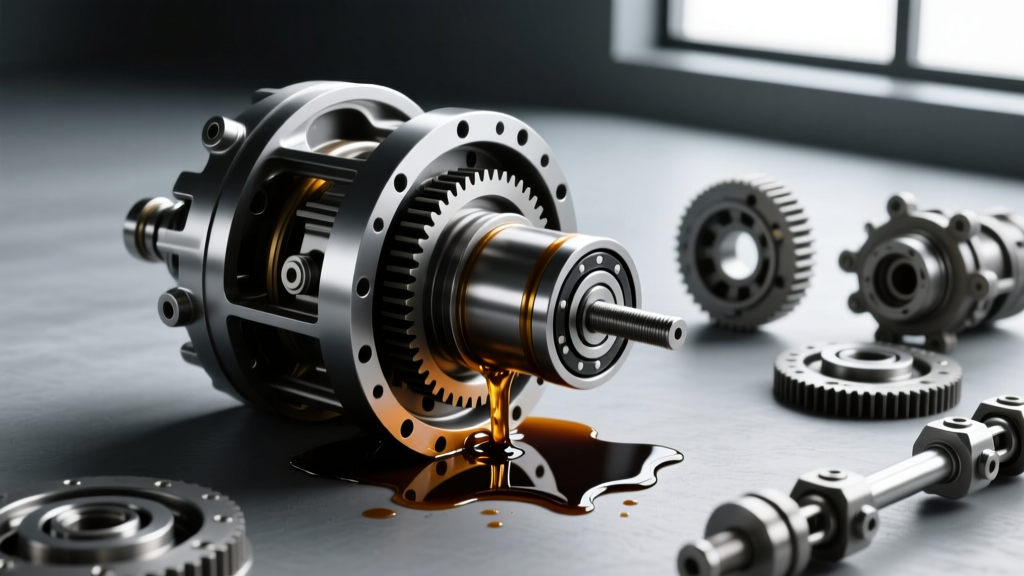
When evaluating axle upgrades for off-road rigs, track cars, or heavy-duty tow vehicles, understanding the core differential gear mechanism is non-negotiable. The open differential is the undisputed baseline of modern automotive engineering. Designed primarily for on-road civility and cost-effective manufacturing, an open differential utilizes a minimalist gear train consisting of a ring gear, a pinion gear, a carrier, two side gears, and typically two or four spider gears (pinion mate gears).
The mechanical reality of an open differential gear mechanism is governed by the path of least resistance. When your vehicle is cornering, the outside wheel must travel a greater distance than the inside wheel. The spider gears rotate on their cross-pins to accommodate this speed differential, preventing tire scrubbing and drivetrain binding. However, this elegant solution becomes a critical flaw when traction is compromised. If one wheel encounters ice, mud, or air, the spider gears spin freely on their shafts, routing 100% of the engine's torque to the wheel with the least resistance. For a daily driver commuting in fair weather, this is perfectly acceptable. For a 2026 overland build or a drag racer launching on a prepped surface, an open differential is a severe bottleneck.
The Traction Upgrade: Decoding Limited Slip Mechanisms
To mitigate the one-wheel-peel phenomenon, engineers developed the Limited Slip Differential (LSD). Unlike locking differentials (which physically lock both axles together via a dog clutch or pneumatic actuator), an LSD allows for speed differentiation while actively biasing torque to the wheel with grip. When shopping for an LSD, you will encounter two dominant architectures in the aftermarket:
1. Clutch-Type LSD (e.g., Eaton Positraction)
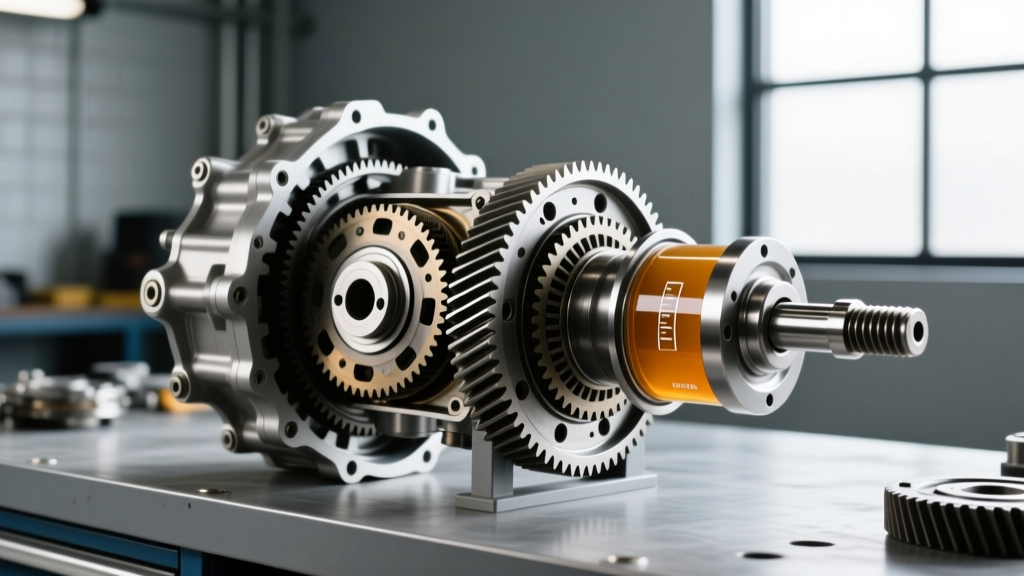
The clutch-type LSD modifies the standard differential gear mechanism by integrating a stack of friction clutches and preload springs between the side gears and the carrier housing. Under straight-line acceleration, the clutch packs lock the side gears to the carrier, forcing both wheels to turn at the same speed. When cornering, the torque required to break the clutch friction allows the side gears to slip, permitting the wheels to rotate at different speeds. The Eaton Positraction lineup remains the gold standard for this design, offering rebuildable clutch packs and predictable breakaway torque.
2. Helical Gear LSD (e.g., Detroit Truetrac, Torsen)
Helical LSDs completely eliminate friction clutches. Instead, they rely on a complex arrangement of helical-cut planetary gears. When one wheel loses traction, the helical gears bind against the carrier housing, creating axial thrust that multiplies torque to the wheel with grip. This is measured by the Torque Bias Ratio (TBR). A typical helical differential gear mechanism boasts a TBR of 2.5:1 to 3.5:1, meaning it can send up to 3.5 times more torque to the high-traction wheel compared to the slipping wheel.
Head-to-Head Comparison Matrix
To visualize the mechanical and economic differences, refer to the comparison chart below:
| Feature | Open Differential | Clutch-Type LSD | Helical Gear LSD |
|---|---|---|---|
| Torque Bias Ratio (TBR) | 1:1 (Zero biasing) | 2:1 to 4:1 (Adjustable via clutches) | 2.5:1 to 3.5:1 (Fixed by gear cut) |
| Friction Modifier Required? | No | Yes (Strictly required) | No |
| Maintenance Interval | 60,000 - 100,000 miles | 30,000 - 50,000 miles (Clutch wear) | 60,000 - 100,000 miles |
| Average Carrier Cost | $120 - $200 | $450 - $650 | $600 - $850 |
| Best Application | Highway cruising, budget builds | Drag racing, street performance | Off-road, towing, daily driving |
Critical Fluid Dynamics: Gear Oil and Friction Modifiers
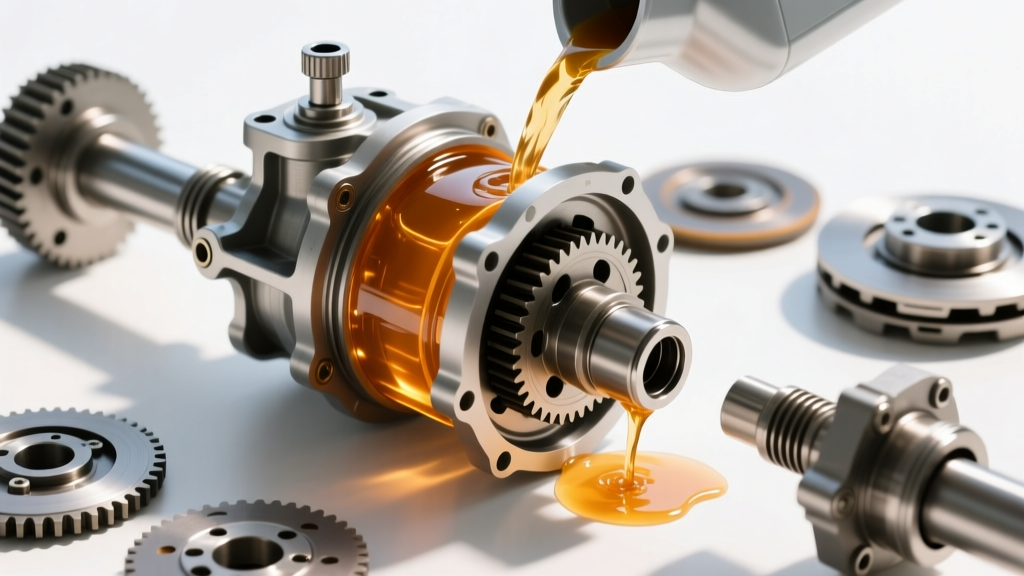
Because the internal architecture of the differential gear mechanism dictates its lubrication requirements, selecting the wrong fluid will result in catastrophic failure or unbearable NVH (Noise, Vibration, and Harshness). As of 2026, synthetic gear oils have largely superseded conventional petroleum-based oils due to their superior thermal stability under high-shear conditions.
Viscosity and API Ratings
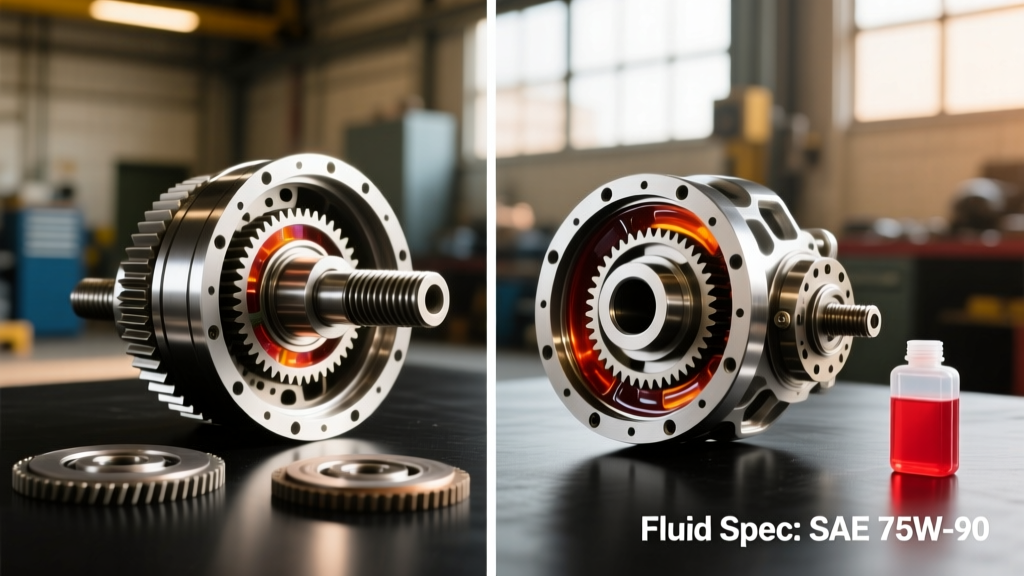
For standard half-ton truck axles (like the ubiquitous Ford 8.8 or GM 10-bolt), a 75W-90 API GL-5 synthetic gear oil is the factory specification. GL-5 denotes a high concentration of extreme pressure (EP) additives, typically zinc and phosphorus, which protect the hypoid ring and pinion gears from wiping under heavy sliding loads. If you are running a heavy-duty towing setup or subjecting the axle to sustained high-speed track use, stepping up to a 75W-140 fluid provides a thicker hydrodynamic film at high operating temperatures, though it may incur a slight parasitic drag penalty during cold starts.
The Friction Modifier Imperative
This is where the open vs. LSD debate directly impacts your maintenance routine. If you install a clutch-type LSD, the GL-5 gear oil alone is insufficient. The EP additives in standard gear oil will cause the carbon-fiber or paper-based clutch packs to grab aggressively, resulting in severe "chatter" or "judder" during low-speed parking lot turns. You must add a specialized friction modifier, such as Red Line Limited Slip Friction Modifier or OEM Motorcraft XL-3. Typically, a standard 2.5-quart axle requires exactly 4 ounces of modifier. Conversely, helical gear LSDs (like the Detroit Truetrac) and open differentials do not require friction modifiers; in fact, adding them to a helical unit can reduce the gear binding effect and lower the effective TBR.
Rebuild Economics and Precision Torque Specifications
Upgrading your differential gear mechanism is not a simple plug-and-play affair; it requires precision measurement and strict adherence to torque specifications. Whether you are swapping from an open carrier to an Eaton Posi or replacing worn Timken bearings, the setup process dictates the lifespan of the axle.
Fastener Torque and Threadlocking
The ring gear is subjected to immense shear forces. When bolting the ring gear to the new LSD carrier, you must use high-strength threadlocker. For a Ford 8.8 axle, ring gear bolts must be torqued to 70-85 lb-ft using Red Loctite 272. For a GM 12-bolt, the specification is typically 65 lb-ft. Always torque these bolts in a star pattern to ensure the ring gear seats perfectly flush against the carrier flange. A warped ring gear will result in a high-pitch whine that worsens under deceleration.
Backlash and Bearing Preload
The relationship between the ring gear and the pinion gear is defined by backlash—the microscopic amount of free play between the gear teeth. For most street-driven hypoid gearsets, backlash should be set between 0.006 and 0.010 inches, measured via a dial indicator mounted to the axle housing. Furthermore, differential bearing preload must be established using shims or a crush sleeve. Insufficient preload will allow the carrier to deflect under load, causing the teeth to clash and shatter. A complete master rebuild kit, including Timken bearings, shims, a new crush sleeve, and a pinion seal, typically costs between $130 and $180, a necessary expense when changing the differential gear mechanism.
The Final Verdict for Your Axle Build
Choosing between an open and limited slip differential gear mechanism ultimately hinges on your vehicle's mission profile and your willingness to perform meticulous fluid maintenance. If your vehicle is strictly a highway cruiser or a budget-conscious daily driver, the open differential offers unmatched reliability and zero maintenance headaches beyond standard 75W-90 fluid swaps. However, if you demand traction in the mud, snow, or at the drag strip, the upgrade to an LSD is mandatory. For pure street performance and drag racing, the clutch-type LSD offers tunable breakaway torque. For a do-it-all overland rig or tow vehicle where maintenance intervals need to be stretched, the helical gear LSD provides a maintenance-free, chatter-free traction solution that will outlast the vehicle itself.