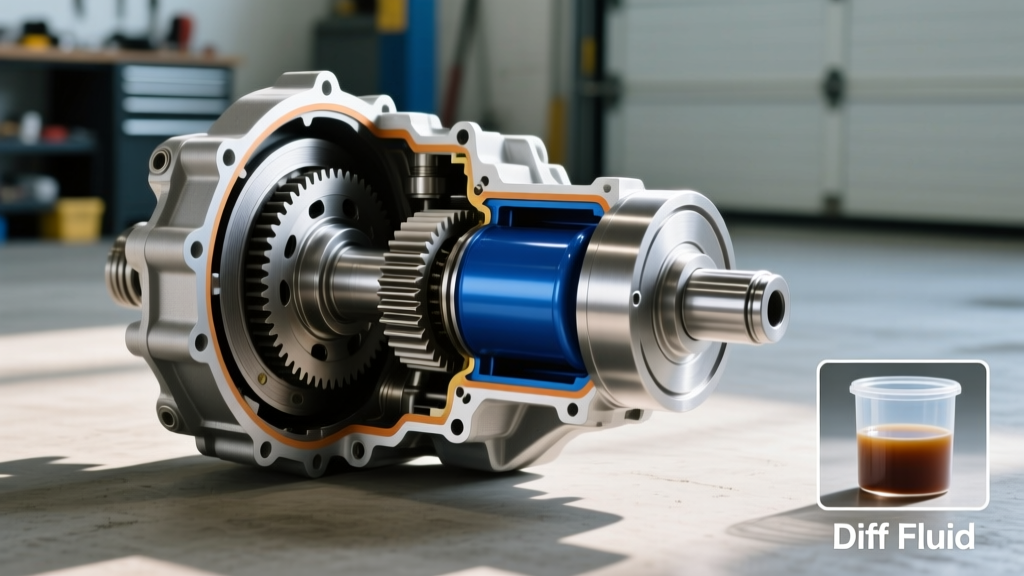
When a 4x4 truck or SUV develops a whining, howling, or grinding sound from the front axle, owners are often quick to blame the transfer case or CV axles. However, a truly noisy front differential usually points to internal bearing failure, improper gear backlash, or degraded lubricant. For vehicles equipped with Independent Front Suspension (IFS)—such as the GM 8.25-inch, Ford 8.8-inch, or Toyota 8-inch CLVT front axles—tearing down the differential to diagnose the noise presents a unique opportunity. While the carrier is on the bench, should you replace the failing unit with a standard open differential, or upgrade to a front limited-slip differential (LSD)?
This guide compares open and limited-slip front differentials from the perspective of a 2026 drivetrain rebuild, focusing on traction, Noise, Vibration, and Harshness (NVH), fluid requirements, and exact rebuild specifications.
Diagnosing the Howl: Why Front Differentials Fail
Before selecting a replacement carrier, it is vital to confirm the source of the noise. Front IFS differentials operate under unique stresses compared to solid rear axles. They must accommodate steering angles, suspension articulation, and front-end impacts.
- Pinion Bearing Whine: Typically changes pitch under throttle load versus deceleration (coast). Caused by pitting on the pinion head bearing or improper crush sleeve preload.
- Side Carrier Bearing Hum: A constant, low-frequency drone that correlates directly with vehicle speed, regardless of throttle position.
- Ring and Pinion Howl: Often a high-pitched siren sound caused by improper backlash, incorrect gear pattern, or severe gear oil degradation.
If your gear set is salvageable and only the bearings have failed, you can retain your current ratio and carrier type. However, if the ring and pinion are scored, a full rebuild is required, opening the door for an upgrade. For deeper diagnostic steps, consult the Ring & Pinion Technical Tips database.
Open vs. Limited Slip: Front Axle Dynamics
The front axle dictates steering. Therefore, the type of differential you install directly impacts steering feel, drivetrain binding, and overall NVH.
The Open Differential
Most factory IFS front axles are equipped with open differentials. They route power to the wheel with the least resistance.
Pros: Zero steering bind on dry pavement; completely transparent NVH; lowest rebuild cost.
Cons: 'One-wheel peel' in mud, snow, or off-road; renders 4WD largely ineffective if one front tire loses traction.
The Clutch-Type Limited Slip (LSD)
Clutch-based LSDs (e.g., Eaton Positraction, Auburn) use friction plates to bias torque to both wheels.
Pros: Excellent straight-line traction in snow and mud.
Cons: High NVH risk. In a front axle, clutch-type LSDs can cause severe steering bind and 'chatter' during tight turns, which many owners mistakenly diagnose as a noisy front differential. They also require strict friction modifier maintenance.
The Helical Gear LSD (Torsen/Truetrac)
Helical gear differentials use planetary gear sets to multiply torque without friction clutches. The Eaton Truetrac is the gold standard for front IFS applications.
Pros: Smooth, bind-free operation; zero steering chatter; no special friction modifiers required; highly reliable.
Cons: Higher initial purchase price; requires both wheels to have some load to engage (won't work if one wheel is completely in the air).
Fluid Dynamics: Gear Oil and Friction Modifiers
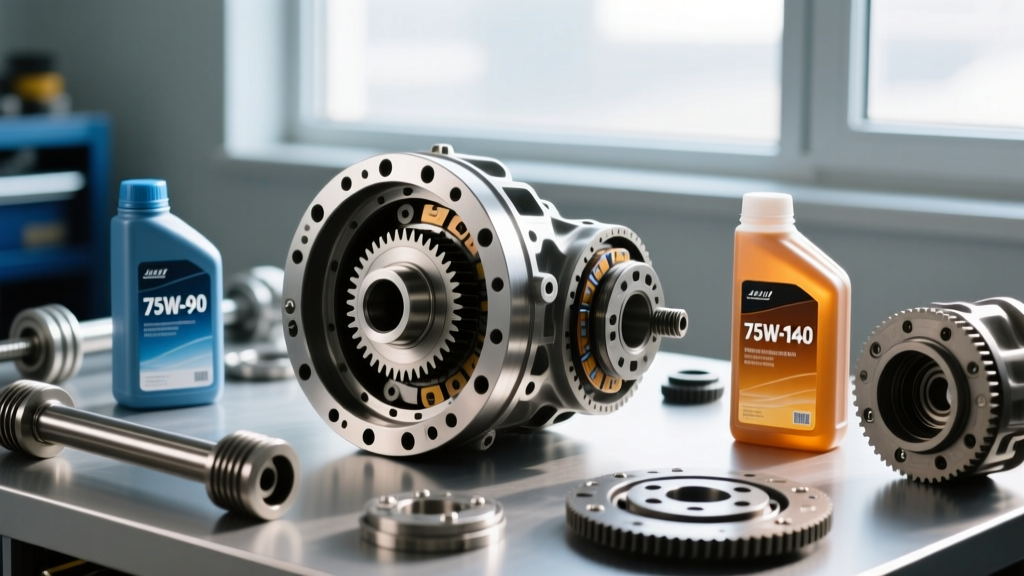
Fluid selection is paramount when addressing front differential noise and longevity. The baseline requirement for almost all modern light-truck front differentials is a 75W-90 Synthetic GL-5 gear oil (e.g., Amsoil Severe Gear or Mobil 1 Synthetic).
- Open & Helical Gear Diffs: Require standard 75W-90 GL-5. No additives are necessary. Using high-quality synthetic fluid reduces operating temperatures by up to 15°F, extending bearing life and minimizing gear whine.
- Clutch-Type LSDs: Mandate the addition of a Friction Modifier (FM), such as Motorcraft XL-3 or GM EOS. If you omit the FM, the clutches will grab and release rapidly during turns, creating a violent shuddering noise that mimics catastrophic gear failure.
Pro-Tip: If you are unsure whether a used front differential is an open or clutch-type LSD, perform a 'drain and sniff' test. Clutch-type FMs have a highly distinct, pungent sulfur-amine odor. Alternatively, jack up the front end and rotate one wheel; if the opposite wheel turns in the opposite direction, it is likely open. If it turns in the same direction or offers heavy resistance, it is an LSD.
2026 Buyer’s Comparison & Cost Matrix
When budgeting for a front differential rebuild or upgrade, factor in the cost of the carrier, master rebuild kit (bearings, shims, seals), and specialized tools.
| Differential Type | Example Model | Approx. Carrier Cost (2026) | Fluid Requirement | Front Axle NVH Risk |
|---|---|---|---|---|
| Open (OEM Replacement) | Spicer Open Carrier | $150 - $250 | 75W-90 GL-5 | Very Low |
| Clutch-Type LSD | Eaton Positraction | $450 - $600 | 75W-90 + FM | High (Chatter/Bind) |
| Helical Gear LSD | Eaton Truetrac | $650 - $850 | 75W-90 GL-5 | Extremely Low |
| Selectable Locker | ARB Air Locker | $900 - $1,100 | 75W-90 GL-5 | Low (Only when engaged) |
Rebuild Specifications: GM 8.25" IFS & Ford 8.8" IFS
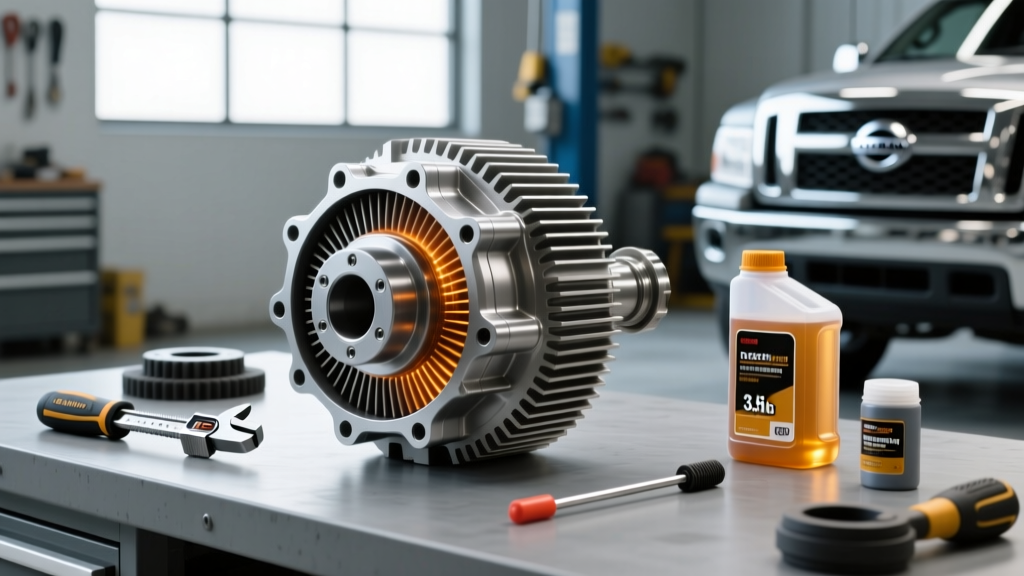
If you are addressing a noisy front differential by performing a teardown, adhering to exact torque specifications is the only way to ensure the new setup remains quiet. Improper bearing preload is the number one cause of premature pinion bearing failure and subsequent whining.
GM 8.25" IFS (2004-2018 Silverado/Sierra 1500)
- Ring Gear Bolts: 70 lb-ft (Use Red Loctite 272 on threads; do not use lock washers).
- Pinion Nut Torque: 150 to 250 lb-ft. Note: This is not a final torque spec, but rather the torque required to achieve the correct rotational preload.
- Pinion Rotational Preload: 15 to 25 in-lbs (with new bearings, no carrier installed).
- Fluid Capacity: ~1.5 Quarts (1.4 Liters).
Ford 8.8" IFS (2004-2020 F-150)
- Ring Gear Bolts: 85 lb-ft (Apply medium threadlocker).
- Pinion Nut Torque: 160 to 220 lb-ft to achieve preload.
- Pinion Rotational Preload: 12 to 20 in-lbs.
- Fluid Capacity: ~1.8 Quarts (1.7 Liters).
For precise identification of your specific axle ratio and spline count before ordering parts, utilize the Spicer Differential Identification Guide.
Gear Pattern and Backlash: The Secret to a Quiet Rebuild
Even the best limited-slip carrier will result in a noisy front differential if the ring and pinion gear pattern is set incorrectly. When installing your new carrier—whether open or LSD—you must verify the gear contact pattern using a high-contrast gear marking compound (like Permatex Prussian Blue).
- Backlash Specification: Most light-truck IFS differentials require a backlash between 0.006" and 0.010". Use a magnetic base dial indicator mounted to the differential housing to measure the play between the ring gear and pinion gear.
- Drive Side Pattern: Should be centered from top to bottom on the tooth face, slightly biased toward the heel under load.
- Coast Side Pattern: Should mirror the drive side. If the pattern is high on the tooth (top land), you need to increase pinion depth (add shims). If the pattern is low (root), decrease pinion depth.
Taking the time to map the gear pattern guarantees that the load is distributed evenly across the gear teeth, eliminating high-frequency whine and ensuring the longevity of your new open or LSD setup.
Final Verdict: Making the Right Choice
If your primary goal is to simply cure a noisy front differential and restore the truck to factory driving manners on a budget, an OEM-style Open Differential paired with a high-quality master bearing kit and fresh 75W-90 synthetic fluid is the correct path.
However, if you live in a region with heavy snow, frequently drive on slick mud, or want to maximize the capability of your 4WD system without sacrificing daily drivability, upgrading to a Helical Gear LSD (Truetrac) is the ultimate buyer's choice for 2026. It eliminates the one-wheel-peel phenomenon while completely avoiding the steering bind and clutch chatter associated with traditional limited slips, ensuring your front axle remains powerful, predictable, and whisper-quiet.