The Hidden Link Between Gear Oil and a Cracked Rear Differential
When diagnosing catastrophic drivetrain failures, mechanics and owners often blame a cracked rear differential on severe off-road impacts, overloading, or manufacturing defects. While physical trauma and towing beyond the Gross Combined Weight Rating (GCWR) are obvious culprits, a silent and frequently overlooked cause is chronic thermal stress induced by inadequate or degraded gear oil. In 2026, as heavy-duty trucks from Ford, GM, and Ram push towing capacities well past 20,000 pounds, the thermal loads placed on the ring and pinion gears have never been higher.
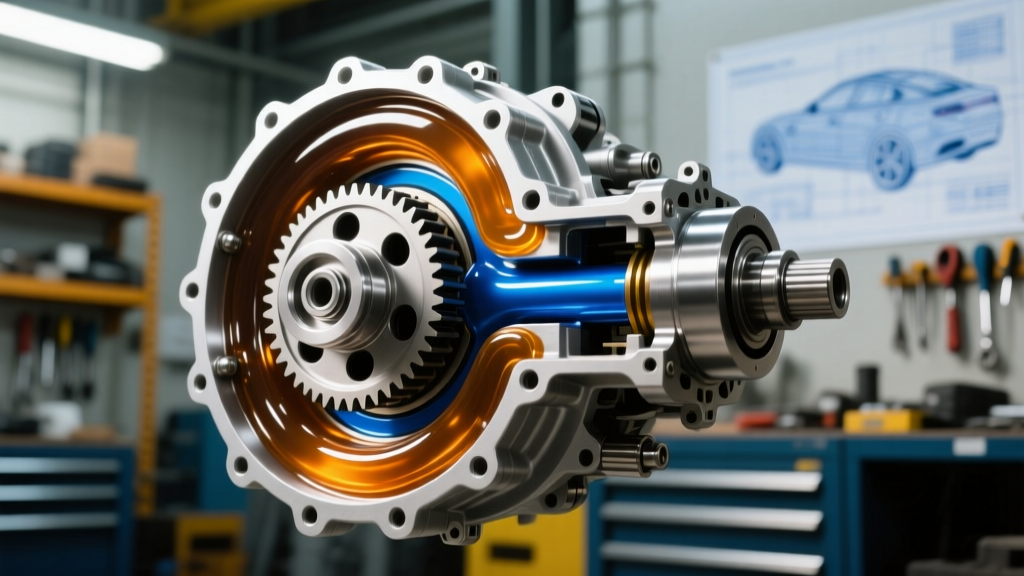
When hypoid gear oil loses its film strength or shear stability, metal-on-metal contact generates localized, extreme hot spots on the gear teeth and bearings. Because differential housings—whether cast-iron (like the GM 9.5-inch) or aluminum (like the AAM 11.5-inch with an aluminum cover)—do not dissipate this uneven heat efficiently, the resulting thermal gradients cause severe internal stress. Over time, this cyclic expansion and contraction can warp bearing bores, compromise the pinion seal, and ultimately lead to a cracked rear differential casing or a fractured mounting flange. Choosing the correct synthetic gear oil is not just about lubrication; it is a critical structural defense for your axle housing.
75W-90 vs. 75W-140: Matching Viscosity to Your Axle's Thermal Load
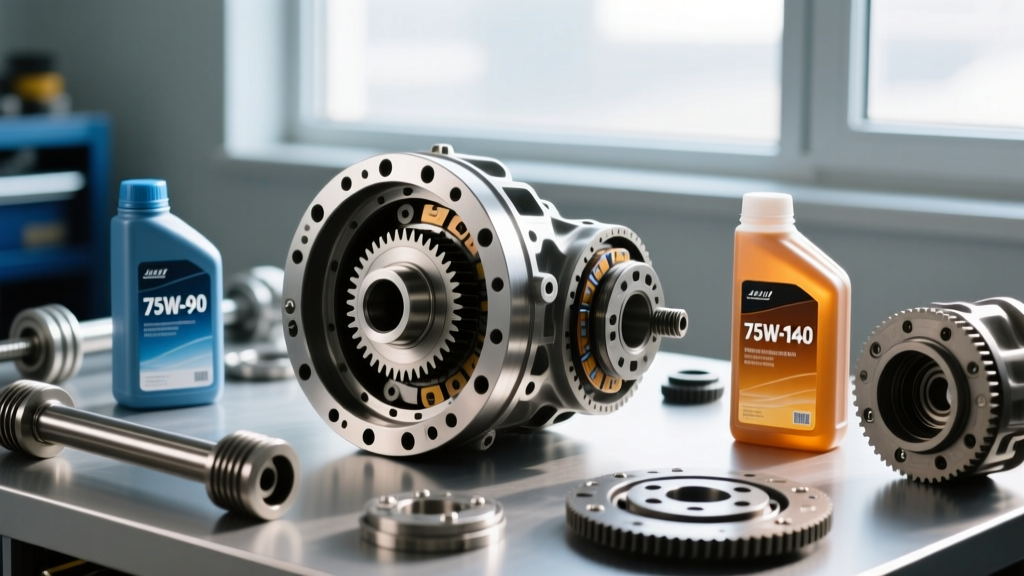
The first step in preventing differential housing failure is selecting the correct viscosity grade. While many light-duty SUVs and half-ton trucks operate perfectly on 75W-90, three-quarter-ton and one-ton trucks subjected to heavy towing require the thicker hydrodynamic film of a,75W-140 gear oil to prevent gear tooth deflection and housing overheating.
| Specification | 75W-90 Synthetic | 75W-140 Synthetic |
|---|---|---|
| Kinematic Viscosity @ 100°C | 13.5 - 18.5 cSt | 24.0 - 32.0 cSt |
| Flash Point (Typical) | ~400°F (204°C) | ~430°F (221°C) |
| Primary Application | Light towing, daily driving, front axles | Heavy towing (>8,000 lbs), commercial use, rear axles |
| Thermal Protection Level | Moderate to High | Extreme |
Note: Always consult your owner's manual. Upgrading to a 75W-140 in a differential designed for 75W-90 can increase parasitic drag and slightly reduce fuel economy, but it is highly recommended for modified trucks running larger, heavier aftermarket wheels and tires.
2026 Buyer’s Guide: Top Synthetic Gear Oils Compared
To protect high-torque axles from the thermal events that cause a cracked rear differential, you need gear oils with advanced sulfur-phosphorus Extreme Pressure (EP) additives and robust synthetic base stocks. Below is our expert comparison of the top three drivetrain fluids on the market for 2026.
1. AMSOIL Severe Gear 75W-90 (SVGQT-EA)
Best For: High-mileage trucks and extreme temperature environments.
2026 Price Range: $21.00 - $23.50 per quart.
API Specification: GL-5 / MT-1.
AMSOIL Severe Gear is engineered with proprietary synthetic base oils that boast an exceptionally high viscosity index. This means the oil resists thinning out when the differential fluid temperature spikes past 250°F during steep grade towing. Its advanced EP additives form a sacrificial chemical layer on the ring and pinion gears, preventing micro-welding. By maintaining a stable fluid film, Severe Gear keeps the overall housing temperature uniform, drastically reducing the thermal shock that leads to a cracked rear differential.
2. Mobil 1 Synthetic Gear Lube LS 75W-140 (104361)
Best For: Heavy-duty towing and factory Limited Slip Differentials (LSD).
2026 Price Range: $13.50 - $16.0: per quart.
API Specification: GL-5.
3. Red Line HeavyWeight ShockProof 75W140 (30114)
Best For: Off-road abuse, drag racing, and high-shock load applications.
2026 Price Range: $26.00 - $29.00 per quart.
API Specification: Exceeds GL-5 (Unique Chemistry).
Red Line ShockProof does not rely on traditional sulfur-phosphorus EP additives. Instead, it utilizes a solid dispersant that acts like a microscopic cushion between the gear teeth. According to Red Line Oil's technical documentation, this unique formulation absorbs immense shock loads that would otherwise chip ring gear teeth or transfer destructive kinetic energy directly into the differential carrier and housing. If your truck sees extreme off-road articulation or heavy drag-strip launches, ShockProof prevents the sudden mechanical shocks that instantly result in a cracked rear differential.
The Friction Modifier Dilemma: Protecting Your LSD Clutches
If your truck is equipped with a clutch-type Limited Slip Differential (LSD), running the wrong fluid—or failing to add the correct friction modifier—will cause the clutch packs to bind and chatter. This binding creates sudden, violent torque spikes inside the differential carrier. These harmonic vibrations and shock loads are notorious for cracking the cast-iron carrier or the differential housing itself.
Always use the OEM-specified friction modifier when servicing a clutch-type LSD:
- Ford / Motorcraft: XL-3 Friction Modifier Additive (Part# 19C515).
- GM / ACDelco: Limited Slip Axle Lubricant Additive (Part# 10-4016 or legacy 1052358).
- Chrysler / Mopar: Friction Modifier (Part# 68218655AA).
Expert Tip: Never over-fill friction modifier. Adding more than 4-6 ounces can cause the clutch packs to slip entirely under load, generating excessive heat that will warp the differential cover and compromise the housing seals.
Critical Service Specs: Torque, Capacities, and Fill Plug Procedures
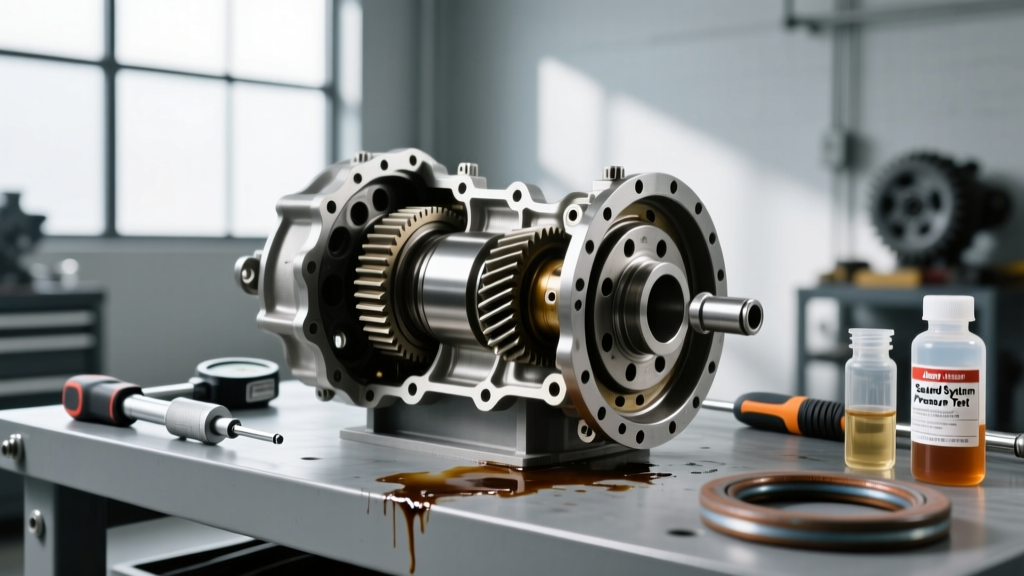
Proper fluid maintenance goes beyond pouring oil into the fill hole. Over-torquing the fill or drain plugs is a leading cause of stripped threads and warped aluminum covers. A warped cover leads to slow leaks, eventual fluid starvation, and ultimately, a cracked rear differential due to dry, overheated bearings seizing the pinion gear.
Refer to this 2026 reference chart for the most common heavy-duty truck axles:
| Axle Model | Fluid Capacity | Fill/Drain Plug Torque | OEM Recommended Viscosity |
|---|---|---|---|
| Ford Sterling 10.5 / 10.25 | 3.5 - 3.7 Quarts | 35 - 45 lb-ft | 75W-140 Synthetic |
| Ram AAM 11.5 | 3.8 Quarts (w/ Cooler) | 25 lb-ft | 75W-90 or 75W-140 |
| GM 9.5 / 10.5 (14-Bolt) | 3.0 - 3.2 Quarts | 24 lb-ft (32 Nm) | 75W-90 Synthetic |
Service Procedure Best Practices:
- Crack the Fill Plug First: Never drain the differential before confirming the fill plug can be removed. If the fill plug is seized and you drain the fluid, the truck is stranded.
- Use a Torque Wrench: Do not use an impact wrench on differential plugs, especially on aluminum covers. The API and OEM engineering guidelines strictly require hand-torquing to prevent housing distortion.
- Check the Magnetic Plug: Most OEM fill and drain plugs are magnetic. A fine, glitter-like paste is normal wear. However, if you find metallic shards or chunks larger than a grain of rice, the ring and pinion are actively failing, and a full differential rebuild is required to prevent catastrophic housing failure.
Final Thoughts on Drivetrain Longevity
A cracked rear differential is a catastrophic failure that often requires replacing the entire axle assembly, costing upwards of $3,500 to $5,000 in parts and labor. By investing in high-quality synthetic gear oils like AMSOIL Severe Gear or Mobil 1, respecting fluid change intervals (every 50,000 miles for heavy towing), and adhering to strict torque specifications, you eliminate the thermal and mechanical stressors that destroy axle housings. Protect your drivetrain with the right chemistry, and your heavy-duty truck will handle the torque for hundreds of thousands of miles.