The Evolution: Do NASCAR Cars Have a Clutch?
For decades, the answer to the question "do NASCAR cars have a clutch" was a definitive no. From the early days of stock car racing through the Generation 6 era, NASCAR vehicles utilized dog-ring manual transmissions (like the legendary BorgWarner and Jerico 4-speeds). Drivers shifted without a clutch pedal, relying entirely on precision rev-matching and load-unloading techniques to slide the dog rings into place. However, the introduction of the Next Gen car completely revolutionized the drivetrain architecture, bringing a clutch back to the highest levels of American stock car racing.
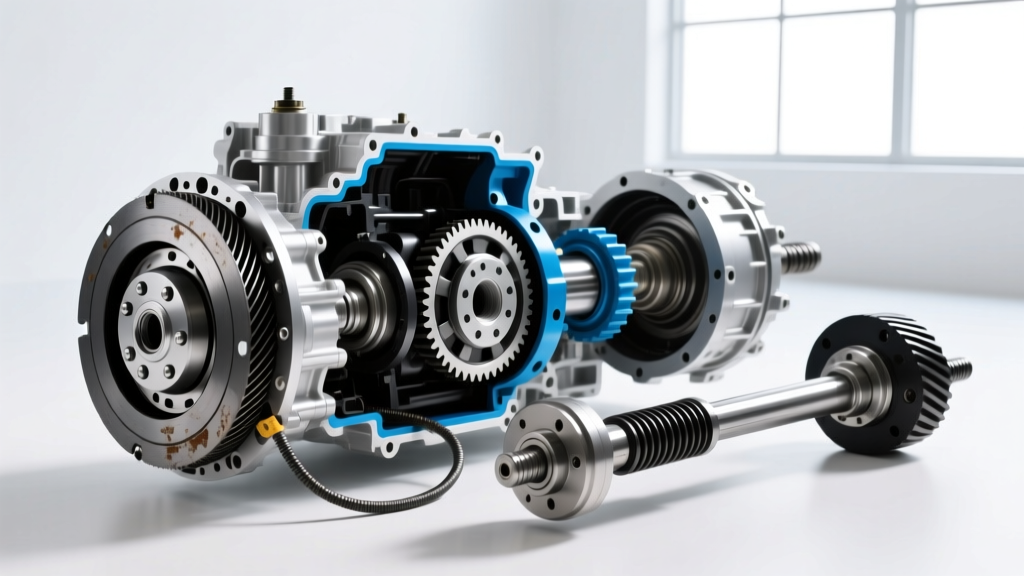
As of the 2026 season, the Next Gen platform utilizes a spec Xtrac P1336 5-speed sequential transaxle. While the sequential drum mechanism still handles upshifts and downshifts without a clutch, the transaxle is equipped with a multi-plate carbon clutch and a hydraulic release bearing (the modern equivalent of a throw-out bearing). This clutch is strictly required for launching the car from a standstill—such as exiting pit road or starting a race. Because this component operates in an extreme, high-RPM environment, throw-out bearing noise and failure present unique diagnostic challenges for race engineers and pit box mechanics.
Anatomy of the Next Gen Release Bearing Assembly
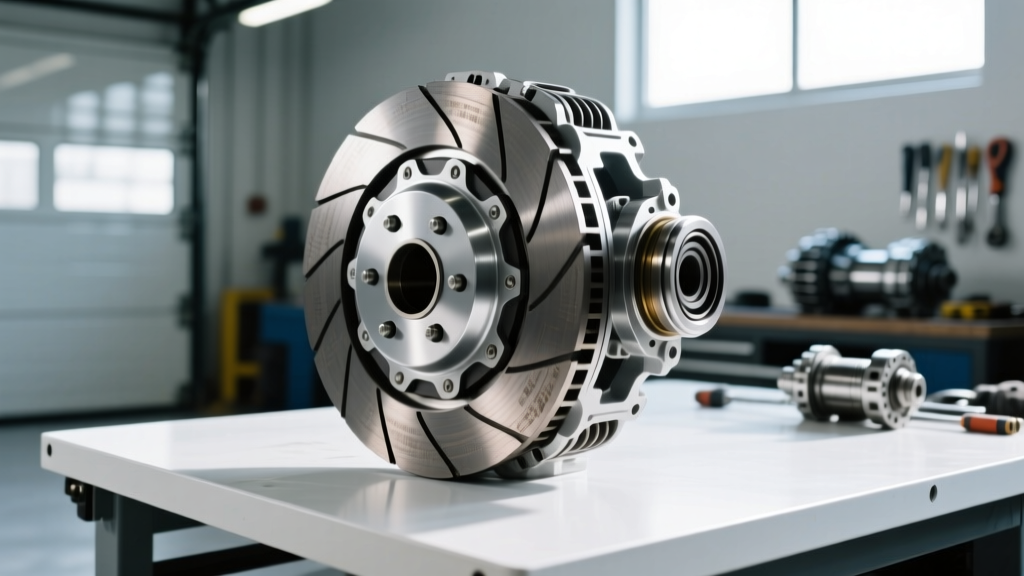
In a traditional street car, a mechanical or hydraulic fork pushes a standard throw-out bearing (TOB) against the pressure plate fingers. In the Next Gen NASCAR Xtrac P1336 transaxle, this setup is replaced by a Concentric Slave Cylinder (CSC), often referred to in racing circles as a hydraulic release bearing.
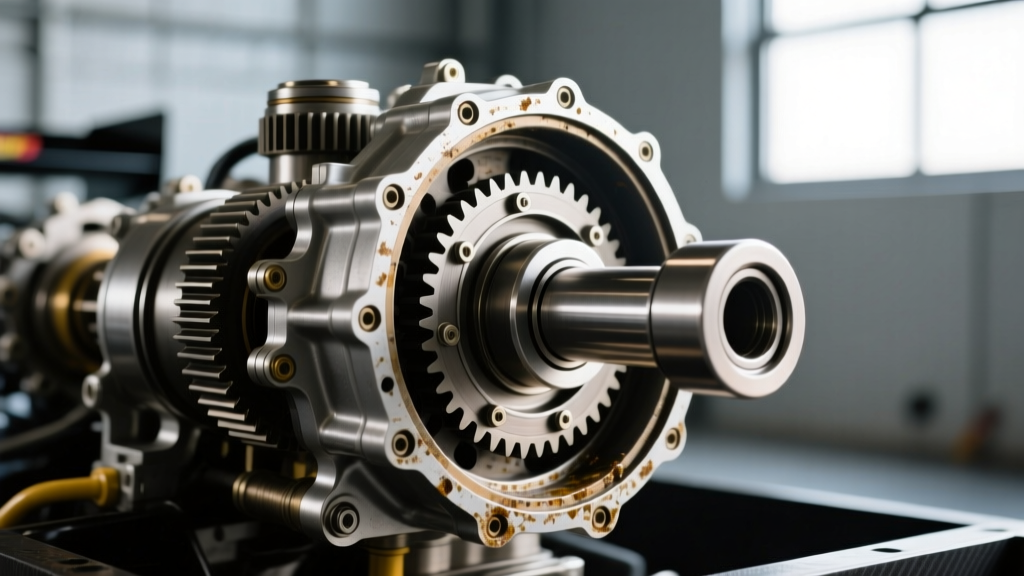
According to Tilton Engineering's racing clutch documentation, concentric release bearings eliminate the need for external linkages, reducing deflection and allowing for precise clutch modulation. The CSC rides directly on the transmission input shaft sleeve and presses against the diaphragm spring of the carbon-on-carbon clutch pack. Operating at engine speeds exceeding 8,500 RPM, the bearing is subjected to immense centrifugal forces, severe thermal cycling, and aggressive carbon dust ingestion.
Acoustic Diagnostics: Identifying TOB Noise on the Pit Box
Diagnosing throw-out bearing noise in a Next Gen car is vastly different from diagnosing a street vehicle. The acoustic signature of a failing bearing is easily masked by the 670-horsepower pushrod V8, the aggressive whine of the straight-cut gears in the Xtrac transaxle, and the exhaust note. Race engineers rely on chassis microphones and drivetrain telemetry to isolate the noise.
Differentiating TOB Noise from Drivetrain Clatter
A failing hydraulic release bearing typically emits a high-frequency, metallic whirring or grinding noise that correlates directly with engine RPM, rather than vehicle speed. Crucially, the acoustic profile will change when the clutch pedal is depressed. If the noise intensifies or shifts in pitch the moment the driver applies preload to the hydraulic release bearing, the CSC is the primary suspect.
| Symptom / Noise Profile | RPM Correlation | Clutch Pedal Interaction | Likely Culprit |
|---|---|---|---|
| High-pitched metallic whirring | Engine RPM | Noise worsens on pedal depression | Failing CSC / Throw-Out Bearing |
| Rhythmic clicking or clattering | Vehicle Speed | Unaffected by clutch pedal | Dog-Ring Engagement / Gear Wear |
| Low-frequency vibration / hum | Engine RPM | Disappears when clutch is pressed | Input Shaft Bearing / Pilot Bearing |
| Hissing or sputtering under load | Engine RPM | Pedal feels spongy or inconsistent | Hydraulic Cavitation / Fluid Boil |
Common Failure Modes in High-Stress Racing Environments
When a Next Gen car suffers a clutch-related DNF (Did Not Finish) or pit-road penalty, the hydraulic release bearing is often at the center of the failure. The specific failure modes observed in the Xtrac P1336 environment include:
- Carbon Dust Ingestion: The multi-plate carbon clutch generates microscopic abrasive dust as it wears. If the bellhousing scavenging system or air-purge lines fail, this dust infiltrates the CSC seals, scoring the internal hydraulic piston and destroying the bearing races.
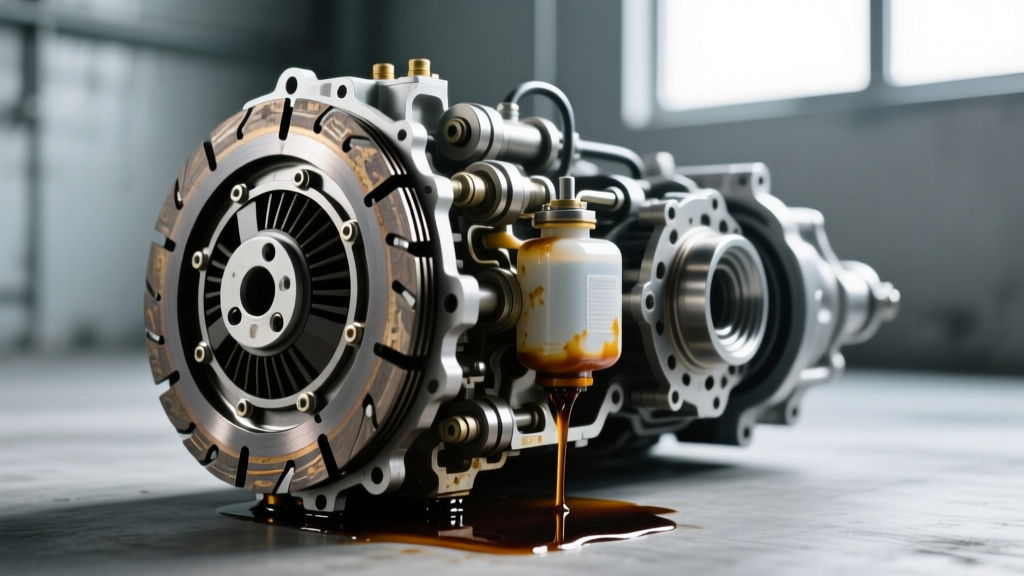
- Thermal Degradation and Cavitation: The clutch assembly operates at extreme temperatures during standing starts. If the high-temperature racing hydraulic fluid (such as Xtrac 1308 or equivalent DOT 5.1 spec) absorbs moisture or overheats, it boils inside the CSC. This cavitation creates a spongy pedal and causes the bearing to chatter against the pressure plate, leading to catastrophic spalling.
- Lateral Runout and Input Shaft Wear: The CSC must remain perfectly concentric to the input shaft. If the transaxle bellhousing-to-block alignment (doweled and torqued to strict tolerances) is compromised, the bearing rides at an angle, destroying the internal ball bearings within a single race weekend.
Model-Specific Repair Protocol: Xtrac P1336 CSC Replacement
Replacing the throw-out bearing (CSC) on a Next Gen car is a pit-box or garage-level procedure that requires dropping the entire transaxle assembly. As detailed in NASCAR's Next Gen technical overviews, the modular nature of the rear-mounted transaxle allows for rapid swaps, but the internal CSC requires meticulous attention to detail.
Step 1: Transaxle Removal and Inspection
After draining the Xtrac synthetic gear oil, the rear suspension cradle and half-shafts are disconnected. The bellhousing is secured to the engine block via M10x1.25 high-tensile studs. These must be torqued to 42 Nm (31 lb-ft) upon reassembly. Once the transaxle is separated, the CSC is unbolted from the internal housing plate.
Step 2: Seal and Surface Preparation
Before installing the new concentric release bearing, the input shaft sleeve must be polished with 600-grit emery cloth to remove any micro-galling caused by the old bearing. The shaft is then coated with a thin layer of high-temperature molybdenum disulfide (MoS2) assembly paste. Never use standard wheel bearing grease, as it will melt and contaminate the carbon clutch faces.
Step 3: Hydraulic Bleeding and Preload
Racing CSCs do not use a traditional mechanical free-play adjustment. Instead, they rely on a constant hydraulic preload maintained by the master cylinder and a remote reservoir.
- Connect a pressure bleeder set to 35-40 PSI to the remote clutch reservoir.
- Open the bleed nipple on the CSC (usually a 7mm or 8mm AN fitting).
- Flush the system until no micro-bubbles are visible in the clear PTFE bleed lines.
- Verify the hydraulic stroke using a dial indicator on the clutch fork/CSC piston to ensure it meets the spec (typically 4.5mm to 5.2mm of total travel for full carbon clutch disengagement).
Telemetry Monitoring and Preventative Maintenance
In modern motorsport, diagnosing a throw-out bearing isn't just about listening for noise; it's about reading the data. Race engineers monitor the clutch pressure transducer and clutch position sensor (LVDT) on the steering wheel telemetry. A failing CSC will exhibit a non-linear pressure curve—meaning the hydraulic pressure required to move the bearing spikes erratically as the internal balls bind or the piston seals drag.
Furthermore, teams utilize bellhousing temperature sensors. If the localized temperature around the CSC exceeds 180°C (356°F), the risk of hydraulic fluid boil and bearing seal failure increases exponentially. By tracking these telemetry markers alongside acoustic data, teams can predict throw-out bearing failure before it results in a stranded car on pit road, ensuring the complex answer to "do NASCAR cars have a clutch" remains a performance advantage rather than a mechanical liability.
For further technical specifications on racing sequential transaxles and clutch actuation systems, refer to the Xtrac Racing Transmissions archive.