The Hidden Link Between Dual Clutch Transmission Fluid and Slipping
In the modern automotive landscape of 2026, Dual Clutch Transmissions (DCTs) remain the gold standard for rapid shift times and high-efficiency torque transfer. However, the Achilles' heel of any wet-clutch DCT—whether it is a Volkswagen DSG, a Porsche PDK, or a Ford PowerShift—is its reliance on highly specialized hydraulic fluid. Unlike traditional automatic transmissions that use a torque converter, wet DCTs submerge their friction clutch packs directly in the dual clutch transmission fluid. This fluid must simultaneously act as a hydraulic medium for the mechatronic solenoids, a coolant for the clutch packs, and a friction modifier for the clutch plates.
When this fluid degrades, shears out of its viscosity grade, or becomes contaminated with clutch friction material, the delicate balance of the mechatronic unit is destroyed. The result? Clutch slipping, shuddering, and eventual limp-mode failure. This preventive maintenance guide will teach you how to diagnose DCT slipping, differentiate between fluid breakdown and mechanical clutch wear, and execute a proper fluid service to save thousands in replacement costs.
Recognizing DCT Slipping Symptoms Before Catastrophic Failure
Clutch slipping in a wet DCT rarely happens overnight. It presents as a progressive degradation in shift quality. Because the mechatronic unit constantly adapts to the friction coefficient of the clutch packs, early-stage slipping is often masked by software adaptations until the mechanical limits are reached.
- RPM Flares Between Shifts: The most classic symptom. During upshifts (particularly 2nd to 3rd, or 4th to 5th), the engine RPM will spike momentarily before the next gear fully engages, indicating the off-going clutch is releasing before the on-coming clutch has achieved full lock-up.
- Low-Speed Shudder and Chatter: Often felt when taking off from a stoplight or crawling in traffic. This is caused by the fluid losing its anti-shudder friction modifiers, resulting in a stick-slip phenomenon across the clutch plates.
- Delayed Reverse Engagement: A hesitation or 'thud' when shifting from Park or Drive into Reverse. This points to low hydraulic pressure or degraded fluid failing to actuate the reverse clutch pack swiftly.
- Flashing Gear Indicator (Limp Mode): The Transmission Control Module (TCM) detects slip ratios that exceed safe thresholds, triggering a dashboard warning and locking the transmission into a single gear to protect the mechatronic unit.
Diagnostic Protocol: Fluid Degradation vs. Friction Material Wear
Before ordering a $2,500 clutch pack kit, a proper diagnostic sequence must be performed to determine if the dual clutch transmission fluid is the root cause of the slipping.
Step 1: Thermal Fluid Level Verification
DCTs do not have a traditional dipstick. The fluid level must be checked at a highly specific thermal window, typically between 35°C and 45°C (95°F - 113°F). If the fluid is checked cold, it will be underfilled once hot, leading to hydraulic cavitation and clutch slipping. If checked hot, it will be overfilled, causing the rotating clutch baskets to aerate the fluid, creating foam that compresses under pressure and causes severe slip.
Step 2: Scanning Clutch Adaptation Volumes
Using a bi-directional scan tool or VCDS (VAG-COM Diagnostic System), you must read the Measuring Value Blocks (MVB) to see how hard the TCM is working to maintain clutch grip. According to the Ross-Tech VCDS Measuring Blocks Wiki, navigating to Address 02 (Transmission) -> MVB 115 and 116 will reveal the clutch adaptation limits.
- Normal Operation: Clutch stroke adaptation values should be below 10.0 mm.
- Fluid/Contamination Issue: Values between 11.0 mm and 13.5 mm often indicate the fluid's friction modifiers have broken down, forcing the mechatronic unit to over-stroke the clutch piston to achieve lock-up.
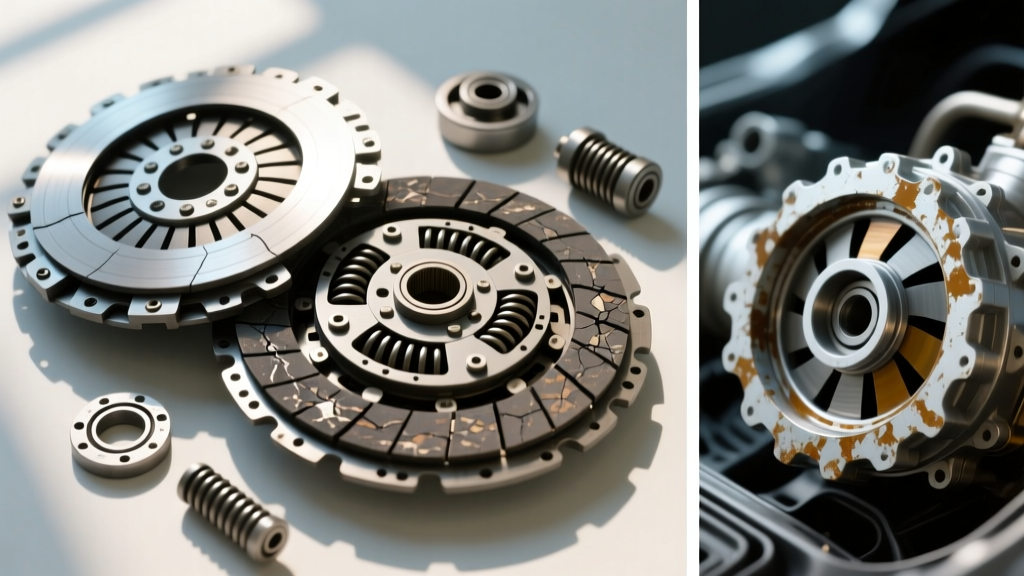
- Mechanical Failure: Values exceeding 14.0 mm typically indicate the physical friction material on the clutch plates has worn past the service limit. A fluid change will not fix this; a clutch pack replacement is mandatory.
Preventive Maintenance: DCT Fluid Specifications and Service Intervals
Using the correct fluid is non-negotiable. The friction modifiers in VW/Audi DSG fluid are entirely different from those in a Porsche PDK or a Ford PowerShift. Cross-contamination or using generic 'multi-vehicle' DCT fluids will cause immediate clutch chatter and slipping. Below is a reference chart for common wet DCT systems.
| Transmission Model | OEM Fluid Specification | Total Capacity / Service Fill | Preventive Interval |
|---|---|---|---|
| VW/Audi DQ250 (6-Speed Wet) | Pentosin FFL-2 (G 052 182 A2) | 7.2L / 5.5L | 40,000 Miles / 4 Years |
| VW/Audi DQ381 (7-Speed Wet) | Pentosin FFL-4 (G 055 529 A2) | 7.0L / 5.5L | 40,000 Miles / 4 Years |
| Porsche PDK (ZF 7-Speed) | ZF PDK Fluid (000.043.207.27) | 8.5L / 7.0L | 60,000 Miles / 6 Years |
| Ford 6DCT450 (MPS6 Wet) | Motorcraft FMM-1 DCT Fluid | 7.4L / 5.0L | 60,000 Miles / 5 Years |
Note: Dry-clutch DCTs (like the VW DQ200 7-speed or Ford 6DCT250) do not use clutch fluid for the friction surfaces. They use standard manual gear oil (e.g., 75W) for the gears and a separate, sealed hydraulic fluid for the mechatronic actuators. Misdiagnosing a dry DCT slip as a fluid issue is a common rookie error.
Step-by-Step Wet DCT Fluid Service Procedure (DQ250 Example)
For those tackling the preventive maintenance at home, here is the exact procedure for the ubiquitous VW/Audi DQ250 6-speed DSG. As detailed in FCP Euro's DSG Service Guide, precision and cleanliness are paramount.
- Preparation: Level the vehicle on jack stands. Ensure the transmission is in Park and the engine is off. Connect your scan tool to monitor the Transmission Fluid Temperature (TFT).
- Drain: Remove the 14mm hex drain plug (Torque spec: 45 Nm). Expect roughly 4.5 to 5.0 liters of fluid to drain out. Inspect the fluid for a burnt smell or excessive metallic glitter (a fine gray paste is normal clutch wear; large flakes indicate bearing failure).
- Filter Replacement: Remove the filter housing cap (Torque spec: 25 Nm). Replace the paper filter element and the rubber O-ring. Lubricate the new O-ring with fresh DSG fluid.
- Fill: Remove the 10mm hex fill plug located on the side of the transmission casing (Torque spec: 15 Nm). Using a hand pump, inject exactly 5.5 liters of fresh Pentosin FFL-2 fluid. Reinstall the fill plug.
- Thermal Level Check: Start the engine. Cycle the gear selector through P-R-N-D-S, pausing for 3 seconds in each gear to fill the hydraulic accumulators and clutch cooling circuits. Return to Park. With the engine still running and the fluid temperature between 35°C and 45°C, remove the drain plug again. The internal overflow tube will allow excess fluid to drain. Once it slows to a slow drip, reinstall the drain plug with a new crush washer (45 Nm).
Cost Analysis: Fluid Service vs. Clutch Pack Replacement
Ignoring preventive maintenance on a wet DCT is a fast track to catastrophic repair bills. Here is the financial reality of DCT ownership in 2026:
- DIY DSG Fluid Service: $120 - $180 (OEM fluid kit and filter).
- Dealer/Shop DSG Fluid Service: $350 - $550.
- Mechatronic Unit Replacement (due to fluid contamination): $1,800 - $3,200.
- Dual Clutch Pack Replacement (due to slip/wear): $2,500 - $4,500 (requires specialized DSG alignment tools and software adaptation).
Expert Verdict
Clutch slipping in a wet dual clutch transmission is rarely a sudden mechanical failure; it is almost always the end result of deferred maintenance. The dual clutch transmission fluid is the lifeblood of the system, tasked with impossible thermodynamic and hydraulic duties. By strictly adhering to 40,000-mile service intervals, utilizing exact OEM fluid specifications, and monitoring clutch adaptation volumes via OBD2 diagnostics, you can easily push a wet DCT past 200,000 miles without ever needing to replace the friction clutch packs. Treat the fluid as a wear item, not a lifetime fill, and your DCT will continue to deliver lightning-fast, slip-free shifts for the life of the vehicle.