The Physics: How Gear Ratios Alter LSD Clamping Force
When enthusiasts upgrade their drivetrain, the conversation usually revolves around acceleration and top speed. However, the relationship between your ring and pinion gear ratio and the internal operation of a mechanical limited slip differential is rarely discussed, despite being a critical factor in rear-end traction. To understand this dynamic, we must look at the physics of torque multiplication and how it interacts with the differential carrier.
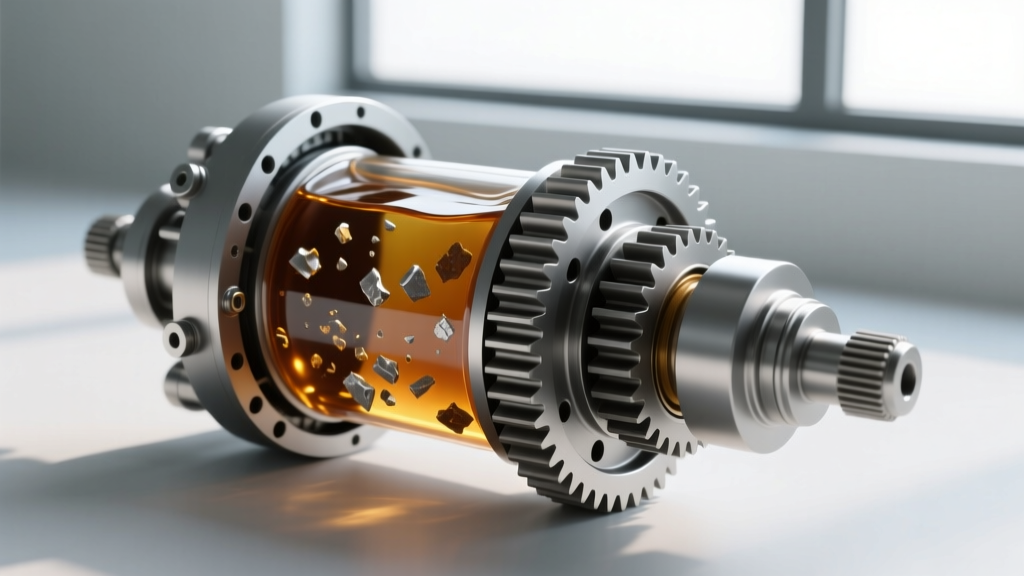
In a traditional Salisbury-style clutch-pack mechanical limited slip differential, the clutches are engaged by the lateral thrust of the axle side gears. When torque is applied to the ring gear, the pinion gears push against the side gears, forcing them outward against the clutch packs. The clamping force is directly proportional to the torque acting on the side gears. By installing a numerically higher gear ratio (for example, moving from a 3.15 to a 4.10), you increase the torque multiplication factor of the ring and pinion. For any given engine torque output, the driveshaft torque remains the same, but the torque delivered to the ring gear—and subsequently the side gears and clutch packs—increases significantly. This results in higher internal clamping pressure, raising the breakaway torque threshold and drastically reducing one-wheel peel during hard launches.
Model-Specific Focus: S550 Mustang Super 8.8 IRS
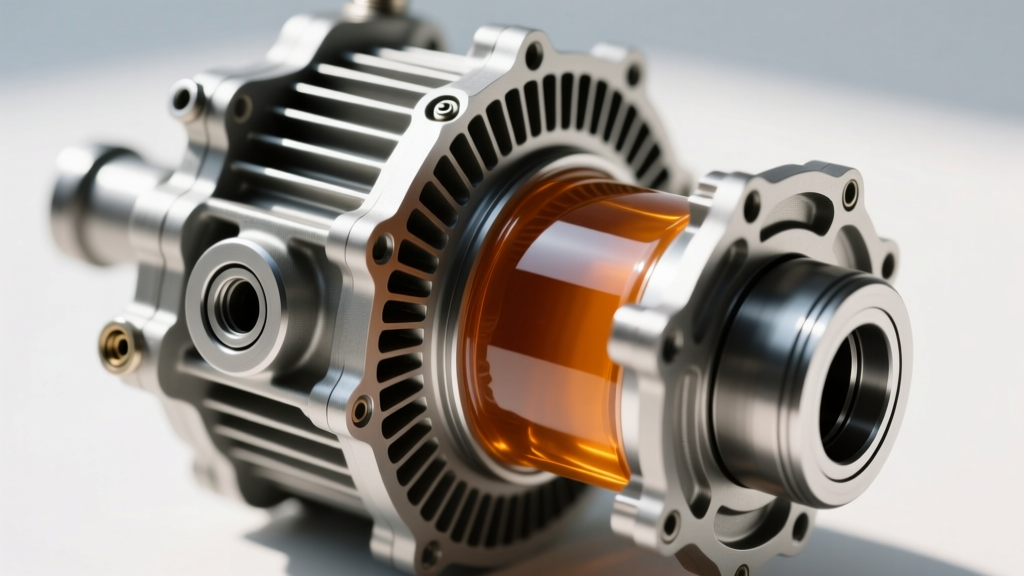
The 2015-2020 Ford Mustang GT (S550 chassis) utilizes an Independent Rear Suspension (IRS) featuring the robust Super 8.8-inch differential. From the factory, Ford equipped these vehicles with 3.15 or 3.31 gear ratios to meet stringent EPA highway fuel economy standards. While the factory Traction-Lok mechanical limited slip differential is adequate for daily driving, the 5.0L Coyote V8 produces over 460 lb-ft of torque, which easily overpowers the factory 31-spline clutch packs when paired with the numerically low 3.15 gears.
Upgrading to a 4.10 gear set not only restores the aggressive off-the-line acceleration expected of a modern muscle car but also inherently improves the locking characteristics of the mechanical limited slip differential. According to engineering data from Ford Performance Parts, the Super 8.8 IRS features a 12-bolt ring gear and massive 31-spline axles, making it highly receptive to gear swaps and clutch pack upgrades without requiring a complete axle replacement.
Clutch-Pack vs. Helical Mechanical Limited Slip Differential Dynamics
It is vital to distinguish between clutch-based mechanical LSDs and helical gear-based mechanical limited slip differential units (such as the Eaton Truetrac or Torsen). In a clutch-pack setup, as described above, higher numerical gears increase absolute clamping force. Conversely, a helical gear mechanical LSD relies on a fixed Torque Bias Ratio (TBR) determined by the angle of the worm gears. While a 4.10 gear ratio will not change the 3.5:1 TBR of a helical unit, it does increase the absolute torque threshold required to overcome internal friction, allowing the helical gears to bind and transfer torque more effectively under high-load, low-traction scenarios. For the S550 Mustang, rebuilding the factory clutch-pack unit with carbon-fiber frictions remains the most cost-effective and OEM-integrated solution for high-torque applications.
Performance Data: 3.15 vs. 4.10 Ratio Impact
The following data table illustrates the theoretical impact of gear ratio changes on clutch clamping force and breakaway torque in the Super 8.8 platform, assuming a constant engine output of 400 lb-ft in 3rd gear (1:1 ratio).
| Gear Ratio | Ring Gear Torque | Estimated Side Gear Thrust | LSD Breakaway Torque | Traction Outcome |
|---|---|---|---|---|
| 3.15 (Factory) | 1,260 lb-ft | Moderate | ~450 lb-ft | Prone to single-tire slip on sticky tires |
| 3.73 (Street) | 1,492 lb-ft | High | ~530 lb-ft | Improved lockup, balanced daily driving |
| 4.10 (Track) | 1,640 lb-ft | Maximum | ~585 lb-ft | Simultaneous wheel spin, optimal launch |
Precision Setup and Torque Specifications
Swapping gears in the Super 8.8 IRS requires meticulous attention to setup dimensions. As outlined in the technical archives at Ring-Pinion.com, improper backlash or pinion depth will result in catastrophic gear failure within the first 500 miles, especially under the increased torque loads of a 4.10 setup.
Pinion Depth and Solid Spacer Conversion
The factory Super 8.8 uses a crush sleeve to set pinion bearing preload. For any high-performance mechanical limited slip differential build, the crush sleeve must be discarded in favor of a solid pinion spacer kit (such as the Ratech solid spacer). This prevents bearing preload from loosening during aggressive drag strip launches or road course curb strikes.
- Pinion Nut Torque: 250 lb-ft (using a solid spacer to achieve target preload).
- Pinion Bearing Preload: 18 to 22 in-lbs of rotational drag (measured with a dial inch-pound torque wrench).
- Pinion Depth: Start with the factory shim thickness, then adjust using the etching on the new pinion gear head. Target a drive-side pattern that is centered, slightly biased toward the heel under load.
Backlash, Pattern, and Carrier Preload
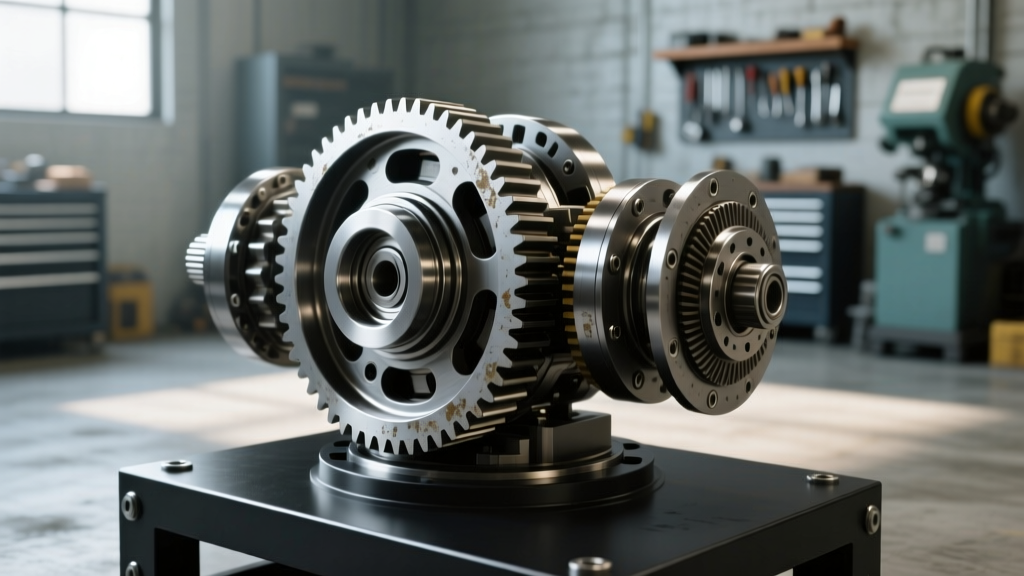
The ring gear must be mounted to the mechanical limited slip differential carrier with extreme precision. The S550 IRS carrier utilizes specific side bearing shims to set both backlash and carrier bearing preload.
- Ring Gear Bolt Torque: 85 lb-ft. Apply Red Loctite 272 to all 12 ring gear bolts to prevent backing out under high-torque reversals.
- Target Backlash: 0.008 to 0.012 inches. Measure at a minimum of four equidistant points around the ring gear. Variation greater than 0.002 inches indicates a warped ring gear or improper seating on the carrier flange.
- Carrier Bearing Preload: Achieve 35 to 45 ft-lbs of total rotational drag (including pinion drag) by adjusting the side shims. This ensures the carrier cannot deflect under the immense clamping force generated by the 4.10 gears.
Differential Fluid and Friction Modifier Protocol
The longevity of a clutch-type mechanical limited slip differential is entirely dependent on fluid dynamics and friction modifiers. The S550 IRS differential runs significantly hotter than a solid-axle setup due to its proximity to the exhaust and limited airflow. Therefore, stepping up from the factory 75W-85 to a high-quality 75W-140 Full Synthetic gear oil (such as Motul Gear 300 or Amsoil Severe Gear) is highly recommended for track use.
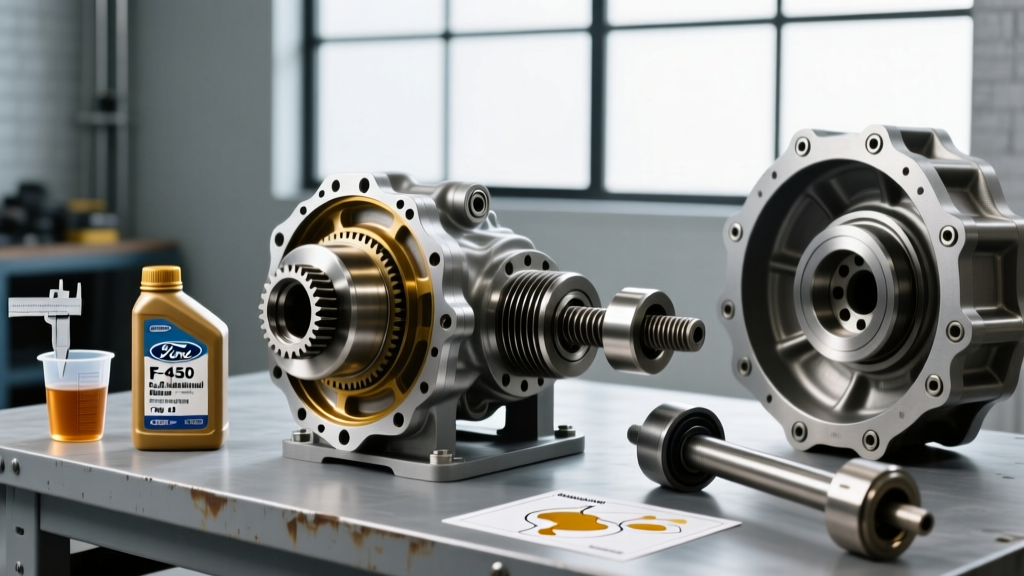
Crucially, you must add a dedicated friction modifier (Ford XL-3 or equivalent). The mechanical limited slip differential relies on a specific coefficient of friction between the carbon-fiber clutch discs and the steel separator plates. Without the modifier, the clutches will bind and release abruptly, causing severe driveline chatter, accelerated wear, and eventual glazing of the friction surfaces. The Super 8.8 IRS fluid capacity is approximately 2.0 quarts. Always perform a figure-eight test drive immediately after the fill to circulate the modifier into the clutch pack pores before subjecting the axle to high-torque loads.
Cost Breakdown and Sourcing
Planning a gear and LSD upgrade requires a realistic budget. Below is the estimated 2026 pricing for a professional-grade Super 8.8 IRS rebuild utilizing OEM and Ford Performance components.
- 4.10 Ring and Pinion Set (M-4209-88410): $280 - $320
- Master Install Kit (Bearings, Shims, Solid Spacer): $140 - $180
- Carbon-Fiber Clutch Pack (M-4700-B): $110 - $130
- 75W-140 Synthetic Fluid & XL-3 Modifier: $60 - $80
- Professional Labor & Machine Shop Setup: $650 - $900
Total investment typically ranges between $1,240 and $1,610. While this is a premium modification, the synergy between the 4.10 gear multiplication and the enhanced clamping force of the rebuilt mechanical limited slip differential transforms the S550 Mustang into a cohesive, track-capable platform, effectively putting the Coyote V8's power to the pavement without the need for an expensive electronic locking differential swap.