The Evolution of Mustang Manual Transmissions: MT-82 to TR-3160
The Ford Mustang S550 (2015-2023) and the newer S650 (2024+) generations represent a massive leap in chassis dynamics, but their hydraulic clutch actuation systems have remained a notorious pain point for enthusiasts and daily drivers alike. Whether you are rowing gears through the Getrag-sourced MT-82 or the upgraded Tremec TR-3160 in the latest Dark Horse models, clutch pedal problems—ranging from spongy engagement to firewall-induced stiffness—can severely compromise drivability and transmission longevity.
As a core component of the drivetrain, the clutch actuation system relies on a precise balance of hydraulic pressure, mechanical leverage, and rotational damping. When symptoms like a soft pedal, hard engagement, or high-frequency vibration arise, they are rarely isolated to a single failing part. Instead, they point to systemic vulnerabilities in the master cylinder, hydraulic lines, concentric slave cylinder (CSC), or flywheel assembly. This model-specific repair guide breaks down the exact failure modes, OEM part numbers, and aftermarket solutions required to restore factory-perfect clutch actuation.
Symptom Matrix: Decoding Clutch Actuation Failures
Before tearing into the bellhousing or replacing the master cylinder, use this diagnostic matrix to correlate your specific pedal symptom with the most probable mechanical failure.
| Pedal Symptom | Primary Suspect | Diagnostic Test | Recommended Fix |
|---|---|---|---|
| Soft / Spongy | Air in hydraulic line or failing CSC internal seals | Check bellhousing inspection cover for DOT 4 fluid weeping. | Pressure bleed system; replace CSC if fluid is present in bellhousing. |
| Hard / Stiff | Firewall flex or binding CMC pushrod | Observe firewall near CMC mount for deflection during heavy clutch depression. | Install aftermarket firewall brace; upgrade CMC. |
| Vibrating / Chatter | Dual-Mass Flywheel (DMF) spring failure or worn release bearing | Feel for high-frequency buzzing through the pedal at 1,800-2,200 RPM. | Replace DMF with Single-Mass Flywheel (SMF) conversion kit. |
| Inconsistent Bite | Master cylinder internal bypass valve failure | Pedal returns slowly or bite point shifts after repeated highway shifts. | Replace OEM CMC with adjustable aftermarket unit. |
Deep Dive: The Spongy Pedal & Concentric Slave Cylinder (CSC)
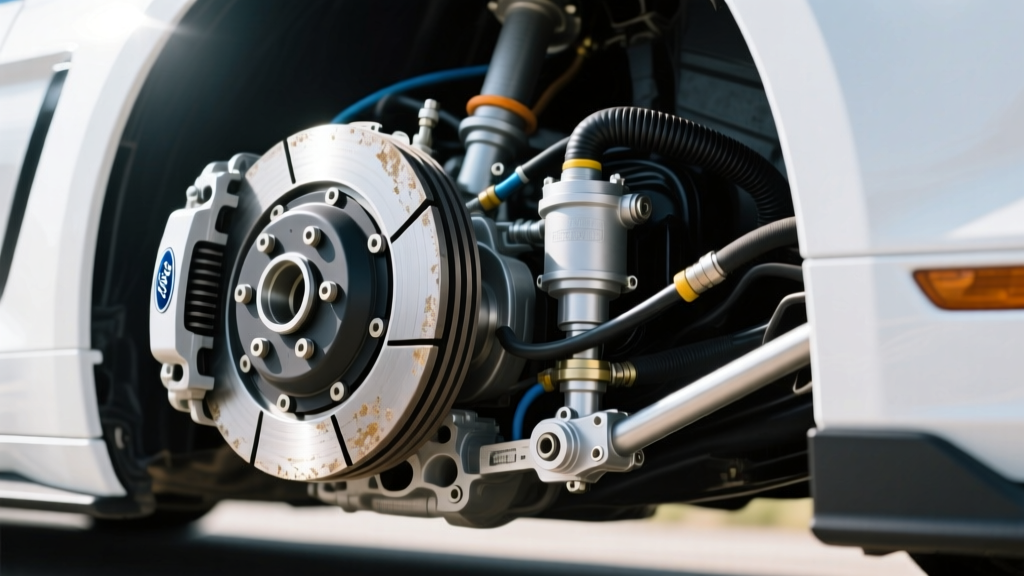
The most common complaint among S550 Mustang owners is a clutch pedal that feels progressively softer over time, eventually leading to incomplete clutch disengagement and gear grinding. The MT-82 and TR-3160 transmissions utilize an internal Concentric Slave Cylinder (CSC), which wraps around the transmission input shaft. While this design saves space and reduces moving mass, it places the hydraulic seals in a high-heat, high-friction environment.
Identifying CSC Failure
If your clutch pedal sinks to the floor or feels spongy despite multiple bleed attempts, the CSC internal seals have likely failed. You can confirm this without dropping the transmission by removing the rubber inspection plug on the bottom of the bellhousing. If you see drops of Motorcraft PM-20 DOT 4 LV fluid, the CSC is compromised and must be replaced. Operating the vehicle with a leaking CSC will contaminate the clutch friction disc, necessitating a full clutch replacement.
OEM vs. Aftermarket Actuation Upgrades
The OEM Ford CSC (Part # BR3Z-7A548-A) is adequate for stock power levels, but it is prone to premature failure under the stress of high-clamp-load aftermarket clutches. For a reliable repair, experts at Ford Performance Parts and aftermarket specialists recommend upgrading to a heavy-duty CSC or an external slave cylinder conversion kit if your budget allows. When reinstalling the CSC, ensure the hydraulic quick-connect fitting (Part # WC-86221) is fully seated until you hear a definitive click; a partially seated line is the leading cause of post-repair sponginess.
Troubleshooting the 'Hard' Clutch Pedal: Firewall Flex & Master Cylinders
A clutch pedal that feels unusually stiff, or one that requires immense leg fatigue to operate in stop-and-go traffic, is rarely caused by the clutch pressure plate itself. In the S550 Mustang chassis, the clutch master cylinder (CMC) mounts directly to the sheet metal of the firewall. Under the hydraulic pressure required to actuate a heavy performance clutch, the thin firewall steel actually flexes inward.
This firewall flex absorbs a significant portion of your pedal travel, resulting in a hard, dead-feeling pedal and an inconsistent bite point. The definitive repair for this chassis-specific flaw is the installation of a billet aluminum firewall brace. Brands like Steeda and MGW offer braces that bolt to the existing CMC studs and distribute the hydraulic load across a wider surface area of the firewall, completely eliminating deflection.
Additionally, the OEM CMC utilizes a plastic internal bypass valve that can stick or degrade over time, causing hydraulic pressure to bleed back into the reservoir prematurely. Upgrading to an aftermarket CMC with a CNC-machined aluminum body and an adjustable pushrod allows you to dial in exact pedal free-play, ensuring full actuation without over-extending the CSC.
High-Frequency Pedal Vibration: Flywheel and Release Bearing Diagnostics
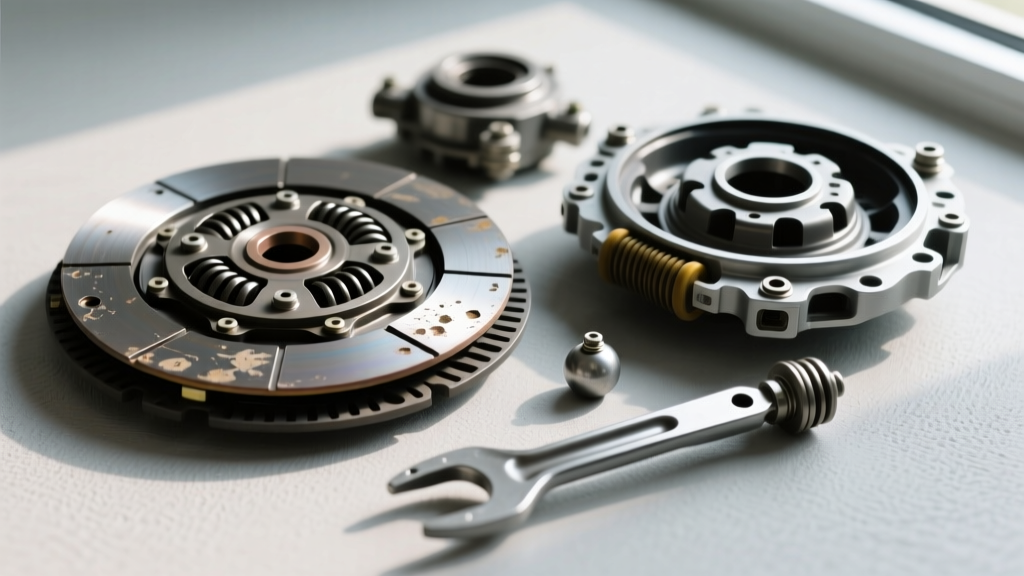
If your clutch pedal vibrates with a distinct buzzing sensation—particularly between 1,800 and 2,200 RPM—the issue lies within the rotating assembly, not the hydraulics. The 5.0L Coyote V8 utilizes a Dual-Mass Flywheel (DMF) from the factory to dampen torsional vibrations and protect the MT-82 transmission gears from shock loads. However, the internal arc springs within the DMF are notorious for fatiguing and breaking under aggressive driving or high-torque tuning.
When the DMF springs fail, the secondary mass of the flywheel wobbles on its axis, transferring high-frequency harmonic vibrations directly through the release bearing and into the hydraulic actuation line, which acts as a conduit straight to your foot. According to drivetrain specialists at Exedy USA, the most permanent solution is converting to a Single-Mass Flywheel (SMF) setup, such as the Exedy Hyper Single or a Ford Performance SMF kit. While an SMF may introduce slightly more gear rattle at idle, it entirely eliminates DMF-related pedal vibration and provides a more direct, responsive actuation feel.
Precision Bleeding & Torque Specifications
Gravity bleeding is entirely ineffective on the Mustang's clutch actuation system due to the upward routing of the hydraulic line from the master cylinder to the transmission. To achieve a rock-solid pedal, you must use a pressure bleeder and follow a strict protocol.
- Fill the pressure bleeder tank with fresh Motorcraft DOT 4 LV fluid and pressurize it to exactly 30 PSI. Higher pressures can rupture the OEM plastic hydraulic lines.
- Attach the bleeder hose to the CSC bleed nipple (located on the side of the transmission bellhousing) and open the valve.
- Allow fluid to flow until it is completely free of micro-bubbles (typically 1 to 1.5 quarts of fluid volume).
- Close the nipple, remove the pressure tank, and perform 20 slow, full-stroke pedal pumps to seat the CSC piston against the pressure plate fingers.
Critical Torque Specs (MT-82 & TR-3160)
- Flywheel to Crankshaft (5.0L): 59 lb-ft + 90-degree turn (Yield bolts must be replaced)
- Clutch Pressure Plate to Flywheel: 22 lb-ft (Tighten in a crisscross star pattern)
- Bellhousing to Engine Block (MT-82): 35 lb-ft
- Bellhousing to Engine Block (TR-3160): 37 lb-ft
- Driveshaft Flange to Pinion: 85 lb-ft
Repair Cost Breakdown & Labor Estimates
Understanding the financial commitment of a proper clutch actuation repair helps in deciding between a band-aid fix and a comprehensive overhaul. Below is a realistic cost breakdown based on current 2026 aftermarket and OEM pricing.
| Repair Scenario | Parts Cost | Labor Time | Estimated Total |
|---|---|---|---|
| CSC Replacement Only (OEM) | $180 - $250 | 4.5 Hours | $650 - $850 |
| Full Clutch & SMF Conversion | $700 - $1,100 | 6.0 Hours | $1,400 - $1,900 |
| CMC Upgrade & Firewall Brace | $250 - $400 | 1.5 Hours | $400 - $600 |
| Hydraulic Line Flush & Bleed | $30 (Fluid) | 0.5 Hours | $90 - $120 |
For comprehensive transmission removal and installation procedures, always consult the latest service manuals available via Tremec Transmissions or the Ford Motorcraft service portal. Addressing clutch actuation issues holistically—rather than replacing single components in isolation—ensures that your Mustang's manual transmission delivers crisp, predictable shifts for tens of thousands of miles.