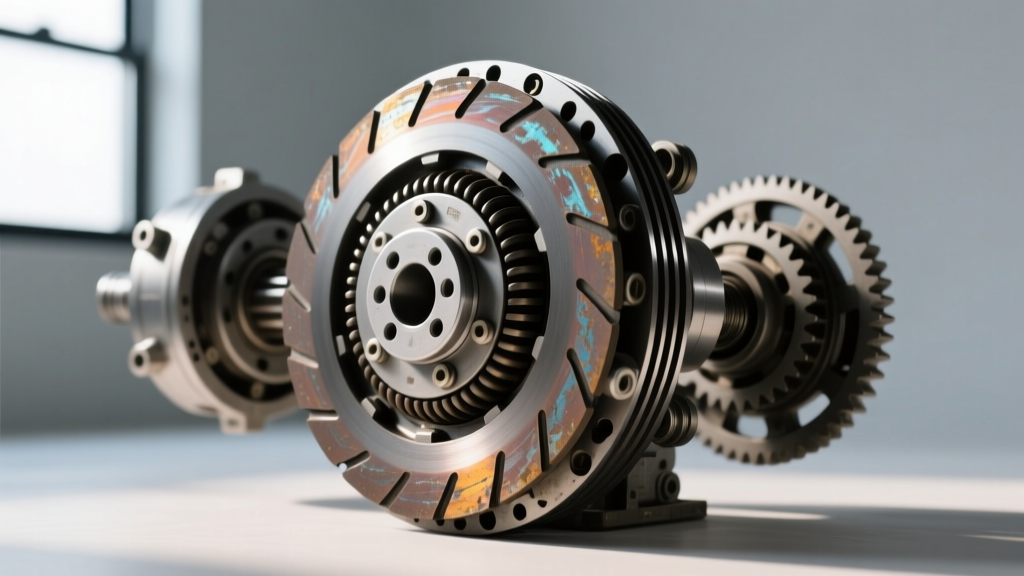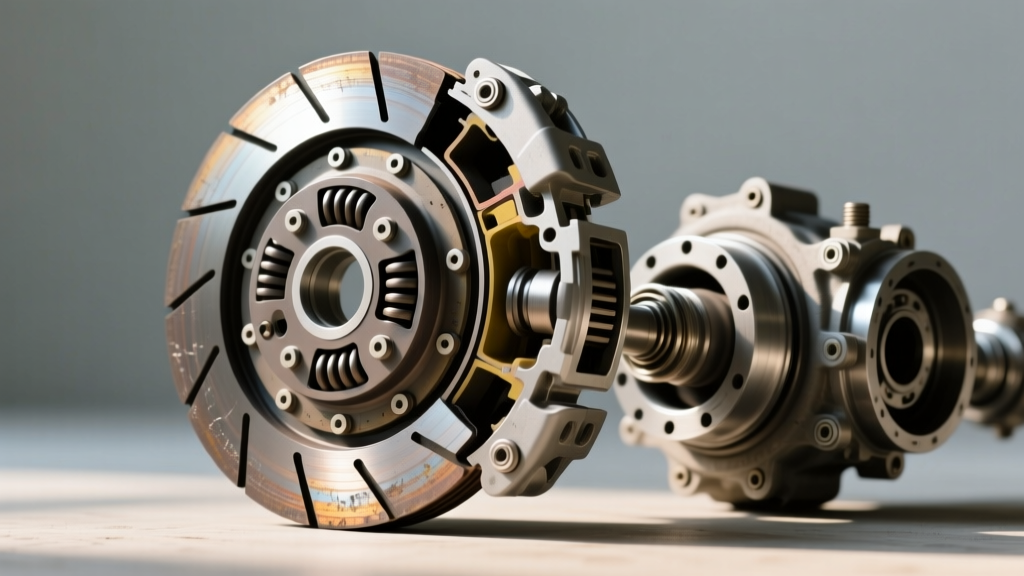
Manual transmissions demand a precise, symbiotic relationship between the driver's left foot and the drivetrain's friction materials. When that relationship breaks down, the symptoms are immediate and alarming. For owners of the Ford Mustang equipped with the Getrag MT-82 manual transmission (2011–2023 models), clutch pedal anomalies are a well-documented headache. As of 2026, the MT-82 platform remains a staple in the performance community, yet its hydraulic release bearing and dual-mass flywheel setups require meticulous maintenance. If you are experiencing a soft, hard, or vibrating pedal alongside a loss of power delivery, you are likely facing a compounding failure. This model-specific repair guide will decode these symptoms, explain the underlying mechanics, and provide exact torque specs and bleeding procedures to get your Mustang back on the road.
Defining the Failure: What Does Clutch Slip Mean?
Before tearing into the bellhousing, we must answer a fundamental diagnostic question: what does clutch slip mean in the context of modern hydraulic manual transmissions? Clutch slip occurs when the friction disc is no longer fully locked to the flywheel by the pressure plate's clamping force. Instead of transferring 100% of the engine's torque to the MT-82's input shaft, the disc spins at a different RPM than the flywheel. You will notice the engine RPMs climbing rapidly under load, while vehicle speed remains stagnant or accelerates sluggishly.
In the MT-82, clutch slip is rarely just a worn friction disc. It is frequently a secondary symptom of a hydraulic failure. When the clutch pedal feels spongy or soft, the Concentric Slave Cylinder (CSC) is failing to apply adequate forward pressure on the diaphragm spring fingers of the pressure plate. Consequently, the clamping force drops below the threshold required to hold the engine's torque output, resulting in slip. Ignoring a spongy pedal will inevitably lead to catastrophic friction material failure and severe flywheel scoring.
The Getrag MT-82 Hydraulic Architecture
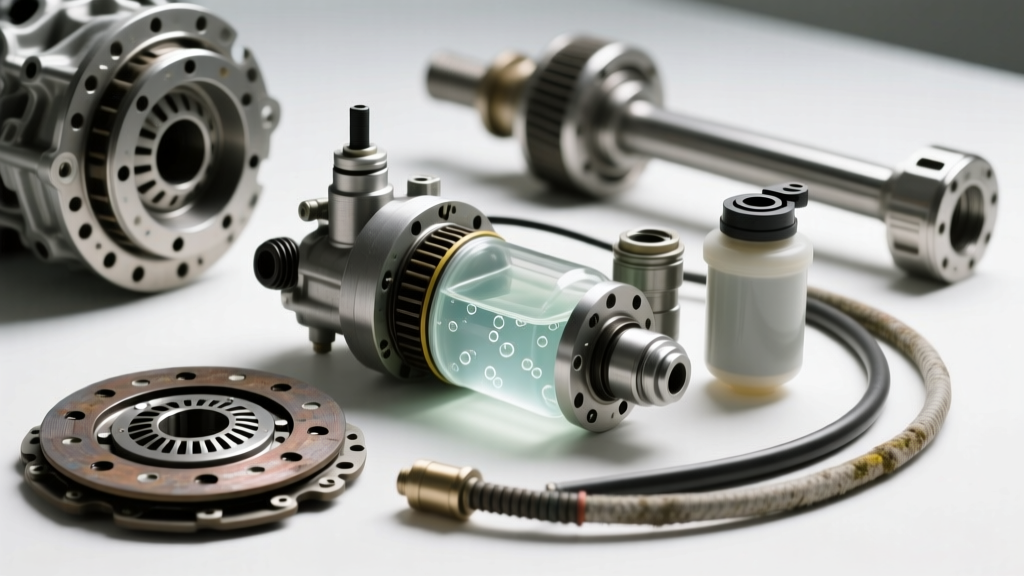
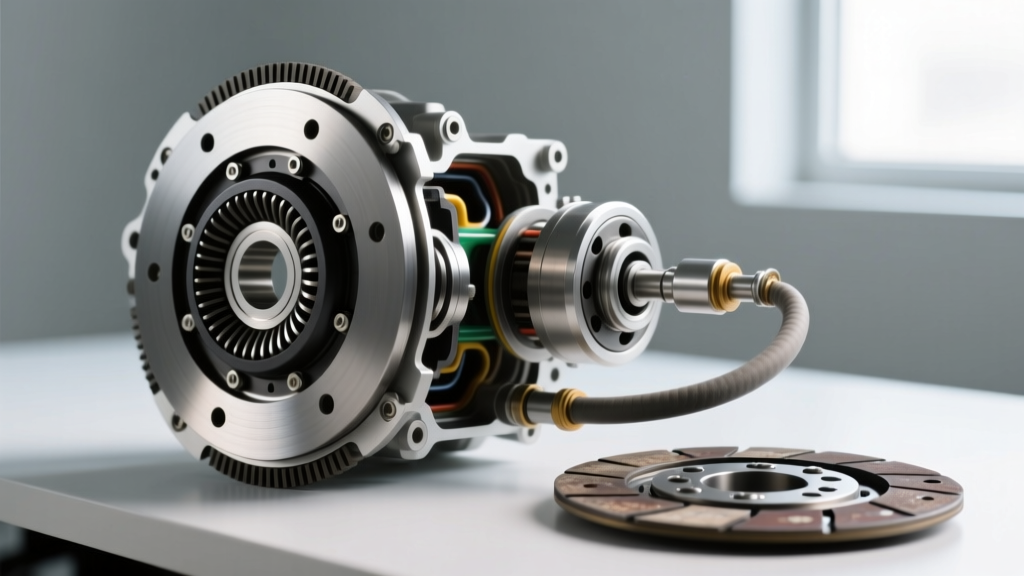
Unlike older manual transmissions that utilized an external clutch fork and a traditional throw-out bearing, the MT-82 relies on a hydraulic Concentric Slave Cylinder (CSC), also known as a Hydraulic Release Bearing (HRB). This component sits inside the bellhousing, wrapping around the transmission input shaft. When you press the clutch pedal, the master cylinder pushes Motorcraft DOT 4 LV fluid through the hard line and flexible hose directly into the CSC, expanding it outward to disengage the clutch.
Diagnosing Spongy, Hard, and Vibrating Pedals
Pedal feel is your primary window into the health of the MT-82's hydraulic and mechanical components. Here is how to interpret the feedback from your left foot:
- Spongy or Soft Pedal: Usually indicates air in the hydraulic line, a failing internal seal inside the CSC, or a leaking master cylinder bypass port. Air is compressible; fluid is not. If the pedal sinks to the floor without resistance, the system has lost hydraulic integrity.
- Hard or Stiff Pedal: Often points to a binding clutch fork pivot ball, a collapsed flexible hydraulic hose, or a warped pressure plate diaphragm spring. In the MT-82, the plastic factory pivot ball (Ford part # 7A369) is notorious for wearing down, altering the geometry and making the pedal feel artificially stiff or notchy.
- Vibrating or Chattering Pedal: A vibrating pedal upon engagement typically signals a failing Dual-Mass Flywheel (DMF). The internal dampening springs of the DMF collapse, causing severe harmonic vibrations that travel through the CSC and directly into the hydraulic fluid, manifesting as a pulsating pedal.
MT-82 Symptom Diagnostic Matrix
| Pedal Symptom | Primary MT-82 Root Cause | Diagnostic Verification Test |
|---|---|---|
| Spongy / Sinks to Floor | Internal CSC seal blowout or air ingestion | Check for fluid weeping at the bellhousing inspection cover; pressure bleed system. |
| Hard / Notchy Engagement | Worn plastic clutch fork pivot ball | Remove inspection cover and inspect pivot ball for flat-spotting or missing shards. |
| Vibrating / Pulsating | Collapsed Dual-Mass Flywheel (DMF) springs | Listen for metallic 'clack-clack' at idle; observe RPM-dependent pedal pulsation. |
| Slipping Under Load | Oil contamination from CSC leak or weak diaphragm | Perform a high-gear (4th/5th) lug test at 2,000 RPM; watch for RPM spikes. |
Model-Specific Repair: Replacing and Bleeding the MT-82 CSC
If your diagnostic tests confirm a failing CSC or contaminated clutch assembly, replacement is mandatory. According to McLeod Racing, a leading authority on manual drivetrain conversions, the MT-82's internal hydraulic bearing requires precise installation depth to function correctly. Furthermore, bleeding the MT-82 is notoriously frustrating due to the CSC's orientation, which traps air bubbles at the highest point of the hydraulic circuit.
The 15-PSI Pressure Bleed Procedure
Gravity bleeding and pedal-pumping are largely ineffective on the MT-82. You must use a pressure bleeder to force fluid upward and push trapped air out of the CSC.
- Extract all old fluid from the master cylinder reservoir using a turkey baster. Refill with fresh Motorcraft High Performance DOT 4 LV (Part # PM-22).
- Attach a pressure bleeder to the reservoir and set the regulator to exactly 15 PSI. Higher pressures can blow out the master cylinder's internal seals.
- Crawl under the vehicle and locate the hydraulic line junction near the transmission crossmember.
- Crack the hard line fitting slightly to allow fluid and air to escape. Let it flow until no bubbles are visible, then tighten the fitting to 11 lb-ft.
- Move to the bellhousing inspection cover. If equipped with a bleeder screw on the CSC (common in aftermarket upgrades like Exedy), bleed there. If using the OEM sealed CSC, cycle the pedal slowly 20 times with the pressure bleeder attached to force the CSC to its maximum stroke, pushing air back up to the master cylinder.
Critical MT-82 Torque Specifications
When dropping the MT-82 to replace the CSC, clutch kit, or flywheel, adhering to factory torque specs is non-negotiable to prevent case warping or catastrophic bolt failure under high-torque loads.
- Bellhousing to Engine Block (M12 Bolts): 37 lb-ft (50 Nm)
- Transmission Crossmember to Chassis: 66 lb-ft (90 Nm)
- Driveshaft Flange to Pinion Flange (M10 Bolts): 37 lb-ft (50 Nm) - Always replace these stretch bolts.
- Clutch Pressure Plate to Flywheel (M8 Bolts): 22 lb-ft (30 Nm) in a crisscross star pattern.
- Flywheel to Crankshaft (if replacing DMF): 59 lb-ft (80 Nm) plus an additional 90-degree turn.
Curing MT-82 Clutch Pedal Vibration and Chatter
If you are asking what does clutch slip mean, you might also be experiencing the violent shudder known as clutch chatter. In the MT-82 ecosystem, chatter and pedal vibration are almost exclusively tied to the Dual-Mass Flywheel (DMF) and the clutch fork pivot geometry. The OEM DMF is designed to absorb the harsh torsional vibrations of the 5.0L Coyote V8. However, as the internal grease dries out and the dampening springs weaken (typically around 70,000 to 90,000 miles), the flywheel develops excessive rotational play.
Many enthusiasts opt for a Single-Mass Flywheel (SMF) conversion to eliminate the DMF failure point. While an SMF (such as those offered by Exedy Globalparts) provides a more direct, rigid feel and handles higher torque loads, it transfers more gear rattle and engine harmonics into the chassis. If you choose an SMF conversion, you must also upgrade the plastic factory pivot ball to an adjustable steel pivot ball to maintain the correct clutch fork geometry, ensuring the pedal remains smooth and linear throughout its travel.
2026 Pricing and Component Selection Guide
Budgeting for an MT-82 clutch and hydraulic repair requires understanding the difference between OEM replacement parts and performance aftermarket upgrades. Below is a current market breakdown for a complete overhaul.
| Component Category | OEM / Factory Replacement | Performance Aftermarket (e.g., McLeod, Exedy) |
|---|---|---|
| Concentric Slave Cylinder (CSC) | $180 - $240 (Motorcraft / Sachs) | $250 - $350 (McLeod Hydraulic Bearing) |
| Flywheel Assembly | $450 - $600 (OEM Dual-Mass) | $350 - $500 (Billet Steel Single-Mass) |
| Clutch Kit (Disc & Pressure Plate) | $250 - $320 (OEM Ford Performance) | $400 - $750 (Ceramic / Kevlar Twin-Disc) |
| Clutch Fork Pivot Ball | $15 (Plastic OEM) | $45 - $85 (Adjustable Steel / Bronze) |
| Estimated Total Parts Cost | $895 - $1,175 | $1,045 - $1,685 |
Note: Labor costs for dropping the MT-82 transmission and replacing internal hydraulic components typically range from $600 to $900 at independent specialty shops, depending on regional rates and whether the exhaust system requires extensive disassembly.
Expert Transmission Insight: Never reuse the OEM hydraulic line O-rings when disconnecting the MT-82 hard line. The quick-connect fittings utilize specialized Viton seals that deform upon removal. Always use a dedicated disconnect tool and replace the seals with new Motorcraft quick-connect kits to prevent slow, insidious fluid leaks that will eventually introduce air back into the CSC, causing the spongy pedal and clutch slip to return within months.
Final Diagnostics and Drivetrain Longevity
Understanding what does clutch slip mean is only the first step in preserving your manual transmission. A slipping clutch generates immense heat, which can rapidly degrade the transmission fluid inside the MT-82 and damage the input shaft seal. If your pedal feels spongy, address the hydraulic system immediately before the friction material disintegrates. If the pedal vibrates, inspect the flywheel and pivot geometry before the harmonic chatter cracks the bellhousing or damages the input shaft bearings. By utilizing the correct DOT 4 LV fluid, adhering to precise torque specifications, and selecting high-quality replacement components from trusted manufacturers like Ford Performance Parts, you can restore the crisp, predictable pedal feel that makes driving a manual Mustang an unparalleled experience.