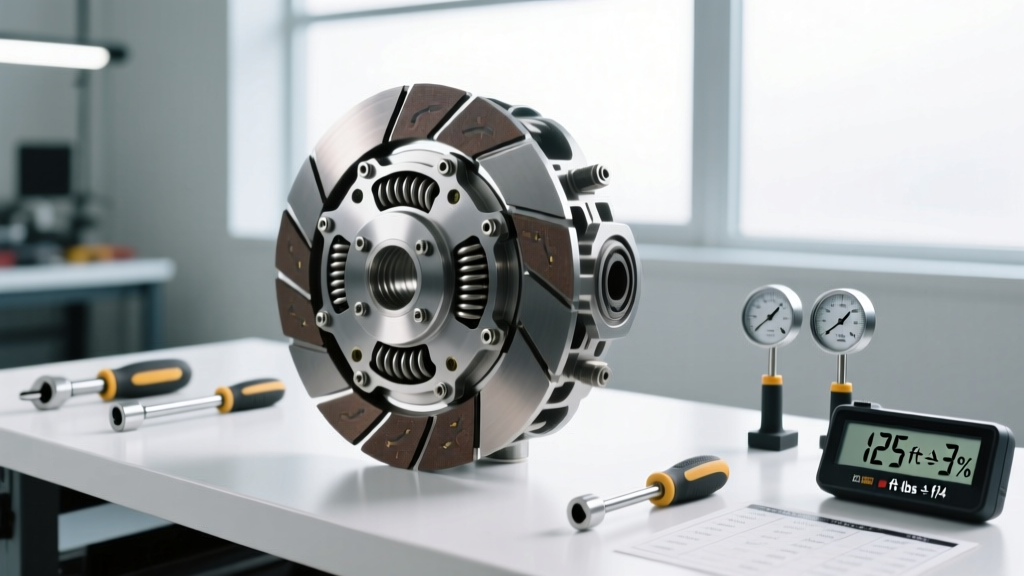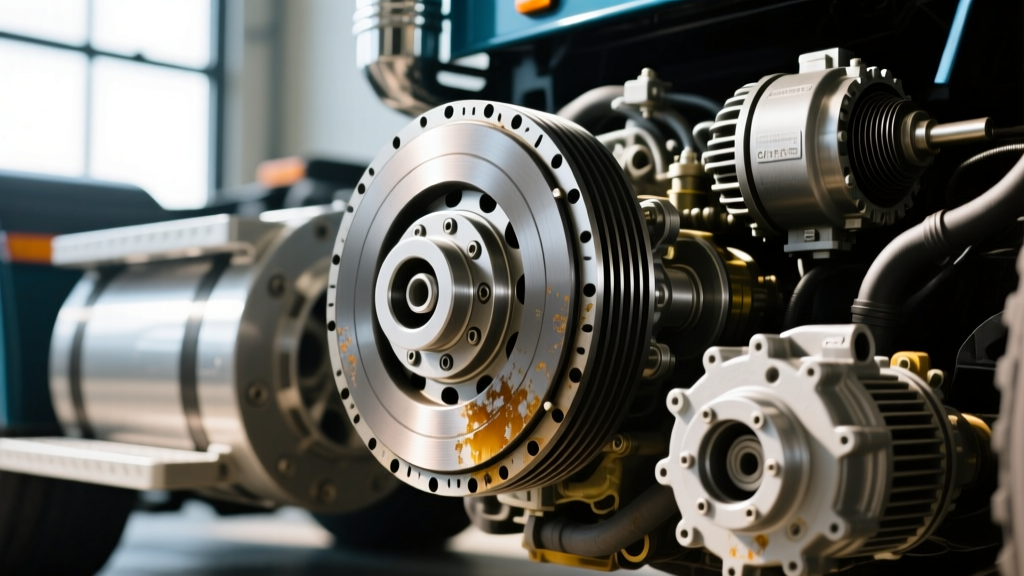
Editor's Note (2026 Update): While automotive manual transmissions use a clutch pedal to disengage the driveline, heavy-duty commercial mowers and garden tractors (like the Kubota GR2120 or John Deere 318/400 series) utilize a mower PTO clutch pedal or hydraulic lever to engage the cutting deck. Misdiagnosing this hydraulic or mechanical engagement circuit is a leading cause of premature PTO failure.
The Anatomy of a Mower PTO Clutch Pedal System
Unlike a standard automotive dry-clutch setup, the mower PTO clutch pedal on sub-compact tractors and commercial zero-turns typically actuates one of two systems:
- Hydraulic Wet Clutch Packs: Found on models like the John Deere 400 and Kubota GR2120. Pressing the pedal routes hydraulic fluid to a piston that clamps alternating friction and steel separator plates inside the transaxle.
- Mechanical-to-Electric Linkage: Found on older Scag and Exmark commercial mowers, where a physical pedal or lever pulls a cable that triggers a heavy-duty microswitch, engaging an electromagnetic Ogura or Warner Electric PTO clutch.
When operators report clutch pedal problems—specifically soft, hard, spongy, or vibrating feedback—it indicates a failure in the fluid dynamics, mechanical linkage, or electromagnetic air-gap tolerances. Below is the definitive diagnostic framework for resolving these engagement anomalies.
Spongy & Soft Pedals: Hydraulic Aeration and Bypass
A spongy or soft mower PTO clutch pedal is almost exclusively a hydraulic issue. Because the PTO engagement circuit shares fluid with the hydrostatic drive (HST) on many garden tractors, fluid degradation directly impacts pedal feel.
Root Cause 1: Master Cylinder O-Ring Bypass
On John Deere 318 and 332 models, the PTO engagement valve utilizes a small-bore master cylinder. Over time, the internal Buna-N O-rings harden and flatten. When you press the pedal, fluid bypasses the piston rather than pushing the clutch pack actuator. The pedal sinks to the floor with zero resistance.
Root Cause 2: Micro-Aeration in the HST/PTO Fluid
If the hydraulic fluid has sheared or absorbed moisture, the rapid pressure spike during PTO engagement causes cavitation. You will feel a 'bouncy' or spongy return when the pedal is released.
The 2026 Flush & Bleed Protocol
- Drain the transaxle completely. Do not mix fluids.
- Refill with the exact OEM specification: Kubota Super UDT2 or John Deere Low Viscosity Hy-Gard. (Expect to pay $35–$45 per gallon in 2026).
- Locate the PTO bleed screw on the transaxle housing (usually a 10mm hex near the mid-PTO output shaft).
- With the engine at idle, slowly depress the PTO pedal while a technician cracks the bleed screw until a solid stream of fluid exits without bubbles.
- Torque the bleed screw to 7-9 ft-lbs to avoid stripping the aluminum housing.
Rock-Hard Pedals: Mechanical Bind and Pack Seizure
If the mower PTO clutch pedal requires excessive force (over 40 lbs of pressure) or refuses to depress, you are dealing with a mechanical bind or a fused clutch pack.
Diagnosing the Mechanical Linkage
On cable-actuated electric PTO systems, the pedal pivot bushings and cable sheaths are exposed to extreme debris, moisture, and fertilizer corrosion. Disconnect the cable from the pedal arm. If the pedal moves freely but the cable is stiff, the inner wire is fraying inside the Teflon liner. Replace the assembly with an OEM heavy-duty cable (e.g., Scag part #483492, approx. $65).
Wet Clutch Pack Fusion (The 'Green Death')
If the hydraulic linkage moves freely but the pedal remains rock-hard, the internal wet clutch pack has fused. This happens when operators 'slip' the PTO pedal to slowly engage heavy rotary cutter decks. The resulting 400°F+ heat glazes the friction material, and the resin bonds the steel separator plates together. Fix: The transaxle must be split, and the clutch pack replaced. Friction disc kits (e.g., Kubota H1710-25110) cost between $180 and $280, but labor is intensive.
Vibrating & Chattering: The Armature Air-Gap Failure
A vibrating or chattering mower PTO clutch pedal is a severe mechanical warning sign. In hydraulic systems, this indicates warped steel separator plates. However, in mechanical-linkage-to-electric systems, the vibration is actually electromagnetic chatter transferring back through the cable and pedal assembly.
The Air-Gap Tolerance Matrix
Electromagnetic PTO clutches (like the Warner Electric 5218-series or Ogura GT2.5-RW) rely on a precise air gap between the rotor and the armature. As the friction surface wears, the gap widens. When the gap exceeds 0.030 inches, the electromagnetic field cannot pull the armature in cleanly. It 'chatters' against the rotor at 60Hz, sending violent vibrations up the engagement cable and into the operator's foot pedal.
Adjustment Procedure:
- Disconnect the battery to prevent accidental engagement.
- Insert a feeler gauge through the inspection slots in the PTO clutch housing.
- Measure the gap at all three armature mounting points.
- If the gap exceeds 0.020', loosen the 12mm locknuts on the armature spacers.
- Adjust the spacers to achieve a uniform 0.012' to 0.015' air gap across all three points.
- Torque the locknuts to 12-15 ft-lbs using a thread-locking compound (Blue Loctite 243).
Diagnostic Matrix: Pedal Symptom vs. Root Cause
| Pedal Symptom | Primary System | Root Cause | Required Action |
|---|---|---|---|
| Soft / Sinks to Floor | Hydraulic Wet Pack | Master cylinder O-ring bypass | Rebuild or replace PTO valve assembly |
| Spongy / Bouncy | Hydraulic Wet Pack | Fluid aeration / sheared HST fluid | Complete fluid flush & circuit bleed |
| Rock-Hard / Stuck | Mechanical / Hydraulic | Cable corrosion or fused clutch plates | Lubricate/replace cable or split transaxle |
| Vibrating / Chattering | Electric (via Cable) | Air-gap > 0.030' causing 60Hz chatter | Shim armature to 0.012' - 0.015' gap |
2026 Replacement Cost & OEM Part Matrix
When adjustment and bleeding fail, component replacement is mandatory. Below is the current 2026 pricing and part reference guide for the most common commercial mower PTO clutch systems. Sourcing from authorized dealers like Messick's or direct from Altra Motion (Warner Electric) ensures you receive genuine friction materials capable of handling the high-inertia loads of modern 60-inch and 72-inch commercial decks.
- Warner Electric 5218-101-015 (Heavy Duty Electric PTO): $485 - $550. Used on premium stand-on and zero-turn mowers. Features a 1.125' crankshaft bore and 125 lb-ft static torque rating.
- Ogura GT2.5-RW (Electromagnetic Clutch): $390 - $450. Common on Exmark and Scag models. Known for superior heat dissipation fins.
- Kubota H1710-25110 (Hydraulic Clutch Pack Kit): $210 - $280. Includes alternating friction and steel discs for the GR-series hydraulic PTO engagement.
- John Deere AM107324 (PTO Engagement Valve Kit): $145 - $180. Resolves soft/spongy pedal issues on the JD 318/400/420 garden tractors.
Final Torque & Safety Reminder
Always verify the PTO clutch mounting bolts to the engine crankshaft. For most 1-inch to 1.25-inch crankshafts, the mounting bolts require 35-45 ft-lbs of torque. An under-torqued PTO clutch will wobble, destroying the armature air-gap and causing violent pedal vibration that mimics internal transaxle failure. Always engage the mower PTO at low idle (under 1,200 RPM) to minimize the thermal shock and inrush current that degrades both hydraulic fluid and electromagnetic coils.