The Diagnostic Value of the Clutch Lever
For riders of cable-actuated machines, routine maintenance often involves adjusting clutch cable on motorcycle lever assemblies to maintain the proper 10-15mm of free play. However, from a transmission diagnostic perspective, the frequency and range of these adjustments serve as a primary indicator of internal clutch pack degradation. When a cable-actuated clutch requires constant adjustment, or when the adjuster barrels max out their thread travel, the issue is rarely just cable stretch. It is a quantifiable symptom of friction material wear, spring fatigue, and clutch pack compression.
In this technical deep-dive, we explore the metallurgy, mechanical tolerances, and lifespan indicators of motorcycle wet and dry clutch systems. By understanding the exact service limits of friction plates and pressure springs, you can transition from reactive cable adjustments to proactive drivetrain preservation.
Anatomy of Cable Stretch vs. Pack Compression
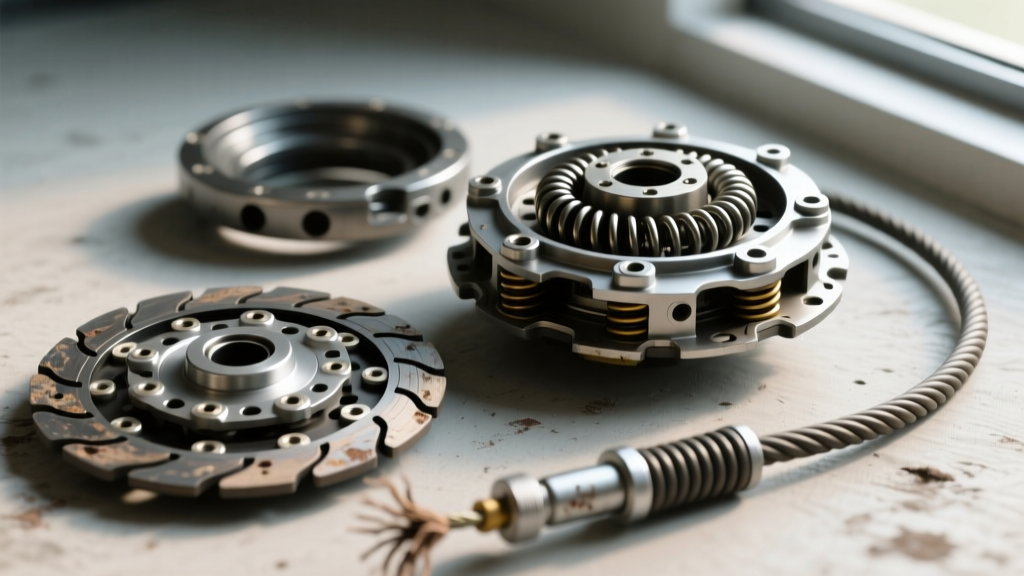
To accurately diagnose clutch wear, we must isolate the variable of the Bowden cable. A standard motorcycle clutch cable consists of a steel inner wire housed within a PTFE-lined or steel-braided outer sheath. Over time, the inner wire undergoes tensile yielding (stretch), and the outer sheath compresses. This accounts for roughly 2-4mm of slack over a 20,000-mile lifespan.
However, the clutch pack itself is a consumable stack. A typical sportbike clutch contains 7 to 9 friction plates interspersed with steel separator plates. When the friction material (usually a paper-based composite or Kevlar) wears down by just 0.3mm per plate, the total stack height drops significantly. The pressure plate moves outward to compensate, pulling the clutch pushrod and actuator arm with it. This effectively 'consumes' the free play at the lever. If you find yourself dialing the handlebar adjuster outward and subsequently relying on the engine-case adjuster to regain free play, you are measuring the physical loss of clutch pack thickness.
4 Critical Signs Your Clutch Pack is Expiring
Beyond the need for constant cable adjustment, a failing clutch pack exhibits distinct mechanical symptoms that correlate to specific component failures.
- High-RPM Slipping Under Load: The most definitive sign of friction material glazing or wear. When rolling on the throttle in 4th or 5th gear at 6,000+ RPM, the tachometer needle climbs faster than the vehicle's road speed. This indicates the coefficient of friction has dropped below the clamping force of the springs.
- Notchy Engagement and Lever Chatter: If the clutch lever pulses or the engagement point feels 'stepped' rather than linear, the steel separator plates are likely warped from excessive heat cycling, or the clutch basket fingers are severely notched.
- Failure to Fully Disengage (Dragging): Even with maximum cable slack introduced, the motorcycle creeps forward in first gear with the lever pulled to the grip. This points to warped steel plates that refuse to separate, or severe notching in the outer clutch basket that traps the friction plate tabs.
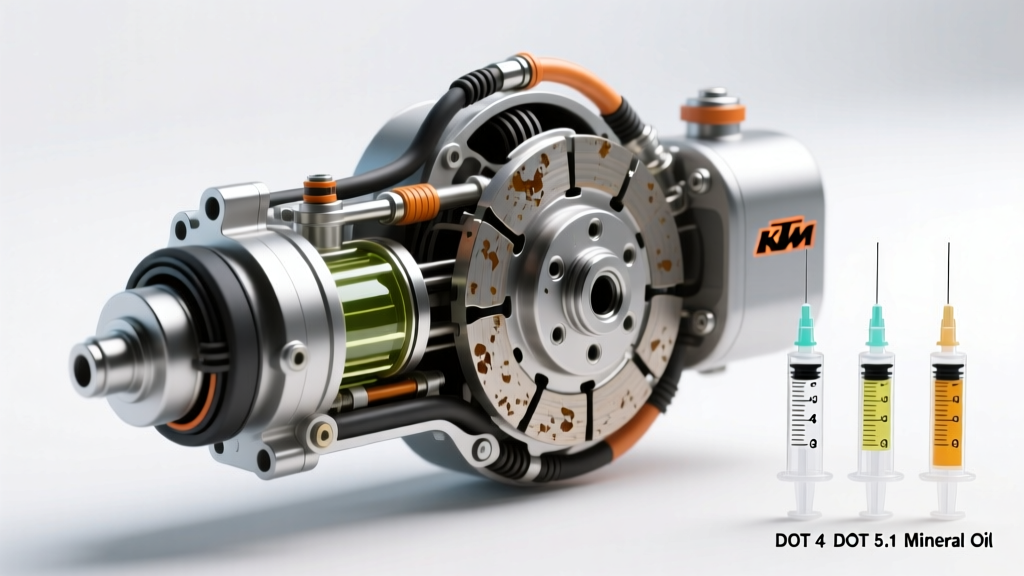
- Spongy Lever Feel (Wet Clutches): While typically a hydraulic issue, cable-actuated wet clutches can feel spongy if the friction material is delaminating and contaminating the shared engine oil, or if the clutch pushrod bearing (often a small needle or ball bearing) has disintegrated.
OEM Specifications and Service Limits
Accurate diagnosis requires a set of digital calipers and a factory service manual. Guessing stack height leads to premature failure or lever drag. Below is a comparison of standard OEM specifications and absolute service limits for three popular motorcycle platforms. Once any friction plate or spring falls below the 'Limit' threshold, the entire pack must be replaced.
| Motorcycle Model | Friction Thickness (Std / Limit) | Spring Free Length (Std / Limit) | Common Aftermarket Part # |
|---|---|---|---|
| Kawasaki Ninja 400 (2018-2024) | 3.00mm / 2.70mm | 49.2mm / 46.5mm | EBC CK1158 |
| Yamaha MT-07 / FZ-07 (2014-2025) | 3.00mm / 2.70mm | 45.5mm / 42.0mm | EBC CK2320 |
| Honda CBR600RR (2007-2020) | 3.10mm / 2.80mm | 44.4mm / 41.9mm | Barnett 302-30-1004 |
| Harley-Davidson Sportster (2004-2022) | 0.118in / 0.094in | 1.95in / 1.85in | Barnett Kevlar 301-30-1002 |
Beyond the Cable: Inspecting the Clutch Basket and Hub
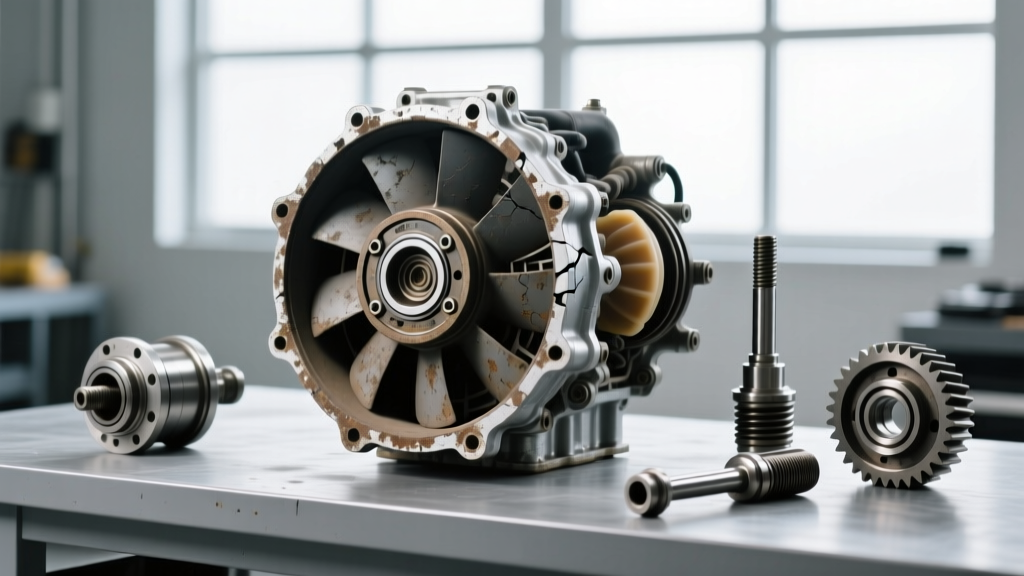
When replacing a worn clutch pack, simply installing new friction plates and high-quality replacement clutches is only half the procedure. The outer clutch basket (driven gear) and inner hub (drive boss) must be inspected for mechanical wear.
Expert Diagnostic Tip: Run your fingernail across the fingers of the outer clutch basket. If your nail catches in deep grooves (notching) caused by the friction plate tabs hammering against the aluminum during engagement, the new clutch plates will hang up. This causes dragging and erratic engagement. Mild notching can be smoothed with a fine flat file, but baskets with notches exceeding 0.5mm require replacement or the installation of a billet aluminum basket with steel inserts.
Additionally, inspect the inner hub splines. On high-torque cruisers and heavily tuned sportbikes, the splines connecting the inner hub to the transmission mainshaft can round off, leading to catastrophic drivetrain failure regardless of cable adjustment or clutch pack health.
Replacement Economics: OEM vs. Aftermarket
The aftermarket for motorcycle clutch components has evolved significantly by 2026, offering materials that frequently outperform OEM paper-based composites. When sourcing parts, understanding the friction material is critical for matching your riding style and spring rates.
Material Science and Pricing
- OEM Paper-Based (Standard): Offers the smoothest, most predictable engagement for street riding. Highly susceptible to glazing if the rider frequently 'slips' the clutch at low speeds. Cost: $120 - $220 per pack.
- Kevlar / Aramid Fiber (e.g., Barnett): Provides an aggressive bite and extreme heat resistance. Ideal for track days, heavy touring, or modified engines. Requires a break-in period and often necessitates upgrading to heavy-duty clutch springs to prevent premature wear. Cost: $140 - $180 per pack.
- Sintered Bronze / Carbon (Dry Clutches): Used primarily on Ducati and select high-end exotic models. These materials require precise air-gap adjustments rather than cable free-play, and they wear much faster than wet clutch equivalents. Cost: $300 - $600+ per pack.
Real-World Torque Specifications
Reassembly requires strict adherence to torque specifications. Over-tightening the clutch boss nut can crush the spacer sleeve, binding the entire pack and rendering the clutch cable adjustment useless. Under-tightening will allow the inner hub to fret against the mainshaft, destroying the transmission input.
- Yamaha MT-07 / FZ-07: Clutch Boss Nut requires 59 lb-ft (80 Nm). You must use a dedicated clutch holding tool (e.g., Motion Pro 08-0411) to prevent the basket from spinning. Never use an impact wrench, as the shock loading can fracture the inner hub casting.
- Honda CBR600RR: Clutch Center Nut requires 58 lb-ft (78 Nm). Always install a new lock washer and peen the edge into the nut's casting groove.
- Kawasaki Ninja 400: Clutch Boss Nut requires 73 lb-ft (99 Nm). Note the higher torque spec due to the thicker mainshaft design on the newer parallel-twin platform.
Final Diagnostic Workflow
The next time you find yourself adjusting clutch cable on motorcycle components more than twice in a single riding season, stop treating the symptom and measure the disease. Pull the clutch cover, drain the JASO MA2-rated engine oil, and break out the calipers. Measure the friction stack, check the spring free-length, and inspect the basket fingers. By utilizing precise OEM service limits and selecting the appropriate aftermarket friction material, you can restore factory-level lever feel and protect your transmission from the devastating effects of a slipping, failing clutch pack.
For further reading on drivetrain maintenance and advanced transmission diagnostics, consult the Barnett Clutches Technical Information portal or review model-specific service intervals via RevZilla's Common Tread maintenance guides.