The Core Differences: Single vs. Twin Disc Architecture
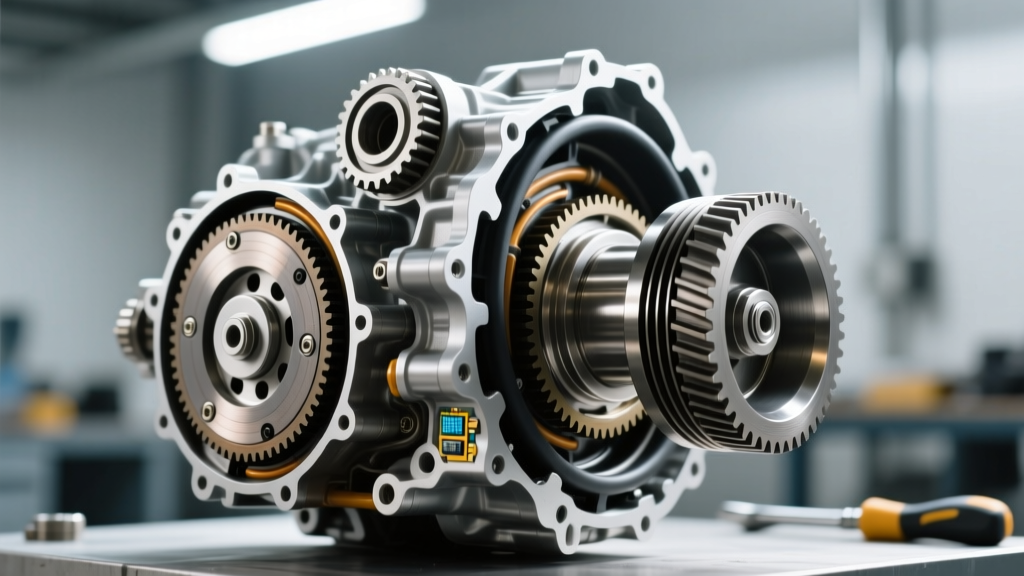
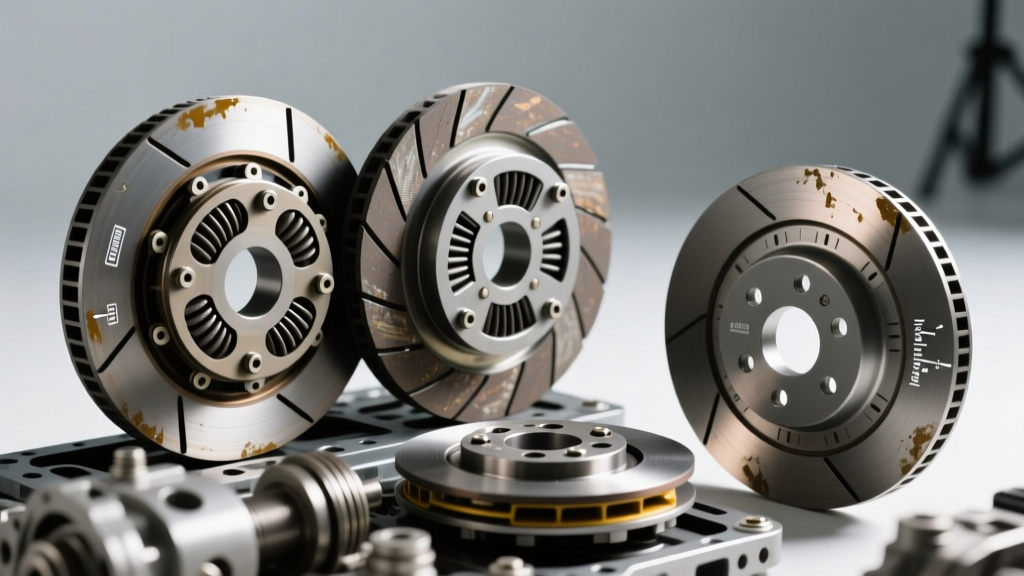
When diagnosing manual transmission drivetrains, understanding the fundamental architectural differences between a single disc and a twin disc clutch system is critical. A standard OEM single disc setup relies on one friction plate sandwiched between the flywheel and the pressure plate. In contrast, high-performance twin disc systems—such as the McLeod RXT or RAM 5000 Series—utilize two friction discs separated by an intermediate (floater) plate. This design effectively doubles the friction surface area, allowing for massive torque capacity (often 800 to 1,200 lb-ft) without requiring an unmanageable pedal effort.
However, this added complexity introduces unique failure modes. Symptoms that indicate simple wear in a single disc clutch might point to catastrophic hydraulic misalignment or machining errors in a twin disc setup. As we navigate the 2026 automotive landscape—where high-horsepower forced-induction builds and EV-swapped manual conversions are increasingly common—technicians must employ a rigorous, system-specific inspection checklist to accurately diagnose chatter, slip, and engagement issues.
Symptom Mapping: How Failures Manifest Differently
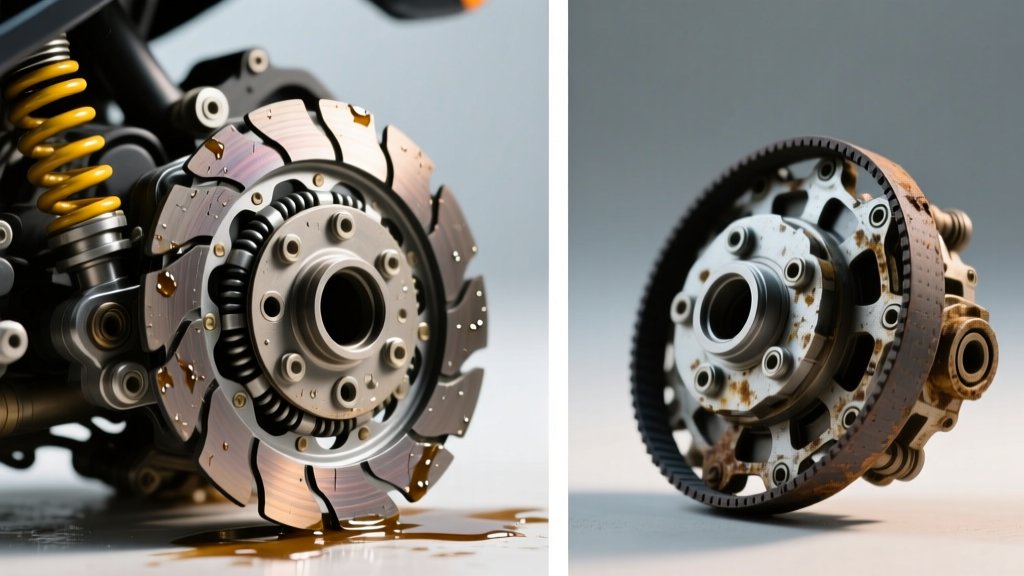
- Clutch Chatter on Engagement: In a single disc system, chatter is typically caused by a collapsed marcel spring, hot spots on the flywheel, or oil contamination on the friction material. In a twin disc system, chatter is frequently the result of an incorrect flywheel step height, causing the intermediate plate to bind and release abruptly, or worn anti-rattle pins failing to dampen the floater plate.
- Slipping Under Heavy Load: A slipping single disc usually indicates worn friction material or a fatigued diaphragm spring. A slipping twin disc often points to hydraulic over-throw—where the concentric slave cylinder (CSC) extends too far, inadvertently pulling the release bearing off the fingers and reducing clamping force—or a warped intermediate plate failing to distribute load evenly.
- Unusual Noises at Idle: Single disc setups may exhibit input shaft rattle or release bearing whine. Twin discs are notorious for 'floater rattle' (a metallic clanking at idle). While mild rattle is inherent to twin disc designs due to the necessary clearance between the intermediate plate and the drive straps, excessive clunking indicates stretched straps or missing retention springs.
Pre-Teardown Diagnostic Checklist (In-Vehicle)
Before dropping the transmission, you must verify the hydraulic system's behavior and pedal geometry. Twin disc clutches are highly sensitive to hydraulic throw distances.
- Measure Pedal Free Play: Verify 0.5 to 0.75 inches of free play at the pedal pad. Insufficient free play in a twin disc setup will cause the release bearing to ride constantly on the diaphragm fingers, leading to premature bearing failure and clutch slip.
- Check Hydraulic Throw Length: Using a dial indicator or calibrated travel tool, measure the slave cylinder pushrod travel. Most OEM single disc setups require 0.450' to 0.550' of travel. Many aftermarket twin disc setups (especially those using a 3/4' bore master cylinder) require strict travel limits to prevent bottoming out the CSC inside the bellhousing.
- Auditory Diagnostics: With the engine idling in neutral, depress the clutch pedal slowly. A high-pitched squeal indicates a dry or failing release bearing. A distinct 'clunk' as the pedal is depressed often points to a broken pressure plate strap or a severely worn intermediate plate drive lug.
On-the-Bench Inspection Checklist (Post-Removal)
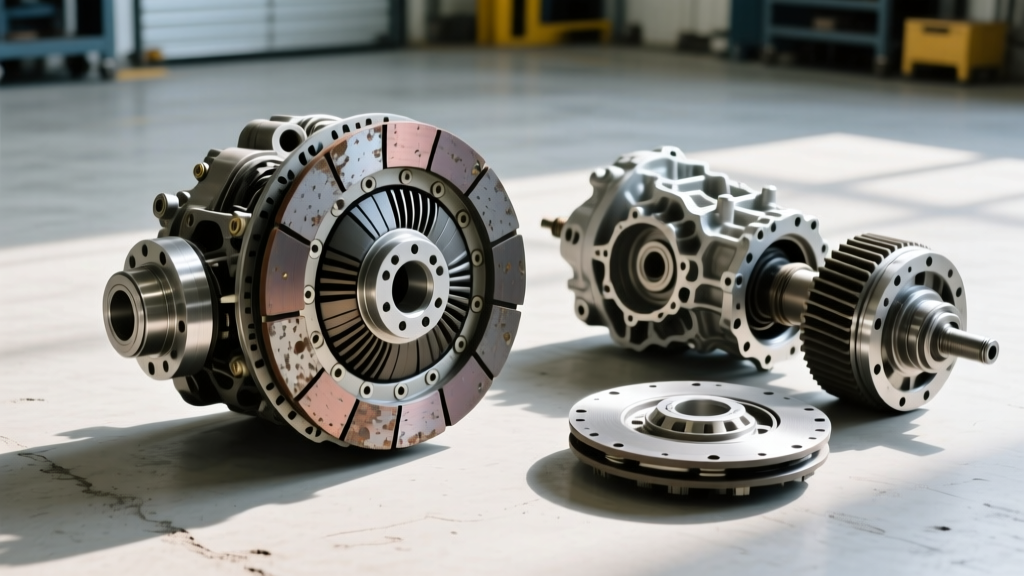
Once the transmission and bellhousing are removed, the physical inspection of the clutch pack begins. This is where the divergence between single and twin disc inspection protocols becomes most apparent.
Friction Material & Marcel Spring Verification
Measure the friction material thickness using a digital caliper. For both single and twin disc applications, the wear limit is generally 0.030' above the rivet heads. If the rivets are exposed or within 0.015' of the surface, immediate replacement is required. Inspect the marcel springs (the wavy springs between the friction pucks). In a single disc, a flattened marcel spring causes harsh engagement. In a twin disc, the intermediate plate often lacks a traditional marcel spring, relying instead on the pressure plate's compliance; therefore, inspect the pressure plate's internal coil springs for heat discoloration (bluing), which indicates severe over-temperature events and loss of clamping pressure.
Intermediate Plate & Strap Inspection (Twin Disc Specific)
The intermediate plate is the Achilles' heel of twin disc diagnostics. Inspect the drive lugs where the plate interfaces with the flywheel straps. Look for 'stepping' or gouging on the lugs. If the intermediate plate has been slamming against the straps due to improper step height, the lugs will deform, causing the plate to hang up during disengagement. This results in the vehicle creeping forward even with the clutch pedal fully depressed. According to McLeod Racing Tech Tips, replacing the intermediate plate and straps as a matched set is mandatory if any lug deformation exceeds 0.010'.
Flywheel Step Height & Machining Specifications
The most common cause of twin disc clutch failure is improper flywheel machining. The 'step height' is the distance from the flywheel's friction surface to the pressure plate mounting pad. Single disc setups typically require a flat (0.000') or specific negative step, depending on the manufacturer. Twin disc setups almost universally require a positive step to accommodate the thickness of the intermediate plate and the second friction disc.
| Engine Platform | Clutch Configuration | Required Flywheel Step Height | Max Allowable Runout (TIR) |
|---|---|---|---|
| GM LS / LT (e.g., LQ4, LT1) | OEM Single Disc (Sachs/ACDelco) | 0.000' (Flat) | 0.005' |
| GM LS / LT | Aftermarket Twin Disc | +0.025' to +0.040' (Positive) | 0.003' |
| Ford Coyote (5.0L) | OEM Single Disc | -0.010' to -0.020' (Negative) | 0.005' |
| Ford Coyote (5.0L) | Aftermarket Twin Disc | +0.030' to +0.050' (Positive) | 0.003' |
Expert Note: Never assume a flywheel machined for a single disc clutch can be adapted for a twin disc by simply adding shims. Shims alter the harmonic balance and clamping geometry. Always send the flywheel to a certified clutch machinist who utilizes a dedicated step-height dial indicator fixture.
Drivetrain Alignment: Bellhousing Runout
While bellhousing runout affects both setups, twin disc clutches operate with significantly tighter internal clearances. Excessive runout will cause the transmission input shaft to orbit off-center, leading to catastrophic wear on the pilot bearing, intermediate plate binding, and severe vibration at high RPMs.
Mount a magnetic base dial indicator to the crankshaft or flywheel face, with the indicator tip resting on the inner bore of the bellhousing. Rotate the crankshaft 360 degrees. The Total Indicator Reading (TIR) must not exceed 0.005' for single disc applications, and should ideally be held to 0.003' or less for twin disc applications. If runout exceeds these limits, install offset dowel pins (available in 0.007', 0.014', and 0.021' offsets) to re-center the bellhousing. As detailed in the RAM Clutches Technical Information database, ignoring bellhousing runout is the leading cause of warranty denials for high-end twin disc kits.
Torque Specifications & Reassembly Best Practices
Proper torque sequencing is non-negotiable. An unevenly torqued flywheel will warp under thermal load, instantly destroying a twin disc intermediate plate's mating surface.
- Flywheel to Crankshaft (GM LS M10x1.5): 74 lb-ft, applied in a star pattern. Always use new OEM-style torque-to-yield bolts or high-grade ARP fasteners (torqued to ARP's specific moly-lube specs, typically 90-95 lb-ft).
- Pressure Plate to Flywheel: 35 to 40 lb-ft for most standard 10.5' and 11' setups. Tighten gradually in a crisscross pattern, one full turn at a time, to ensure the diaphragm spring compresses evenly and the intermediate plate remains centered during assembly.
- Clutch Alignment Tool: Never eyeball the alignment. Use a precision machined alignment tool that mimics the exact spline count and pilot diameter of your transmission's input shaft (e.g., 26-spline for Tremec T-56 Magnum, 23-spline for Ford MT-82).
Cost Analysis & Replacement Thresholds
Diagnosing the root cause saves thousands in misdirected parts replacements. A standard OEM single disc clutch kit (flywheel, disc, pressure plate, and slave) for a daily-driven application typically ranges from $450 to $850. Labor for a standard RWD swap averages 5 to 7 hours.
Conversely, a high-quality twin disc kit (such as a McLeod RXT or RAM 900 Series) costs between $1,100 and $1,800. However, the hidden costs lie in the mandatory ancillary services: precision flywheel step-machining ($150-$250), upgraded braided AN-4 hydraulic lines ($80), and potentially a new 3/4' bore master cylinder ($120) to ensure adequate fluid volume for the larger slave cylinder. If your inspection reveals heat-checked friction surfaces and deformed intermediate lugs, do not attempt to reuse the flywheel or pressure plate; the metallurgical fatigue will cause immediate chatter upon reassembly. For comprehensive installation and diagnostic flowcharts, refer to the Summit Racing Clutch Installation Guide.
By adhering to this divergent inspection checklist, technicians can accurately separate single disc wear-and-tear from twin disc systemic failures, ensuring reliable power delivery and eliminating drivetrain vibrations.