The Hidden Cost of Ignoring Actuation Kinematics
As we navigate the 2026 riding season, the modern motorcycle drivetrain is more refined than ever, yet the fundamental mechanical linkage between the rider's hand and the clutch basket remains a frequent point of failure. Most riders treat the clutch lever as a simple on/off switch, focusing solely on lever feel. However, beneath the primary chaincase or engine side cover lies a precision mechanism where cable tension dictates the lifespan of critical internal components. When mechanics and DIY enthusiasts overlook the direct correlation between precise motorcycle clutch cable adjustment and severe clutch fork and pivot issues, the result is often catastrophic mechanical failure, scored engine cases, and repair bills that easily exceed $800.
Whether you are maintaining a standard inline-four sportbike, a heavy-duty V-twin cruiser, or a Motorcycle Engined Vehicle (MEV) trike conversion utilizing a literal automotive clutch fork, the physics of actuation remain identical. Improper cable tension introduces parasitic axial and lateral loads that the pivot points were never engineered to withstand. This expert guide will dissect the failure modes of clutch pivots and release forks, providing actionable diagnostic frameworks, exact torque specifications, and best practices to safeguard your drivetrain.
The Mechanics of Actuation: Where the Cable Meets the Pivot
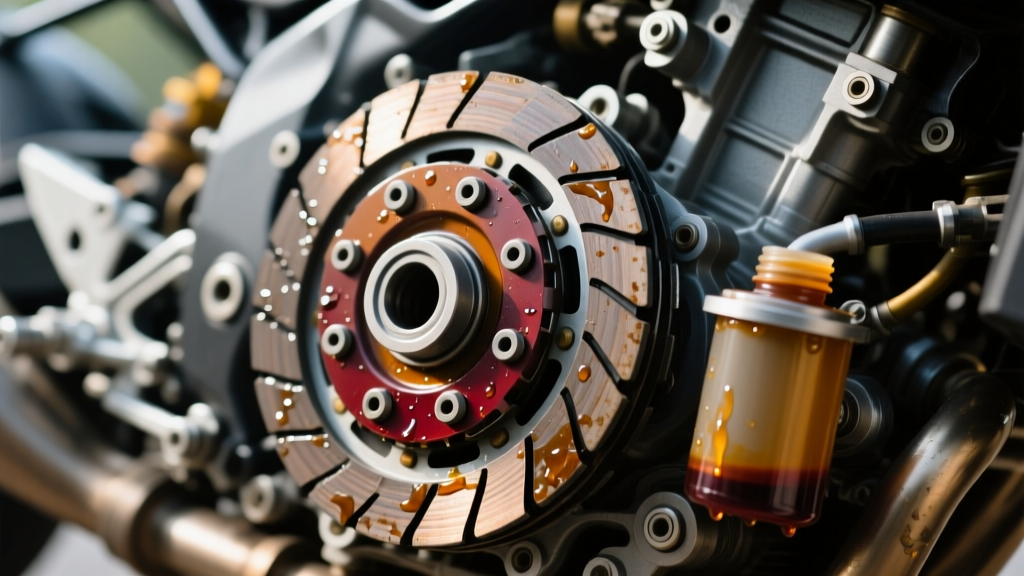
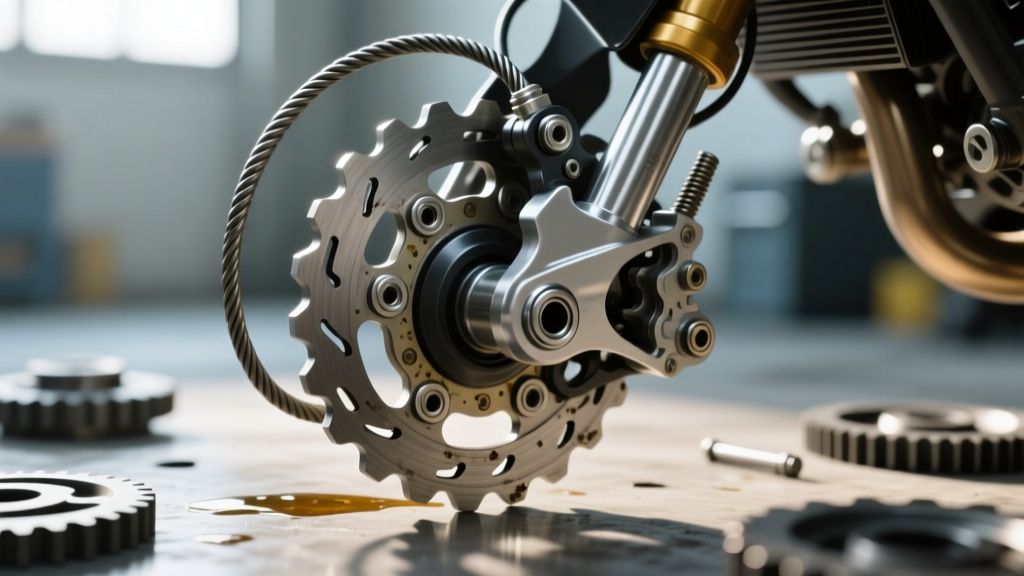
To understand why motorcycle clutch cable adjustment is the primary preventative measure against pivot wear, we must trace the load path. When you pull the lever, the cable actuates an external arm (often referred to as a release lever or actuating fork). This arm rotates on a pivot pin, pivot ball, or bushing, which in turn pushes a hardened steel pushrod through the transmission or primary shaft to compress the clutch pressure plate springs.
In specialized applications—such as Harley-Davidson Softail primary drives, BMW R-series shaft-drive final units, or MEV trike conversions mating a Suzuki Hayabusa engine to a Ford T5 transmission—a literal clutch fork rides on a pivot ball stud inside the bellhousing or primary case. If the clutch cable lacks the manufacturer-specified free play (typically 2mm to 3mm at the lever perch), the throwout bearing or pushrod is held in a state of constant pre-load against the spinning pressure plate fingers.
The Thermal and Friction Cascade
This constant pre-load triggers a destructive cascade:
- Friction Generation: The throwout bearing or pushrod tip slips against the rotating pressure plate, generating intense localized heat.
- Heat Transfer: This heat travels down the pushrod directly to the actuating arm pivot or clutch fork pivot ball.
- Lubrication Breakdown: Standard greases melt and migrate away from the pivot point. Even high-grade Molybdenum Disulfide (Moly) pastes lose their boundary lubrication properties when subjected to constant spinning friction.
- Metallurgical Galling: The case-hardened steel pivot pin begins to gall against the aluminum engine case or bronze bushing, eventually seizing or snapping the pivot stud entirely.
Diagnostic Matrix: Identifying Clutch Fork and Pivot Issues
Diagnosing pivot and fork wear early can save you from splitting the engine cases or dropping the transmission. Use the following diagnostic matrix to correlate lever symptoms with internal mechanical realities. Note: 2026 labor rates at specialized dealerships average $145–$165 per hour, making early detection financially critical.
| Lever Symptom | Likely Pivot/Fork Issue | Impact of Bad Cable Tension | Est. Repair Cost (2026) |
|---|---|---|---|
| Gritty or 'Notchy' Lever Feel | Galled Pivot Pin or Worn Bronze Bushing | Zero free play prevents lubrication; constant drag scores the pin. | $120 - $250 |
| Inconsistent Engagement Point | Worn Release Fork Grooves / Pushrod Tip | Over-extension from a tight cable causes lateral binding on the fork. | $350 - $600 |
| Lever Clunk or Sudden Slack | Snapped Actuating Arm Pivot Stud | Chronic over-tightening fatigues the M6/M8 pivot bolt until shear failure. | $500+ (Case Repair) |
| High-Frequency Vibration at Lever | Throwout Bearing / Pushrod Harmonic Transfer | Pre-load forces the pivot to absorb engine harmonics instead of isolating them. | $200 - $400 |
The Golden Rule of Motorcycle Clutch Cable Adjustment
According to Motion Pro, the leading manufacturer of high-performance control cables, the vast majority of cable and pivot failures stem from rider error during adjustment. The objective is not to eliminate all slack, but to establish a precise 'free play' window that allows the pivot to return to its neutral resting position, completely disengaging the throwout mechanism from the rotating assembly.
Step-by-Step Expert Adjustment Protocol
- Measure at the Perch: Measure the free play at the tip of the clutch lever. The universal baseline for most Japanese and European motorcycles is 2.0mm to 3.0mm (approx. 1/16 to 1/8 inch). For heavy cruisers and MEV trike conversions, consult the specific manual, but 1/8 inch remains the safest baseline to protect the clutch fork pivot.
- Verify the Ramp Mechanism: On models utilizing a cam-and-ramp actuator (common in Harley-Davidson and Buell primary drives), ensure the cable tension does not force the ramp past its detent. Over-tightening skips the ramp, forcing the pivot ball to absorb the entire spring load statically.
- The 'Engine Running' Test: With the bike on a lift and in gear, pull the clutch lever. If you hear a distinct 'chirp' or grinding noise that ceases when you release the lever slightly, your cable is too tight. The throwout bearing is riding the pressure plate, and heat is actively transferring to your pivot pin.
- Account for Thermal Expansion: Cables stretch and housings compress as the engine reaches operating temperature (approx. 180°F–210°F). Always perform your final motorcycle clutch cable adjustment after a 15-minute warm-up ride to ensure the pivot is not being pre-loaded when the engine is hot.
Advanced Pivot and Fork Maintenance: Lubrication and Torque
When inspecting the actuating arm or clutch fork during a primary fluid change or transmission service, the type of lubricant applied to the pivot is non-negotiable. Standard lithium-based chassis greases are entirely inadequate for the high-pressure, low-speed oscillation of a clutch pivot.
Mandatory Lubricants
You must use a Molybdenum Disulfide (Moly) paste. Moly provides a solid-film boundary lubrication that will not melt, wash out in primary oil, or squeeze out under the 400+ lbs of clamping force exerted by modern clutch springs.
- Honda Moly 60 Paste (P/N: 08712-0001): The industry gold standard. Contains 60% molybdenum disulfide. Ideal for actuating arm pivot pins and pushrod tips.
- Yamaha Molybdenum Disulfide Grease (P/N: ACC-YAM-LU-00): Excellent for shaft-drive release fork pivots.
- Red Line Assembly Lube: A suitable alternative if OEM Moly pastes are unavailable, though dedicated Moly 60 is preferred for high-friction pivot points.
Critical Torque Specifications
Overtightening the pivot bolt that secures the actuating arm can distort the aluminum engine case, causing the pivot to bind. Conversely, under-tightening allows the arm to wobble, wallowing out the bore. Always use a calibrated inch-pound torque wrench.
- Japanese Inline-4 Actuating Arm Bolts (M6): 10 - 12 Nm (88 - 106 in-lbs). Apply blue Loctite 243.
- V-Twin Primary Release Lever Pivot Studs: 22 - 25 Nm (16 - 18 ft-lbs). Use a new crush washer or nyloc nut.
- MEV/Trike Bellhousing Clutch Fork Pivot Balls: 30 - 35 ft-lbs. Ensure the pivot ball seat in the clutch fork is packed with Moly paste prior to installation to prevent the classic 'squeak' that plagues poorly assembled conversions.
Inspection Limits: When to Replace the Pivot and Fork
During your annual drivetrain inspection, clean the pivot pin and actuating arm bore with brake cleaner and inspect them under a bright LED light. Use a digital micrometer to measure the pivot pin diameter.
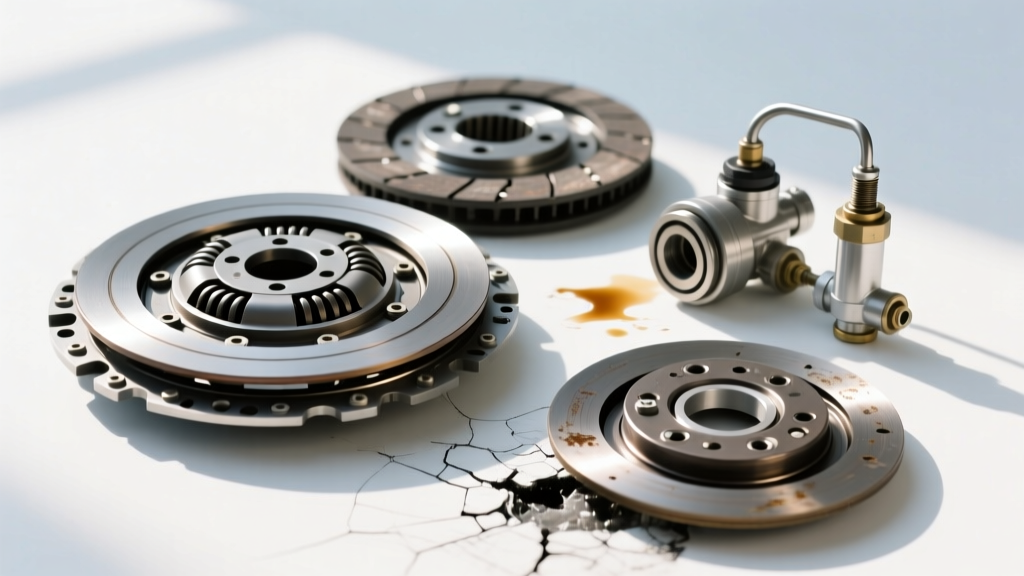
- Scoring and Galling: If you can catch your fingernail in a groove on the pivot pin, it must be replaced. A scored pin will act like a file, destroying the new bushing or engine case bore within 500 miles.
- Diameter Wear Limit: Most OEM pivot pins measure between 8.00mm and 10.00mm. If the pin has worn more than 0.10mm (0.004 inches) below its factory specification, discard it. The cost of an OEM pivot pin (typically $8 to $18) is negligible compared to the $450+ cost of drilling and installing a helicoil or steel sleeve into a wallowed-out aluminum engine case.
- Clutch Fork Groove Wear (MEV/Auto Transmissions): Inspect the inner pads of the clutch fork where it contacts the throwout bearing collar. If the wear pads are grooved deeper than 1.5mm, the fork will bind laterally during engagement, causing severe clutch chatter and uneven pressure plate wear.
Conclusion: Protecting the Drivetrain Through Precision
The health of your motorcycle's internal clutch components is inextricably linked to the tension of a simple steel cable. By treating motorcycle clutch cable adjustment not as a matter of rider comfort, but as a critical calibration for internal mechanical survival, you effectively eliminate the root cause of most clutch fork and pivot issues. Maintain your 2-3mm free play, utilize high-moly boundary lubricants, and respect factory torque specs. For further reading on cable routing and longevity, resources like RevZilla's Common Tread offer excellent visual guides on maintaining cable housings to prevent internal friction that can mimic pivot binding. Ride smart, wrench smarter, and let your drivetrain operate exactly as the engineers intended.