The Tactile Difference: Manual Power Sports vs. The Automatic Car Clutch
When you daily drive a vehicle equipped with an automatic car clutch—whether it is a traditional fluid-driven torque converter or a modern computer-controlled Dual-Clutch Transmission (DCT)—the engagement process is entirely hidden from the driver. You press the throttle, solenoids fire, and hydraulic pressure manages the friction materials seamlessly. But step into the garage, swing a leg over a motorcycle, or strap into a side-by-side ATV, and you are suddenly dealing with raw, mechanical friction systems that require physical diagnosis. For beginners transitioning from street cars to power sports, diagnosing a slipping dirt bike clutch or a bogging ATV CVT can feel like a dark art. However, these systems leave behind physical clues that are incredibly easy to read once you know where to look.
The Shared-Sump Trap: Why Car Oil Destroys Motorcycle Clutches
The most common mistake beginners make when servicing a motorcycle is treating the engine like a standard automotive powerplant. In an automatic car clutch system, the transmission fluid is entirely separate from the engine oil, and the torque converter relies on specific friction modifiers to operate smoothly. Motorcycles, however, predominantly use a "shared sump" design. This means the exact same oil lubricates the high-revving engine bearings, the transmission gears, and the wet multi-plate clutch assembly.
If you pour standard API SN or SP automotive oil into your motorcycle, the molybdenum-based friction modifiers designed to improve car fuel economy will coat your clutch friction plates. The result? Immediate, catastrophic clutch slip under heavy throttle. According to AMSOIL's technical breakdown on JASO standards, you must exclusively use oil certified with a JASO MA or MA2 rating. JASO MA2 oils omit the friction modifiers and contain higher zinc/phosphorus (ZDDP) levels to protect both the clutch basket and the transmission gears. A standard JASO MA2 10W-40 synthetic oil change costs roughly $45 to $65 and is the very first step in curing a newly acquired, mysteriously slipping motorcycle clutch.
Lever Feel and Free Play: The First Diagnostic Step
Before you ever unbolt a clutch cover, you must diagnose the actuation system. Unlike the hydraulic slave cylinders hidden inside a car's bell housing, motorcycle clutches rely on exposed cables or external hydraulic lines. As noted in RevZilla's Common Tread maintenance guides, improper free play is the culprit behind 60% of perceived "clutch slip" issues.
- Cable-Actuated Clutches: You need 10mm to 15mm (about 3/8 to 1/2 inch) of free play at the lever end before you feel resistance. If the cable is too tight, the throwout bearing constantly pushes against the pressure plate, preventing full clamp load and causing the plates to slip and burn.
- Hydraulic Clutches: Found on modern bikes like the KTM 300 XC-W or Yamaha MT-09. These self-adjust, but if the lever feels "spongy" or creeps to the grip, you likely have air in the line or degraded DOT 4 fluid. Bleeding the system with a vacuum bleeder takes 15 minutes and restores the firm, tactile engagement point.
Inside the Basket: Measuring Friction and Steel Plates
If your free play is correct and your oil is JASO MA2 certified, but the bike still bogs and revs out under load, the friction material is worn. A typical sportbike or motocrosser uses a wet multi-plate clutch consisting of 7 to 9 friction plates interleaved with 6 to 8 bare steel drive plates. Diagnosing this requires a micrometer and a flat surface.
Let us look at the factory service manual specifications for a highly popular platform, the Kawasaki Ninja 400:
- Friction Plate Thickness: New = 3.0mm. Service Limit = 2.6mm. If any plate measures below 2.6mm, the entire stack must be replaced.
- Steel Plate Warpage: Place the steel plates on a piece of plate glass and use a feeler gauge. The service limit for warpage is typically 0.1mm (0.004 inches). Warped steel plates cause "clutch chatter"—a violent shuddering when you slowly release the lever in first gear.
- Clutch Spring Free Length: Springs fatigue over time due to extreme heat. If the spec calls for 45.5mm new, and your springs measure 43.0mm, they are no longer providing enough clamping force. A full OEM clutch kit (springs, steels, and fibers) generally costs between $110 and $160.
The Notched Basket Phenomenon: Diagnosing Clutch Drag
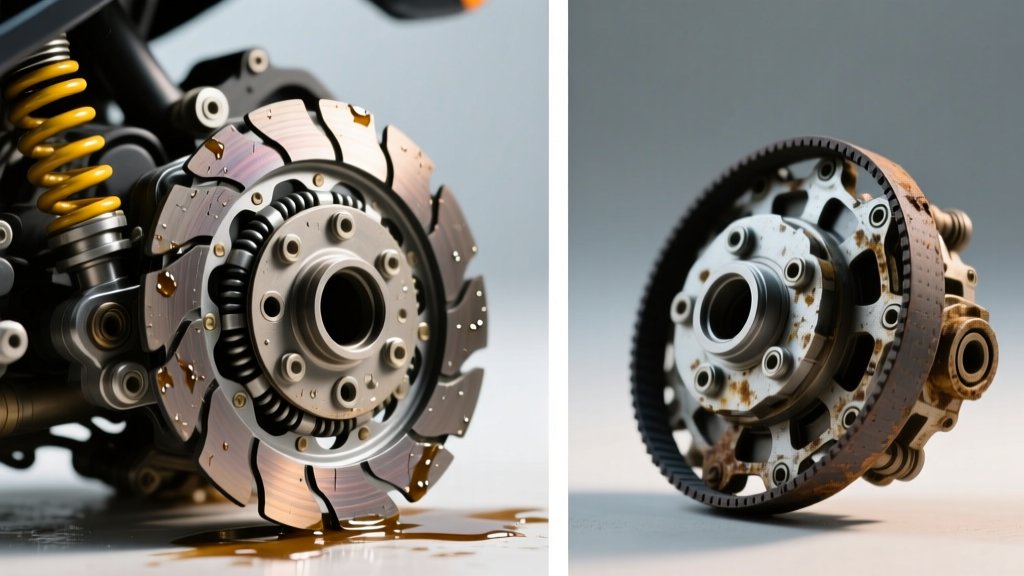
Sometimes the problem is not slipping, but dragging. If you pull the clutch lever in at a stoplight and the motorcycle still wants to lurch forward, or if finding neutral while the engine is running is nearly impossible, you are likely experiencing clutch drag. As Cycle World's Ask Kevin series frequently highlights, the aluminum tabs of the inner hub and outer basket get battered by the clutch plates over thousands of miles of engagement. This creates deep grooves, or "notches."
When you pull the lever, the friction plates expand slightly and get wedged into these notches, refusing to separate from the steel plates. For a beginner on a budget, you can temporarily remove the basket and carefully file the notches flat with a half-round file. However, the permanent, professional fix is upgrading to a billet aluminum or steel-lined clutch basket from manufacturers like Wiseco or Hinson, which costs between $250 and $400 but guarantees smooth disengagement for the life of the machine.
ATV CVT Diagnostics: When Your "Automatic" Isn't Automatic
If you are riding a modern side-by-side like a Polaris RZR or Can-Am Maverick, you do not have a traditional wet clutch or an automatic car clutch. You have a Continuously Variable Transmission (CVT). The CVT uses a primary clutch (attached to the engine crankshaft) and a secondary clutch (attached to the transmission input) connected by a heavy-duty rubber drive belt. Diagnosing CVT problems requires looking at belt wear, roller weights, and spring tension.
| Symptom | Mechanical Culprit | Diagnostic Measurement | Estimated Fix Cost |
|---|---|---|---|
| High RPM, Low Speed (Slip) | Glazed Sheaves / Worn Belt | Belt width below 1.125" (Polaris spec) | $130 - $190 (EPI Drive Belt) |
| Sluggish Takeoff / Bogging | Flat-Spotted Primary Rollers | Rollers show flat spots > 1mm deep | $45 - $75 (Dalton Roller Kit) |
| Harsh, Clunky Engagement | Fatigued Secondary Spring | Spring fails to hold secondary helix tension | $25 - $45 (Torsion Spring) |
| Overheating / Burning Smell | Improper Belt Deflection | Deflection > 1.5" under moderate thumb pressure | Adjustment (Free) or Shim Kit ($20) |
Essential Garage Tools and Torque Specifications
Working on power sports drivetrains requires specific tools that go beyond the standard automotive socket set. To properly diagnose and rebuild these systems, your garage must be equipped with the following:
- Digital Micrometer (0-25mm): Essential for measuring friction plate thickness to the hundredth of a millimeter.
- Feeler Gauge Set: Required for checking steel plate warpage on a glass surface and setting clutch cable free play.
- Clutch Holding Tool: Many motocross bikes (like the Honda CRF450R) require a specialized spanner tool to hold the inner hub while you break the center locknut loose. The center locknut torque spec is a massive 59 lb-ft (80 Nm), requiring serious leverage.
- 1/4-inch Drive Torque Wrench: Clutch pressure plate bolts are small (usually 6mm) and easily stripped. For a Yamaha YZ450F, the pressure plate bolts must be torqued to exactly 10 Nm (7.2 lb-ft) in a crisscross pattern to ensure even clamping force across the friction stack.
Final Thoughts for the Beginner Wrench
Diagnosing clutch problems on motorcycles and ATVs is vastly different from plugging an OBD2 scanner into a car with an automatic transmission. It requires a hands-on, tactile approach. By understanding the critical importance of JASO MA2 oils, mastering the art of measuring friction plates, and learning the geometry of a CVT pulley system, you can save yourself hundreds of dollars in dealership labor fees. Take your time, measure everything against the factory service limits, and respect the torque specs. Your machine will reward you with miles of flawless, slip-free engagement.