The True Cost of Motorcraft Rear Differential Fluid in 2026
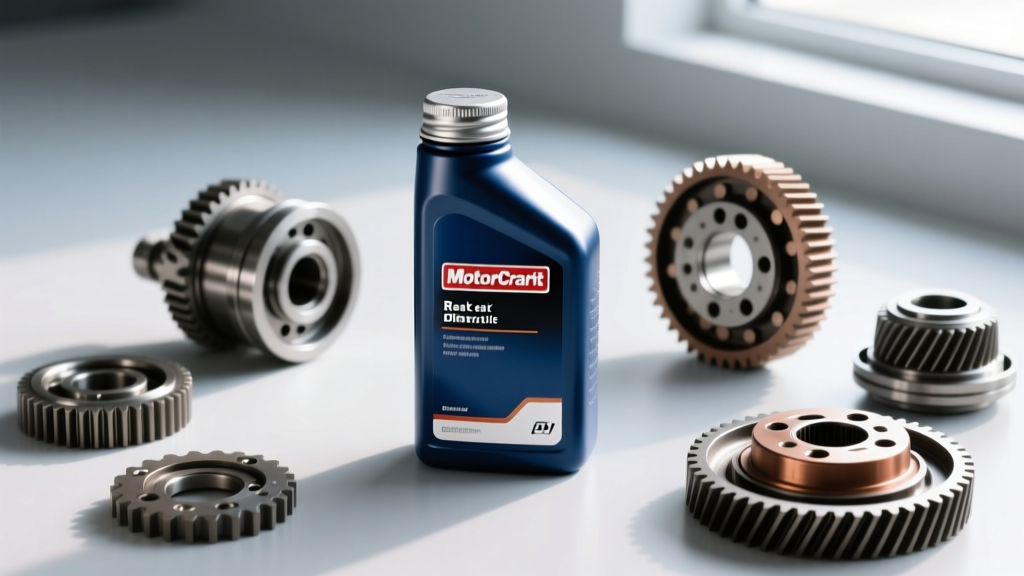
When maintaining the drivetrain of a Ford truck, SUV, or performance car, the rear differential is often the most neglected component until a catastrophic failure occurs. For Ford owners, Motorcraft rear differential fluid remains the OEM benchmark, engineered specifically to handle the extreme sliding and rolling pressures of Ford’s hypoid ring and pinion gears. However, as we move through 2026, the cost of synthetic gear oils and specialized friction modifiers has shifted due to global base oil refining trends and additive package supply chains.
This comprehensive cost analysis and specification breakdown will dissect exactly what you are paying for when you purchase Motorcraft gear oil, the chemical specifications that justify the price, and a complete DIY versus dealership service cost comparison. Whether you are servicing a Mustang 8.8-inch IRS, an F-150 9.75-inch rear end, or a heavy-duty Super Duty 10.5-inch Sterling axle, understanding these costs and specs is critical for your wallet and your drivetrain’s longevity.
Decoding Differential Gear Oil Specifications
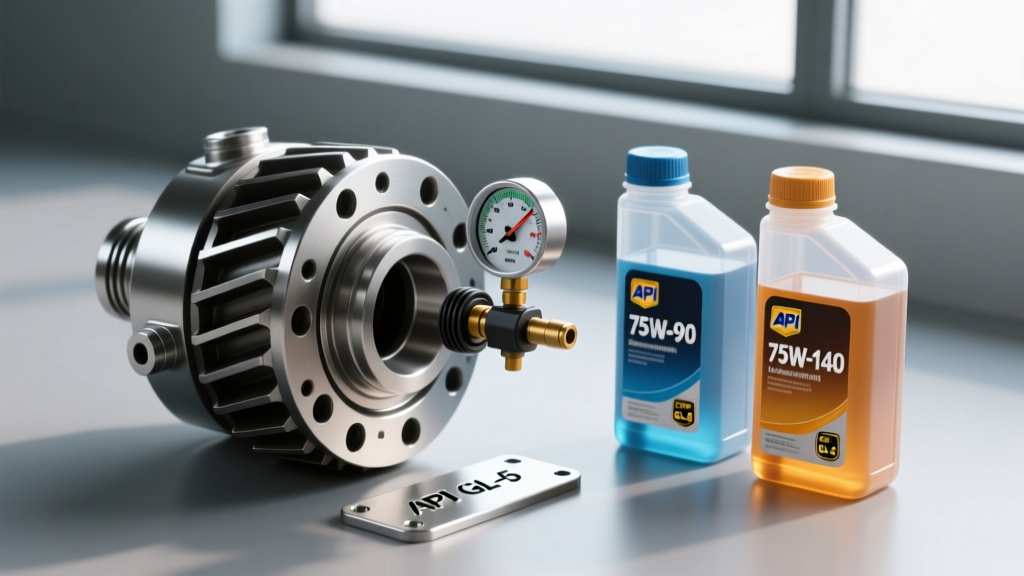
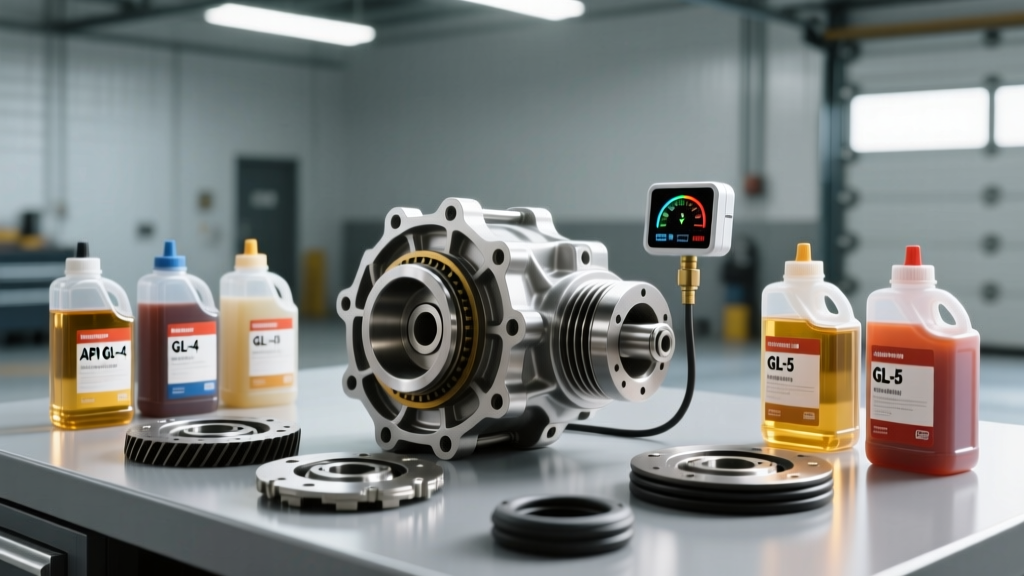
Before analyzing the price, it is vital to understand the engineering specifications that dictate the cost of Motorcraft gear oils. Motorcraft rear differential fluids are formulated to meet or exceed the API (American Petroleum Institute) GL-5 specification.
Unlike engine oil, which is designed to handle high RPM and heat, GL-5 gear oil is packed with extreme pressure (EP) additives—specifically sulfur-phosphorus compounds. When the ring and pinion gears in a differential mesh, the contact patch experiences immense shearing force. The sulfur-phosphorus additives react with the metal surfaces under high pressure and heat to form a sacrificial sacrificial solid-film barrier, preventing metal-on-metal welding and micropitting.
Viscosity Grades: 75W-90 vs. 75W-140 vs. 75W-85
- 75W-90: The standard for most light-duty applications, daily driving, and moderate towing. It offers an excellent balance of cold-weather flow and high-temperature film strength.
- 75W-140: Mandated by Ford for “Severe Duty” applications, which includes frequent heavy towing (over 8,000 lbs), snow plowing, or sustained high-speed driving in desert climates. The higher viscosity prevents fluid shear in the 10.5-inch and Dana axles under extreme thermal loads.
- 75W-85: Increasingly specified in newer 2020+ Super Duty models to improve parasitic loss and fuel economy while maintaining EP protection via advanced synthetic base stocks.
Motorcraft Part Numbers, Viscosities, and 2026 Pricing
The retail price of Motorcraft fluids varies depending on whether you purchase through a local Ford dealership parts counter, an authorized online retailer, or a big-box auto parts store. Below is the 2026 average pricing breakdown for the most common Motorcraft rear differential fluids.
| Motorcraft Part Number | Viscosity / Type | Application / Notes | Avg. Price (Per Quart) |
|---|---|---|---|
| XY-75W90-QL | 75W-90 Premium Synthetic | F-150, Mustang, Explorer, Ranger | $14.50 - $17.00 |
| XY-75W140-QL | 75W-140 Full Synthetic | Super Duty, F-150 Heavy Payload, Towing | $18.00 - $23.00 |
| XY-75W85-QL | 75W-85 Synthetic | Newer F-250/F-350 (Fuel Economy Spec) | $16.00 - $19.50 |
| XL-3 | Friction Modifier (4 oz) | Required for Traction-Lok (LSD) Axles | $8.50 - $11.00 |
Note: Prices reflect early 2026 retail averages. Dealership parts counters often charge a 15-20% premium over online Ford parts distributors.
Axle Capacities and the Friction Modifier Cost Factor
The total cost of your fluid change is directly tied to your specific axle housing capacity. Overfilling a differential can cause fluid aeration and seal leaks, while underfilling leads to pinion bearing starvation. Furthermore, if your vehicle is equipped with a Limited Slip Differential (LSD), you must factor in the cost of the Motorcraft XL-3 Friction Modifier.
Common Ford Rear Axle Capacities
- Ford 8.8-inch (F-150, Mustang IRS): Requires approximately 3.5 to 4.0 pints. Purchase 3 to 4 quarts.
- Ford 9.75-inch (F-150 HD Payload): Requires approximately 4.5 to 5.0 pints. Purchase 4 to 5 quarts.
- Ford 10.5-inch Sterling (F-250/F-350 SRW): Requires approximately 5.5 to 6.5 pints. Purchase 5 to 6 quarts.
- Dana 80 (F-350 DRW / F-450): Requires approximately 7.0 to 8.0 pints. Purchase 6 to 8 quarts.
The Chemistry and Cost of XL-3 Friction Modifier
If you have a Traction-Lok (clutch-type LSD) rear end, the clutch packs require a specific coefficient of friction to operate smoothly. Standard GL-5 gear oil is too “slippery” on its own, which would cause the clutches to slip continuously, resulting in zero locking force. Conversely, without a modifier, the clutches will grab and release violently, causing a severe “chatter” or shudder during tight parking lot turns.
Motorcraft XL-3 contains specialized esters that dial in the exact friction coefficient Ford engineered for the clutch discs. At roughly $9.00 per 4 oz bottle, and with most LSDs requiring between 4 oz and 8 oz, you must add $9.00 to $18.00 to your total parts cost. Pro Tip: Do not exceed the recommended modifier volume, or the differential will lose its ability to lock under load.
DIY vs. Dealership: Rear Differential Service Price Breakdown
Is it worth paying the dealership to perform a rear differential fluid service? Let’s break down the financial reality of a standard F-150 8.8-inch or 9.75-inch axle service in 2026.
| Cost Category | DIY (At-Home) Service | Ford Dealership Service Dept. |
|---|---|---|
| Fluid (4-5 Quarts 75W-90) | $65.00 | Included in Labor/Parts Markup |
| Friction Modifier (XL-3) | $9.00 | Included |
| Gasket / RTV Sealant | $12.00 (Fel-Pro RDS55026) | $15.00 |
| Labor (1.0 - 1.5 Hours) | $0.00 (Your Time) | $165.00 - $240.00 |
| Total Estimated Cost | $86.00 | $225.00 - $310.00 |
As the data illustrates, the dealership markup on drivetrain services is substantial. Dealerships often use bulk-pumped Motorcraft fluid, which lowers their internal cost but is billed to the consumer at a premium retail rate. By performing the service yourself, you save upwards of $150 per axle, and you gain the peace of mind of knowing the exact torque specifications and sealants were used.
Precision Torque Specs & Installation Protocol
To ensure your DIY service meets OEM standards, you must adhere to precise torque specifications. Stripped differential cover bolts or leaking fill plugs are the most common DIY failures. Always consult your specific vehicle’s Ford Owner’s Manual, but the following are the standard engineering baselines for Ford axles:
Fastener Torque Specifications
- 8.8-inch Cover Bolts (8mm): 15 - 18 lb-ft. (Do not overtighten; these small bolts snap easily in the aluminum or thin-steel housing).
- 8.8-inch Cover Bolts (3/8-inch): 25 - 30 lb-ft.
- 9.75-inch & 10.5-inch Cover Bolts: 35 - 45 lb-ft.
- Fill / Level Plug (3/8" NPT or metric equivalent): 25 - 35 lb-ft. Use a 3/8-inch drive ratchet without a breaker bar to avoid cracking the housing.
The RTV vs. Pre-Cut Gasket Debate
Many modern Ford differentials (especially the 8.8 and 9.75) do not use a pre-cut cork or rubber gasket from the factory; they rely on a bead of silicone RTV sealant. If you choose the RTV route, use Motorcraft TA-3 (XL-2) or Permatex Black/Gray RTV. Apply a continuous 3mm bead, torque the bolts in a star pattern, and wait a minimum of 2 hours before filling with gear oil to allow the silicone to skin over. Alternatively, aftermarket pre-cut gaskets (like the Fel-Pro RDS series) feature rubber-coated steel cores that seal instantly and allow for immediate fluid filling, saving you time in the garage.
Summary: Maximizing Drivetrain ROI
Investing in genuine Motorcraft rear differential fluid is a non-negotiable aspect of Ford ownership, particularly for those utilizing their vehicles for towing or performance driving. While the upfront cost of synthetic 75W-140 and XL-3 friction modifiers may push a DIY parts list near $100 for heavy-duty axles, it pales in comparison to the $3,000+ cost of a ring-and-pinion or bearing rebuild caused by fluid shear and thermal breakdown. By understanding the API GL-5 specifications, adhering to strict torque values, and bypassing dealership labor markups, you can maintain peak drivetrain efficiency while keeping your 2026 maintenance budget firmly under control.