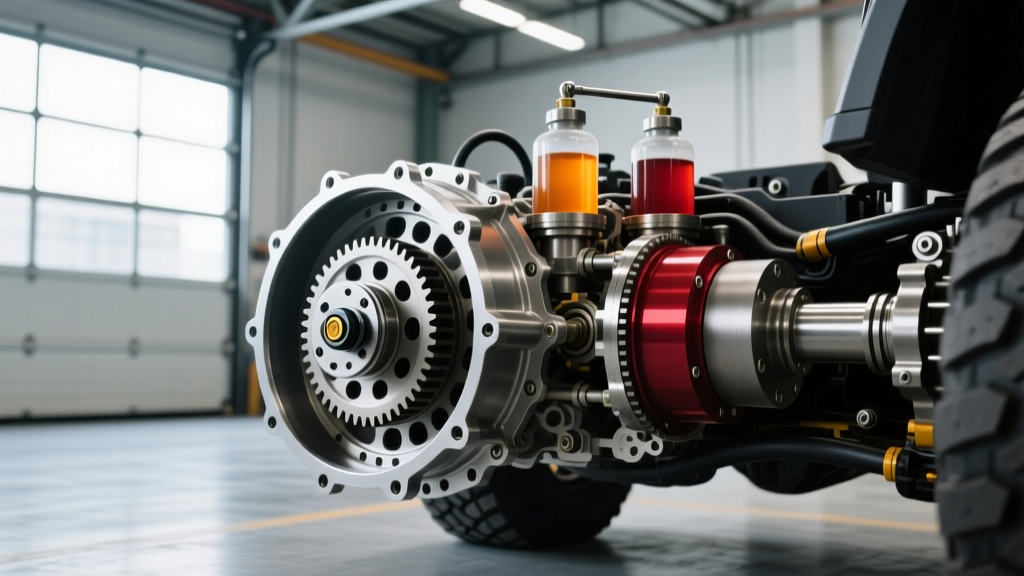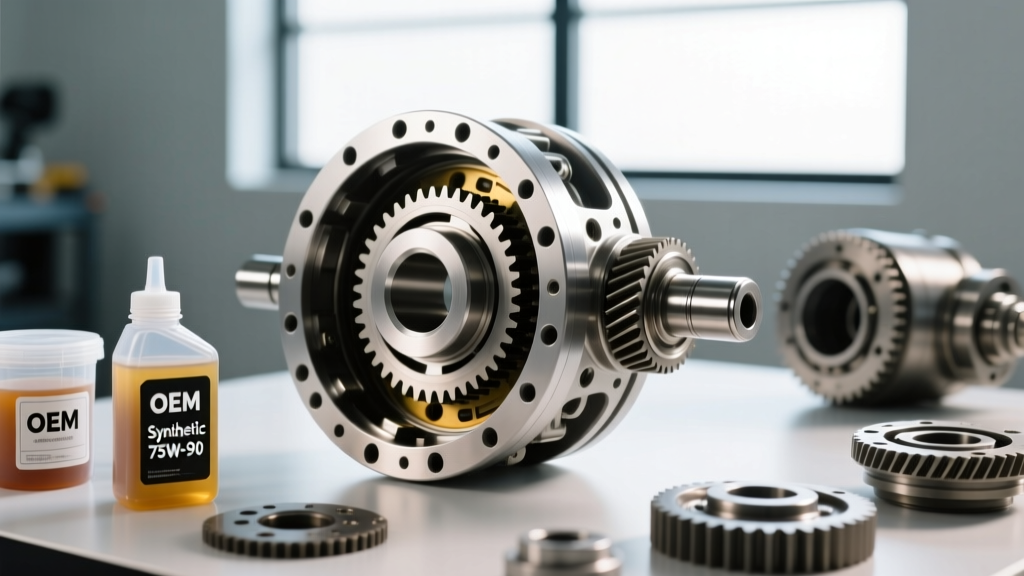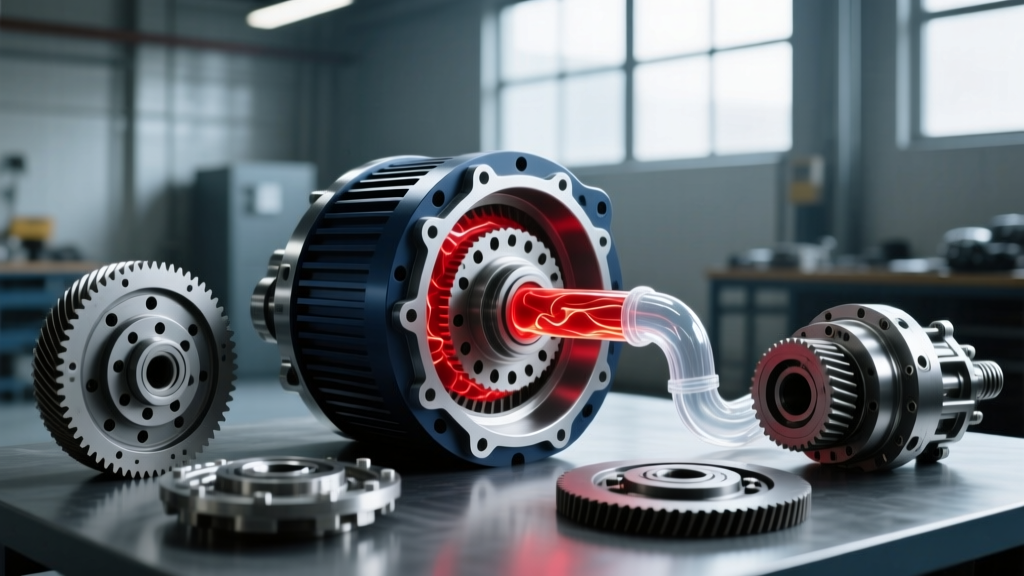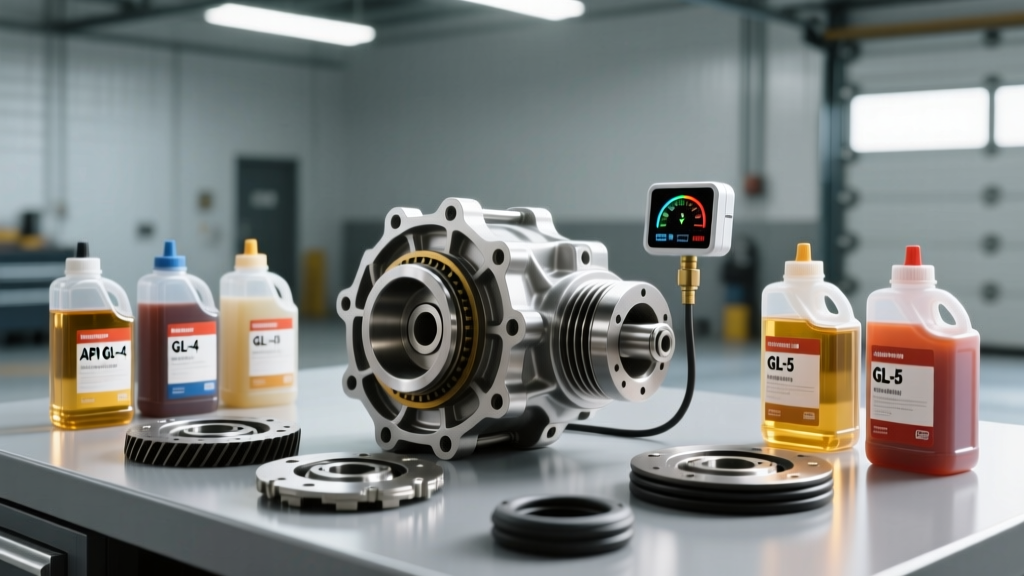
As of 2026, axle assemblies in Class 8 commercial trucks, heavy-duty electric vehicles (EVs), and extreme off-road rigs operate under immense thermal and mechanical stress. To manage these extreme loads, external cooling loops and inline filtration systems have transitioned from niche racing modifications to standard heavy-duty equipment. But how do fleet managers and hardcore enthusiasts know when the gear oil is degrading or the inline filter is clogged? The answer lies in utilizing a differential pressure monitor. This comprehensive buyer's guide bridges the gap between advanced axle telemetry and fundamental differential fluid types and specifications, ensuring your ring and pinion gears survive the harshest environments.
The Role of a Differential Pressure Monitor in Axle Telemetry
In high-stress applications—such as a Dana S130 heavy-duty axle or an AAM 11.5 equipped with an external Superchiller and remote filtration loop—a differential pressure monitor is a critical diagnostic sensor. It measures the pressure drop ($\Delta P$) across the inline axle filter. By comparing the fluid pressure entering the filter housing to the pressure exiting it, the monitor provides real-time data on fluid viscosity health and filter restriction.
- Normal $\Delta P$ (2–6 PSI): Indicates clean fluid flowing freely through the filter media at operating temperature.
- High $\Delta P$ (>15 PSI): Triggers a warning. This typically means the filter is clogged with metallic particulate or the fluid has severely oxidized into sludge. It can also indicate that the fluid has lost its shear stability, causing the external pump to cavitate.
- Cold-Start Spikes: If your monitor reads 25+ PSI on a cold start, you are likely using a fluid viscosity that is too high (e.g., a 75W-140 in a system designed for 75W-90), forcing the filter bypass valve open and sending unfiltered, debris-laden oil back to the ring and pinion.
Understanding these readings requires a deep knowledge of the differential fluid types and specifications flowing through the system.
Decoding Differential Fluid Specifications (API & SAE)
Selecting the correct gear oil is not merely about picking a brand; it is about matching the chemical formulation to the axle's metallurgy and the telemetry data from your differential pressure monitor. The American Petroleum Institute (API) and the Society of Automotive Engineers (SAE) dictate the global standards for these lubricants.
API Service Classifications
API GL-5: The undisputed standard for hypoid gear sets found in 99% of automotive and truck differentials. GL-5 fluids contain high levels of sulfur-phosphorus Extreme Pressure (EP) additives. These additives sacrifice themselves under the extreme sliding forces of the ring and pinion teeth to prevent microwelding and spalling. However, the corrosive nature of sulfur-phosphorus can damage yellow metals (bronze bushings, synchros) if used in combined transaxle units.
API MT-1: Designed for manual transmissions and non-synchronized heavy-duty commercial axle boxes. MT-1 offers superior thermal stability and seal compatibility over older GL-5 formulations, resisting the formation of the exact type of sludge that triggers high readings on a differential pressure monitor.
SAE J306 Viscosity Grades
The SAE J306 standard defines gear oil viscosity. A 75W-90 fluid flows like a 75-weight oil in freezing temperatures (the 'W' stands for Winter) but maintains the protective film thickness of a 90-weight oil at 100°C. For heavy towing and extreme off-roading, 75W-140 is often specified to maintain a thicker hydrodynamic wedge under severe shear loads.
Comparing Top Differential Fluid Types for High-Stress Axles
When outfitting an axle with external filtration and a differential pressure monitor, fluid consistency and shear stability are paramount. Below is a comparison of the top-tier differential fluids available in 2026, tailored for heavy-duty and high-performance applications.
| Fluid Brand & Type | Viscosity | API Spec | Best Application | Est. Price / Qt |
|---|---|---|---|---|
| AMSOIL Severe Gear (SVG) | 75W-90 | GL-5 | Heavy towing, off-road, external coolers | $22.50 |
| Red Line 50104 ShockProof | 75W-140 | GL-5 | Rock crawling, drag racing, high-shock loads | $28.00 |
| Mobil Delvac 1 Gear Oil | 75W-90 | MT-1 / GL-5 | Class 8 commercial fleets, long-drain intervals | $18.50 |
| Castrol ON EV Reduction Gear | EV-Spec (Low Vis) | EV-OEM | Electric vehicle axle reduction gearboxes | $35.00 |
Deep Dive: Friction Modifiers and Limited-Slip Differentials
If your axle houses a clutch-type Limited Slip Differential (LSD)—such as an Auburn, Eaton Posi, or Ford Traction-Lok—you must address friction modifiers. Standard GL-5 fluids will cause clutch chatter during low-speed cornering as the differential pressure monitor registers erratic flow pulses from the chattering clutches. You must either purchase a fluid pre-blended with LSD modifiers (like Valvoline SynPower) or add a dedicated friction modifier (e.g., AMSOIL Slip Lock, approx. $12 per 4oz bottle) to quiet the clutches and ensure smooth hydraulic engagement.
Note: Gear-driven LSDs like the Detroit Locker or Torsen do NOT require friction modifiers. Adding them can actually reduce the mechanical bite of the gear teeth.
Interpreting Monitor Readings Based on Fluid Chemistry
Your differential pressure monitor is essentially a real-time chemistry lab. Here is how to interpret the data based on the fluid you are running:
- Rapid $\Delta P$ Increase (Under 5,000 Miles): If you are running a conventional mineral-based 80W-90 in a high-heat environment (e.g., desert towing), the fluid is likely oxidizing. Mineral oils lack the synthetic base stock stability to resist thermal breakdown, leading to varnish and sludge that rapidly clogs 10-micron inline filters.
- Erratic Pressure Drops: This indicates fluid foaming or aeration. If the fluid lacks adequate anti-foam agents, the external pump will ingest air, causing the differential pressure monitor to read zero or fluctuate wildly. Switch to a premium synthetic with robust defoamers.
- Consistently Low $\Delta P$ at Operating Temp: While generally good, if the pressure is lower than the manufacturer's baseline, the fluid may have suffered permanent shear loss. The polymers that give the oil its '90' or '140' weight rating have been mechanically torn apart by the gear teeth, reducing the fluid to its base '75W' viscosity.
Step-by-Step: Fluid Change & Filter Service Protocol
When your differential pressure monitor indicates a filter restriction, it is time for a complete service. Proper torque specifications and fill procedures are critical to preventing case distortion and leaks. Always consult the official Dana or AAM engineering bulletins for your specific axle model.
Torque Specs & Capacities for Common Heavy-Duty Axles
- Dana 80 (Ford/Commercial):
- Capacity: 3.75 - 4.0 Quarts (with external filter loop add 1.5 Qt)
- Fill Plug Torque: 25 - 35 lb-ft
- Spec: API GL-5, 75W-90 Synthetic
- AAM 11.5 (Ram 2500/3500):
- Capacity: 3.4 Quarts
- Fill Plug Torque: 24 lb-ft (Aluminum plug - do not overtighten!)
- Spec: API GL-5, 75W-90 or 75W-140 Synthetic
- Ford 10.5 (Super Duty):
- Capacity: 3.7 Quarts
- Fill Plug Torque: 35 lb-ft
- Spec: API GL-5, 75W-140 Synthetic (Mandatory for severe towing)
The Service Procedure
- Pre-Heat the Axle: Drive the vehicle for 15 miles to bring the fluid up to operating temperature. This suspends metallic particulates in the oil, ensuring they drain out rather than settling at the bottom of the housing.
- Drain and Clean: Remove the fill plug before the drain plug. If the fill plug is seized, you do not want to be left with an empty axle. Drain the fluid and use a lint-free rag with brake cleaner to wipe the magnetic drain plug and the inside of the housing.
- Replace the Inline Filter: Isolate the external cooling loop using ball valves if equipped. Unscrew the filter housing, replace the 10-micron cellulose/synthetic media element, and lubricate the O-ring with fresh gear oil.
- Refill and Bleed: Pump the new fluid until it reaches the bottom of the fill hole threads. If using an external pump, cycle the ignition (or manually run the pump) to bleed air from the cooler lines, then top off the differential housing. Reinstall the fill plug and torque to spec.
- Reset the Monitor: Zero out your differential pressure monitor via the cabin telemetry display or OBD2 tuner to establish a new baseline $\Delta P$ for the fresh fluid and filter.
Final Verdict: Data-Driven Axle Maintenance
Integrating a differential pressure monitor into your heavy-duty or off-road axle system transforms maintenance from a guessing game into a precise, data-driven science. By pairing this telemetry with high-quality, shear-stable synthetic fluids like AMSOIL Severe Gear or Mobil Delvac 1, you ensure that your ring and pinion gears remain bathed in clean, properly pressurized lubrication. Whether you are navigating a Class 8 cross-country haul or crawling through deep mud, understanding differential fluid types and specifications is the ultimate key to drivetrain longevity.