The Physics of ATF Degradation and Thermal Thresholds
Automatic transmission fluid (ATF) is the lifeblood of your drivetrain, serving simultaneously as a hydraulic medium, friction modifier, and coolant. However, modern synthetic fluids like Dexron VI, Mercon LV, and ZF Lifeguard 8 are highly sensitive to thermal degradation. The baseline operating temperature for optimal ATF performance is between 160°F and 180°F (71°C - 82°C). Once fluid temperatures breach the 200°F (93°C) threshold, the oxidation rate accelerates exponentially. In fact, for every 20°F increase above 200°F, the operational lifespan of the transmission fluid is effectively halved.
When ATF oxidizes, it forms varnish and sludge that clog valve body solenoids, degrade clutch pack friction materials, and compromise torque converter lockup mechanisms. For vehicles subjected to towing, off-road crawling, or stop-and-go traffic in high-ambient climates, the factory in-tank radiator cooler is rarely sufficient. This is where integrating an auxiliary Mishimoto transmission cooler transitions from a performance upgrade to a critical preventive maintenance necessity.
Mishimoto Stacked-Plate Architecture vs. Legacy Designs
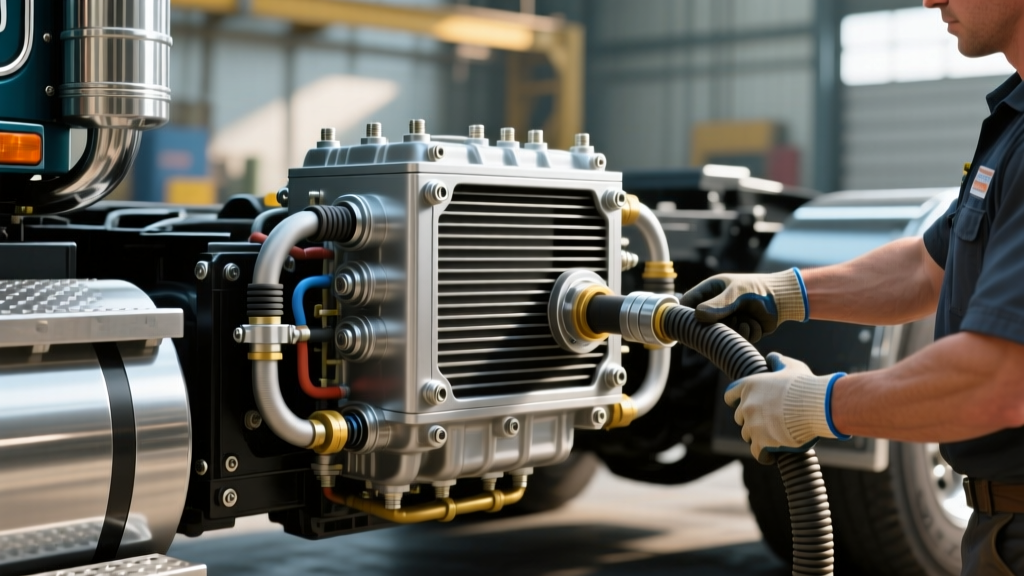
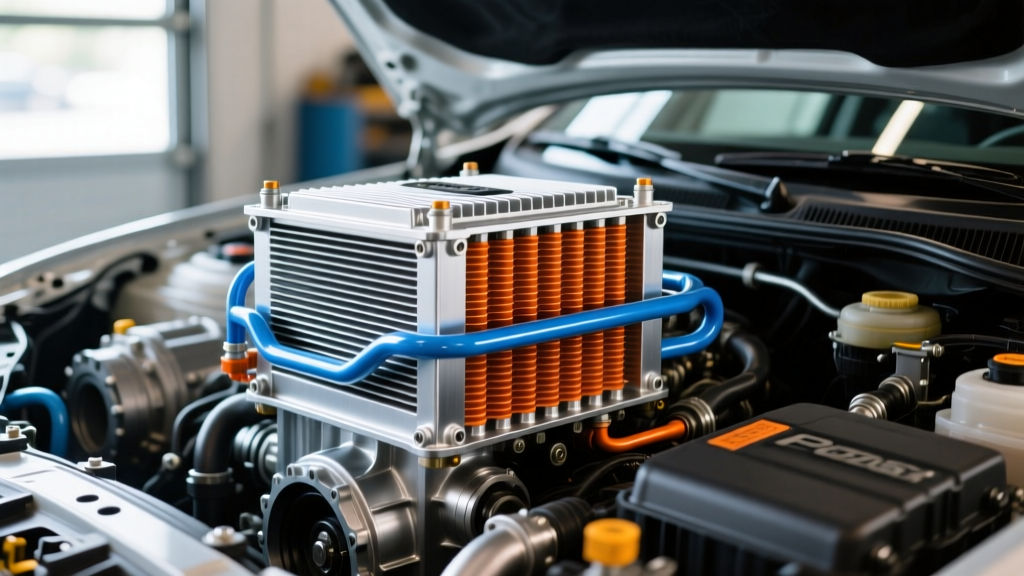
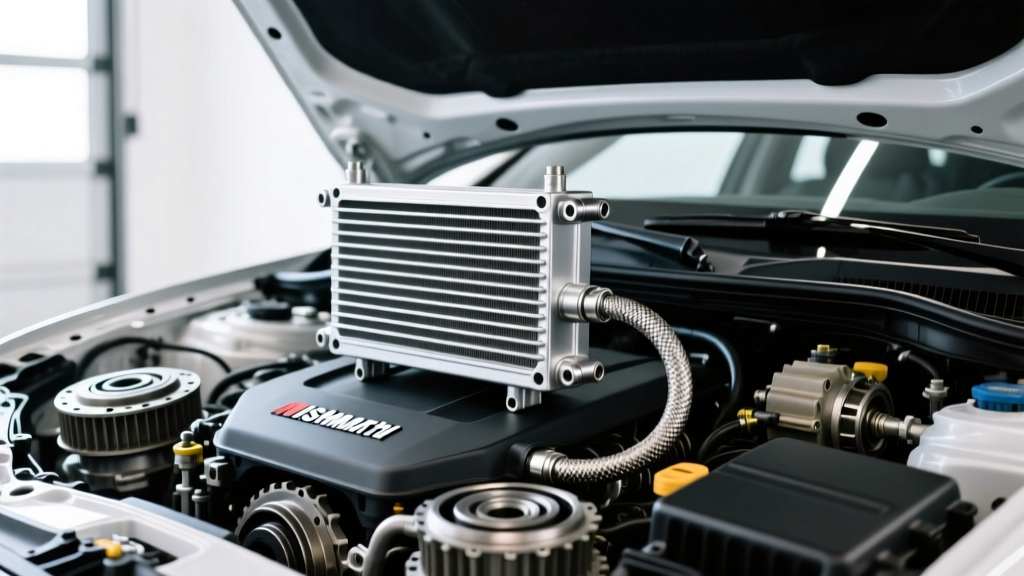
Historically, auxiliary coolers utilized tube-and-fin or plate-and-fin designs. While inexpensive, these legacy designs suffer from high fluid restriction and lower thermal transfer efficiency. Mishimoto’s modern stacked-plate transmission coolers represent a significant evolution in thermal management.
- Turbulator Technology: The internal plates feature stamped turbulators that agitate the fluid flow, breaking up the boundary layer of oil and forcing it into direct contact with the aluminum heat-transfer surfaces.
- Low Pressure Drop: Despite aggressive cooling, the cross-sectional flow area of a stacked-plate Mishimoto cooler minimizes pressure drop. This is vital for maintaining the line pressure required to actuate clutch packs, especially in high-horsepower applications.
- Brazed Construction: Unlike mechanical crimped coolers that are prone to vibration-induced fatigue and leaking, Mishimoto utilizes copper-brazed or aluminum-furnace-brazed joints, ensuring structural integrity under severe chassis vibration.
OEM Thermal Bottlenecks: 6L80 and ZF 8HP Case Studies
To understand the true preventive benefits of an auxiliary cooler, we must examine the inherent thermal flaws in two of the most ubiquitous modern transmissions: the GM 6L80/6L90 and the ZF 8HP.
GM 6L80 / 6L90: The Towing Heat Trap
Found in millions of GM trucks and SUVs (Silverado, Tahoe, Suburban), the 6L80 is a robust unit that suffers heavily when paired with the factory in-tank cooler during towing. The 6L80 utilizes a complex torque converter clutch (TCC) apply strategy. Under heavy load, micro-slippage in the TCC generates immense localized heat directly inside the converter. This superheated fluid is then routed to the transmission pan and the factory cooler. In 90°F+ ambient weather, towing a 7,000 lb trailer will easily push 6L80 fluid temperatures to 225°F - 240°F, rapidly degrading the 11.5-quart fluid capacity and baking the 3-5-R clutch pack seals.
ZF 8HP and the Thermal Bypass Valve Dilemma
The ZF 8HP (used in Ram trucks, BMWs, Jaguars, and Dodge Challengers) features a sophisticated thermal management system designed to warm the fluid quickly for reduced parasitic drag and lower emissions. It achieves this via a wax-actuated thermal bypass valve. When the fluid is cold, the valve blocks flow to the auxiliary cooler. However, as documented in Sonnax thermal bypass diagnostics, these wax elements are notorious for sticking or reacting too slowly. Under heavy throttle or steep grade climbing, the fluid temperature can spike past 230°F before the bypass valve fully opens, causing catastrophic thermal shock to the mechatronic unit's plastic adapter seals and clutch drums.
Expert Tip: When installing an auxiliary cooler on a ZF 8HP equipped vehicle, it is highly recommended to pair the Mishimoto cooler installation with a Sonnax thermal bypass delete kit or a heavy-duty billet bypass valve to ensure uninterrupted fluid flow to the cooler at all times.
Quantifying the Preventive Maintenance ROI
The financial argument for an auxiliary cooler is undeniable when comparing the cost of hardware against the cost of a transmission rebuild. Below is a breakdown of fluid life expectancy relative to operating temperatures, demonstrating the protective benefits of auxiliary cooling.
| Average Fluid Temp | ATF Oxidation State | Expected Fluid Life (Miles) | Hardware Risk Level |
|---|---|---|---|
| 175°F (79°C) | Optimal / Stable | 80,000 - 100,000+ | Minimal |
| 195°F (90°C) | Mild Degradation | 40,000 - 50,000 | Low |
| 220°F (104°C) | Rapid Oxidation / Varnish | 15,000 - 20,000 | Moderate (Seal hardening) |
| 240°F (115°C) | Severe Breakdown | 5,000 - 8,000 | High (Clutch glazing) |
| 260°F+ (126°C+) | Fluid Carbonization | Under 2,000 | Critical (Imminent Failure) |
A universal Mishimoto stacked-plate cooler kit typically retails between $130 and $180. Add $60 for high-quality silicone hoses and AN fittings, and your total preventive investment is roughly $240. Compare this to a professional 6L80 rebuild or replacement, which currently averages $2,800 to $3,800 in 2026, and the ROI is immediately apparent.
Precision Installation and Routing Protocol
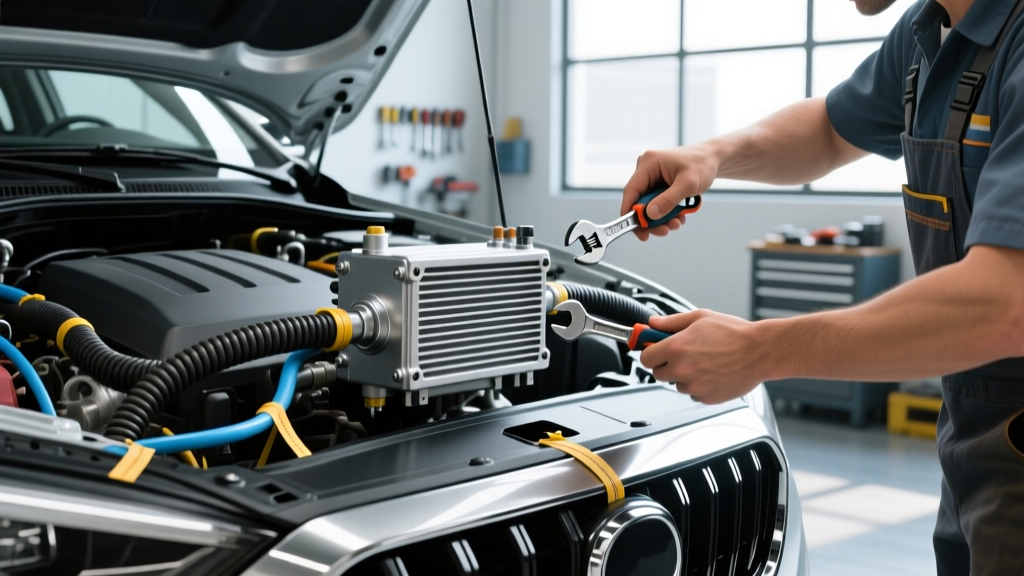
Simply bolting a cooler to the grille support is not enough. Improper routing and sub-par hardware are the leading causes of auxiliary cooler failures. Follow these strict preventive maintenance installation protocols.
Fluid Routing Strategy: Series vs. Parallel
Always plumb your auxiliary Mishimoto transmission cooler in series with the factory in-tank radiator cooler, never in parallel. Parallel routing creates a path of least resistance, causing fluid to bypass the factory cooler entirely and potentially leading to cold-fluid shifting issues in colder climates. The correct series routing order is:
- Transmission Output: Hot fluid leaves the transmission case.
- Factory Radiator Cooler: Fluid passes through the in-tank cooler for initial heat exchange and temperature stabilization.
- Auxiliary Mishimoto Cooler: Fluid enters the stacked-plate cooler for maximum ambient air cooling before returning to the pan.
- Transmission Return: Cooled, dense fluid re-enters the transmission to lubricate and actuate hydraulics.
Hardware, Fittings, and Torque Specifications
Do not rely on cheap barb fittings and worm-gear clamps. The constant vibration of the chassis will eventually fatigue standard clamps, leading to a blown hose and total fluid loss in seconds.
- Hose Selection: Use high-temperature, transmission-rated silicone or EPDM rubber hoses. Avoid standard fuel or coolant lines, as ATF will degrade them from the inside out.
- Clamp Selection: Utilize constant-tension T-bolt clamps or OEM-style fuel injection ear clamps. These maintain tension as the hose expands and contracts thermally.
- AN Fittings: If your Mishimoto cooler utilizes AN (Army-Navy) fittings, adhere strictly to torque specifications to prevent stripping the aluminum threads or crushing the O-rings.
- -6 AN Fittings: Torque to 12 - 15 lb-ft.
- -8 AN Fittings: Torque to 22 - 25 lb-ft.
- Mounting Hardware: Avoid plastic zip-ties. Fabricate or purchase aluminum L-brackets. Use M6x1.0 stainless steel hardware with nylock nuts, torqued to 7 - 9 lb-ft, and apply a medium-strength threadlocker (e.g., Loctite 243) to prevent vibration-induced backing out.
Long-Term Preventive Maintenance Schedule
Installing the cooler is only the first step. To ensure your drivetrain remains protected for the life of the vehicle, integrate the auxiliary cooler into your standard maintenance intervals:
- Every 10,000 Miles: Visually inspect the cooler fins for debris, bug buildup, and road salt accumulation. Clean with a low-pressure water stream or compressed air from the engine bay side out to prevent fin bending.
- Every 15,000 Miles: Check all hose connections for micro-weeping. ATF weeping attracts dirt, forming a dark, gritty crust around the clamps and fittings.
- Every 30,000 - 50,000 Miles: Perform a transmission fluid pan drop and filter change (if applicable). Inspect the fluid for a burnt smell or metallic particulate. The presence of varnish indicates your cooling system may be undersized or failing.
By treating thermal management as a core pillar of your preventive maintenance strategy, you effectively bulletproof your transmission against the most common cause of catastrophic failure: unmitigated heat. A properly spec'd and installed Mishimoto cooler ensures your transmission operates precisely where the engineers intended, delivering seamless shifts and unparalleled longevity.