The Thermal Bottleneck in Modern Super Dutys
The Ford 6.7L Powerstroke is an undisputed titan of the heavy-duty truck segment, pushing up to 1,200 lb-ft of torque in the 2023+ High Output variants. However, transferring that massive twisting force through the drivetrain generates immense parasitic heat. Whether your Super Duty is equipped with the venerable 6R80 (2011-2019) or the advanced 10R80 (2020-2026) 10-speed automatic transmission, thermal management is the single greatest factor in drivetrain longevity. When towing heavy 5th-wheel trailers through mountain passes, factory cooling systems frequently struggle, leading to transmission fluid degradation and thermal derating.
The 10R80 transmission, in particular, is highly sensitive to heat. Its complex 10-speed planetary gearset and clutch packs rely on MERCON ULV (Ultra Low Viscosity) fluid, which is engineered for tight tolerances and rapid shift times. When Transmission Fluid Temperature (TFT) exceeds 225°F (107°C), the Powertrain Control Module (PCM) initiates torque derating to protect the hardware. If temperatures climb past 250°F (121°C), the truck will enter severe thermal protection modes, drastically limiting performance. A strategic 6.7 Powerstroke transmission cooler upgrade is not just a performance modification; it is a critical reliability intervention for anyone towing near the truck's 22,000-pound GCWR limit.
Transmission Cooler Architecture: Tube, Plate, and Stacked
Selecting the right aftermarket cooler requires understanding the fluid dynamics and heat-exchange efficiency of the three primary cooler architectures available on the market today. According to engineering data from Derale Performance, the physical design of the cooler's internal passages dictates both its cooling capacity and its restriction to fluid flow.
Tube-and-Fin: The Budget Baseline
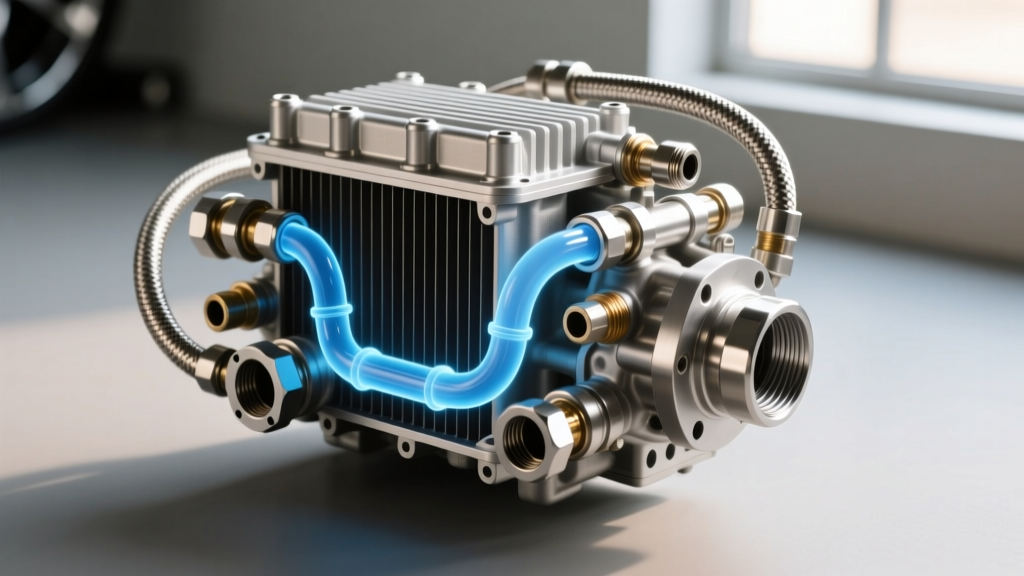
Tube-and-fin coolers represent the oldest and most basic design. Transmission fluid travels through a single, continuous serpentine tube wrapped with external aluminum fins. While they are inexpensive and offer very low flow restriction, their thermal transfer efficiency is the lowest of the three types. For a 6.7 Powerstroke, a tube-and-fin cooler is only recommended as a secondary auxiliary unit for light-duty, unladen highway driving. They lack the surface area required to shed the heat generated by a 10,000-pound trailer on a 6% grade.
Plate-and-Fin: The Mid-Range Workhorse
Plate-and-fin coolers utilize a series of horizontal aluminum plates with internal turbulators. The fluid is forced through these narrow, zig-zagging channels, which increases fluid agitation and maximizes contact with the aluminum surface. This design offers a massive leap in cooling efficiency over tube-and-fin models without creating excessive pressure drop. For Super Duty owners who tow medium-duty loads (e.g., 6,000 to 10,000-pound boat or equipment trailers) in moderate climates, a high-capacity plate-and-fin cooler provides an excellent balance of cost, fitment, and thermal rejection.
Stacked-Plate: The Heavy-Duty Standard
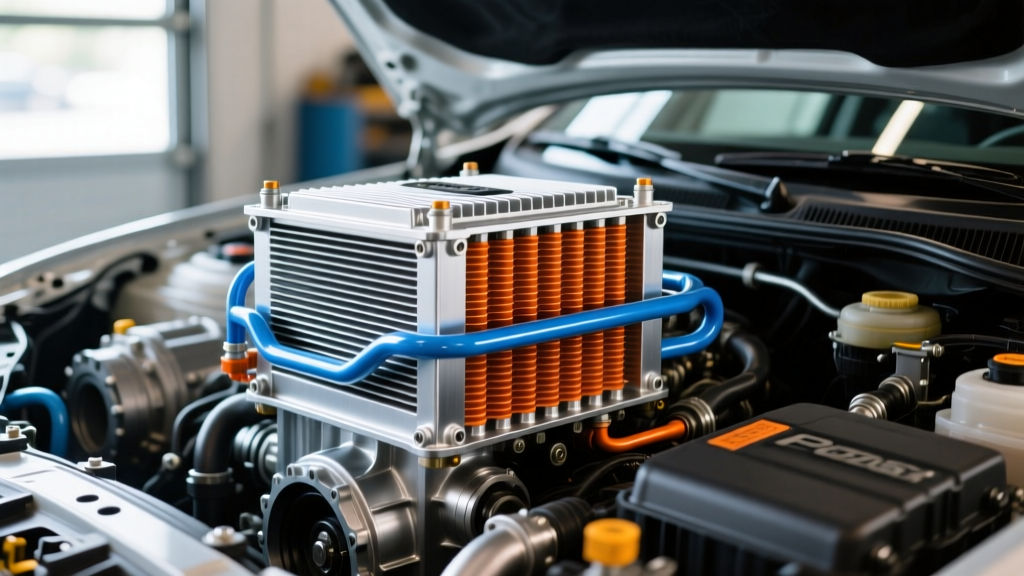
The stacked-plate design is the gold standard for severe-duty towing. These coolers are constructed from alternating layers of stamped aluminum plates brazed together in a furnace. The internal passages are incredibly shallow and wide, creating an enormous surface-area-to-volume ratio. Stacked-plate coolers offer the highest BTU-per-hour heat rejection and are highly resistant to physical damage from road debris. Leading manufacturers like Mishimoto utilize stacked-plate architectures in their premium Super Duty upgrade kits because they can drop transmission temperatures by 20°F to 40°F under peak load, all while maintaining optimal line pressure.
Application Matrix: Selecting Your 6.7L Cooler
Choosing the correct cooler requires matching the hardware to your specific Gross Vehicle Weight Rating (GVWR) and typical towing profile. Use the matrix below to guide your purchasing decision for the 2026 towing season.
| Cooler Architecture | Best Application Profile | Thermal Efficiency | Flow Restriction | Est. Cost (2026) |
|---|---|---|---|---|
| Tube-and-Fin | Daily driving, empty bed, light campers (<5k lbs) | Low | Very Low | $120 - $180 |
| Plate-and-Fin | Medium towing, equipment trailers, moderate climates | Medium-High | Low | $180 - $320 |
| Stacked-Plate | Heavy 5th-wheel, commercial hauling, mountain grades | Maximum | Medium | $350 - $750 |
| Remote-Mount w/ Fan | Stationary PTO use, extreme desert towing, show trucks | Maximum (Active) | High (Pump) | $600 - $1,100 |
6R80 vs. 10R80: Routing, Fitment, and Fluid Dynamics
The physical installation and fluid requirements differ vastly between the 6R80 and 10R80 generations. As documented by powertrain specialists on Ford-Trucks.com, front-end packaging on the 2020+ Super Dutys is incredibly tight due to the massive Charge Air Cooler (CAC) and intercooler stacks required for the 6.7L's emissions and power output.
The 6R80 Era (2011-2019)
The 6R80 utilizes MERCON LV fluid and features relatively accessible 1/2-inch or 3/8-inch quick-disconnect cooler lines routing to the factory radiator or standalone front-mount cooler. Upgrading this system typically involves mounting a large stacked-plate cooler directly in front of the A/C condenser. You will need a specialized quick-disconnect tool (such as the Lisle 39960 or OTC 6459) to safely separate the factory plastic retaining clips without cracking the aging aluminum fittings.
The 10R80 Era (2020-2026)
The 10R80 presents unique challenges. First, it requires MERCON ULV fluid. Warning: Never mix MERCON LV and MERCON ULV. The ULV fluid is significantly thinner, and using LV in a 10R80 will cause immediate clutch slippage and transmission failure. Second, the 10R80 relies on a highly integrated thermal management system, often routing fluid through a complex thermal bypass valve and the engine's cooling stack. When upgrading a 2020+ model, you must ensure your aftermarket stacked-plate cooler includes an integrated thermal bypass or that you retain the factory bypass valve to ensure the transmission reaches operating temperature quickly, preventing clutch glazing during cold-weather warmups.
Installation Protocol and Torque Specifications
A proper installation ensures zero leaks and maintains the hydraulic pressure required for crisp shift events. Follow this protocol when swapping your factory unit for an aftermarket stacked-plate upgrade:
- Fluid Drain and Catch: The 6R80 and 10R80 hold approximately 17.5 quarts of fluid dry, but a cooler and line swap will only drain about 4 to 6 quarts. Use a clean, dedicated catch pan to prevent contamination.
- Line Disconnection: Use the correct Ford quick-release tool. Do not pry with screwdrivers, as the OEM aluminum tube flares easily and will leak if scored.
- Mounting Hardware: When mounting the new cooler to the radiator support or custom brackets, use isolated rubber well-nuts or polyurethane bushings to prevent galvanic corrosion and vibration transfer. The factory M6 radiator mounting bolts should be torqued to exactly 89 lb-in (10 Nm). Over-torquing will strip the thin aluminum support brackets.
- AN Fittings and Hoses: If your upgrade kit utilizes braided stainless lines with AN-6 fittings, apply a light coating of assembly lube to the O-rings. Torque AN-6 aluminum fittings to 15-18 ft-lbs using an aluminum-specific torque wrench to prevent cracking the fitting bodies.
- The Bleeding Procedure: After reconnecting the lines and filling the pan with the exact specified fluid (LV or ULV), start the truck with the parking brake engaged. Cycle the transmission through every gear (P-R-N-D), holding each for 3 seconds to fill the clutch drums and the new cooler core. Check the fluid level via the dipstick or the factory leveling plug (on pan-drop setups) with the transmission pan temperature between 185°F and 200°F, verified via an OBD-II scanner reading the TFT PID.
By carefully selecting the correct stacked-plate or plate-and-fin architecture and adhering to strict installation and fluid protocols, your 6.7 Powerstroke will maintain optimal hydraulic pressure and shift quality, even when pulling maximum payloads through the most punishing terrain.