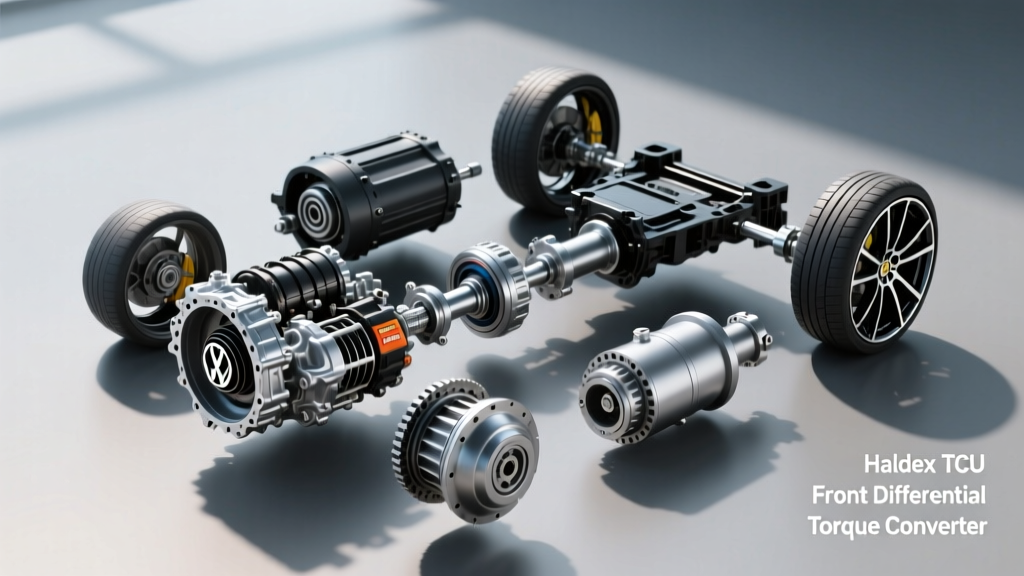
The Anatomy of the Mini Cooper ALL4 AWD System
When the dashboard of your F56 Hardtop, F54 Clubman, or F60 Countryman illuminates with the dreaded drivetrain malfunction Mini Cooper warning, it is rarely a simple sensor glitch. For models equipped with the ALL4 all-wheel-drive system, this warning indicates a critical fault within a highly complex, electrohydraulically controlled driveline. As of 2026, the BMW Group's UKL and UKL2 front-wheel-drive platforms rely on a transverse engine layout, meaning the AWD system must route power 90 degrees from the transaxle to the rear axle. Understanding how this system operates is the first step in accurately diagnosing and repairing the fault.
Power Transfer Unit (PTU) and Angle Gear
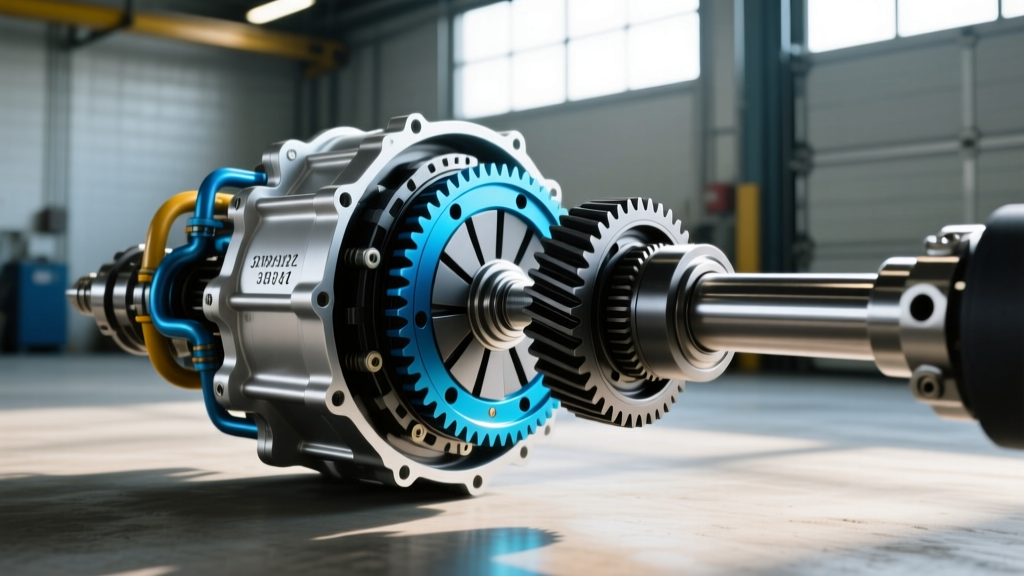
Mated directly to the Aisin 8F24 or 8F35 8-speed automatic transmission (or the Getrag 6-speed manual in earlier models), the Power Transfer Unit (PTU) is the heart of the ALL4 system. Inside the PTU, a hypoid gear set redirects torque from the transverse transmission output shaft to a rear-facing propeller shaft. Because the PTU sits in close proximity to the exhaust manifold and catalytic converter of the B38/B48 engines, it operates in an extreme thermal environment. This heat exposure is the primary catalyst for the fluid degradation that often leads to catastrophic internal spline failure.
Electrohydraulic Rear Coupling (Hang-On Clutch)
Unlike traditional mechanical center differentials, the ALL4 system utilizes a 'hang-on' electrohydraulic multi-plate clutch integrated into the rear differential assembly. The Dynamic Stability Control (DSC) module continuously monitors wheel speeds, steering angle, and throttle position. When slip is detected, the DSC sends a Pulse Width Modulation (PWM) signal to the clutch actuator valve. An internal hydraulic pump pressurizes the clutch pack, seamlessly engaging the rear axle. If the hydraulic fluid shears or the clutch plates glaze, the system detects a rotational speed delta between the front and rear axles, immediately triggering the drivetrain malfunction limp mode to protect the driveline from binding or mechanical destruction.
Decoding the 'Drivetrain Malfunction Mini Cooper' Warning
The 'Drivetrain Malfunction' message is a generic catch-all alert generated by the Digital Motor Electronics (DME) and DSC modules. However, in the context of the ALL4 system, it is almost always accompanied by specific hexadecimal fault codes stored in the VTG (Transfer Gear) or DSC modules. When this error occurs, the vehicle's ECU will aggressively limit engine torque and completely disengage the rear axle, effectively turning your AWD Mini into a FWD vehicle with severely restricted acceleration.
Technician's Note: Never ignore a transient drivetrain malfunction warning that disappears upon restarting the vehicle. In ALL4 models, this usually indicates early-stage PTU spline wear or momentary clutch slip due to degraded rear differential fluid. Catching it early can save you from a $2,500+ driveline replacement.
Top 3 Mechanical Culprits Behind the Error
- PTU Angle Gear Spline Stripping: The splines connecting the transmission output shaft to the PTU input gear are notoriously prone to wear. If the factory grease degrades, the splines grind down to smooth metal. The DSC module detects that the PTU speed sensor reads 0 RPM while the transmission output sensor reads forward motion, throwing code 482A14 (Transfer case speed sensor implausible).
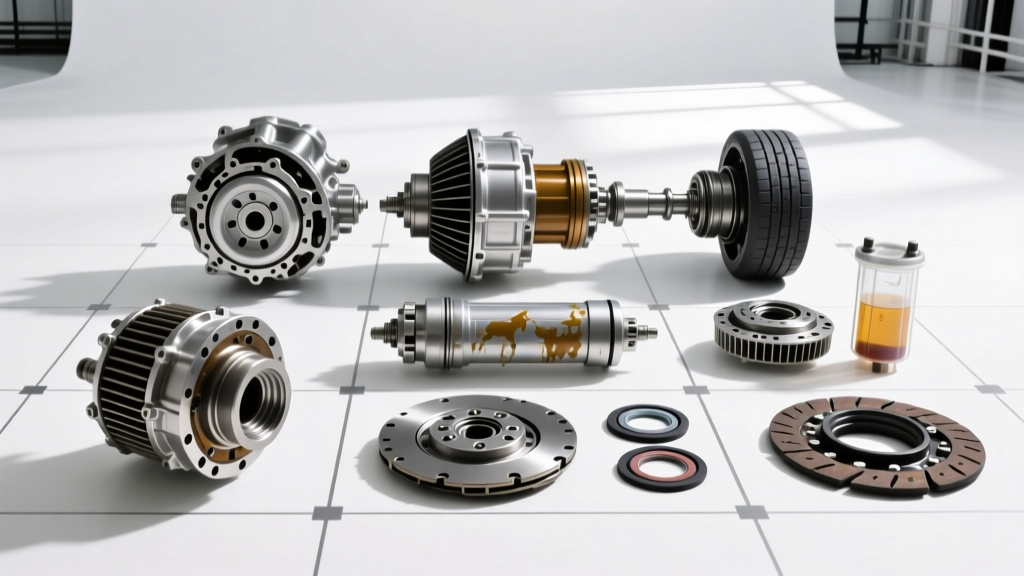
- Electrohydraulic Clutch Pack Burnout: The rear differential clutch pack relies on specialized friction modifiers. When the fluid breaks down from thermal cycling, the clutch slips under load. The DSC module registers this as a traction anomaly, triggering code 4F21 (AWD clutch slip) and illuminating the dash warning.
- Flex Disc (Guibo) Disintegration: The rubber flex disc connecting the front driveshaft to the PTU absorbs torsional vibration. Over time, heat and ozone cause the rubber to crack and separate. While this often starts as a vibration at 40-50 mph, severe separation can cause the driveshaft to wobble, damaging the PTU output seal and triggering speed sensor correlation faults.
Diagnostic Data: Fluid Specs, Torque Values, and Part Numbers
Proper maintenance and repair of the ALL4 system require strict adherence to BMW/Mini engineering specifications. Using incorrect gear oils in the electrohydraulic clutch will cause immediate chatter and eventual failure. Below is the critical data matrix for UKL-platform ALL4 servicing.
| Component | Specification / Part Number | Capacity | Torque Spec (Fastener) |
|---|---|---|---|
| PTU (Power Transfer Unit) | Mini P/N 83222446673 (GKN MTF-1) | 0.35 Liters | PTU to Trans: M8 @ 35 Nm |
| Rear Differential (Hypoid) | SAF-XJ 75W-140 (P/N 83222415200) | 0.45 Liters | Diff to Subframe: M10 @ 56 Nm + 90° |
| Front Driveshaft to PTU | M8 Flange Bolts (P/N 33117604244) | N/A | 35 Nm (Replace on removal) |
| Flex Disc to Transmission | M10 Nuts (P/N 07147564631) | N/A | 56 Nm |
| Rear Axle Nut (CV Joint) | M27 Collar Nut (P/N 33206865244) | N/A | 280 Nm (Prevailing torque) |
Step-by-Step Triage for AWD System Failures
When a customer presents a 2016-2026 ALL4 Mini Cooper with the drivetrain malfunction warning, a systematic approach is required to isolate the fault without unnecessarily condemning expensive assemblies.
- Scan the DSC and EGS Modules: Use a BMW-specific diagnostic tool like ISTA or an advanced bi-directional scanner (e.g., Autel MaxiSys). Look specifically for VTG (Transfer Gear) speed sensor faults or DSC clutch slip codes. Generic OBD2 scanners will only read engine emissions codes and will miss the AWD-specific chassis codes.
- Perform a Live Data Road Test: Monitor the front axle speed, rear axle speed, and PTU speed sensors in real-time. If the front and PTU speeds match, but the rear speed drops under heavy throttle, the fault lies in the rear electrohydraulic clutch pack or rear axle half-shafts.
- Physical PTU Spline Inspection: If the PTU speed sensor reads 0 RPM while driving, you must verify the angle gear splines. Remove the front driveshaft and the PTU fill plug. Using a borescope or a specialized spline-checking tool, inspect the mating teeth between the transmission output and the PTU input. Stripped splines require transmission and PTU removal.
- Hydraulic Actuator Test: Using ISTA, command the rear axle clutch to engage at varying duty cycles (10% to 90%) while the vehicle is on a lift. Listen for the hydraulic pump whine and monitor the torque transfer. A sluggish response indicates a clogged actuator filter or worn clutch plates inside the rear differential.
The Realities of Repair Costs and Dealership vs. Independent Shops
Repairing an ALL4 drivetrain malfunction is highly specialized. Dealerships often default to replacing entire assemblies rather than rebuilding them. For example, if the PTU splines are stripped, a dealer will typically quote a new Aisin transmission and a new PTU as a single sealed unit, resulting in invoices ranging from $4,500 to $6,800.
However, specialized independent European shops can often separate the PTU from the transmission. By replacing just the PTU input sleeve and the transmission output flange, the repair can be completed for $1,200 to $1,800 in parts and labor. Similarly, if the rear differential clutch pack is burnt, a dealer will quote a complete rear axle replacement ($3,000+), whereas an indie shop with access to GKN rebuild kits can replace the clutch packs and seals for roughly $800 to $1,100.
Preventative Maintenance to Avoid AWD Catastrophe
The most critical takeaway for Mini Cooper ALL4 owners is that the drivetrain fluids are not 'lifetime' as the factory manual historically suggested. To prevent the drivetrain malfunction warning and subsequent mechanical failure, strict maintenance intervals must be followed:
- PTU Fluid: Drain and refill every 30,000 miles. The tiny 0.35L capacity degrades rapidly due to exhaust heat. Use only the specified GKN MTF-1 equivalent.
- Rear Differential Fluid: Drain and refill every 40,000 miles. If the vehicle is tracked or driven aggressively in mountainous terrain, reduce this interval to 20,000 miles to preserve the friction modifiers required by the electrohydraulic clutch.
- Flex Disc Inspection: Visually inspect the rubber guibo every 15,000 miles during routine oil changes. Look for radial cracking or separation from the metal sleeve.
By understanding the intricate operation of the ALL4 system and adhering to aggressive fluid maintenance schedules, you can keep your Mini Cooper's AWD system functioning flawlessly and avoid the dreaded drivetrain malfunction limp mode. For deeper technical discussions and community-driven troubleshooting on UKL platform drivetrains, enthusiasts and technicians frequently consult resources like GKN Driveline's AWD technical documentation and the extensive archives on Bimmerpost's F56 Technical Subforum.