The Great Misconception: Is the Golf R Drivetrain 4WD or AWD?
Walk into any automotive forum or dealership service lounge, and you will inevitably hear a Volkswagen enthusiast refer to their hatchback as a "4WD" monster. However, from an engineering and preventive maintenance standpoint, conflating 4WD (Four-Wheel Drive) with AWD (All-Wheel Drive) is not just a semantic error—it is a fundamental misunderstanding that leads to catastrophic maintenance oversights. As we navigate the 2026 landscape of hot hatch performance, understanding the precise architecture of your Golf R drivetrain is the first step toward preserving its legendary grip and longevity.
The Volkswagen Golf R (from the Mk7 through the current Mk8.5 generations) does not utilize a traditional 4WD system. Instead, it relies on a highly sophisticated, transversely mounted AWD architecture. Confusing the two leads owners to apply incorrect service intervals, ignore critical clutch-pack wear, and ultimately face thousands of dollars in premature drivetrain failures.
Architectural Showdown: Haldex AWD vs. Traditional 4WD
To properly maintain the Golf R, we must first dissect the mechanical differences between its AWD system and a traditional 4WD setup found in vehicles like the Jeep Wrangler or Toyota Tacoma.
How Traditional 4WD Operates
Traditional 4WD systems are typically longitudinally mounted and feature a dedicated transfer case with a locking mechanism (gears or chains) that physically locks the front and rear output shafts together, forcing a 50/50 torque split. This is ideal for low-traction, off-road environments but causes severe "wind-up" and binding on dry pavement because the front and rear axles cannot rotate at different speeds during cornering. Maintenance on these systems involves heavy gear oils (e.g., 75W-90 or 75W-140), manual locking hubs, and robust U-joint greasing.
How the Golf R AWD System Operates
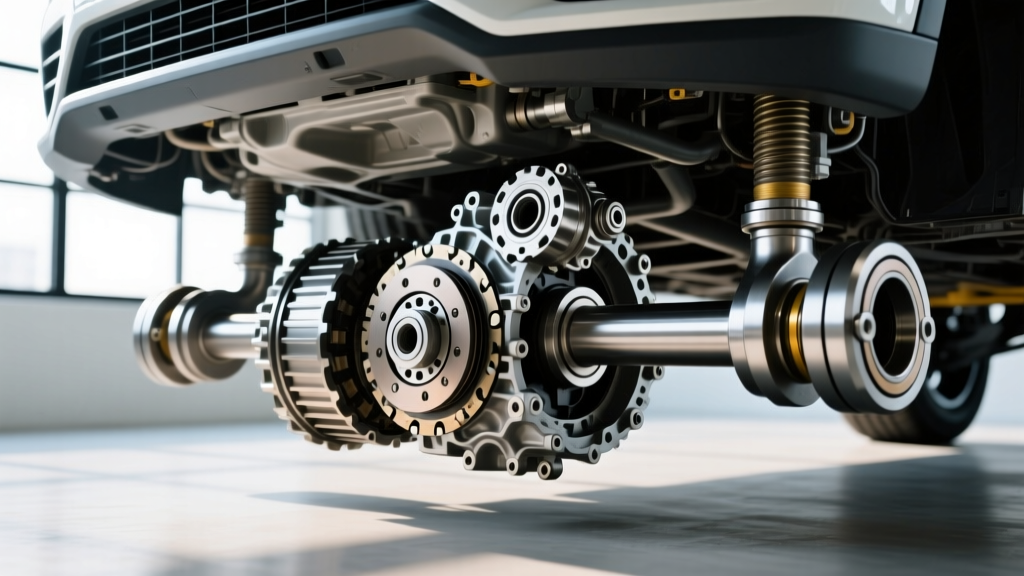
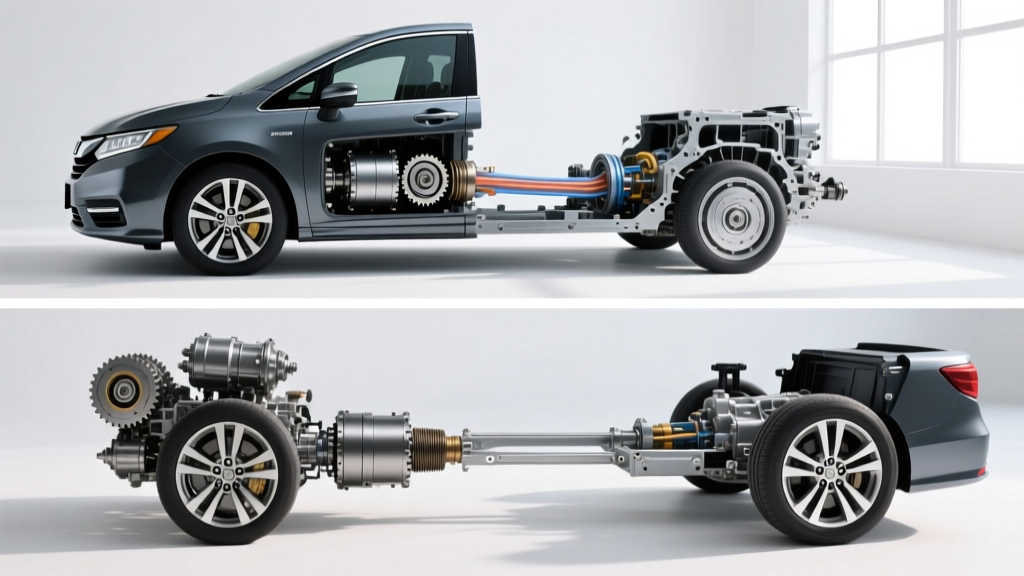
The Golf R drivetrain utilizes a transverse engine layout. Power routes through the DSG transmission to a front differential, while a Power Take-Off (PTO) gear—commonly called the bevel box—sends power rearward via a two-piece driveshaft.
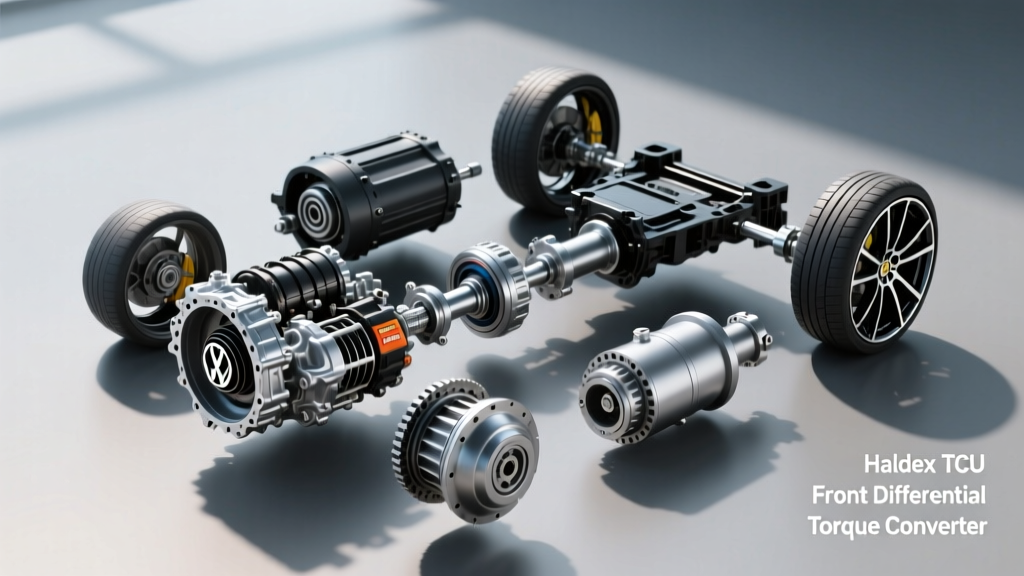
- Mk7 / Mk7.5 Golf R: Employs a Haldex Generation 5 electro-hydraulic multi-plate clutch pack at the rear differential. It operates primarily as a FWD vehicle, engaging the rear axle only when front slip is detected or predictive algorithms demand it.
- Mk8 / Mk8.5 Golf R: Ditches the traditional Haldex coupling for a revolutionary Torque-Vectoring Rear Differential (using twin multi-plate clutches on the rear axle shafts), capable of sending up to 100% of rear-biased torque to a single outside wheel to eliminate understeer.
Because AWD systems rely on friction materials (clutch packs) and hydraulic pumps rather than locked metal gears, their maintenance requirements are vastly different, demanding strict adherence to specialized fluid chemistry and microscopic filtration standards.
Critical Golf R Drivetrain Maintenance Guide
Neglecting the nuances of an AWD system is the fastest way to degrade the performance of your Golf R. Below is the definitive preventive maintenance protocol for the core components of the drivetrain.
The Haldex Gen 5 "Hidden Screen" Trap
When Volkswagen and Haldex transitioned to the Generation 5 system (introduced in the Mk7 Golf R), they made a controversial engineering decision: they deleted the traditional paper filter. Instead, they placed a small, cylindrical brass mesh screen directly on the intake side of the electric hydraulic pump.
Expert Warning: Many quick-lube shops and even some dealership technicians are unaware of this screen. They drain the old fluid, refill it, and stamp the maintenance booklet. Over 20,000 miles, clutch material and metallic dust clog this tiny screen. The pump starves for fluid, overheats, and burns out. A replacement Haldex pump and harness will cost between $450 and $700 in parts and labor.
The Fix: Every 20,000 miles (or 3 years), you must drop the rear subframe slightly or reach blindly behind the differential to remove the pump housing, extract the brass screen, and clean it with brake cleaner and compressed air. For a comprehensive visual walkthrough, the FCPEuro Haldex Service Guide remains an industry-standard reference for DIYers tackling this exact procedure.
The Bevel Box: The Forgotten Link
The bevel box (transfer case) bolts directly to the DSG transmission and translates rotational force 90 degrees to the rear driveshaft. It holds a mere 0.85 liters of specialized fluid. Because it is small and tucked away, it is entirely ignored during standard services. Running degraded bevel box fluid leads to whining noises, PTO gear wear, and eventual seal leaks that will dump fluid onto your hot exhaust. Resealing a leaking bevel box is a labor-intensive nightmare, often requiring subframe removal, pushing dealership repair bills past $1,200.
DSG Transmission: The Heart of the Powertrain
Whether you are running the older DQ250 (6-speed) or the modern DQ381 (7-speed), the Dual-Clutch Transmission relies on highly specific hydraulic fluid to actuate the mechatronic unit and cool the wet clutches. Using incorrect universal ATF will cause mechatronic solenoid failure and clutch shudder. The DSG fluid and external filter must be serviced every 40,000 miles without exception.
Fluid Specifications, Capacities, and Torque Data
Precision is paramount. Keep this data table in your garage for your next service interval. Note: Always verify part numbers against your specific VIN, as VW occasionally supersedes fluid formulations.
| Component | OEM Fluid Specification | Capacity (Service Fill) | Drain/Fill Plug Torque | Service Interval |
|---|---|---|---|---|
| Haldex Gen 5 (Mk7/7.5) | G 060 175 A2 | ~1.1 Liters | 35 Nm (26 lb-ft) | 20k Miles (w/ Screen Clean) |
| Mk8 Torque Vectoring Diff | G 060 175 A2 (Clutch) / G 055 175 A2 (Gear) | ~1.5L Total (Dual Chamber) | 30 Nm (22 lb-ft) | 30k Miles |
| Bevel Box (PTO) | G 055 175 A2 | 0.85 Liters | 30 Nm (22 lb-ft) | 40k Miles |
| DQ381 7-Speed DSG | G 052 182 A2 | ~5.5 Liters (7.0L Dry) | Pan Bolts: 10 Nm (7 lb-ft) | 40k Miles |
4WD vs AWD Maintenance Cost & Complexity Comparison
Understanding the financial and mechanical divergence between these two layouts highlights why the Golf R requires a specialized approach compared to a traditional 4WD truck.
- Fluid Costs: A traditional 4WD system (Transfer Case + Front/Rear Diffs) requires massive volumes of thick gear oil (up to 6+ quarts total), but the fluids are relatively cheap and stable. The Golf R AWD system requires less total volume, but the specialized synthetic hydraulic fluids and clutch-pack additives are significantly more expensive per liter.
- Filtration: 4WD differentials generally have no filters; you simply drain, flush, and refill. The Golf R's Haldex and DSG systems are highly sensitive to microscopic particulates, necessitating external inline filters (DSG) and delicate brass screen cleanings (Haldex).
- Mechanical Wear Items: A 4WD system relies on heavy steel gears and chains that can last 200,000 miles if fluid is maintained. The Golf R's AWD system relies on friction clutch packs. If the Haldex fluid is allowed to degrade, the friction modifiers break down, leading to clutch glazing, slippage, and eventual rear differential replacement (a $2,500+ catastrophe).
Real-World Edge Cases and Failure Modes
As of 2026, the aftermarket community has identified several edge cases specific to the Golf R drivetrain that every owner must monitor:
1. The Mk8 Torque Vectoring Harness Chafing
Early Mk8 Golf R models experienced a routing issue where the wiring harness connecting to the rear torque-vectoring actuator motors would chafe against the rear subframe. This causes intermittent AWD dropout and a "Drivetrain Malfunction" CEL (Check Engine Light). Preventive maintenance involves inspecting the rear diff harness during every oil change and applying automotive-grade braided sleeving and zip-ties to secure the loom away from moving or vibrating components.
2. DSG Bevel Box Seal Weeping
The seal where the bevel box mates to the DSG transmission casing is prone to micro-leaks around 60,000 miles, especially on tuned examples pushing over 350 lb-ft of torque. If you notice a reddish-brown residue accumulating on the undertray near the transmission bell housing, do not assume it is engine oil. Wipe the bevel box mating surface with a shop towel. If it's wet with gear oil, schedule a reseal immediately before the PTO gears run dry and shatter. For deep-dive technical discussions and DIY telemetry on this exact issue, the VWVortex Mk8 Golf R Forum is an invaluable repository of owner-documented teardowns.
3. Driveshaft Center Bearing Degradation
The two-piece rear driveshaft relies on a rubber-isolated center bearing. In regions that use heavy road salts or experience extreme temperature cycling, this rubber degrades, causing a distinct "clunk" when shifting from Reverse to Drive, or a high-speed vibration that mimics an unbalanced wheel. Replacing the center bearing support typically costs around $300 to $450 in labor and parts, but ignoring it will eventually lead to U-joint failure and driveshaft separation at highway speeds.
Final Verdict: Respect the Architecture
The Golf R drivetrain is an engineering marvel that bridges the gap between daily drivability and track-capable performance. However, it is definitively an AWD system, not a 4WD tractor. By abandoning the "set it and forget it" mentality of traditional 4WD gearboxes and embracing the meticulous, interval-driven maintenance required by Haldex clutches, torque-vectoring actuators, and DSG mechatronics, you will ensure your Golf R continues to hook up off the line and carve through apexes for years to come. For further reading on the fundamental engineering differences between these layouts, Car and Driver's AWD vs. 4WD Breakdown provides an excellent high-level overview of the mechanical theory discussed in this guide.