The WHP vs. BHP Dilemma in Modern Performance Tuning
You just dropped thousands on a forced induction kit, a built bottom end, and aggressive camshafts. The engine dyno reads 650 brake horsepower (BHP) at the flywheel. But when you strap the car to the Mustang or Dynojet chassis dyno, the screen flashes 520 wheel horsepower (WHP). Where did the missing 130 horsepower go? This is where a drivetrain loss calculator becomes an essential tool for any serious performance enthusiast. In the 2026 tuning landscape, understanding parasitic drag is just as critical as maximizing combustion efficiency. This guide explores how drivetrain loss calculators work and details the exact modifications and upgrades you can install to reclaim that lost power.
How a Drivetrain Loss Calculator Actually Works
A basic drivetrain loss calculator uses static multipliers to estimate power loss between the crankshaft and the contact patch of the tires. The traditional rule of thumb dictates a 10-15% loss for Rear-Wheel Drive (RWD), 15-20% for Front-Wheel Drive (FWD), and 20-25% for All-Wheel Drive (AWD) platforms. However, advanced calculators and simulation software now factor in dynamic variables: rotational inertia, gear oil viscosity, the number of gear meshes, and final drive ratios.
When you input your engine's crank HP into a calculator, it subtracts the estimated parasitic drag. But here is the secret most tuners miss: the loss percentage is not a fixed law of physics. By strategically upgrading your drivetrain components, you can manually lower the loss percentage in the calculator, accurately predicting higher WHP outputs from the exact same engine package.
The Parasitic Drag Hierarchy: Where is Your Power Going?
Before throwing money at random bolt-on parts, you must understand where power is being consumed. The table below breaks down the typical power loss by component and the corresponding upgrade path to minimize it.
| Drivetrain Component | Typical Power Loss | Primary Cause of Drag | Performance Upgrade Solution | Estimated Cost (2026) |
|---|---|---|---|---|
| Transmission (Gear Mesh) | 3% - 6% | Helical gear friction, fluid shear | Low-viscosity synthetic fluid, straight-cut gears | $150 - $3,500 |
| Driveshaft | 1% - 3% | Rotational mass, U-joint binding | 1-Piece Carbon Fiber shaft, 1310 U-joints | $1,200 - $1,900 |
| Differential | 2% - 5% | Clutch-pack friction, hypoid gear mesh | Helical LSD (Quaife/Wavetrac), synthetic 75W-90 | $900 - $1,600 |
| Axles & CV Joints | 1% - 4% | CV joint articulation drag, heavy steel | 300M Chromoly lightweight axles | $600 - $1,400 |
| Flywheel / Flexplate | N/A (Affects inertia) | Heavy steel rotational mass | Billet Aluminum or Chromoly flywheel | $400 - $900 |
Strategic Upgrades to Minimize Drivetrain Loss
To effectively move the needle on your next chassis dyno run, focus on components that reduce both static friction and rotational inertia. Here are the most impactful drivetrain modifications available today.
Carbon Fiber Driveshafts and Lightweight Flywheels
While a lightweight flywheel doesn't technically increase peak WHP on a steady-state dyno pull, it drastically reduces rotational inertia, allowing the engine to rev through the powerband faster, which translates to lower ETs at the drag strip. For actual parasitic drag reduction, the driveshaft is king. Replacing a heavy, two-piece steel driveshaft (often weighing 45-60 lbs in trucks and older muscle cars) with a 1-piece carbon fiber driveshaft from manufacturers like QA1 or PST drops the weight to roughly 15-20 lbs. Carbon fiber also possesses superior dampening characteristics, absorbing high-frequency NVH (Noise, Vibration, and Harshness) that would otherwise be transferred to the chassis.
Differential Efficiency: Helical vs. Clutch-Type LSDs
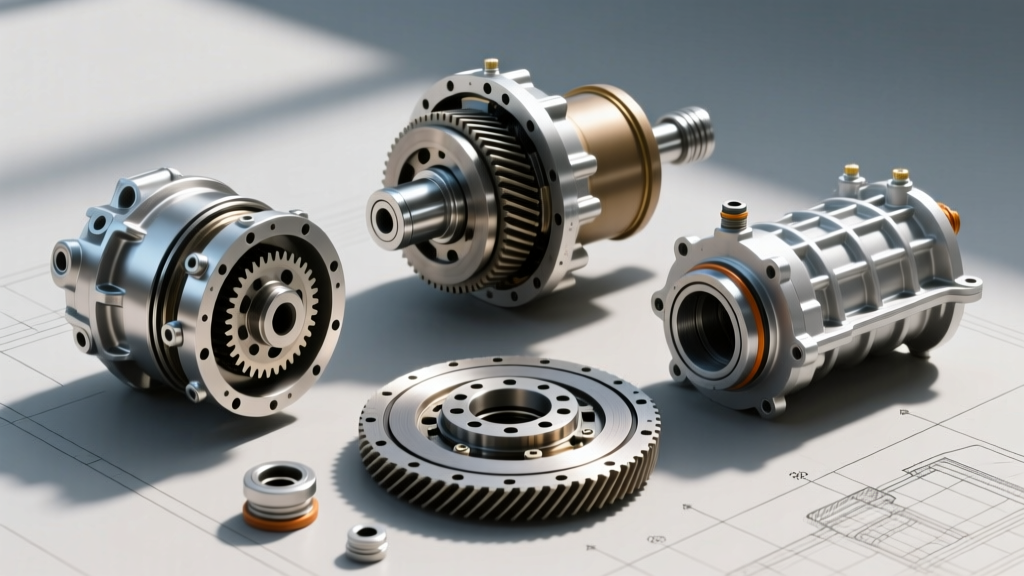
If you are building a track car or a high-horsepower street machine, your differential choice heavily impacts your drivetrain loss calculator results. Traditional clutch-type Limited Slip Differentials (LSDs), like the Eaton Truetrac or standard GM Auburn units, rely on friction modifiers and physical clutch packs that generate constant drag, even when driving in a straight line. Upgrading to a helical gear-based LSD, such as the Quaife ATB (Automatic Torque Biasing) or Wavetrac, eliminates clutch packs entirely. Helical LSDs operate with near-open-differential efficiency during straight-line cruising, freeing up 2-4 horsepower that would otherwise be lost to internal friction, while still providing massive mechanical grip under cornering loads.
Transmission Fluid Dynamics and Gear Mesh
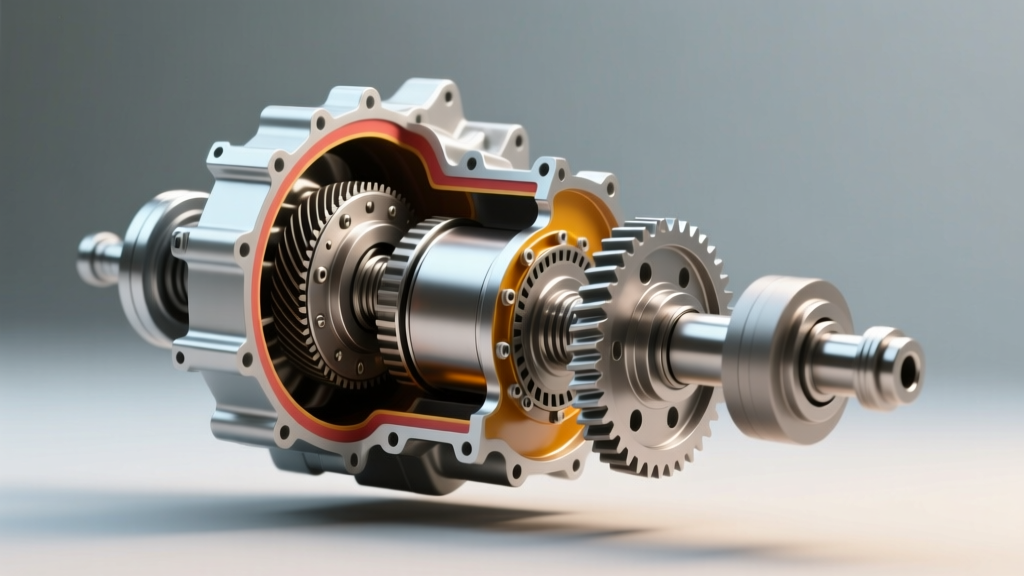
The transmission is the largest source of parasitic loss in the drivetrain. Every time a gear meshes, and every time the mainshaft spins through a bath of gear oil, power is consumed. For modern automatics like the ZF 8HP70 or 8HP90, sticking to the OEM-spec fluid (like ZF LifeguardFluid 8) is mandatory for the mechatronic valves to function correctly. However, for manual transmissions like the Tremec T56 Magnum or the Ford MT-82, switching to a high-quality, low-viscosity synthetic fluid like Tremec MTL-ET or Red Line MTL can reduce fluid shear drag by up to 1.5%. In endurance racing, teams often utilize specialized low-drag synthetic oils to shave fractions of a second off lap times, a trick that is highly applicable to high-WHP street builds.
Real-World Math: Calculating Your Gains
Let us apply this to a real-world scenario using a popular 2026 build formula: a boosted 6.2L LS3 producing 620 BHP at the crank.
- Stock Configuration: Using a standard RWD drivetrain loss calculator at a 15% loss multiplier, your predicted WHP is 527 WHP (620 - 93).
- Upgraded Configuration: You install a QA1 carbon fiber driveshaft, a Quaife ATB differential, a McLeod lightweight aluminum flywheel, and fill the Tremec T56 with Red Line MTL. These upgrades reduce your parasitic drag multiplier to an estimated 11%.
- The Result: Plugging 620 BHP and an 11% loss into the calculator yields 551 WHP.
You just 'found' 24 wheel horsepower without touching the engine's air, fuel, or spark maps. Furthermore, the reduction in rotational mass will make the car feel like it gained an extra 50 horsepower in the mid-range.
Critical Torque Specifications for Upgraded Components
When upgrading drivetrain components to handle increased torque and reduce loss, precision assembly is non-negotiable. A loose pinion nut or improperly torqued U-joint strap will lead to catastrophic failure under high-WHP loads. Always adhere to the following baseline specifications (verify with your specific OEM or aftermarket service manual):
- 1310 / 1350 U-Joint Strap Bolts: 18-22 lb-ft. Use a drop of Blue Loctite (243). Over-torquing will distort the U-joint caps, causing immediate binding and increased parasitic drag.
- GM 12-Bolt / Ford 9-Inch Ring Gear Bolts: 70-75 lb-ft. Must be cleaned with brake cleaner and secured with Red Loctite (263) or equivalent high-strength thread locker.
- Tremec T56 Magnum Bellhousing to Block Bolts: 35 lb-ft. Ensure the dowel pins are perfectly aligned to prevent input shaft binding, which creates massive rotational drag and premature bearing failure.
- Driveshaft Pinion Nut (Standard GM 12-Bolt): 250 lb-ft (prevailing torque). This crushes the pinion crush sleeve to set bearing preload. If using a solid pinion spacer upgrade (highly recommended for 500+ WHP builds), torque to 15-20 in-lbs of rotational drag, then secure the staking nut.
Final Thoughts on Drivetrain Efficiency
A SAE technical paper on automotive powertrain efficiency highlights that as engine outputs continue to climb, the percentage of power lost to the drivetrain actually scales upward due to increased gear mesh loading and fluid churning. Therefore, utilizing a drivetrain loss calculator is not just a post-dyno exercise; it is a blueprint for your build. By strategically targeting the heaviest rotating assemblies and the highest-friction gear meshes, you can shrink that loss percentage, putting more of your expensive engine upgrades directly to the pavement.