The Real Cost of Ignoring Milky Front Differential Fluid
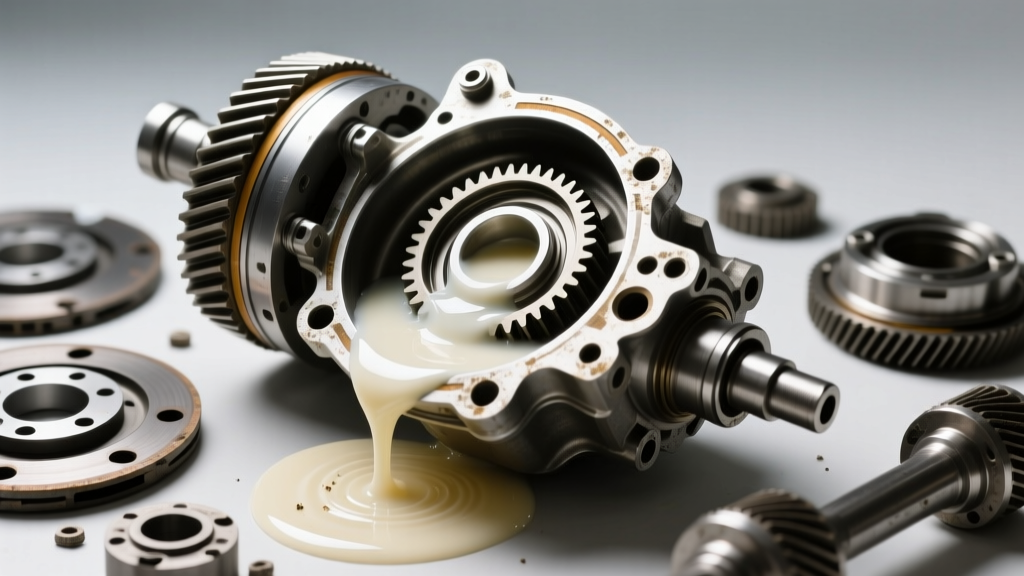
Finding milky differential fluid on your dipstick or during a routine front axle service is an immediate red flag. Unlike rear differentials, which sit higher and are generally shielded, front differentials—especially Independent Front Suspension (IFS) setups on modern trucks and SUVs—are positioned low and directly in the path of water crossings, deep snow, and road puddles. When water breaches the front axle housing, it mixes with the GL-5 gear oil, creating a mayonnaise-like emulsion that strips the lubricant of its extreme pressure (EP) additives.
From a tribology perspective, this emulsification is catastrophic. Water reacts with the sulfur-phosphorus EP additives found in 75W-90 and 75W-85 gear oils, forming mild sulfuric acids. Over time, this causes micro-pitting on the ring and pinion gear teeth and accelerates bearing cage degradation. If you are facing a front differential service due to water intrusion, understanding the 2026 cost breakdown between a simple flush, a seal replacement, and a full rebuild is critical to protecting your drivetrain budget.
2026 Front Differential Service Cost Breakdown
Labor rates in 2026 average between $135 and $195 per hour at independent drivetrain specialists, while dealerships often exceed $215 per hour. The table below outlines the expected costs to address milky front differential fluid based on the root cause and repair path.
| Service / Repair Type | DIY Cost (Parts & Fluid) | Independent Shop (2026) | Dealership (2026) |
|---|---|---|---|
| Front Diff Fluid Flush (No Leaks) | $35 - $60 | $140 - $220 | $195 - $280 |
| Front Axle Shaft Seal Replacement | $15 - $30 (Seal) | $280 - $450 | $450 - $650 |
| Pinion Seal Replacement | $20 - $35 (Seal) | $320 - $550 | $500 - $750 |
| Axle Breather Tube Rerouting | $15 - $40 | $120 - $180 | $180 - $250 |
| Full Differential Rebuild (Water Damage) | $350 - $600 (Master Kit) | $1,600 - $2,800 | $2,500 - $3,800+ |
Diagnosing the Source of Water Intrusion
Before paying for a flush, you must identify how the water entered the housing. Flushing milky differential fluid without fixing the breach guarantees the problem will return within a few thousand miles. According to the AA1Car Differential Diagnosis Guide, water ingress typically stems from three specific failure points.
1. Front Axle Shaft Seal Failure
The front axle seals sit at the end of the differential housing where the CV axles insert. Constant articulation, road debris, and worn CV axle surfaces can tear the rubber lip. Part Spotlight: For GM 8.25" IFS trucks (Silverado, Tahoe), the SKF 22441 or Timken 710502 are the OEM-equivalent replacements, costing roughly $14 to $22 each. The high cost of this repair isn't the part; it's the 1.5 to 2.5 hours of labor required to remove the wheel, brake caliper, rotor, tie rod end, lower ball joint, and CV axle to access the seal.
2. Pinion Seal Degradation
The pinion seal sits where the front driveshaft yoke connects to the differential. If you frequently drive through deep water, the driveshaft can submerge the pinion flange. Furthermore, a worn U-joint can cause harmonic vibrations that chew up the pinion seal lip. Replacing this seal requires dropping the front driveshaft and removing the pinion nut. Expert Warning: Never use an impact gun to remove the pinion nut without first marking the nut's exact position relative to the threads or measuring the rotational preload torque. Ruining the crush sleeve preload will result in immediate bearing failure and whining noises.
3. Clogged or Submerged Axle Breather
Differentials heat up during operation and cool down afterward. This thermal cycling creates a vacuum inside the housing. If the factory axle breather tube is clogged with mud, or if it is routed too low and submerged in water, the cooling vacuum will literally suck water past the axle and pinion seals. Rerouting the breather tube high up into the engine bay using 5/16" polyurethane tubing and a $5 brass check valve is the cheapest and most effective preventative maintenance you can perform.
DIY Front Differential Flush: Specs, Torque, and Part Numbers
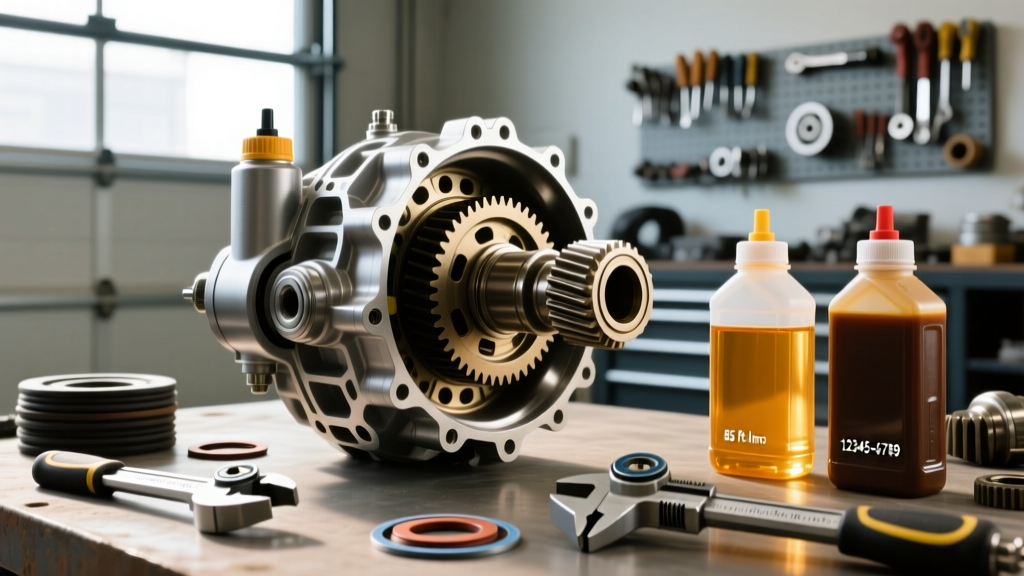
Unlike rear differentials that usually feature a drain plug and a cover, most modern front differentials (especially IFS units) only have a fill plug. This means you cannot simply drain the milky differential fluid; you must extract it using a fluid transfer pump, flush the housing with brake cleaner or kerosene, and pump new fluid back in.
GM 8.25" IFS (Silverado, Sierra, Tahoe, Suburban)
- Fluid Capacity: 1.8 pints (0.85 Liters)
- Specification: 75W-85 GL-5 Synthetic (ACDelco 10-4016 or AMSOIL Severe Gear 75W-90)
- Fill Plug Torque: 24 Nm (18 lb-ft) — Do not overtighten; the housing is aluminum and strips easily.
- Extraction Tip: Feed the extraction tube all the way to the bottom of the housing and angle it toward the axle tubes to pull out settled water and metallic sludge.
Dana 30 / Dana 44 (Jeep Wrangler JK/JL, Ford Super Duty)
- Fluid Capacity: 2.5 pints (Dana 30) / 3.0 pints (Dana 44)
- Specification: 80W-90 GL-5 (Valvoline High Performance or Mobil 1 Synthetic)
- Fill Plug Torque: 34 Nm (25 lb-ft)
- Extraction Tip: Solid axle front diffs often accumulate heavy water pooling in the lower knuckle extensions. Use a pump with a rigid, bendable hose to snake into the inner axle C-knuckles.
When to Rebuild vs. When to Flush
How do you know if the milky differential fluid has already caused terminal damage? The decision matrix comes down to mileage on the contaminated fluid and audible symptoms.
The Magnet Test: Most front differential fill plugs are magnetic. If you extract the plug and find a fine, glitter-like metallic paste, this is normal gear wear. If you find distinct metal flakes, chips, or roller bearing needles, the water has already caused pitting and spalling. A flush will not save the differential; a complete teardown and rebuild using a master bearing and seal kit (e.g., Randy's Ring & Pinion Master Kit) is mandatory.
If the front differential operates silently and the fluid was only milky for a short duration (e.g., discovered immediately after a water crossing), performing three back-to-back DIY flushes with cheap 80W-90 GL-5 mineral oil, followed by a final fill with high-quality synthetic, will effectively purge the water and emulsified sludge. For deeper technical insights on gear wear patterns and bearing preload setups, the Timken Automotive Seals and Bearing Catalog remains an invaluable resource for drivetrain technicians.
Final Cost-Saving Advice for 2026
If you are paying an independent shop to address milky front differential fluid, always request that they use a high-viscosity synthetic GL-5 gear oil with a dedicated friction modifier if your front axle features an electronic locking differential (like GM's G80 or Ford's electronic locker). Standard GL-5 without the correct modifier will cause the locking mechanism to chatter and bind, leading to a secondary repair bill that could have been easily avoided.