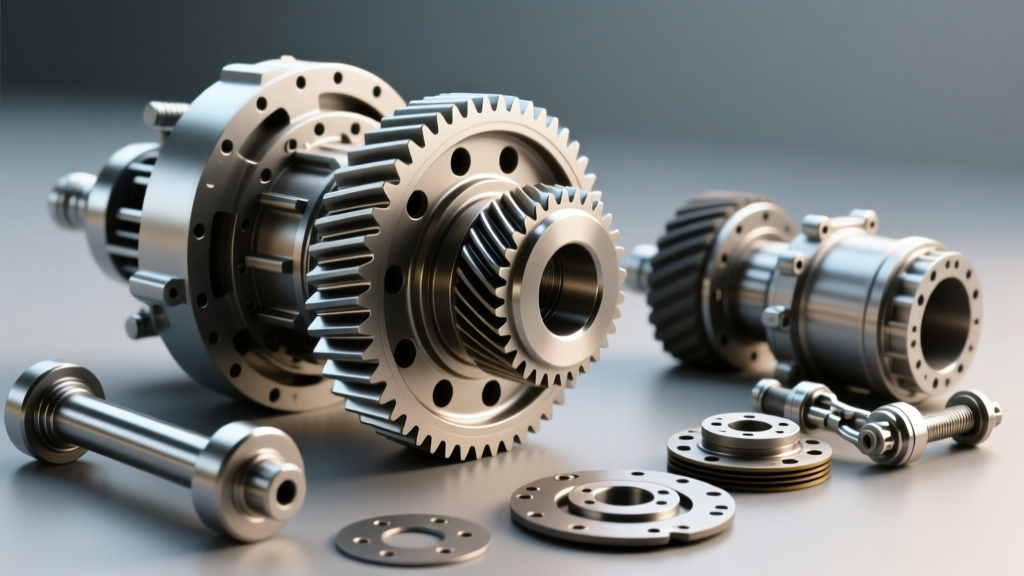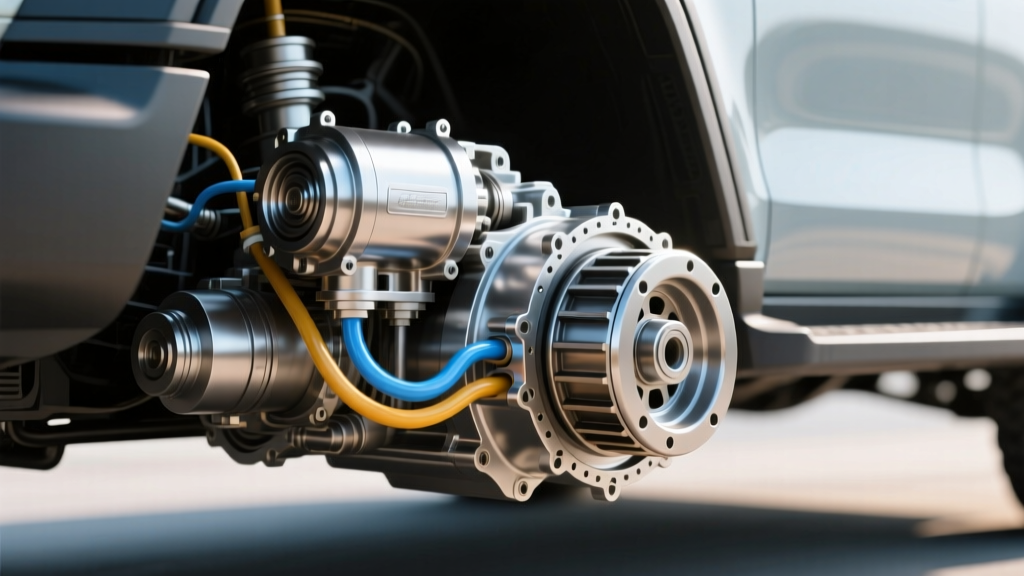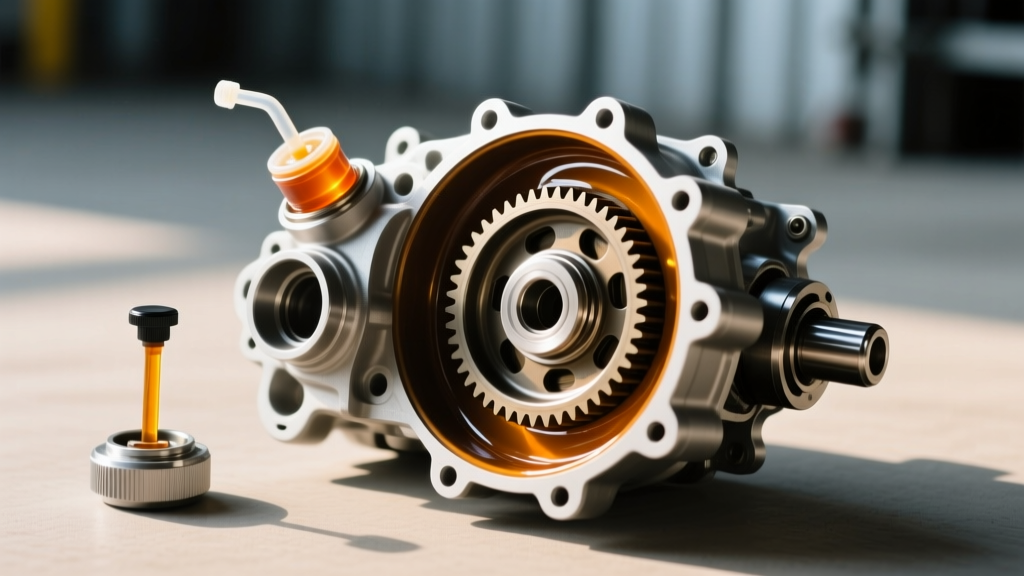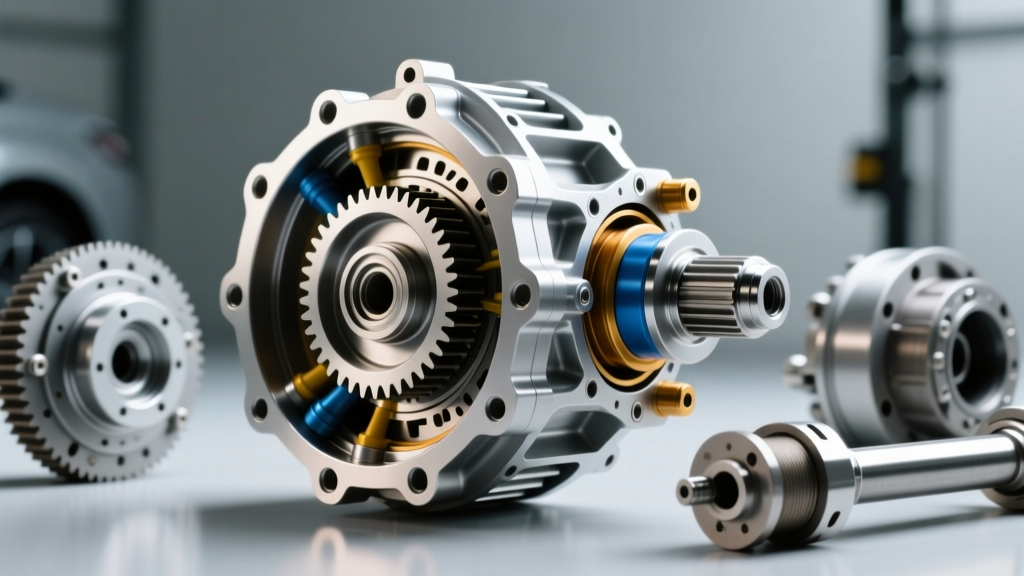
The Drivetrain Heartbeat: Understanding AWD 'Tachycardia'
In medical terminology, sinus tachycardia refers to a fast, regular heart rhythm. In the automotive world, the center differential acts as the 'heart' of an All-Wheel Drive (AWD) system, pumping torque to the front and rear axles. When enthusiasts and drivetrain specialists use the metaphorical phrase differential for sinus tachycardia, they are describing a very specific mechanical arrhythmia: the rapid, cyclic binding, RPM fluctuation, and high-speed shudder that occurs when a center differential fails to regulate torque bias correctly.
As we navigate the 2026 automotive landscape, AWD systems have become increasingly complex. Whether dealing with a viscous coupling, a helical limited-slip, or an active clutch-pack transfer case, diagnosing these 'tachycardia-like' RPM flares requires a deep understanding of tribology, gear geometry, and fluid shear rates. This guide serves as your definitive diagnostic manual for center differential and AWD system troubleshooting.
Symptom Matrix: Diagnosing Center Differential Arrhythmias
Before tearing into the drivetrain, you must isolate the exact nature of the RPM flare or binding. Use the following diagnostic matrix to map your symptoms to the likely mechanical root cause.
| Symptom Presentation | AWD System Type | Mechanical Root Cause | Targeted Fluid / Part Fix |
|---|---|---|---|
| Cyclic hopping/binding on tight, low-speed turns | Viscous Coupling (e.g., Subaru 5MT) | Sheared siloxane fluid; locked coupling | Motul Gear 300 75W-90 / OEM Viscous Unit |
| High-speed RPM flares under heavy throttle | Active Clutch Pack (e.g., BMW xDrive ATC400) | Worn friction discs; TF0870 fluid breakdown | Shell TF0870 / ATC400 Friction Rebuild Kit |
| Groaning noise and torque bias failure under load | Torsen / Helical (e.g., Audi Quattro) | Thrust washer wear; loss of gear preload | ZF LifeguardFluid / Torsen Rebuild Kit |
Deep Dive: Subaru Symmetrical AWD (Viscous & Helical)
Subaru’s manual transmission AWD systems rely heavily on a center differential that combines a helical limited-slip mechanism with a viscous coupling. When the siloxane fluid inside the viscous coupling degrades due to extreme thermal cycling, it can permanently solidify or lose its shear-transfer capabilities. This results in the classic 'tachycardia' symptom: the vehicle hops and binds during parking lot maneuvers, and you may experience erratic RPM flares as the ECU struggles to compensate for drivetrain wind-up.
Fluid Specifications and Torque Data
To service the center differential on a Subaru 5MT or 6MT (including WRX and STI models from 2015-2025), you must address the main transmission gear oil, which bathes the center diff assembly in most standard setups, or the dedicated DCCD fluid in advanced models.
- Fluid Type: API GL-5 75W-90. For severe duty and high-heat track use, Motul Gear 300 75W-90 offers superior kinematic viscosity stability (15.5 cSt at 100°C).
- Capacity: Approximately 3.5 to 4.0 Liters for the entire manual transmission/center diff housing.
- Drain Plug Torque: 35 Nm (26 lb-ft) for the M16x1.5 magnetic drain plug.
- Fill Plug Torque: 35 Nm (26 lb-ft). Always use a new aluminum crush washer (Part # 803916090).
Diagnostic Tip: If a fluid change does not eliminate the low-speed binding, the viscous coupling itself has mechanically failed. The 2026 aftermarket cost for a replacement OEM Subaru viscous center differential unit hovers between $850 and $1,100.
Deep Dive: BMW xDrive (ATC400/ATC500 Transfer Cases)
BMW’s xDrive system utilizes an active clutch-pack transfer case (often integrated with or positioned immediately behind the transmission) to act as the center differential. The most common units, the ATC400 and ATC500, are notorious for developing 'tachycardia' symptoms—specifically, rapid RPM flares and a jerking sensation during hard acceleration or when transitioning from deceleration to throttle.
Actuator Gear Wear and Fluid Breakdown
The xDrive transfer case relies on a stepper motor and a plastic actuator gear to apply pressure to the internal clutch packs. Over time, the specialized transfer case fluid loses its friction-modifier efficacy, causing the clutch packs to slip. The ECU detects this slip and commands the actuator motor to clamp harder, rapidly wearing down the plastic actuator gear teeth.
- Fluid Type: Shell TF0870 (BMW Part # 83222446673). Do not use standard 75W-90 gear oil here. TF0870 is a highly specialized friction-modified fluid.
- Capacity: 0.6 Liters (600ml).
- Drain/Fill Plug Torque: 30 Nm (22 lb-ft) for the M14x1.5 plugs.
- Common Failure Part: Transfer Case Actuator Motor Repair Kit (Part # 27107599806), which replaces the worn plastic gear without requiring a full motor replacement.
According to ZF Aftermarket technical bulletins, failing to recalibrate the transfer case via BMW ISTA software after a fluid or actuator replacement will result in immediate clutch pack destruction due to incorrect baseline clamping pressure.
Deep Dive: Audi Quattro (Torsen & Crown Gear)
Audi’s legendary Quattro system historically utilized Torsen (Torque Sensing) center differentials, and later evolved into the Quattro with Ultra technology and Crown Gear differentials. A Torsen center diff relies on precise gear mesh and thrust washer clearances to generate torque bias. When the specialized fluid breaks down, the internal worm gears and side gears experience accelerated thrust washer wear.
The symptom here is less of an RPM flare and more of a 'torque arrhythmia'—a hesitation or groaning from the center tunnel when the front or rear axle loses traction. The differential fails to bias torque, effectively acting like an open differential.
- Fluid Type: ZF LifeguardFluid or OEM Audi G 055 010 A2 (for specific Crown Gear applications).
- Diagnostic Check: Perform the 'Figure-8' test on dry pavement. If the vehicle binds, chirps tires, or exhibits drivetrain wind-up, the center differential is locking up or failing to unlock, indicating internal mechanical galling or severe fluid degradation.
Step-by-Step Troubleshooting Protocol
When faced with an AWD system exhibiting sinus tachycardia-like RPM flares, follow this strict diagnostic hierarchy to avoid unnecessary part replacements:
- The Figure-8 Test: Find a dry, clean paved area. Drive the vehicle in tight, lock-to-lock figure-8 patterns at 5-10 mph. Listen for chirping tires, hopping, or groaning from the center tunnel. This immediately confirms center differential binding.
- Fluid Extraction and Particle Analysis: Drain the center diff/transfer case fluid into a clean glass pan. Look for a 'glitter bomb' effect. Fine metallic paste is normal wear; chunky ferrous shavings or brass-colored flakes (thrust washers) dictate an immediate teardown and rebuild.
- Software Calibration: Connect your bi-directional scanner (Subaru SSM4, BMW ISTA, or VCDS for Audi). Check for transfer case adaptation values. If the clutch wear index is maxed out, a fluid change will not save the unit; a mechanical rebuild is required.
- Tire Circumference Verification: AWD center differentials are highly sensitive to rotational speed differences. Use a tailor's tape measure to measure the exact circumference of all four tires. A variance of more than 2/32-inch in tread depth or a mismatched tire brand can cause the center diff to continuously slip, mimicking a mechanical failure.
2026 Cost Analysis: Fluid Service vs. Complete Rebuild
Understanding the financial implications of drivetrain arrhythmias is crucial for proper shop estimating and DIY budgeting.
- Preventative Fluid Service: $80 - $150 (Includes specialized fluids like Shell TF0870 or Motul 75W-90, plus OEM crush washers). This should be performed every 30,000 to 50,000 miles.
- Actuator Gear Repair (BMW xDrive): $250 - $450 (Includes the plastic gear repair kit, fluid, and 1.5 hours of labor).
- Complete Center Differential Rebuild: $1,200 - $2,800. This includes removing the transmission or transfer case, splitting the casing, replacing friction clutches, thrust washers, and seals, and reprogramming the ECU.
- OEM Replacement Unit: $2,500 - $4,500+ depending on the vehicle platform and dealership markup.
Conclusion
Diagnosing a 'differential for sinus tachycardia' requires looking past the metaphor and addressing the hard physics of torque transfer. Whether you are chasing an RPM flare in a BMW xDrive, a parking-lot hop in a Subaru WRX, or a torque-bias failure in an Audi Quattro, the root cause almost always traces back to fluid shear stability, friction material degradation, or actuator calibration. By adhering to exact torque specifications, utilizing OEM-specified tribological fluids, and leveraging modern diagnostic software, you can restore your AWD system's heartbeat to a steady, reliable rhythm.
For further reading on drivetrain maintenance intervals and OEM fluid cross-references, consult the Subaru TechInfo Portal or your respective manufacturer's technical service bulletins.