The Classic MGB Clutch Hydraulics Dilemma
For owners of the iconic British sports car, sourcing a reliable MGB clutch master cylinder has become increasingly complex. Produced from 1962 to 1980, the MGB utilizes a Girling/Lockheed-style hydraulic clutch actuation system. While elegantly simple in its original 1960s design, the modern aftermarket is flooded with replacement cylinders of wildly varying quality. A failing master cylinder doesn't just result in a soft pedal; it can lead to catastrophic drivetrain damage if internal bypassing causes the clutch to slip under load.
As we navigate the 2026 classic car restoration market, the disparity between Original Equipment Manufacturer (OEM) benchmark parts and budget 'white-box' imports is starker than ever. This comprehensive buyer's guide evaluates the leading MGB clutch master cylinder brands, providing exact part numbers, real-world pricing, metallurgical insights, and critical installation specifications to keep your 18V or 18GG engine shifting flawlessly.
Understanding the 3/4-Inch Bore Standard
Before comparing brands, it is vital to understand the engineering baseline. The standard MGB clutch master cylinder features a 3/4-inch (0.75") bore. This specific diameter was chosen by British Leyland engineers to balance pedal effort with the necessary fluid displacement to fully actuate the slave cylinder against the heavy diaphragm spring of the MGB clutch cover assembly.
The output fitting utilizes a 9/16-24 UNF thread, mating with the hard line that routes down to the flexible hose and eventually to the slave cylinder on the transmission bell housing. When evaluating replacement brands, the precision of this bore honing and the quality of the internal EPDM rubber seals are the primary differentiators between a unit that lasts 10 years and one that fails in 10 months.
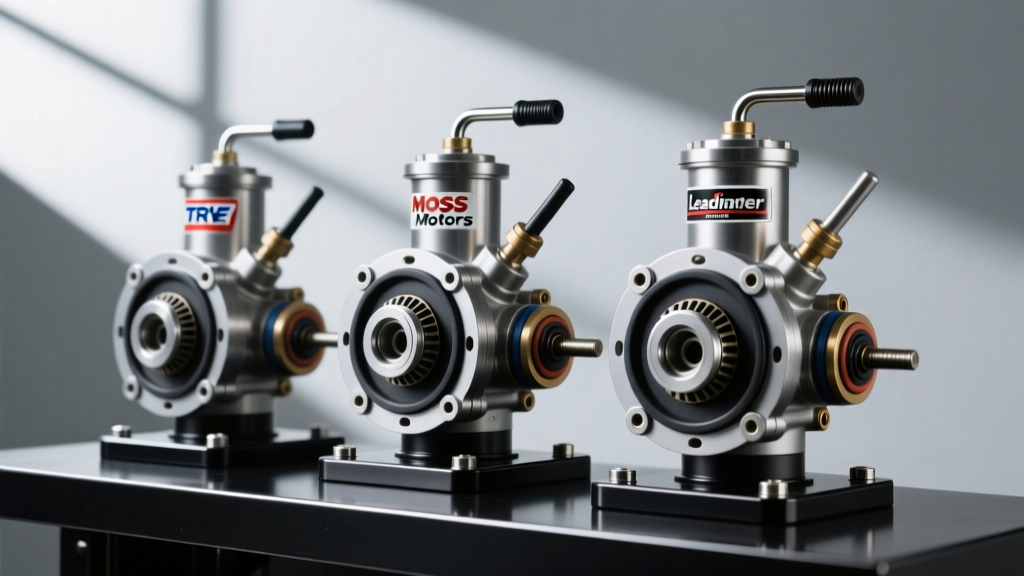
2026 MGB Clutch Master Cylinder Brand Comparison Chart
| Brand / Source | Part Number | Bore Material | Price Range (2026) | Warranty | Expert Verdict |
|---|---|---|---|---|---|
| TRW / Lucas Girling (NOS) | GCC129 / 72134 | Cast Iron (OEM Spec) | $95 - $140 | N/A (NOS) | The gold standard if you can find verified new-old-stock. |
| Moss Motors (House Brand) | 282-110 | Cast Iron / Alloy | $55 - $75 | 2-Year Limited | Best balance of availability, warranty, and modern QA. |
| Stainless-Sleeved Rebuilt | OE Core + Sleeve | Stainless Steel | $85 - $110 (+ core) | Lifetime | The ultimate enthusiast fix; immune to bore pitting. |
| Generic Aftermarket | Import Direct / Unbranded | Cast Iron (Rough Honed) | $25 - $40 | 90-Day | Avoid. High risk of premature seal failure and bypassing. |
TRW / Lucas Girling (The OEM Benchmark)
TRW (which absorbed Lucas Girling) manufactured the original units fitted to the MGB at the Abingdon factory. Sourcing a genuine, New Old Stock (NOS) TRW cylinder in 2026 is the holy grail for concours restorers. The cast iron bore is honed to microscopic tolerances, and the internal rubber compounds are formulated specifically to resist the hygroscopic nature of DOT 4 brake fluid. However, verifying true NOS status is difficult, as many modern boxes labeled 'TRW' contain offshore-manufactured components that lack the original quality control.
Moss Motors House Brand (The Accessible Standard)
For the vast majority of MGB owners, the Moss Motors standard replacement (Part #282-110) is the most logical choice. Moss leverages high-volume manufacturing but maintains strict quality assurance protocols that budget brands ignore. Their units feature clean castings, properly machined 9/16-24 output threads, and accurate pushrod clevis pin holes. While not identical to the 1960s Girling units, Moss backs their components with a robust warranty, making it the safest 'bolt-on-and-go' option for weekend warriors and daily drivers.
Generic 'White Box' Aftermarket (The Budget Gamble)
Walk into a generic auto parts store or browse budget online retailers, and you will find MGB clutch master cylinders for under $30. These units are notorious in the British car community for two fatal flaws: rough bore honing that shreds internal seals within 5,000 miles, and poorly threaded pushrods that make pedal adjustment a nightmare. The cost savings are entirely negated by the labor required to replace a leaking unit and bleed the system a second time.
Stainless-Sleeved Rebuilt Originals (The Enthusiast's Choice)
Specialist rebuilders (often found via the MG Experience forums) take your original, pitted cast-iron master cylinder, bore it out, and press in a precision-machined stainless steel sleeve. Because stainless steel does not corrode or pit when exposed to moisture-laden brake fluid, a sleeved cylinder effectively becomes immortal. This is the recommended route for high-mileage tourers and track-day MGBs where hydraulic reliability is non-negotiable.
Critical Installation Specs: Pushrod Geometry and Torque
Installing a new MGB clutch master cylinder is not merely a 'remove and replace' operation. The most common cause of premature failure and clutch slip is incorrect pushrod adjustment.
The Compensation Port Danger: The master cylinder features a tiny compensation port that connects the fluid reservoir to the bore. When the clutch pedal is released, the piston must retract fully past this port. If the pushrod is adjusted too tightly, the piston rests over the port, sealing the system. As engine bay heat expands the hydraulic fluid, the pressure has nowhere to go but down the line, partially engaging the clutch, causing severe slip, and destroying the throwout bearing.
Adjustment Specification: You must maintain exactly 1/16-inch to 1/8-inch of free play measured at the face of the clutch pedal pad before you feel hydraulic resistance. Adjust the clevis on the pushrod to achieve this.
Torque Specifications: The master cylinder mounts to the pedal box, which is bolted to the firewall. When reinstalling the pedal box or securing the master cylinder nuts, do not exceed 10 to 12 lb-ft of torque. The MGB firewall sheet metal is thin, and the captive nuts can easily break free or strip, requiring invasive dash removal to repair.
Fluid Selection and the DOT 5 Silicone Controversy
The debate over hydraulic fluid in classic British cars is fierce. The factory specification is DOT 3 or DOT 4 glycol-based fluid. In 2026, we highly recommend a high-dry-boiling-point fluid like Castrol LMA (Low Moisture Absorption) DOT 4. It resists boiling during heavy stop-and-go traffic and provides excellent lubrication for the internal rubber seals.
Many owners convert to DOT 5 Silicone fluid to prevent paint damage and internal corrosion, as silicone does not absorb water. However, DOT 5 does not lubricate rubber seals as effectively as glycol, leading to accelerated seal wear in the MGB's specific Lockheed-style bore. Furthermore, silicone fluid traps air bubbles much more stubbornly, making bleeding the notoriously difficult MGB clutch system an absolute nightmare. Stick to high-quality DOT 4 and change it every 24 months.
Bench Bleeding and System Priming
The MGB slave cylinder is mounted high on the transmission bell housing, creating a natural trap for air bubbles. Bleeding the system from underneath the car using the traditional 'pump and hold' method often results in a spongy pedal and hours of frustration.
The Expert Method: 1. Bench Bleed the Master: Before connecting the hard line, fill the reservoir with DOT 4 fluid. Plug the output port with your finger or a specialized plug, and stroke the pushrod with a screwdriver until no air bubbles emerge from the compensation port into the reservoir. 2. Reverse Bleed the System: Use a large syringe or a Motive Products reverse bleeder to inject fluid from the slave cylinder bleed nipple up into the master cylinder reservoir. This forces air upward, following its natural buoyancy, ensuring a rock-solid pedal on the very first try.
Final Verdict for 2026
When sourcing an MGB clutch master cylinder, avoid the false economy of unbranded imports. For standard street use, the Moss Motors (#282-110) unit offers the best combination of modern manufacturing consistency, warranty protection, and immediate availability. For concours restorations, hunt down verified TRW/Lucas NOS units, and for high-performance or heavy-touring applications, invest in a stainless-sleeved rebuild of your original core. Respect the pushrod clearances, bench bleed the unit, and your MGB's clutch hydraulics will deliver crisp, reliable shifts for years to come.