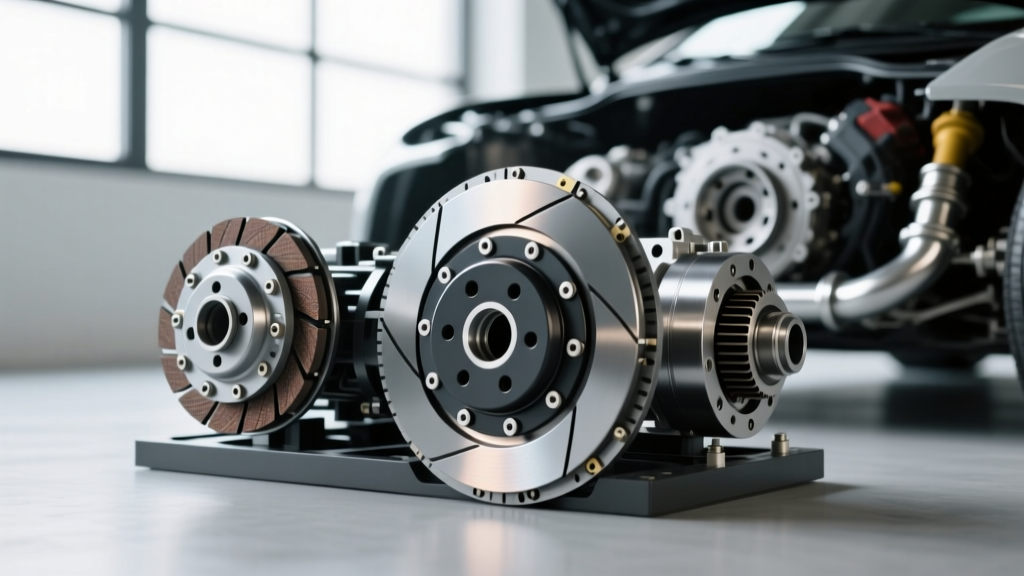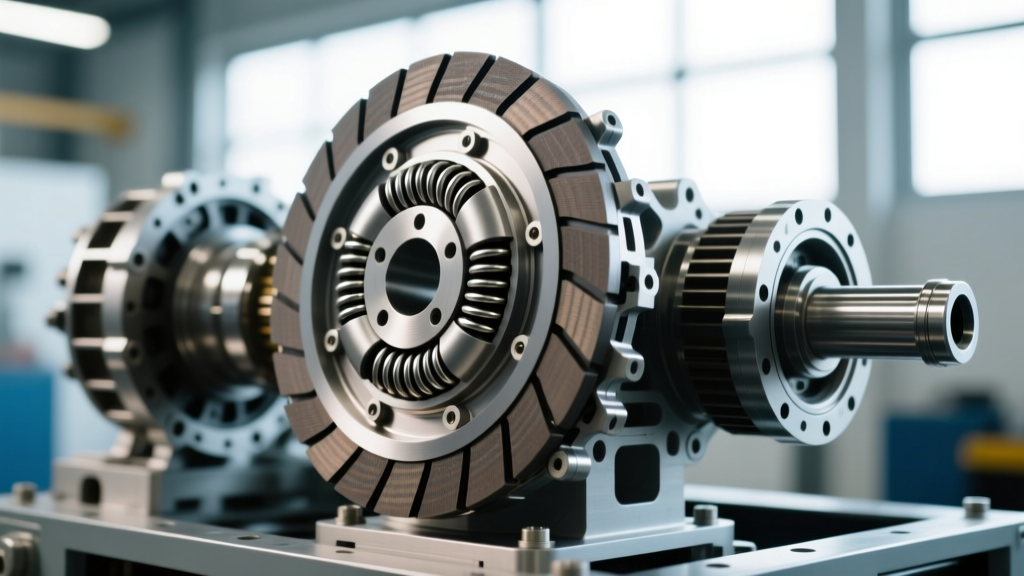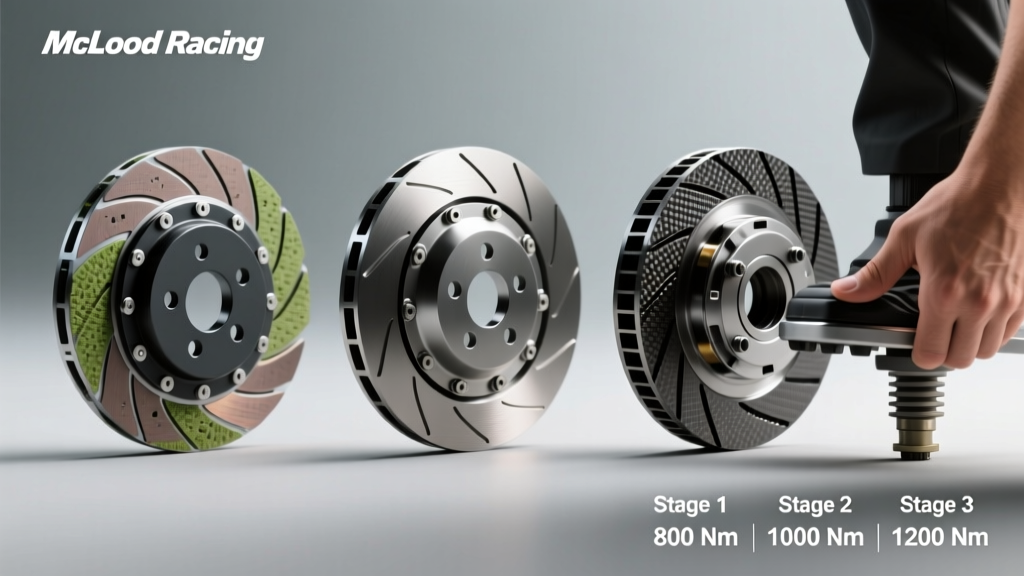
The Reality of 'Stages' in Performance Clutches
When planning a manual transmission swap or upgrading a high-horsepower build, enthusiasts frequently search for a 'Stage 1 vs Stage 2 vs Stage 3 clutch' comparison. However, in the upper echelons of drivetrain engineering, the term 'stage' is largely a marketing fabrication used by budget manufacturers to denote arbitrary increases in clamp load and aggressive friction materials. Premium manufacturers like McLeod Racing do not use the 'Stage' nomenclature. Instead, they categorize their clutches by specific use-case designations: Street Pro, Super Street Pro, Pro Street, and their multi-disc RXT/RST lines.
As of 2026, with the Tremec TKX and Magnum F 6-speed transmissions dominating the restomod and pro-touring market, matching the correct McLeod friction assembly to your specific torque output and drivability requirements is more critical than ever. This guide translates the industry's 'Stage 1, 2, and 3' terminology into McLeod's actual product lineup, providing exact specifications, torque capacities, and installation data for your build.
Stage 1 Equivalent: McLeod Street Pro (Organic)
The 'Stage 1' category is universally understood as a mild performance upgrade over OEM. It is designed for daily-driven vehicles with basic bolt-on modifications (intake, exhaust, mild cam, or low-boost supercharger kits) producing between 300 and 550 rear-wheel horsepower (rwhp).
McLeod Street Pro Specifications
- Part Number Example: 7521405 (GM T-56 / T-56 Magnum, 26-spline, 1-1/8" input shaft)
- Torque Capacity: Up to 550 lb-ft at the crank
- Friction Material: High-grade organic compound with heavy-duty hub springs
- Pedal Feel: Near-OEM, slightly firmer (approx. 10-15% increase in pedal effort)
- Flywheel Compatibility: Nodular iron, steel, or aluminum with steel inserts
The Street Pro utilizes a full-face organic disc. Organic materials offer the highest coefficient of friction at low temperatures, meaning the clutch 'bites' immediately and smoothly, making it ideal for stop-and-go traffic. The marcel springs (wave springs) beneath the friction surface absorb micro-vibrations, eliminating the dreaded clutch chatter common in entry-level performance upgrades. If you are building a 450 rwhp LS3 with a Tremec TKX for weekend cruising, this is your definitive choice.
Stage 2 Equivalent: McLeod Super Street Pro (Kevlar/Ceramic Hybrid)
Moving into 'Stage 2' territory, we enter the realm of the serious street/strip car. These vehicles typically feature forged internals, aggressive camshafts, nitrous oxide, or moderate turbocharging, pushing the 550 to 700 rwhp envelope. The OEM-style organic disc will glaze and slip under these thermal loads.
McLeod Super Street Pro Specifications
- Part Number Example: 7521605 (GM T-56, 26-spline)
- Torque Capacity: Up to 700 lb-ft at the crank
- Friction Material: Ceramic puck or Kevlar-faced segmented disc
- Pedal Feel: Noticeably stiffer (approx. 25-35% increase in pedal effort)
- Drivability: Moderate chatter on takeoff; requires higher RPM engagement
McLeod's Super Street Pro often utilizes a ceramic or Kevlar hybrid friction material. Kevlar offers excellent heat resistance and a smoother engagement than raw ceramic, but it requires a specific break-in procedure to transfer the friction material to the flywheel. Ceramic pucks, on the other hand, offer immense bite and thermal stability but will accelerate flywheel wear and introduce significant driveline shock. For a 650 rwhp twin-turbo Coyote swap, the Super Street Pro provides the necessary holding power without resorting to the complexity of a multi-disc setup.
Stage 3 Equivalent: McLeod Pro Street & RXT Twin Disc
'Stage 3' and beyond is reserved for dedicated track cars, drag radials, and high-boost forced-induction monsters producing 700 to 1,200+ rwhp. At this level, single-disc clutches physically cannot provide enough surface area to hold the torque without requiring a pressure plate so stiff it would cause driver fatigue and damage the firewall or throwout bearing.
McLeod RXT Twin Disc (The Ultimate Stage 3)
- Part Number Example: 691103 (GM RXT Twin Disc, 26-spline)
- Torque Capacity: Up to 1,000+ lb-ft (depending on bellhousing and hydraulics)
- Friction Material: Dual ceramic or sintered iron discs
- Pedal Feel: Surprisingly manageable due to dual-disc leverage (often lighter than a stiff single-disc Stage 2)
- Drivability: Aggressive engagement; not recommended for heavy daily driving
The RXT twin-disc system doubles the friction surface area, allowing McLeod to use a softer pressure plate diaphragm while maintaining massive torque capacity. However, the use of ceramic or sintered iron friction materials means the clutch will chatter aggressively when engaging from a dead stop. Furthermore, sintered iron discs are highly abrasive; they must be paired with a billet steel or specialized nodular iron flywheel. Using sintered iron on an aluminum flywheel will destroy the flywheel surface in a matter of weeks.
Material Science: Friction Compound Comparison
Understanding the friction material is more important than the arbitrary 'stage' label. Below is a technical comparison of the compounds used across the McLeod lineup.
| Material | Coefficient of Friction | Heat Tolerance | Flywheel Wear | Ideal Application |
|---|---|---|---|---|
| Organic | High (Low Temp) | Up to 400°F | Very Low | Street, Daily Driver, Mild Bolt-ons |
| Kevlar | Medium-High | Up to 600°F | Low | Street/Strip, Road Course, Autocross |
| Ceramic | High (High Temp) | Up to 800°F+ | High | Drag Racing, High-Boost Turbo |
| Sintered Iron | Extreme | 1000°F+ | Extreme (Steel only) | Pro Mod, No-Prep Drag, 1000+ HP |
Drivetrain Pairing: Matching the Clutch to the Transmission
A clutch is only as reliable as the transmission behind it. When selecting your McLeod assembly, you must verify the input shaft spline count and diameter. According to Tremec's engineering specifications, the modern TKX 5-speed utilizes a 26-spline, 1-1/8" input shaft, identical to the T-56 Magnum. However, older T-5 World Class transmissions utilize a 26-spline, 1-1/8" shaft but require a different clutch disc hub profile due to the shorter input shaft length and pilot bearing depth.
Expert Warning: Never force a clutch disc onto an input shaft. If the splines do not slide on smoothly by hand, the hub may be machined for a different transmission family. Forcing it will destroy the input shaft bearings and cause catastrophic gear misalignment.
Hydraulics and Throwout Bearing Setup
Upgrading to a high-clamp-load McLeod pressure plate requires a matching hydraulic system. The factory GM or Ford hydraulic throwout bearing (TOB) is often made of plastic and will shatter under the 2,400+ lbs of clamp load generated by a Stage 3 equivalent setup.
McLeod offers their adjustable CNC-machined hydraulic throwout bearings (e.g., Part # 1400 series). These allow for precise air-gap adjustment, which is critical when swapping between different bellhousing depths (such as moving from a QuickTime RM-6060 to a McLeod Modular bellhousing). Ensure your master cylinder bore size is matched to the TOB; a 7/8" bore master cylinder is standard for most T-56 Magnum applications, providing the correct fluid volume for the piston stroke.
Critical Installation Torque Specifications
Proper installation is non-negotiable. A $1,800 RXT twin-disc clutch will fail prematurely if the flywheel or bellhousing is improperly torqued, leading to runout and clutch chatter. Always use a calibrated torque wrench and follow these baseline specifications (verify with your specific engine block manual):
- GM LS Flywheel to Crankshaft: 74 lb-ft + 90 degrees of rotation (use new OEM torque-to-yield bolts and red Loctite).
- Clutch Cover (Pressure Plate) to Flywheel: 35 lb-ft for 12-inch single disc; 50 lb-ft for twin-disc assemblies (tighten in a star pattern, one turn at a time to prevent warping the diaphragm).
- Bellhousing to Engine Block: 35 lb-ft.
- Transmission to Bellhousing: 35-40 lb-ft depending on stud/nut size.
- Driveshaft Strap Bolts: 25 lb-ft (over-torquing will distort the transmission output shaft bearing cap).
The Break-In Procedure: Where Builds Succeed or Fail
The most common cause of 'Stage 2' and 'Stage 3' clutch failure is improper bedding. Organic discs require about 200-300 miles of stop-and-go city driving to mate the friction surface to the flywheel. Ceramic and Kevlar discs require up to 500 miles. During this period, you must avoid wide-open-throttle (WOT) pulls, high-RPM launches, and excessive slipping in traffic. If you glaze a ceramic disc by slipping it too much during the break-in phase, the surface will harden, resulting in permanent slip and requiring a complete teardown and resurfacing.
Cost vs. Longevity: 2026 Market Pricing
Budgeting for a performance drivetrain requires looking beyond the initial purchase price. Based on current 2026 market averages from major retailers like Summit Racing:
- Stage 1 (Street Pro): $450 - $600. Excellent longevity (60,000+ miles) for street use.
- Stage 2 (Super Street Pro): $650 - $850. Moderate longevity; friction material will wear faster if subjected to frequent traffic slipping.
- Stage 3 (RXT Twin Disc): $1,600 - $2,200+. The discs themselves are rebuildable. When the ceramic material wears out, you can send the assembly back to McLeod for a friction replacement and pressure plate rebuild for a fraction of the cost of a new unit.
Ultimately, selecting the right McLeod Racing clutch is about matching your realistic torque output and driving habits to the correct friction material. Ignore the arbitrary 'stage' marketing, focus on the engineering, and your manual transmission build will deliver reliable, hook-after-hook performance for years to come.