The Anatomy of a Clutch: Why the 'Cover' Matters
When enthusiasts begin modifying their vehicles for increased horsepower, the clutch is often the first casualty. A common beginner mistake is blindly purchasing an aggressive 'Stage 3' or 'Stage 4' clutch kit, only to discover that their daily driver now behaves like a temperamental drag car. The secret to balancing high torque capacity with street manners lies in understanding the individual components of the clutch assembly—specifically, the clutch cover. In automotive engineering, the term 'clutch cover' refers to the pressure plate assembly. This steel housing bolts directly to the flywheel and contains the diaphragm spring, which provides the clamping force necessary to keep the friction disc engaged. For the modern street-and-track build in 2026, selecting the right pressure plate is the single most critical factor in maintaining daily drivability.
What Exactly is a Factory Racing Clutch Cover?
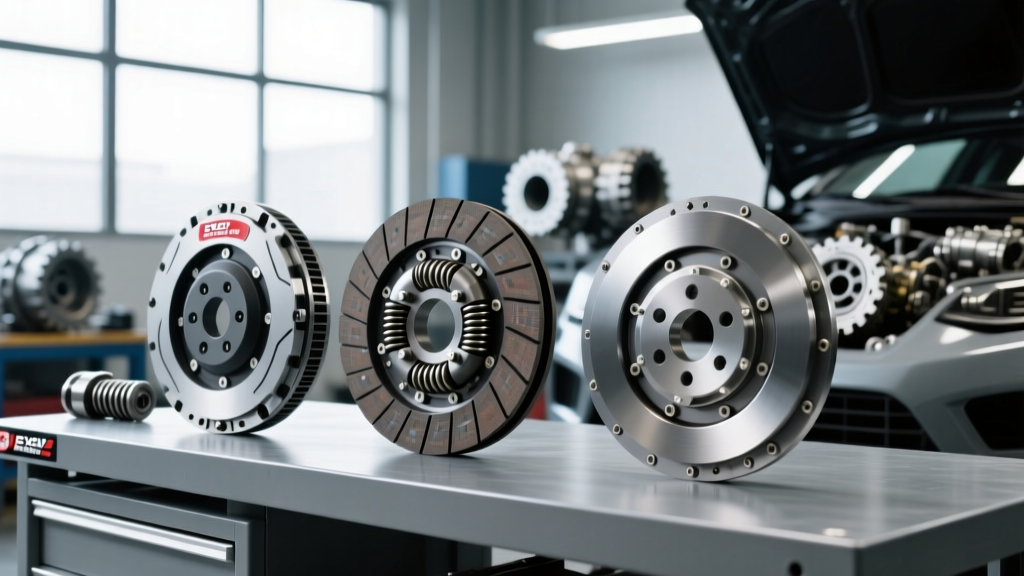
A factory racing clutch cover typically refers to an Original Equipment Manufacturer (OEM) or OEM-partner pressure plate designed for factory-backed motorsport programs, track packages, or high-performance variants (such as the Ford Mustang Shelby GT350, Chevrolet Corvette Z06, or Porsche GT3). Unlike aftermarket 'race-only' covers that use extremely stiff, multi-finger diaphragm springs resulting in a back-breaking pedal, factory racing covers are engineered with optimized pivot points and advanced metallurgy. This allows them to generate significantly higher clamp loads—often jumping from a standard 2,200 lbs to over 3,400 lbs—without proportionally increasing pedal effort at the driver's foot.
Diaphragm Springs and Pedal Effort
The diaphragm spring acts as a lever. By altering the fulcrum point and the thickness of the spring steel, engineers can increase the clamping force at the friction surface while keeping the release bearing effort manageable. For example, upgrading to a ZF Sachs Performance clutch cover (often utilized in OEM track packages) can yield a 30% increase in torque capacity while only increasing pedal weight by 10% to 15%. This is the holy grail for daily drivability: you get the holding power for 500+ wheel horsepower, but you won't need a gym membership to sit in stop-and-go traffic.
The Daily Drivability Checklist: Sprung vs. Unsprung Hubs
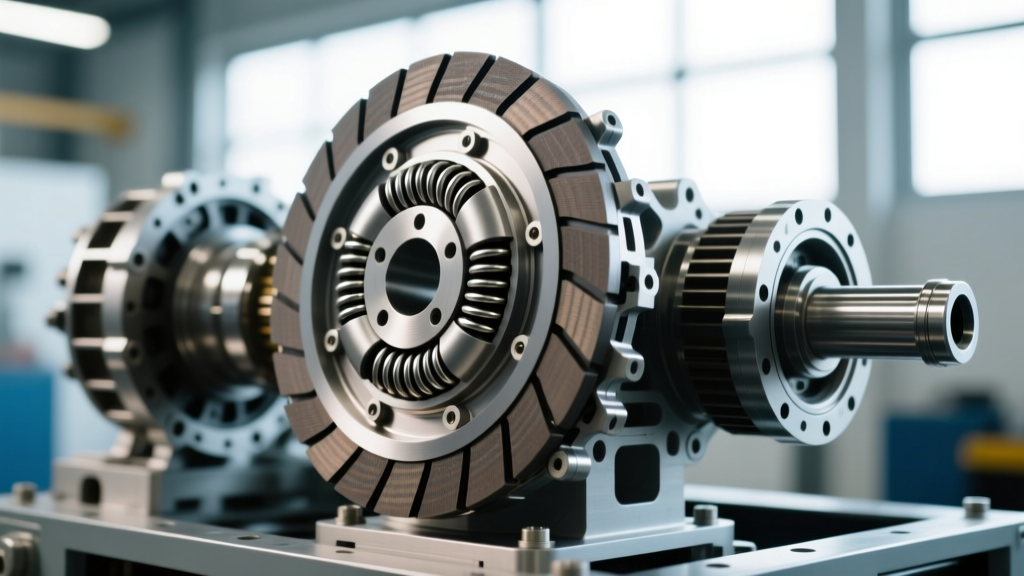
While the factory racing clutch cover manages the clamping force and pedal feel, the friction disc dictates engagement smoothness. For a street-driven vehicle, you must absolutely avoid unsprung (solid) hub discs. An unsprung hub lacks torsion springs, meaning every shock, vibration, and driveline oscillation from the engine is transferred directly into the transmission input shaft and chassis. This results in severe 'chatter' when taking off from a stoplight. Always pair your high-performance clutch cover with a sprung hub disc featuring high-quality polyurethane or steel torsion springs to absorb low-RPM NVH (Noise, Vibration, and Harshness).
Clutch Setup Comparison: Street vs. Track
To help you visualize how different setups impact your daily commute versus your weekend track days, review the comparison matrix below:
| Setup Type | Clamp Load (Approx.) | Pedal Effort | Engagement Feel | Est. Price Range (2026) |
|---|---|---|---|---|
| OEM Standard Replacement | 2,200 - 2,500 lbs | Light / Stock | Very Forgiving, Linear | $250 - $400 |
| Factory Racing Cover + Organic Sprung Disc | 3,200 - 3,600 lbs | Moderate (+15%) | Positive, Slightly Firm | $550 - $850 |
| Aftermarket HD Cover + 4-Puck Ceramic (Unsprung) | 4,000+ lbs | Very Heavy (+50%) | On/Off Switch, High Chatter | $600 - $900 |
Friction Materials: Organic, Kevlar, and Sintered
When mating a disc to your factory racing clutch cover, material choice is paramount. Organic materials (often a blend of fiberglass, Kevlar, and ceramic compounds) offer the smoothest engagement and are ideal for daily driving. They handle heat reasonably well but will glaze if repeatedly abused on a drag strip. Kevlar composite discs offer excellent durability and a slightly more aggressive bite, but they require a longer break-in period and can be prone to chatter if the flywheel isn't perfectly resurfaced. Avoid full sintered iron or full ceramic multi-puck discs for any vehicle that sees regular street use; their coefficient of friction is so high that they grab instantly, causing severe driveline shock and making parking lot maneuvers a chore.
Real-World Install: Torque Specs and Break-In
Even the most meticulously engineered factory racing clutch cover will fail prematurely or cause drivability issues if installed incorrectly. The clutch cover relies on the flywheel's mass and flatness to dissipate heat. Always resurface or replace your flywheel when installing a new clutch assembly. Furthermore, adhering to exact torque specifications is non-negotiable to prevent cover warping and uneven clamping.
Crucial Torque Specifications
- Flywheel to Crankshaft (Ford 5.0L Coyote): M12 bolts torqued to 65 lb-ft.
- Flywheel to Crankshaft (GM LS/LT V8): M11 bolts torqued to 74 lb-ft (verify specific year/manual, some require torque-to-angle).
- Clutch Cover (Pressure Plate) to Flywheel: M8 bolts torqued to 22-25 lb-ft. Always tighten in a star pattern, one turn at a time, to prevent warping the steel cover.
- Clutch Fork Pivot Ball: 30 lb-ft (apply high-temp threadlocker).
The 500-Mile Break-In Protocol
Once your factory racing clutch cover and organic/Kevlar disc are installed, the break-in process dictates the longevity of the friction material. The resins in the friction material must be heat-cycled and burned off to create a proper mating surface with the flywheel. For the first 500 miles, engage in normal stop-and-go city driving. Avoid wide-open-throttle (WOT) pulls, do not launch the vehicle, and avoid towing. If you glaze the disc by slipping it excessively on a steep hill or burn it up with a hard launch before it is seated, no amount of clamp load will save it from slipping.
Troubleshooting Chatter and Heavy Pedals
If you have installed a high-quality setup but still experience terrible chatter or a heavy pedal, look beyond the clutch itself. Worn engine or transmission mounts will allow the powertrain to oscillate under load, mimicking clutch chatter. Additionally, an improperly bled hydraulic system or a worn pilot bearing can cause drag, making shifts notchy and the pedal feel inconsistent. For deeper technical specifications on transmission tolerances and bellhousing alignments, always consult authoritative resources like the Tremec Engineering Library or ZF Group's aftermarket documentation. Upgrading to a factory racing clutch cover is one of the smartest investments you can make for a modified daily driver, provided you respect the engineering behind the entire driveline ecosystem.