The Daily Driver Dilemma: Performance vs. Comfort
When enthusiasts begin modifying their LS or LT-powered vehicles, the drivetrain is usually the first bottleneck. Upgrading to a Tick Performance clutch system is a common rite of passage for Camaro, Corvette, and swap builders looking to handle increased torque. However, a persistent myth in the automotive community is that any 'performance' clutch will ruin your car's daily drivability, leaving you with a stiff left leg, aggressive chatter in stop-and-go traffic, and a vehicle that stalls at every red light.
As of 2026, the aftermarket has evolved significantly. The reality is that daily drivability is not dictated by the brand name on the box, but by the specific combination of hydraulic components, flywheel mass, and friction materials you choose. Tick Performance has built its reputation not just on selling friction discs, but on engineering complete hydraulic and mechanical ecosystems that allow high-horsepower cars to remain perfectly streetable.
Deconstructing the Tick Performance Clutch Ecosystem
To understand daily drivability, we must look at the clutch as a complete system. A true Tick Performance clutch setup relies heavily on optimizing the hydraulic actuation side of the equation, which is often the root cause of poor street manners in aftermarket setups.
The Secret Weapon: The Adjustable Clutch Master Cylinder
The factory hydraulic throwout bearings and master cylinders on platforms like the C6/C7 Corvette or 5th/6th Gen Camaro are notorious for their non-linear pedal feel and delayed engagement. Tick Performance solves this with their Adjustable Clutch Master Cylinder (Part # TP-ADJ-MASTER, typically retailing around $190-$220).
By upgrading to this billet aluminum master cylinder, you gain the ability to physically adjust the pushrod stroke. This allows you to tune the exact point of engagement and the overall pedal effort. For a daily driver, you can set the master cylinder to provide a longer, more progressive pedal travel, mimicking the smooth, forgiving feel of an OEM setup while still providing the clamping force required for a 600+ wheel-horsepower build.
Eliminating Sponginess: Braided Lines and Remote Bleeders
Pedal feel is also ruined by hydraulic expansion. The factory rubber clutch lines swell under pressure, making the engagement point feel vague and inconsistent. Pairing the adjustable master cylinder with a Tick Performance Braided Clutch Line (Part # TP-BRAIDED-LINE, ~$65) and their Remote Clutch Bleeder Kit ensures that 100% of your pedal input translates directly to the concentric slave cylinder (CSC) or clutch fork. This predictability is paramount for daily driving, as it prevents the jerky, accidental slip-ups that cause clutch chatter in traffic.
Friction Materials: What Actually Dictates Drivability?
The friction disc is where the rubber meets the road—or rather, where the composite meets the steel. Tick Performance curates and supplies kits from top-tier manufacturers like RAM Clutches, McLeod, and Exedy. Choosing the right material is the single biggest factor in whether your car is a joy or a nightmare to drive to work.
| Material | Pedal Effort | Engagement Characteristic | NVH Level | Best Application |
|---|---|---|---|---|
| Organic / Ceramic Blend | Light to Medium | Smooth, Progressive | Low | Daily Driving / Street |
| Full Kevlar | Medium | Slightly Abrupt | Low-Medium | Street / Occasional Track |
| Full Ceramic (Puck) | High | Aggressive / On-Off | High | Track / Drag Racing |
| Sintered Iron | Extreme | Instant / No Slip Zone | Extreme | Purpose-Built Race Cars |
Source: Technical data compiled from RAM Clutches Technical Information and Tick Performance application guides.
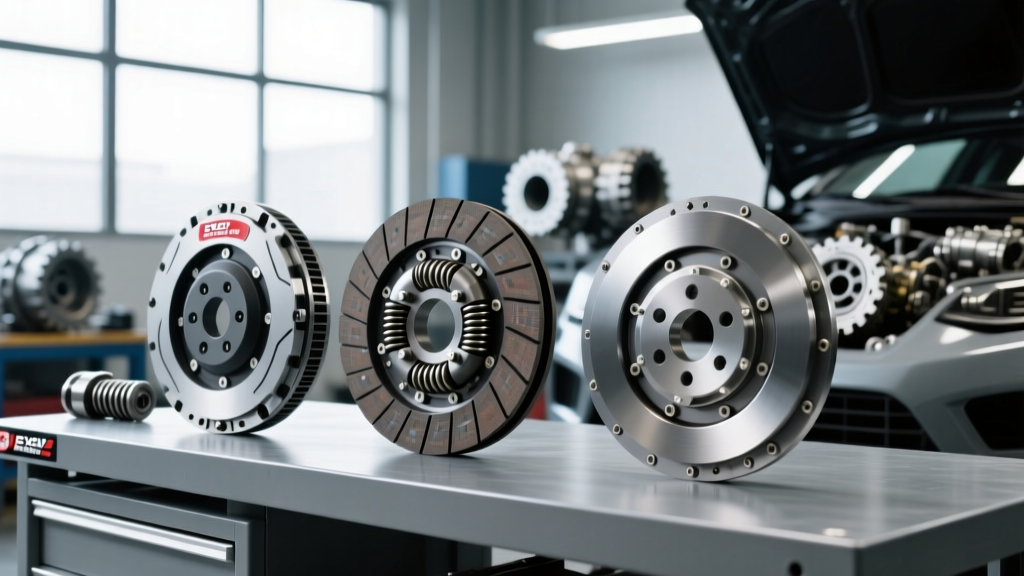
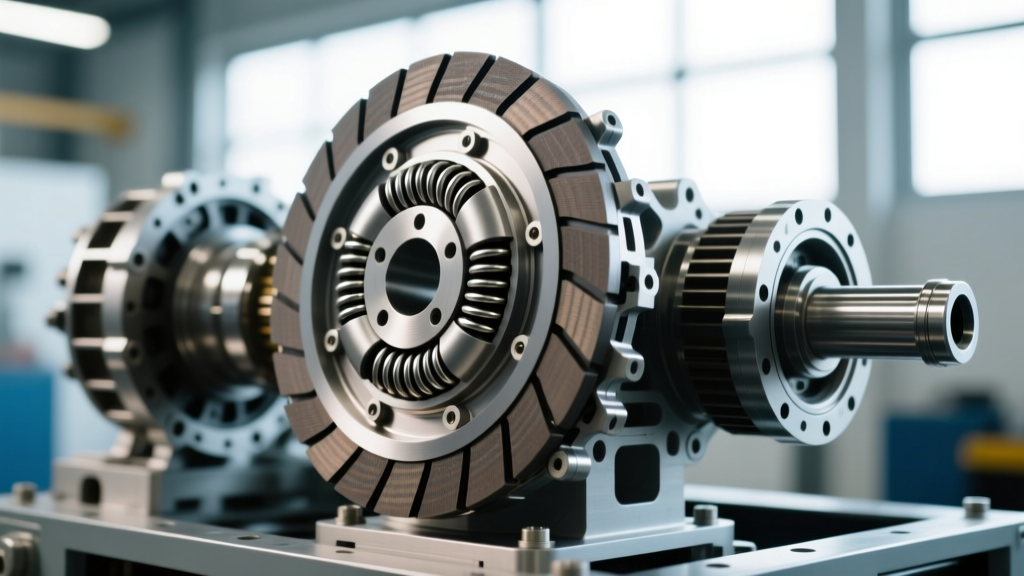
For a dedicated daily driver that sees occasional highway pulls or track days, an organic/ceramic blend or a high-quality Kevlar disc paired with a sprung hub is mandatory. The sprung hub (marcel springs and torsion dampers) absorbs the rotational shock of the engine, preventing the infamous 'clutch chatter' that vibrates through the chassis when taking off from a dead stop in first gear. Never use a rigid-hub, full-ceramic puck disc on a street-driven vehicle unless you enjoy stalling at intersections and replacing your transmission input shaft bearings prematurely.
The Flywheel Factor: Rotational Mass and NVH
A common beginner mistake is pairing a high-end Tick Performance clutch kit with an ultra-lightweight aluminum flywheel to save rotational mass. While an aluminum flywheel (weighing 12-15 lbs compared to a stock 25-30 lb steel flywheel) makes the engine rev incredibly fast, it destroys low-speed drivability.
Aluminum flywheels lack the inertial mass required to smoothly pull the vehicle's weight from a dead stop. This forces the driver to slip the clutch excessively, generating massive heat and accelerating wear. For a daily-drivable Tick Performance setup, opt for a billet steel or chromoly flywheel in the 18-22 lb range. This provides a perfect compromise: faster revving than stock, but enough rotational inertia to pull away from stoplights smoothly without riding the pedal.
Installation and Setup: Torque Specs and Clearances
Even the most street-friendly clutch will feel terrible if installed incorrectly. When installing a Tick Performance system on an LS/LT platform mated to a Tremec T56 Magnum or TR-6060, precision is non-negotiable.
- Flywheel to Crankshaft: Clean all threads with a tap. Use blue Loctite. Torque M10/M12 bolts to factory specs (typically 74 lb-ft for LS, up to 100 lb-ft for LT Gen V applications) in a crisscross pattern.
- Pressure Plate to Flywheel: Align using a standard pilot tool. Torque the M8x1.25 pressure plate bolts to exactly 35 lb-ft, stepping down gradually in a star pattern to ensure the diaphragm springs compress evenly.
- Concentric Slave Cylinder (CSC) Setup: If using a hydraulic throwout bearing, you must measure the distance from the bellhousing mounting surface to the clutch fingers. Adjust the CSC shims so that there is exactly 0.100" to 0.150" of air gap. Zero preload will destroy the bearing; too much gap will result in incomplete disengagement and grinding gears.
- Hydraulic Bleeding: Flush the system with high-quality DOT 3 or DOT 4 fluid (like Motul RBF 600). Never use DOT 5 silicone fluid, as it compresses under heat and will ruin your pedal feel.
The Break-In Procedure: Making or Breaking the Clutch
You have invested $800 to $1,200 in a premium Tick Performance clutch system, master cylinder, and braided line. Do not ruin it by doing burnouts on day one. Organic and Kevlar friction materials require a thermal mating process to transfer an even layer of friction material onto the flywheel and pressure plate faces.
For the first 500 miles, drive the car normally. Avoid 'lugging' the engine in high gears at low RPMs, as this creates extreme shear force on the friction material before it has fully seated. Conversely, avoid slipping the clutch on steep hills or in heavy stop-and-go traffic, which will glaze the organic material and permanently ruin its bite. Aim for moderate RPM shifts (2,500 - 3,500 RPM) with smooth, deliberate pedal releases. After 500 miles, perform one or two hard 3rd-gear pulls to heat-cycle the disc, locking the friction matrix into place.
Final Verdict: Is It Daily Drivable?
Yes, absolutely. A Tick Performance clutch setup is arguably one of the most daily-drivable performance upgrades on the market, provided you select the correct friction material (sprung-hub organic or Kevlar), retain adequate flywheel mass, and utilize their adjustable hydraulic master cylinder to tune the pedal feel to your liking. By treating the clutch as a holistic system rather than just a friction disc, you can reliably handle 600+ lb-ft of torque while still comfortably navigating your morning commute.