The Paradigm Shift: From Street Car Friction to Off-Road Centrifugal Force
For automotive technicians and hardcore DIYers, performing a traditional manual transmission service is a rite of passage. When you approach a Mazda 3 clutch replacement, you are dealing with a highly refined, predictable mechanical system. The Skyactiv-MT 6-speed transmission relies on a dry, single-plate diaphragm spring clutch, a hydraulic concentric slave cylinder (CSC), and a precision-machined flywheel. You use an alignment arbor, torque the pressure plate in a star pattern, and bleed the hydraulic lines. It is an exercise in exact tolerances and friction material management.
However, when you transition from the pavement to the dirt, the rules of drivetrain physics change entirely. Modern high-performance ATVs and UTVs—like the Polaris RZR Pro XP and Can-Am Maverick X3—do not use traditional friction discs. Instead, they rely on Continuously Variable Transmissions (CVTs) utilizing primary and secondary centrifugal clutches. Upgrading and replacing these clutches requires a completely different mindset, specialized puller tools, and an understanding of dynamic belt deflection. In this 2026 performance upgrade guide, we bridge the gap between street car precision and off-road brutality, providing exact torque specs, tuning parameters, and rebuild protocols for UTV CVT systems.
The Mechanical Divide: Friction Discs vs. CVT Sheaves
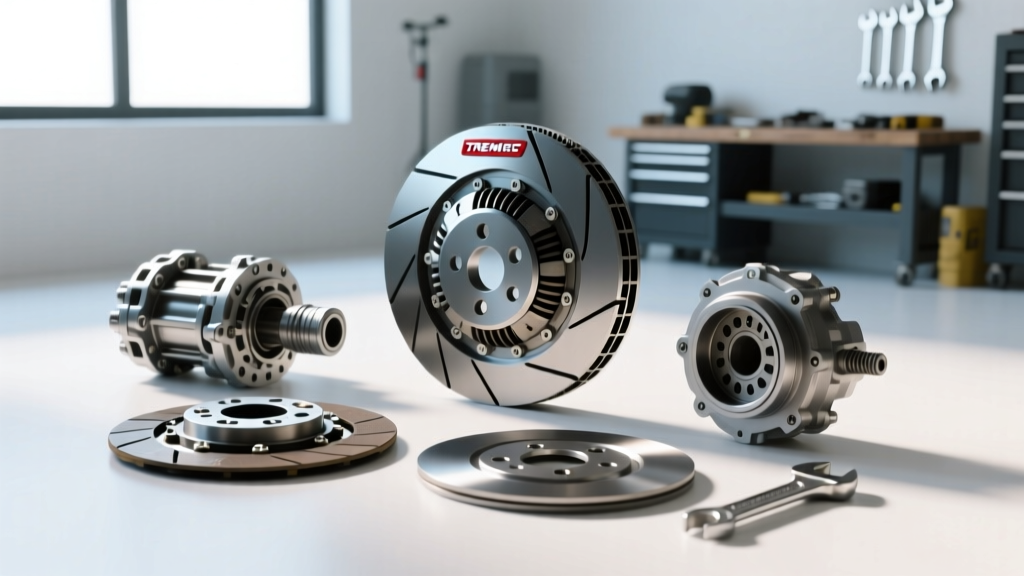
To understand UTV clutch upgrades, we must first contrast them with the familiar architecture of a street car. During a Mazda 3 clutch replacement, the primary goal is to maximize the friction coefficient between the clutch disc and the flywheel without sacrificing pedal feel or daily drivability. Upgrading to a Stage 2 Kevlar or ceramic puck disc increases clamp load and thermal capacity, but the fundamental operation remains binary: engaged or disengaged.
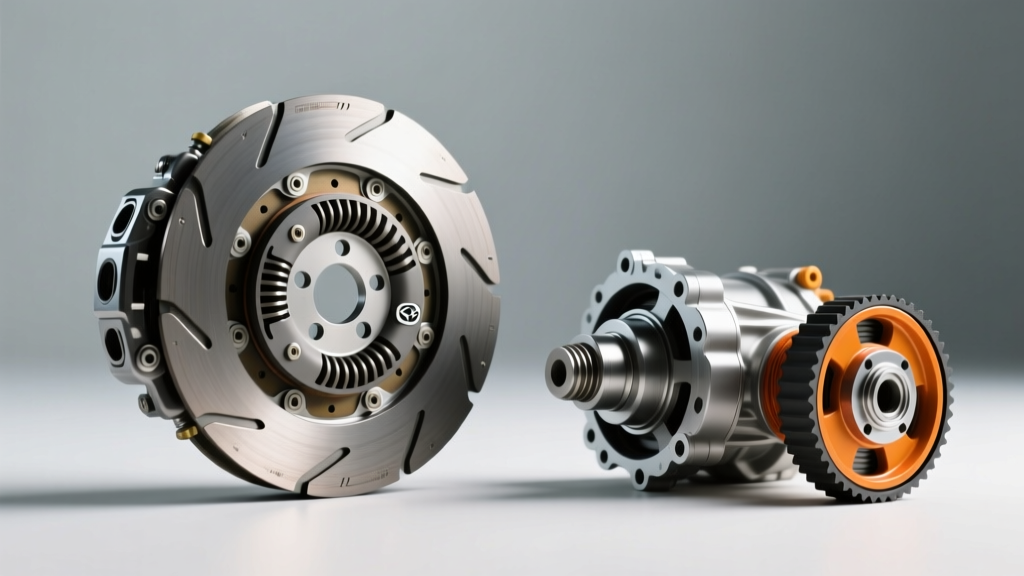
A UTV CVT clutch is infinitely variable. The Primary Clutch (Drive Clutch) is mounted to the engine crankshaft. As engine RPMs rise, centrifugal force pushes heavy rollers (or weights) outward against a movable sheave, forcing the drive belt to ride higher in the pulley. The Secondary Clutch (Driven Clutch) is mounted to the transmission input shaft. It uses a massive torsion spring and a precision-cut helix ramp to clamp the belt and transfer torque to the wheels. Performance upgrades in the UTV world do not involve friction materials; they involve altering the geometry, spring rates, and mass of these moving components to keep the engine in its peak powerband under heavy off-road loads.
Component Comparison: Street vs. Dirt Upgrades
| Feature | Mazda 3 (Skyactiv-G 2.5L) Stage 2 Upgrade | Polaris RZR Pro XP Heavy-Duty CVT Upgrade |
|---|---|---|
| Primary Component | Exedy Hyper Single Ceramic Disc Kit | EPI Primary Spring & Dalton Weight Kit |
| Upgrade Mechanism | Increased friction coefficient & clamp load | Altered centrifugal shift-out RPM & belt pinch |
| Target Metric | Torque capacity (up to 350 lb-ft) | Belt deflection & peak RPM hold (8,100-8,500 RPM) |
| Installation Tooling | Clutch alignment arbor, flywheel lock | 3-jaw primary puller, secondary compressor tool |
| Typical Cost Range | $450 - $800 (Parts only) | $180 - $350 (Tuning kit) / $900+ (Full clutch) |
Data sourced from Mazda Motorsports Engineering and Engineering Performance Inc. (EPI) catalogs.
UTV Primary and Secondary Clutch Rebuild Protocol
Unlike a Mazda 3 where you simply unbolt the transmission and swap the disc, UTV clutch service requires specialized extraction tools and extreme caution regarding stored kinetic energy. Below is the professional protocol for servicing and upgrading a modern high-horsepower UTV CVT.
Step 1: Safe Extraction and Disassembly
Never attempt to pry a primary clutch off the crankshaft with a screwdriver or pry bar; you will score the crank snout and destroy the engine block's main bearing thrust surfaces. You must use a dedicated threaded primary clutch puller. For Polaris applications, an M14x1.5 puller bolt is required. For Can-Am, an M12x1.25 puller is standard.
CRITICAL SAFETY WARNING: The secondary clutch contains a massive torsion spring under extreme preload (often exceeding 400 lbs of rotational force). Disassembling a secondary clutch without a dedicated, bolted secondary clutch compressor tool can result in the sheave violently separating, causing severe injury or death. Never use C-clamps or improvised straps.
Step 2: Cleaning and Surface Preparation
In a Mazda 3 clutch replacement, you use brake cleaner to wipe down the flywheel. In a UTV CVT, brake cleaner is strictly prohibited. The chemical residue left behind by aerosol brake cleaners will cause the CVT belt to slip, generating catastrophic heat and melting the belt cords. You must clean the aluminum sheave faces with pure acetone and a lint-free shop towel. The surface must be surgically clean to ensure maximum belt grip.
Step 3: Upgrading the Primary Clutch (Spring and Weights)
If you have added larger, heavier off-road tires (e.g., moving from 29-inch to 32-inch mud tires), the stock primary clutch will struggle to shift out, bogging the engine.
- Primary Spring Upgrade: Swap the stock spring for a stiffer rate. For example, upgrading to an EPI Pink spring (140/220 lb/in) increases the RPM required to initiate belt engagement and shift-out, keeping a turbocharged engine in its boost threshold.
- Roller Weights: Heavier tires require lighter rollers to maintain RPM. Dropping from a stock 62-gram roller to a 58-gram setup allows the centrifugal force to overcome the increased rotational mass of the drivetrain.
Step 4: Secondary Clutch Helix Tuning
The secondary clutch helix dictates how aggressively the transmission 'downshifts' under load. A steeper helix angle (e.g., 46/40 degrees) provides a more aggressive back-shift when you stab the throttle in the dunes or climb steep rock crawls. A shallower angle (e.g., 42/36) is preferred for high-speed desert running to prevent erratic RPM hunting. Replacing the helix requires compressing the secondary spring, rotating the sheave to align the splines, and swapping the CNC-machined aluminum helix ramp.
Exact Torque Specifications and Fastener Yield
Applying street-car torque logic to UTV fasteners will result in snapped crankshafts or stripped threads. UTV clutch bolts are often torque-to-yield (TTY) or require specific thread-locking compounds due to the massive harmonic vibrations of off-road engines. Always consult your specific service manual, but reference these baseline specifications for popular 2024-2026 platforms:
- Polaris RZR Pro XP / Turbo R Primary Bolt (M14x1.5): Torque to 60 lb-ft (81 Nm), then turn an additional 90 degrees. Do not reuse the bolt; it is a yield-stretch fastener.
- Can-Am Maverick X3 Primary Bolt (M12x1.25): Apply medium strength Loctite 243 (Blue) to the threads. Torque to 85 lb-ft (115 Nm).
- Secondary Clutch Retaining Nut (Polaris): Typically M10x1.25, torqued to 36 lb-ft (49 Nm) with a drop of Blue Loctite.
- Mazda 3 Flywheel Bolts (For Contrast): M10x1.25, torqued to 71 lb-ft (96 Nm) in a crisscross pattern. No Loctite required from the factory, but a light oil film on the bolt head is necessary for accurate torque readings.
Belt Deflection: The Ultimate UTV Clutch Metric
After reinstalling the clutches and a fresh drive belt, you cannot simply bolt on the cover and ride. You must measure belt deflection. With the vehicle in park and the engine off, push the belt inward on the secondary (driven) clutch side. The belt should deflect exactly 1/4 inch to 3/8 inch (6mm to 9mm).
If the deflection is too loose (greater than 1/2 inch), the belt will slip at high RPM, generating temperatures exceeding 400°F inside the CVT housing, which will rapidly destroy the belt and glaze the sheaves. If the deflection is too tight, the secondary clutch will not fully open at low RPMs, causing the vehicle to 'creep' aggressively in neutral and overheat the belt at idle. Adjust deflection by adding or removing thin shims behind the secondary clutch's adjustable sheave.
Final Drivetrain Considerations
Whether you are executing a meticulous Mazda 3 clutch replacement in your home garage or rebuilding a Can-Am Maverick X3 CVT in the pit tent, the core principle of transmission service remains identical: respect the tolerances. Off-road environments introduce mud, water, and extreme shock loads that street cars rarely see. Upgrading your UTV's CVT with matched springs, precision-cut helixes, and high-temp Kevlar-reinforced belts is the single most effective way to translate engine horsepower into forward momentum. Always source your tuning components from reputable manufacturers like EPI or Polaris OEM, and never compromise on specialized puller tools or torque-to-yield fasteners.