The Hydraulic Clutch Paradigm: Master vs. Slave
In the modern automotive landscape of 2026, while drive-by-wire systems dominate EV platforms, traditional internal combustion engine (ICE) vehicles and heavy-duty commercial trucks still rely heavily on hydraulic clutch actuation. When a driver reports a soft pedal or gear-grinding, the immediate assumption by novice technicians is often a failing slave cylinder. However, accurately identifying clutch master cylinder symptoms is critical to preventing misdiagnosis, unnecessary transmission removals, and costly comebacks.
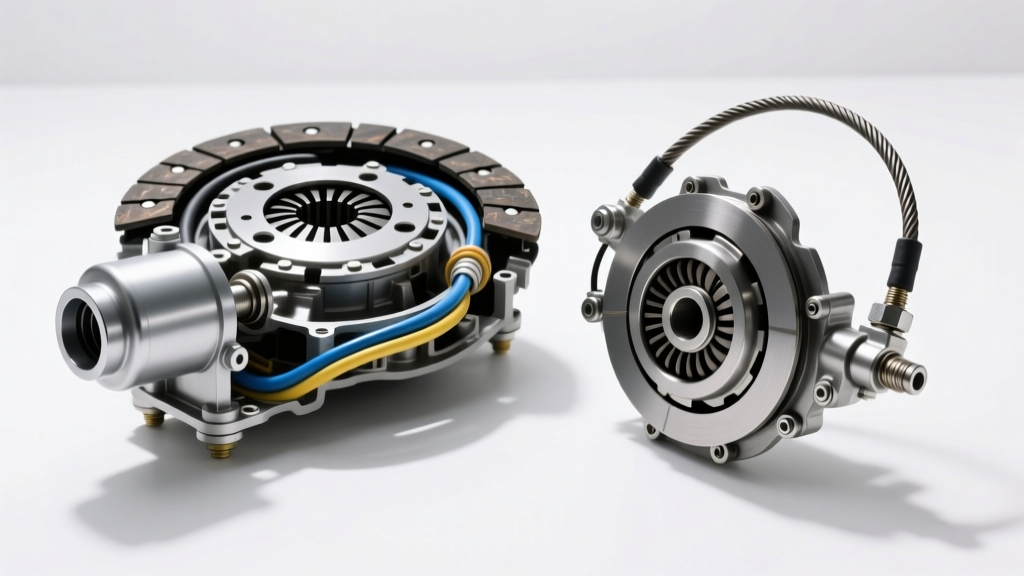
The hydraulic clutch system operates on Pascal’s Law. The master cylinder (typically mounted on the firewall) converts mechanical pedal force into hydraulic pressure. This pressure is transferred via DOT-rated brake fluid through a hard line and flexible hose to the slave cylinder. In many modern manual transmissions, this slave is a Concentric Slave Cylinder (CSC) integrated directly into the bell housing. Because both components share the same sealed hydraulic volume, a failure in one can perfectly mimic a failure in the other. Many mechanics searching for a replacement 'luk clutch slave cylinder' miss the root cause entirely because they fail to isolate the master cylinder's internal bypass faults.
Top 5 Clutch Master Cylinder Symptoms
The master cylinder contains primary and secondary cup seals, a return spring, and a compensation port that allows fluid to expand and contract with temperature changes. When these internal components degrade, specific symptoms manifest.
1. Pedal Sinking to the Floor (Internal Bypass)
If the clutch pedal slowly sinks to the floor while held down at a stoplight, the primary cup seal inside the master cylinder is bypassing fluid. Instead of pushing fluid down the hydraulic line, the fluid is leaking past the seal back into the reservoir or the secondary chamber. This is a classic internal failure that leaves the external slave cylinder completely dry and free of leaks.
2. Spongy Pedal Feel and Air Ingress
A spongy or 'mushy' pedal is often blamed on air in the lines. However, if the system has been bled multiple times and the sponginess returns, the master cylinder's rear seal (where the pushrod enters the bore) may be drawing in air during the pedal's return stroke. This micro-ingression of air creates a compressible pocket in the hydraulic fluid, ruining pedal firmness.
3. Incomplete Clutch Disengagement (Grinding Gears)
When shifting into first or reverse, the transmission may grind. While this can indicate a worn clutch disc or a failing LUK clutch slave cylinder, it is frequently caused by a master cylinder that is not displacing its full volumetric capacity. If the bore is pitted from moisture-contaminated DOT 4 fluid, the seals cannot build the necessary 400–600 PSI required to fully stroke the slave cylinder and disengage the pressure plate.
4. Fluid Loss at the Firewall
Unlike slave cylinder leaks that drip onto the transmission bell housing or the ground beneath the engine, master cylinder leaks occur at the firewall. Fluid will pool on the driver's side footwell carpet or drip down the engine-side of the firewall. This is caused by the failure of the pushrod dust boot and rear seal.
5. Pedal Sticking or Slow Return
The compensation port at the top of the master cylinder bore allows fluid to return to the reservoir. If this port becomes blocked by degraded rubber particles or swollen seals (often caused by using the wrong fluid, such as mineral oil or incorrect DOT 5 silicone), the pedal will stick to the floor or return very slowly, riding the clutch and causing premature wear.
LUK Clutch Slave Cylinder (CSC) Failure Modes
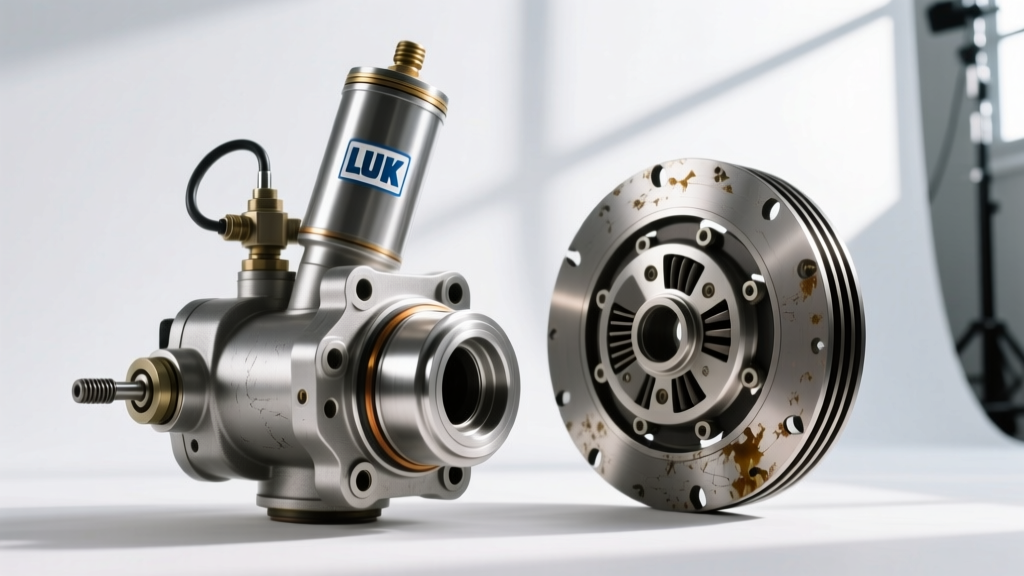
Schaeffler’s LUK brand is the premier OEM supplier for Concentric Slave Cylinders. A LUK clutch slave cylinder integrates the hydraulic piston with the release bearing, eliminating the need for external levers and pivot balls. While highly efficient, CSCs operate in a brutal thermal environment.
According to Schaeffler's engineering data, the most common LUK CSC failure is not hydraulic, but mechanical: the release bearing seizes or the plastic guide sleeve melts due to excessive heat radiating from the clutch assembly. However, when a LUK CSC does fail hydraulically, the internal piston seal extrudes or tears, dumping fluid directly into the bell housing. This requires transmission removal to fix, making accurate diagnosis paramount before dropping the gearbox.
Diagnostic Matrix: Master vs. Slave
Use this diagnostic framework to isolate the faulty component before ordering parts.
| Symptom | Master Cylinder Probability | LUK Slave Cylinder (CSC) Probability | Definitive Test |
|---|---|---|---|
| Pedal sinking under constant pressure | High (Internal Bypass) | Low | Plug the master cylinder output port. If pedal still sinks, master is faulty. |
| Visible fluid leak inside cabin | High (Rear Seal) | None | Inspect firewall and pedal assembly for wetness. |
| Fluid leak beneath bell housing | None | High (Piston Seal) | Remove inspection cover; check for fluid on clutch fork/CSC. |
| Grinding into gear (partial engagement) | Medium (Volumetric loss) | Medium (Stroke limit) | Measure slave pushrod travel. Spec is typically 11mm - 14mm. |
| Noises on pedal depression (whirring) | Low | High (Bearing failure) | Stethoscope on bell housing. Noise changes with clutch load. |
Technical Specifications and Repair Data
Proper repair of these systems requires adherence to strict torque specifications and fluid standards. As detailed in the Schaeffler REPXPERT Clutch Hydraulics Guide, contamination is the number one enemy of hydraulic clutch components.
Fluid Standards and Boiling Points
Most modern hydraulic clutch systems require DOT 4 fluid meeting ISO 4925 Class 4 standards. DOT 4 is hygroscopic; it absorbs moisture from the atmosphere over time. This moisture not only lowers the fluid's boiling point (from a dry 230°C down to a wet 155°C) but also causes internal corrosion in the master cylinder's aluminum or cast-iron bore. Always flush the system with fresh, sealed DOT 4 or DOT 5.1 fluid during any clutch repair.
Torque Specifications
- Master Cylinder Firewall Nuts (M8): 15–20 Nm (11–15 lb-ft). Over-torquing can crack the plastic reservoir housing or distort the cylinder bore.
- LUK CSC Mounting Bolts (M6x1.0): 8–10 Nm (6–7 lb-ft). These bolts thread directly into the aluminum transmission bell housing. Use a calibrated torque wrench to prevent stripping.
- Hydraulic Line Banjo/Flare Fittings: 12–15 Nm. Ensure the mating surfaces are free of debris to prevent micro-leaks.
Part Pricing and Identification (2026 Estimates)
A genuine LUK CSC (e.g., part number 510 0072 10 for common Ford/GM applications) typically ranges from $85 to $140. An OEM master cylinder assembly (often manufactured by FTE or ATE) costs between $60 and $120. Avoid unbranded aftermarket master cylinders, as their internal rubber compounds frequently degrade when exposed to modern DOT 4 additive packages, leading to premature bypass failures.
Bleeding Protocols for Deep-Dive Diagnostics
If you have replaced the master cylinder due to the symptoms listed above, standard pedal-pumping bleeding is often insufficient. The master cylinder sits higher than the slave cylinder, and air naturally rises. We strongly recommend reverse bleeding (pressure bleeding from the slave cylinder bleeder valve up to the master cylinder reservoir) or using a dedicated vacuum bleeder at the reservoir. This ensures that any air trapped in the master cylinder's compensation port or the hard line's high-points is completely evacuated, restoring the firm, predictable pedal feel required for precise manual gear changes.